High fluorination gives PTFE and PFA their exceptional laboratory performance. Their carbon backbones are fully surrounded by fluorine atoms, and the resulting carbon–fluorine bonds are exceptionally strong, with a bond dissociation energy of approximately 116 kcal/mol. This fluorinated structure shields the carbon chain from acids, bases, solvents, and oxidizing reagents while also resisting thermal decomposition more effectively than standard or partially fluorinated plastics.
The key advantage is molecular protection: strong C–F bonds require substantial energy to break, while the dense fluorine sheath makes it difficult for chemicals and solvents to reach the polymer backbone. PTFE and PFA therefore remain highly inert and useful at temperatures and reagent concentrations that can damage conventional plastics.
Why Fluorination Improves Chemical Resistance
Stronger Bonds Resist Chemical Attack
Most standard plastics contain significant numbers of carbon–hydrogen bonds or chemically reactive side groups. In PTFE and PFA, fluorine replaces hydrogen around the carbon framework, producing a highly stable structure dominated by strong C–F bonds.
Because breaking these bonds requires substantial energy, common laboratory reagents cannot easily initiate chain scission or degrade the polymer. The result is much greater resistance to corrosion, swelling, dissolution, and chemical embrittlement.
Fluorine Creates a Protective Molecular Sheath
Fluorine atoms form a dense protective layer around the carbon backbone. This sheath limits the ability of acids, bases, solvents, and other reagents to penetrate the molecular chain.
The effect is similar to a sealed barrier around a vulnerable core: the underlying carbon structure is physically present, but chemical access to it is restricted. This is why PTFE and PFA are considered virtually inert toward most common laboratory chemicals.
Solvents Have Difficulty Dissolving the Polymer
A solvent must interact sufficiently with a polymer to penetrate and separate its molecular chains. The strong, tightly shielded structure of highly fluorinated polymers makes those interactions unfavorable.
As fluorine content rises, polymers generally become less soluble and less prone to swelling in aggressive organic solvents. This is particularly important for trace-analysis equipment, transfer tubing, and digestion vessels, where solvent interaction could cause contamination or dimensional changes.
Why Fluorination Improves Thermal Stability
C–F Bonds Require More Energy to Disrupt
Heat can cause plastics to soften, melt, oxidize, or decompose when molecular bonds and chain structures become unstable. The strong C–F bonds in PTFE and PFA tolerate substantially more thermal energy than the more vulnerable bonds found in many conventional plastics.
This delays thermal degradation and helps the material retain its chemical inertness during heated laboratory operations.
The Fluorinated Structure Resists Oxidation and Flame
The same chemical stability that protects the polymer from reagents also makes it more resistant to oxidation, ignition, and flame propagation. Increasing fluorination generally improves flame resistance and photostability as well as thermal stability.
For laboratory apparatus, this helps maintain performance during prolonged exposure to elevated temperatures, although fluoropolymers still have defined operating limits and should not be treated as unlimited-temperature materials.
PTFE and PFA Support High-Temperature Use
PTFE and PFA both provide maximum continuous-use temperatures of approximately 260°C under appropriate conditions. PTFE has a higher melting point, about 342°C, compared with approximately 305°C for PFA.
PTFE also provides superior thermal stability at extreme temperatures. PFA, however, has lower melt viscosity, allowing it to be melt-processed into complex, transparent, and high-purity shapes while retaining near-PTFE performance in many laboratory applications.
Why This Matters for Laboratory Apparatus
Vessels Remain Chemically Inert
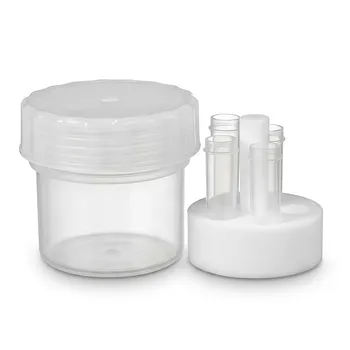
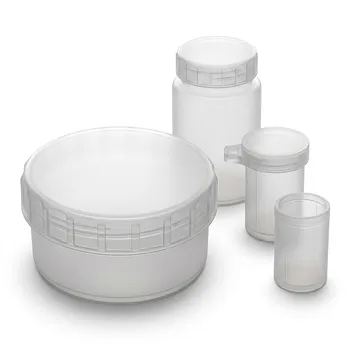
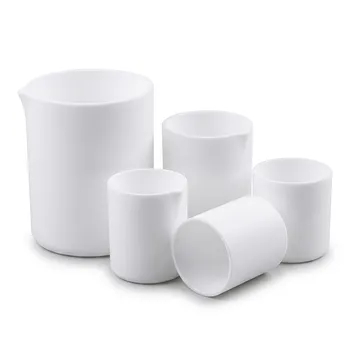
PTFE and PFA beakers, crucibles, digestion vessels, and vessel linings resist attack from strong acids, bases, and many organic solvents. This reduces the risk that the apparatus itself will react with a sample or release contaminants.
That property is essential in digestion, purification, high-purity fluid handling, and trace analysis, where even minor material interaction can affect results.
Components Retain Their Dimensions More Reliably
Chemical attack can cause ordinary plastics to swell, crack, soften, or lose mass. Because PTFE and PFA are difficult for reagents to penetrate or dissolve, they maintain their structure more reliably under corrosive conditions.
This supports consistent vessel geometry, dependable fluid transfer, and longer service life in demanding laboratory environments. Thermal exposure can still affect dimensions through melting, creep, or expansion, so chemical inertness does not eliminate the need for correct mechanical design.
Low Friction Supports Fluid Handling
High fluorination also lowers the coefficient of friction. In tubing, valves, liners, and machined components, this can reduce sticking and facilitate fluid movement.
The low-friction surface is a secondary benefit rather than the primary explanation for chemical resistance, but it complements the materials' inertness in laboratory fluid-handling systems.
How PTFE and PFA Compare With Other Plastics
Standard Plastics Have More Accessible Chemistry
Many conventional plastics contain hydrogen, oxygen, nitrogen, or other groups that are more chemically accessible than the fully fluorinated surface of PTFE or PFA. Depending on the plastic, these groups can be attacked by solvents, oxidants, acids, or bases.
As a result, standard plastics often have narrower chemical-resistance ranges and lower continuous-use temperatures.
Partially Fluorinated Polymers Offer Different Compromises
Materials such as PVDF, ETFE, and PCTFE contain hydrogen or chlorine in addition to fluorinated portions of their structures. They may offer greater hardness, creep resistance, or easier processing than PTFE and PFA.
However, that modified chemistry generally produces a narrower chemical-resistance range and lower continuous working temperatures than fully perfluorinated materials. The best choice depends on whether chemical inertness or mechanical strength is the dominant requirement.
PTFE and PFA Serve Different Manufacturing Needs
PTFE is especially valuable where maximum chemical and thermal resistance are the priority. Its high melt viscosity makes conventional melt processing difficult, so it is commonly formed through specialized processing and machining methods.
PFA is more readily melt-processable. That makes it suitable for intricate, transparent, and high-purity laboratory components where manufacturability and visibility matter alongside chemical resistance.
Understanding the Trade-offs
Chemical Inertness Does Not Mean Universal Compatibility
PTFE and PFA resist nearly all common laboratory acids, bases, and solvents, but no polymer should be assumed to be compatible with every chemical under every combination of temperature, pressure, concentration, and exposure time.
Particularly aggressive conditions, including extreme temperatures or specialized fluorinating environments, require a compatibility review based on the exact chemical and operating conditions.
Thermal Stability Has Practical Limits
A continuous-use rating near 260°C does not mean that the apparatus can be operated indefinitely above that temperature. Near or above the melting range, the material can lose its intended shape even if chemical decomposition has not yet become significant.
Thermal cycling, mechanical load, and pressure can also contribute to creep or dimensional change, especially in PTFE.
Mechanical Strength May Be Lower
High fluorination improves chemical resistance but can reduce certain mechanical properties compared with harder, partially fluorinated polymers. PTFE and PFA are not always the best choices when high stiffness, wear resistance, or resistance to sustained mechanical load is the primary concern.
Designers must therefore evaluate chemical exposure, temperature, load, and fabrication method together.
PTFE and PFA Are Not Identical
PTFE generally provides the higher melting point and greater extreme-temperature stability. PFA is easier to melt-process and can produce more complex shapes with high transparency and purity.
Selecting between them is a performance and manufacturing decision, not simply a choice between two interchangeable fluoroplastics.
Making the Right Choice for Your Goal
The material should be selected against the complete operating profile: reagent chemistry, temperature, exposure time, mechanical load, purity requirements, and required geometry.
- If your primary focus is maximum chemical resistance: Choose fully fluorinated PTFE or PFA apparatus for aggressive acids, bases, solvents, and high-purity applications.
- If your primary focus is extreme thermal stability: Favor PTFE where its higher melting point and superior high-temperature stability provide a meaningful advantage.
- If your primary focus is complex or transparent components: Favor PFA because its lower melt viscosity supports intricate, high-purity, and visually inspectable shapes.
- If your primary focus is mechanical hardness or creep resistance: Evaluate partially fluorinated materials such as ETFE, PVDF, or PCTFE, provided their chemical and temperature limits are acceptable.
High fluorination protects the polymer at the molecular level, giving PTFE and PFA the chemical inertness and thermal stability required for the most demanding laboratory environments.
Summary Table:
| Feature | Effect of High Fluorination |
|---|---|
| Chemical Resistance | Strong C-F bonds hinder chemical attack; dense fluorine sheath blocks reagent penetration. |
| Thermal Stability | High bond energy resists heat; continuous use up to 260°C. |
| Solvent Resistance | Reduced solubility and swelling in organic solvents. |
| Purity | Minimal leaching; ideal for trace analysis. |
| Applications | Beakers, digestion vessels, tubing, valves, and high-purity instruments. |
Discover KINTEK's Superior PTFE & PFA Lab Apparatus
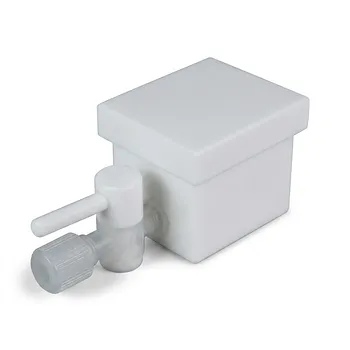
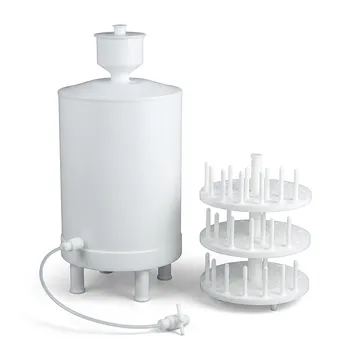
Ensure your lab operates with the highest levels of chemical resistance and thermal stability. KINTEK's PTFE and PFA products, exclusively dedicated to high-performance fluoropolymers, are engineered for demanding applications. From everyday labware to complex custom components, we deliver purity, durability, and precision.
- For Laboratories: Achieve reliable, contamination-free results with our range of PTFE/PFA vessels, tubing, and analytical tools.
- For Distributors: Benefit from our OEM/ODM support, certifications, and supply reliability, ensuring you can meet your customers' stringent requirements.
Contact us today to find the perfect solution for your lab or distribution needs.
Related Products
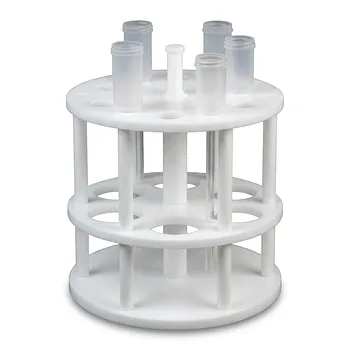
- Custom PFA Microcolumn Racks and PTFE Machined Low Background Corrosion Resistant Laboratory Fixtures
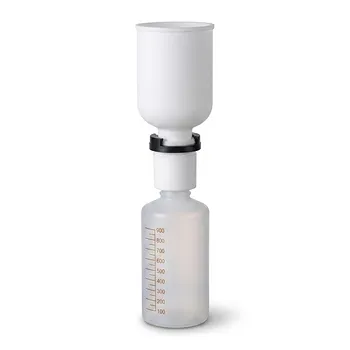
- PTFE PFA Vacuum Filtration System Corrosion Resistant Customizable Shatterproof Laboratory Device
- High Purity PFA Crucible and Corrosion Resistant PTFE Beaker for Trace Analysis and Custom Laboratory Applications
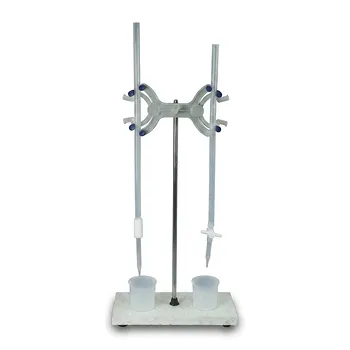
- High Purity PTFE PFA Burette Translucent Acid Base Resistant Reusable Laboratory Titration Equipment
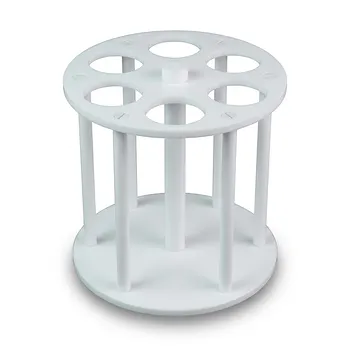
- Custom PFA Separatory Funnel Rack PTFE Machined Laboratory Support Stand Corrosion Resistant Low Background Fluoropolymer Fixture
People Also Ask
- What other PTFE lab accessories are commonly used? Essential Tools for Chemical Resistance & Purity
- What inherent material characteristics of non-melt-processable PTFE make it suitable for manufacturing high-purity laboratory containers and custom-machined apparatus?
- How do extreme temperatures and harsh chemical environments affect PTFE and PFA lab apparatus? Achieve Reliable Performance in Demanding Conditions
- What material considerations are critical for laboratory apparatus when performing cage-opening reactions on fluorinated silsesquioxanes using strong superacids? Choose PTFE/PFA for inertness and purity
- What surface chemical species and binding energy signatures are detected on PTFE fluoropolymer sample holders during XPS analysis? Key insights for accurate calcium detection.