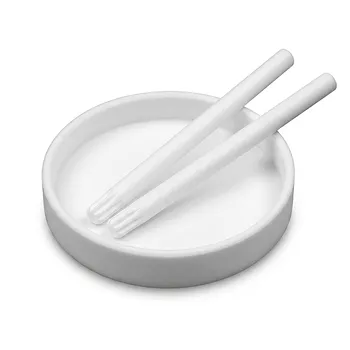
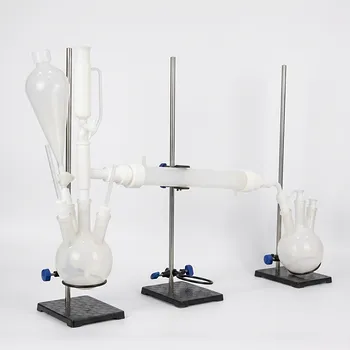
PTFE and PFA are preferred because they combine exceptional chemical resistance, high-temperature capability, low surface adhesion, and laboratory-grade purity in ways most other fluoropolymers cannot match. PTFE is especially valuable for custom machined components because it can be produced as stock shapes and precisely machined into vessels, seals, cell bodies, and fittings. PFA provides comparable chemical and thermal performance while also being melt-processable, transparent, weldable, and suitable for complex molded or extruded apparatus.
PTFE is the machining and low-friction benchmark; PFA is the fabrication-flexibility benchmark. Together, they cover demanding laboratory applications where chemical compatibility, contamination control, temperature stability, and component longevity matter more than low material cost or maximum mechanical strength.
Why Laboratory Applications Demand More Than Ordinary Plastics
Aggressive Chemicals Expose Material Weaknesses
Laboratory apparatus may contact concentrated acids, strong bases, organic solvents, oxidizing reagents, and highly reactive digestion mixtures. Materials such as PVC, polypropylene, and some lower-performance fluoropolymers can soften, swell, embrittle, or release extractables under these conditions.
The strong carbon-fluorine structure in PTFE and PFA provides a highly protective fluorinated surface. As a result, both materials offer exceptionally broad chemical resistance and remain stable in environments that quickly damage conventional plastics or corrode metals.
Contamination Control Is a Primary Design Requirement
In trace analysis, electrochemistry, pharmaceutical processing, and high-purity fluid handling, a component must not alter the sample. Surface corrosion, solvent absorption, particulate generation, and chemical leaching can all compromise results.
PTFE and PFA have low-wetting, nonstick surfaces that reduce sample adhesion, carryover, scaling, and cleaning difficulty. They are not automatically contamination-free in every application, because manufacturing, additives, surface condition, and cleaning procedures still matter, but the base materials are exceptionally well suited to high-purity service.
Elevated Temperatures Narrow the Material Choice
Heating, acid digestion, sterilization, and chemical processing can impose temperatures near the upper limit of ordinary laboratory plastics. PTFE and PFA generally support continuous service around 260°C, depending on grade, load, pressure, exposure time, and component geometry.
That thermal ceiling is substantially higher than the typical limits associated with materials such as FEP, ETFE, ECTFE, and PVDF. The advantage is particularly important for heated reaction vessels, digestion systems, hot fluid transfer, and components exposed to repeated thermal cycling.
Why PTFE Is Valuable for Custom Machined Components
PTFE Combines Inertness With Very Low Friction
PTFE has one of the lowest coefficients of friction among engineering polymers. This helps reduce sticking and mechanical resistance in valve seats, seals, bushings, sliding interfaces, and fluid-handling components.
The low-friction surface also supports cleanability. Samples and residues are less likely to remain attached to the component, which is valuable when the same apparatus is used for multiple analytical runs.
PTFE Is Well Suited to Precision Machining
Conventional PTFE has extremely high melt viscosity and cannot be processed like ordinary thermoplastics through standard injection molding. Manufacturers instead use methods such as powder compaction, sintering, paste extrusion, and machining from sintered stock shapes.
For custom work, this limitation can become an advantage. A solid PTFE billet or sheet can be CNC-machined into specialized reaction vessels, microwave digestion components, high-purity seals, manifolds, electrochemical cell bodies, and one-off geometries without requiring a dedicated mold.
Machining Supports Low-Volume and Specialized Designs
Laboratory apparatus is often produced in small quantities or designed around a particular instrument, sample volume, or experimental procedure. Machining allows the design to be adjusted without the tooling investment required for complex molded parts.
It also supports precise interfaces, bores, channels, threads, sealing surfaces, and mating features. The result is a practical route for prototypes, replacement parts, custom instruments, and research equipment.
Why PFA Is Valuable for Specialized Apparatus
PFA Retains Much of PTFE’s Chemical Performance
PFA is a fully fluorinated copolymer designed to preserve the high chemical inertness and thermal stability associated with PTFE. It is therefore appropriate for aggressive acids, solvents, and high-purity fluids across a broad operating range.
PFA is not identical to PTFE in every property, and material selection must still account for pressure, mechanical loading, permeability, and temperature. Its major distinction is that it can be conventionally melt-processed.
Melt-Processability Enables Complex Shapes
PFA can be molded and extruded into intricate, seamless, or thin-walled geometries that are difficult or impractical to produce from standard PTFE. This is important for tubing, fittings, valves, manifolds, fluidic channels, and specialized vessel designs.
Melt-processing can also produce integrated shapes with fewer joints or machined interfaces. Fewer connections may reduce potential leak paths and simplify cleaning in high-purity fluid systems.
Transparency Improves Process Visibility
PFA is available in clear or translucent forms, allowing operators to inspect fluid flow, bubbles, deposits, color changes, and sample behavior. That visibility is useful in digestion vessels, trace-analysis equipment, tubing, and process assemblies.
PTFE’s opacity is not a performance defect, but it can make internal inspection more difficult. Where visual monitoring is part of the workflow, PFA often provides the more practical design.
PFA Supports Welding and High-Purity Fabrication
PFA can be thermally welded or fabricated into assemblies that require chemically resistant joints. This makes it useful for leak-resistant fluid handling and custom apparatus where adhesives or mechanical fasteners would introduce contamination or chemical vulnerability.
Its combination of weldability, purity, clarity, and chemical resistance explains why PFA is commonly selected for specialized valve bodies, digestion vessels, fittings, and electrochemical or analytical components.
How PTFE and PFA Compare With Other Fluoropolymers
FEP Offers Processability but a Lower Thermal Ceiling
FEP is melt-processable and chemically resistant, but its typical continuous-use temperature is lower than that of PTFE and PFA. It can be an effective choice for less demanding tubing, films, insulation, and transparent components.
For aggressive heated digestion or applications requiring the highest practical thermal margin, PTFE or PFA is generally more suitable.
ETFE and ECTFE Favor Mechanical Strength
ETFE and ECTFE can provide higher tensile strength and better structural performance than PTFE. They may therefore be preferable for mechanically loaded parts, abrasion-prone environments, or applications where dimensional strength is more important than maximum inertness.
They do not usually provide the same combination of broad chemical resistance, low friction, and high-temperature capability that makes PTFE and PFA the laboratory benchmarks.
PVDF Is Useful but Less Universally Resistant
PVDF offers a useful balance of strength, chemical resistance, processability, and cost. It is widely used in chemical handling and industrial fluid systems.
However, its resistance to some aggressive reagents and its operating temperature range are generally below those of PTFE and PFA. It should not be treated as a universal substitute for fully fluorinated materials.
Understanding the Trade-offs
PTFE Is Difficult to Process
PTFE’s high melt viscosity prevents ordinary melt molding. This can increase manufacturing time and cost, especially for complex shapes or large production volumes.
Machining is effective for custom components, but designers must account for PTFE’s relatively low stiffness, creep under sustained load, and dimensional changes associated with temperature and processing history.
PFA Usually Costs More Than Conventional Plastics
PFA provides valuable performance, but resin cost and specialized processing can be higher than for polypropylene, PVC, PVDF, or other engineering plastics. The premium is justified when failure, contamination, corrosion, or replacement would be more expensive than the material itself.
For mild chemicals and moderate temperatures, selecting PFA or PTFE may provide performance that the application does not require.
Chemical Resistance Does Not Eliminate Design Constraints
Neither material should be specified solely from a chemical-resistance chart. Pressure, wall thickness, thermal expansion, creep, permeation, mechanical loading, surface finish, and exposure duration can determine whether a component is safe and reliable.
A reagent may be chemically compatible with PTFE or PFA while the completed geometry is unsuitable for pressure, vacuum, impact, or repeated cycling. Component design and operating conditions remain as important as resin selection.
Neither Material Is Ideal for Every Mechanical Application
PTFE and PFA generally have lower stiffness and load-bearing capability than stronger fluoropolymers such as ETFE or ECTFE. They may also be less suitable where abrasion resistance, tight dimensional stability, or high tensile strength dominates the design brief.
The correct choice depends on which failure mode is most serious: chemical attack, contamination, heat, leakage, wear, deformation, or structural overload.
Choosing Between PTFE and PFA
Select PTFE for Machined, Low-Friction Parts
PTFE is usually the stronger candidate when the component will be machined from stock material, must have very low friction, or requires excellent nonstick behavior. Typical examples include custom seals, valve seats, bushings, reaction vessels, cell bodies, and specialized inserts.
It is particularly practical for one-off designs, prototypes, replacement components, and low-volume laboratory hardware.
Select PFA for Complex, Clear, or Welded Assemblies
PFA is usually preferable when the apparatus requires melt-processed geometry, transparency, thermal welding, seamless fluid paths, or thin-wall construction. Typical examples include high-purity tubing, fittings, valve bodies, digestion vessels, and complex fluidic assemblies.
It is often the better choice when visual inspection and fabrication flexibility are as important as chemical inertness.
Making the Right Choice for Your Goal
The material should be selected from the complete operating profile rather than from chemical resistance alone.
- If your primary focus is custom CNC-machined components: Choose PTFE when low friction, nonstick behavior, broad chemical resistance, and flexible low-volume fabrication are central requirements.
- If your primary focus is complex or transparent laboratory apparatus: Choose PFA when melt-processability, weldability, clarity, and high-purity fluid handling are required.
- If your primary focus is maximum temperature and chemical margin: Evaluate PTFE and PFA first, then confirm the specific grade, pressure, exposure time, and geometry.
- If your primary focus is structural strength or dimensional stability: Compare ETFE, ECTFE, PVDF, or reinforced designs before defaulting to PTFE or PFA.
- If your primary focus is sample integrity: Prefer PTFE or PFA when their low-wetting surfaces and chemical inertness reduce contamination risk, while controlling fabrication cleanliness and validation.
PTFE and PFA are preferred because they provide the most reliable combination of purity, chemical inertness, thermal stability, and application-specific manufacturability for demanding laboratory components.
Summary Table:
| Property | PTFE | PFA | Other Fluoropolymers (FEP, ETFE, PVDF) |
|---|---|---|---|
| Chemical Resistance | Exceptional | Exceptional | Good to Moderate |
| Max Continuous Use Temp | ~260°C | ~260°C | Lower (FEP ~200°C, ETFE ~150°C, PVDF ~150°C) |
| Melt Processability | No (machined) | Yes (molded/extruded) | Varies (FEP yes, ETFE yes, PVDF yes) |
| Transparency | Opaque | Clear/Translucent | Varies (FEP clear, PVDF opaque) |
| Low Friction | Excellent | Good | Moderate |
| Fabrication Flexibility | Machining | Welding, molding | Limited welding |
Enhance Your Lab with High-Performance PTFE & PFA Solutions
At KINTEK, we specialize in precision-crafted laboratory apparatus and custom components exclusively from PTFE and PFA. Our extensive product line covers everything from basic labware to advanced electrochemical cells and microwave digestion vessels, all backed by end-to-end CNC machining capabilities for bespoke solutions. Whether you need a one-off prototype or high-volume orders, our materials ensure purity, durability, and reliability for your most demanding applications. Contact us today to discuss your specific requirements and benefit from our expert guidance. Get in touch now!
Related Products
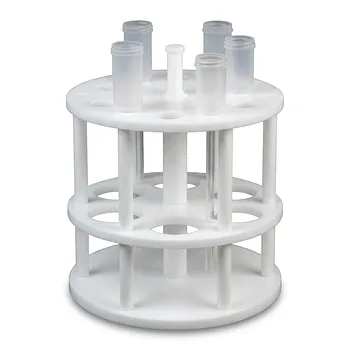
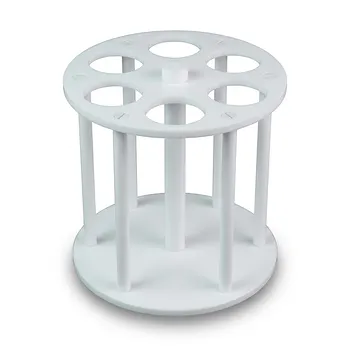
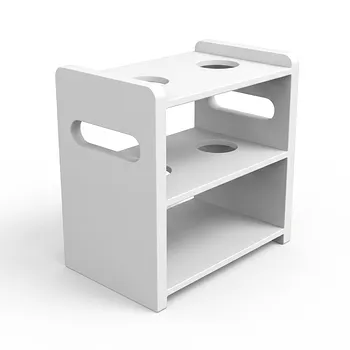
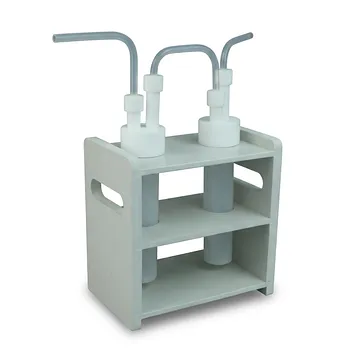
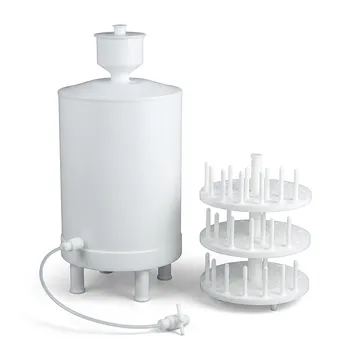
- Custom PFA Microcolumn Racks and PTFE Machined Low Background Corrosion Resistant Laboratory Fixtures
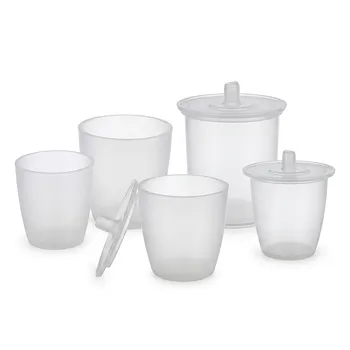
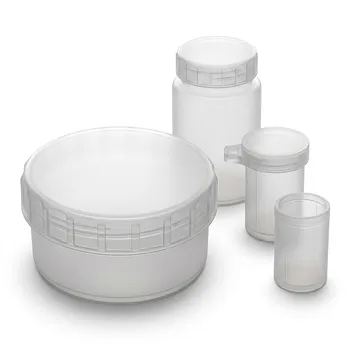
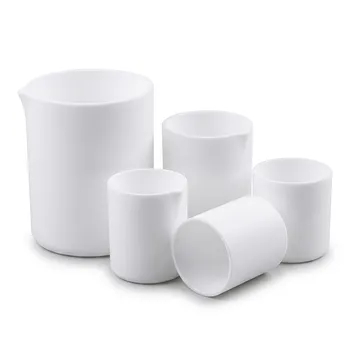
- High Purity PFA Crucible and Corrosion Resistant PTFE Beaker for Trace Analysis and Custom Laboratory Applications
- PTFE PFA Vacuum Filtration System Corrosion Resistant Customizable Shatterproof Laboratory Device
- Custom PTFE Constant Pressure Separatory Funnel Corrosion Resistant Low Background Labware for PFA Flasks
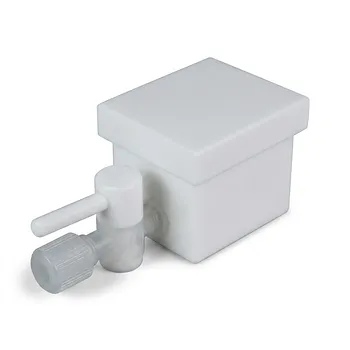
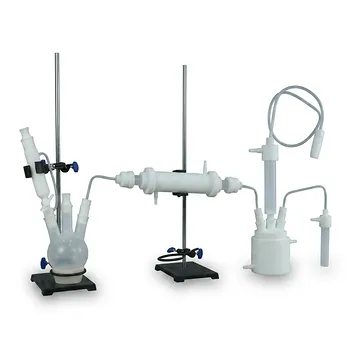
- Corrosion Resistant PTFE Support with PFA Transparent Reaction Tank and High Purity PFA Sampling Tube for Trace Analysis
People Also Ask
- What other PTFE lab accessories are commonly used? Essential Tools for Chemical Resistance & Purity
- What inherent material characteristics of non-melt-processable PTFE make it suitable for manufacturing high-purity laboratory containers and custom-machined apparatus?
- What unique material properties make fluorinated polymers like PTFE and PFA essential for high-performance laboratory equipment and chemical containment? Key advantages explained
- Why use PTFE/PFA for pH adjustment in dye studies? Ensure chemical purity and reliable adsorption data accuracy.
- How does PFA/PTFE labware benefit sol-gel supercapacitor prep? Ensure Purity & Cycling Stability