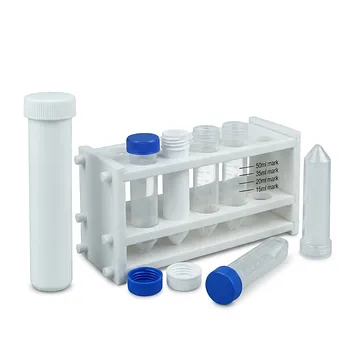
Fluorinated polymers such as PTFE and PFA are essential when laboratory equipment must remain chemically clean, stable, and reliable under extreme conditions. Their strong carbon-fluorine molecular structure gives them exceptional resistance to acids, aggressive organic solvents, and reactive reagents. Combined with high thermal stability, low surface energy, and minimal moisture absorption, these properties help prevent equipment degradation, sample contamination, adsorption, and unwanted leaching.
PTFE and PFA protect both the sample and the containment system: they resist chemical attack while presenting a clean, non-wetting surface that contributes little contamination to high-purity processes.
Why Fluoropolymers Perform in Harsh Laboratory Conditions
Strong Carbon-Fluorine Bonds Resist Chemical Attack
The exceptional inertness of fluoropolymers is rooted in the strength and stability of their carbon-fluorine bonds. This molecular architecture makes PTFE and PFA highly resistant to many strong acids, aggressive solvents, and reactive laboratory chemicals.
That resistance is particularly important in digestion vessels, reagent containers, tubing, valves, and fittings. The material is less likely to corrode, swell, embrittle, or release degradation products into the process stream.
Thermal Stability Supports Demanding Procedures
PTFE and PFA maintain useful performance across broad temperature ranges compared with many conventional laboratory plastics. This makes them suitable for applications involving heated reactions, chemical digestion, sterilization, and hot fluid transfer.
Thermal stability does not mean unlimited temperature capability. Actual limits depend on the specific grade, mechanical load, exposure time, and design of the component.
Low Surface Energy Reduces Adhesion and Retention
Fluoropolymers have exceptionally low surface energy, producing non-wetting and non-sticking behavior. Liquids are less likely to spread across or adhere strongly to the surface.
In trace analysis and high-purity fluid handling, this can reduce residue, sample retention, cross-contamination, and the difficulty of cleaning vessels or transfer lines. It also supports low-friction behavior in moving or sealing components.
Minimal Moisture Absorption Helps Preserve Purity
Low moisture absorption limits the amount of water retained by the material or introduced into a process. This matters when handling moisture-sensitive reagents, concentrated chemicals, or samples where small changes in composition can affect analytical results.
The benefit is practical as well as chemical: equipment is less likely to carry residual moisture from one operation into the next.
How PTFE and PFA Protect Laboratory Processes
They Minimize Contamination During Trace Analysis
Trace analysis can be compromised by very small amounts of extractables, adsorbed species, or residues. PTFE and PFA are used for vessels, containers, tubing, and custom-machined apparatus because they resist chemical degradation and generally contribute little material to the sample under suitable operating conditions.
This makes them valuable for sample preparation, reagent storage, digestion, and high-purity analytical workflows.
They Maintain Containment With Aggressive Chemicals
Chemical containment requires more than a material that survives brief contact. The container, fitting, valve, or tube must retain its mechanical and dimensional integrity over the expected exposure period.
Fluoropolymer components are effective because they combine chemical resistance with thermal and environmental stability. They can therefore serve as barriers between aggressive media and the surrounding equipment or laboratory environment.
They Support Clean, Reliable Fluid Transfer
Tubing, valves, and fittings must resist both the transported chemical and the repeated demands of operation. The low-friction, non-wetting surfaces of PTFE and PFA help limit fluid retention and simplify cleaning.
Their chemical resistance also reduces the likelihood that the transfer path will introduce corrosion products or polymer degradation products into a high-purity fluid stream.
They Remain Stable in Environmental Exposure
Fluoropolymers generally provide strong resistance to weathering, light-related degradation, and other environmental stresses. This stability is useful when equipment is exposed to changing laboratory conditions or must remain reliable over long service periods.
For containment systems, durability reduces the risk that gradual environmental degradation will weaken the material or alter its surface behavior.
PTFE and PFA Have Different Practical Strengths
PTFE Excels at Inertness and Low Friction
PTFE is widely selected for applications requiring very high chemical inertness, low surface energy, and low-friction performance. Common examples include seals, liners, tubing, vessels, and custom-machined laboratory components.
Its low-friction behavior can be valuable in valves and other moving interfaces, while its resistance to aggressive chemicals supports long-term use in corrosive environments.
PFA Supports Complex and High-Purity Components
PFA provides the same fundamental fluorinated-polymer advantages while being suitable for the manufacture of many high-purity laboratory and fluid-handling components. It is commonly used for vessels, bottles, tubing, fittings, and digestion equipment.
The correct choice between PTFE and PFA depends on factors such as temperature, mechanical loading, fabrication method, transparency requirements, dimensional tolerances, and the exact chemicals involved.
Understanding the Trade-offs
Chemical Inertness Does Not Eliminate All Material Limits
PTFE and PFA are highly resistant, but no material is universally unaffected by every chemical under every condition. Permeation, temperature, concentration, exposure time, mechanical stress, and component geometry can all influence performance.
Material compatibility should therefore be checked against the actual chemical and operating conditions rather than inferred from the polymer name alone.
Low Surface Energy Makes Fabrication More Difficult
The same low surface energy that reduces contamination and adhesion can make fluoropolymers difficult to bond, coat, or join. Surface preparation and connection design require particular care.
Fluoropolymers also present processing challenges because of high melt viscosity and limited solubility in common solvents. For complex or precision components, machining may be preferred over conventional processing methods.
PTFE Can Require Mechanical Design Compensation
PTFE's low friction and chemical resistance come with mechanical considerations, including deformation or creep under sustained load. Seals, threaded components, and pressure-bearing parts must be designed with the material's behavior in mind.
A chemically compatible polymer can still fail if its mechanical design, support, or temperature exposure is unsuitable.
Overheating Must Be Controlled
Fluoropolymers have high thermal stability, but excessive heating can still cause decomposition and produce hazardous or corrosive products. Processing and laboratory use must remain within the manufacturer's specified temperature limits.
Thermal resistance should be treated as an operating capability, not permission to expose the material to uncontrolled heat.
Making the Right Choice for Your Goal
The best material choice starts with the chemical, thermal, purity, and mechanical requirements of the application.
- If your primary focus is trace-analysis purity: Choose appropriately specified PTFE or PFA components with low contamination and extractables risk, and use cleaning and handling procedures that preserve that advantage.
- If your primary focus is aggressive chemical containment: Select the fluoropolymer based on verified chemical compatibility, temperature, concentration, exposure time, and mechanical loading.
- If your primary focus is fluid transfer reliability: Evaluate tubing, valves, and fittings as a complete system, paying attention to low retention, sealing behavior, pressure, permeation, and connection design.
- If your primary focus is custom laboratory equipment: Account for fluoropolymer processing constraints, dimensional stability, creep, and joining requirements before finalizing the design.
PTFE and PFA are powerful containment and laboratory materials because they combine chemical inertness, thermal stability, low adhesion, and low contamination potential in one material family.
Summary Table:
| Property | Benefit |
|---|---|
| Strong carbon-fluorine bonds | Resists acids, solvents, and reactive chemicals |
| Thermal stability | Suitable for heated reactions and sterilization |
| Low surface energy | Non-stick, reduces contamination and retention |
| Minimal moisture absorption | Maintains purity and reduces residual moisture |
Ready to upgrade your lab with high-performance PTFE and PFA equipment? As a leading manufacturer of fluoropolymer labware, KINTEK offers a full range of products from basic beakers to custom electrochemical cells, backed by our CNC machining capabilities. Ensure purity and reliability in your work—contact us today for a tailored solution! Get in touch.
Related Products
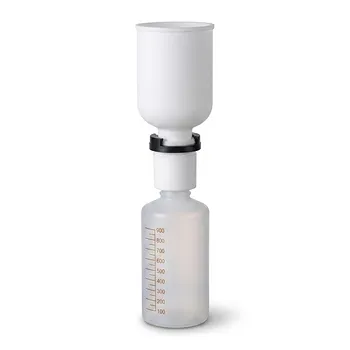
- PTFE PFA Vacuum Filtration System Corrosion Resistant Customizable Shatterproof Laboratory Device
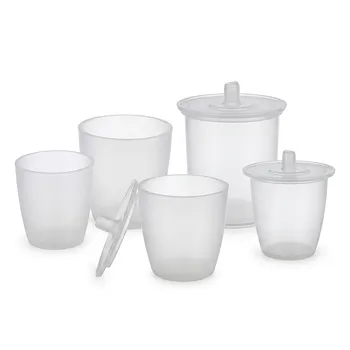
- High Purity PFA Crucible and Corrosion Resistant PTFE Beaker for Trace Analysis and Custom Laboratory Applications
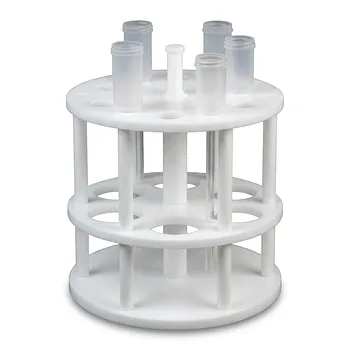
- Custom PFA Microcolumn Racks and PTFE Machined Low Background Corrosion Resistant Laboratory Fixtures
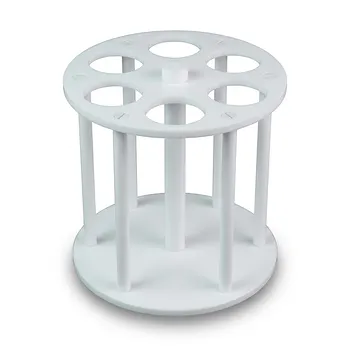
- Custom PFA Separatory Funnel Rack PTFE Machined Laboratory Support Stand Corrosion Resistant Low Background Fluoropolymer Fixture
- Custom PTFE Constant Pressure Separatory Funnel Corrosion Resistant Low Background Labware for PFA Flasks
People Also Ask
- What makes PTFE filtration systems advantageous for industrial and scientific use? Unmatched Chemical & Thermal Stability
- What temperature resistance do PTFE filters offer? Unmatched Thermal Stability from -200°C to +260°C
- How does the hydrophobicity of PTFE filters benefit their use? Ensure Uninterrupted Gas Flow and Solvent Filtration
- Which chemicals are fully compatible with PTFE filters? Discover Unmatched Chemical Resistance
- What steps are involved in selecting the proper PTFE filter? A 4-Step Guide to Optimal Filtration