Temperature elevation generally lowers fluoropolymer bulk density through predictable thermal expansion, while thermal stability depends primarily on fluorination level, operating temperature, and mechanical loading. Molecular-dynamics assessments from 300–600 K show an approximately linear decrease in bulk density as temperature rises. Fully fluorinated polymers remain denser than hydrogenated fluoropolymers, and changes in internal segment length or chain topology have comparatively little effect on overall density.
The key design point is that fluoropolymers typically expand gradually rather than undergoing an abrupt volumetric transition, but their mechanical load capacity can still decline at elevated temperature. Material selection must therefore consider both chemical thermal stability and temperature-dependent strength.
How Temperature Changes Bulk Density
Thermal expansion reduces density
As temperature increases, molecular motion and average intermolecular spacing increase. The material therefore occupies slightly more volume, causing its bulk density to decrease.
Within the 300–600 K range evaluated in molecular-dynamics studies, this decrease is approximately linear. That predictable response supports dimensional compensation and thermal-expansion calculations for laboratory vessels.
Fully fluorinated polymers remain denser
Fully fluorinated chain segments exhibit substantially higher bulk density than hydrogenated fluoropolymer segments. The distinction reflects differences in molecular composition and chain packing.
This does not mean that density alone determines vessel performance. Fluorination level also strongly affects chemical stability, degradation pathways, and allowable service temperature.
Chain architecture has limited density influence
Changing internal segment length or polymer-chain topology produces relatively little change in the overall bulk density compared with the effect of temperature and fluorination.
For vessel design, this means that the thermal-density response can often be treated as a material-level property rather than relying solely on detailed variations in chain architecture.
What the Density Trend Means for Laboratory Vessels
Dimensional changes are gradual
A near-linear density decline indicates gradual thermal expansion rather than a sudden volumetric collapse or discontinuity across the studied temperature range.
This helps maintain structural consistency during heating, particularly in digestion vessels, reaction cells, and custom high-temperature laboratory apparatus.
Sealing and fit must still be evaluated
Even predictable expansion can affect threaded closures, liners, gaskets, press fits, and vessel clearances. Components made from different materials may expand at different rates.
Designs should therefore account for differential thermal expansion, especially where containment, pressure retention, or precision alignment is important.
Density is not a pressure-rating parameter
A stable density trend does not guarantee that a vessel will retain its room-temperature pressure rating at elevated temperature. Tensile strength, modulus, creep resistance, and dimensional restraint may become more important than density.
For example, FEP can remain highly flexible at temperatures approaching 200°C while its ultimate tensile strength decreases substantially. High-temperature vessels may therefore require pressure derating, external support, or a reinforced construction.
How Temperature Affects Thermal Stability
Strong carbon–fluorine bonds provide the foundation
Fluoropolymers derive much of their thermal and chemical resistance from the high bond energy of carbon–fluorine linkages.
This structure supports resistance to aggressive acids, bases, solvents, swelling, and chemical leaching—properties that are especially valuable for high-purity laboratory vessels and trace-analysis equipment.
Fully fluorinated materials offer the highest stability
Perfluorinated materials contain no hydrogen in the polymer backbone. They generally provide superior resistance to high-temperature degradation and can maintain flexibility without the embrittlement associated with some less-fluorinated materials.
Depending on the specific grade and design, fully fluorinated materials may support continuous service above 300°C. However, individual products must be checked against their manufacturer’s rated continuous-use temperature.
Hydrogenated backbones have lower limits
Fluoropolymers containing hydrogen in the main chain generally have lower long-term operating limits, commonly around 200–215°C in the supplied reference context.
At elevated temperature, they may be more susceptible to dehydrofluorination, particularly in the presence of metal oxides. For severe thermal processing, fully fluorinated materials are generally the safer choice when compatible with the application.
The Difference Between Thermal Stability and Mechanical Retention
Chemical integrity can remain high while strength falls
A fluoropolymer may resist chemical decomposition while losing tensile strength or stiffness as temperature rises. These are separate performance questions.
PTFE and PFA, for example, are widely used for high-temperature chemical containment, with commonly cited continuous operating limits near 260°C for many grades. That does not mean their mechanical properties remain identical to those at room temperature.
Flexibility may be retained
Elevated temperature often reduces modulus and tensile strength while preserving substantial elongation. This can help a vessel or liner accommodate thermal expansion without cracking.
The trade-off is reduced resistance to pressure, deformation, and sustained mechanical loads. Flexible behavior is beneficial for thermal cycling but can be problematic for unsupported vessel walls.
Thermal conditioning can improve durability
Extended high-temperature conditioning may improve selected mechanical properties in some high-performance fluoropolymers. The supplementary data describe conditioning at 300°C for seven days increasing MIT flex life from approximately 14,000 to 53,000 cycles, while also improving tensile strength and modulus at 200°C.
These results should not be generalized to every fluoropolymer grade. Conditioning effects depend on formulation, processing history, crystallinity, geometry, atmosphere, and the specific test method.
Understanding the Trade-offs
Higher temperature improves some properties but reduces others
Heating can increase flexibility and, after suitable conditioning, may improve resistance to certain forms of cyclic fatigue. At the same time, tensile load capacity and stiffness may decline during operation.
The practical consequence is that a vessel can remain chemically intact yet deform, creep, or lose pressure capability if it is mechanically overstressed.
Linear density behavior does not eliminate thermal fatigue
Predictable expansion reduces the risk of abrupt dimensional change, but repeated heating and cooling still impose cyclic strain.
Thermal gradients are particularly important. A vessel exposed to uneven heating may experience local expansion differences that are more damaging than uniform bulk expansion.
Solvent exposure can compound temperature effects
At room temperature, many fluoropolymers show minimal solvent absorption and strong retention of mechanical properties. At approximately 50–60°C, solvent uptake can increase and tensile-strength retention can decline, particularly with chlorinated solvents.
Therefore, a vessel exposed simultaneously to heat, solvent, pressure, and cyclic loading must be evaluated under the combined conditions rather than by relying on a temperature rating alone.
Service-temperature claims require material-specific verification
“Fluoropolymer” describes a family of materials, not one universal performance envelope. PTFE, PFA, FEP, and hydrogen-containing fluoropolymers differ in strength, melt behavior, creep, processing, and long-term temperature capability.
Use the specific grade’s data sheet and application testing to establish the allowable temperature, pressure, chemical exposure, and duration.
How to Apply This to Your Project
Temperature-driven density reduction is predictable, but vessel reliability depends on how that expansion interacts with mechanical and chemical demands.
- If your primary focus is dimensional stability: Use the approximately linear thermal-density response to calculate expansion, clearances, and seal movement across the operating range.
- If your primary focus is maximum thermal resistance: Prefer a fully fluorinated material, subject to the specific grade’s continuous-use rating and vessel design requirements.
- If your primary focus is pressure containment: Apply high-temperature pressure derating and evaluate tensile strength, modulus, creep, wall support, and thermal gradients.
- If your primary focus is cyclic heating and cooling: Assess thermal fatigue and consider appropriate conditioning, while validating performance on the actual material and geometry.
- If your primary focus is chemical purity: Confirm resistance to the exact reagents, solvents, temperature, and exposure duration because thermal and solvent effects can reduce mechanical retention.
Design for thermal expansion, but qualify the material for the combined effects of temperature, pressure, chemistry, and cycling.
Summary Table:
| Factor | Effect on Density | Effect on Thermal Stability |
|---|---|---|
| Temperature Increase | Linear decrease in bulk density (300-600 K) | Depends on fluorination level; fully fluorinated more stable |
| Fluorination Level | Fully fluorinated denser than hydrogenated | Higher fluorination improves stability |
| Chain Architecture | Minimal impact on density | Not directly related |
| Mechanical Loading | Not directly related | Strength and modulus decrease with temperature |
| Thermal Conditioning | May improve density stability | Can improve flexibility and fatigue resistance |
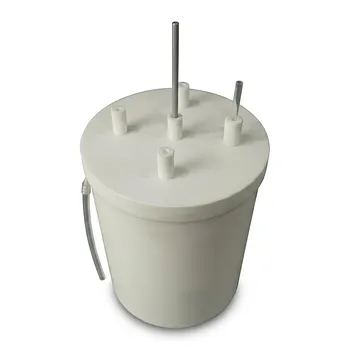
Ensure your high-temperature lab vessels meet rigorous standards. At KINTEK, we specialize in high-performance PTFE and PFA labware, engineered for thermal and chemical resilience. Our custom machining capabilities allow us to design vessels that accommodate thermal expansion while maintaining integrity. Contact us today to discuss your specific requirements and leverage our expertise in fluoropolymer applications. Contact us to get started.
Related Products
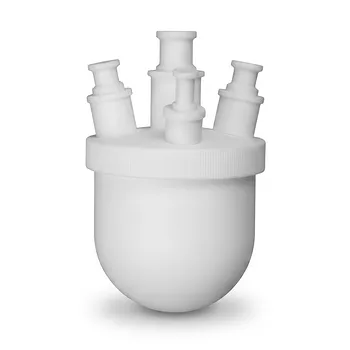
- High Temperature Corrosion Resistant PTFE Reaction Flask Custom Multi Neck Laboratory Vessel with Flat or U Bottom
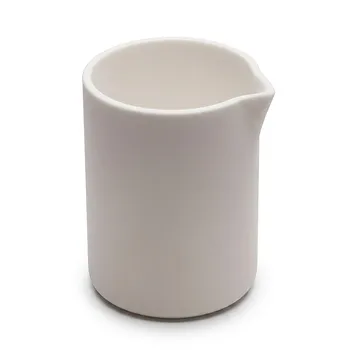
- Custom Thickened PTFE Beaker High Temperature Hot Plate Heating Resistant Precision Laboratory Labware Customizable Fluoropolymer Vessel
- Custom PTFE Flask 250ml High Purity Fluoropolymer Laboratory Vessel for Chemical Research
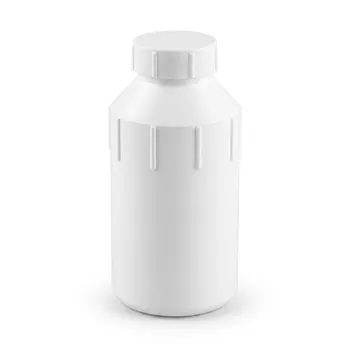
- Custom PTFE Wide Mouth Reagent Reaction Bottle Corrosion Resistant High Temperature Large Capacity Straight Body Laboratory Vessel
- Custom PTFE Beaker 350ml High Purity Laboratory Vessel with Optional Lid for Hot Plate Heating Applications
People Also Ask
- What are the key steps for structural integrity in molded PTFE lab reaction vessels? Master fine powder processing.
- How do perfluorinated solvent environments influence the selection of reaction vessels and fluid handling components in nonaqueous emulsion polymerizations? Choose fluoropolymer materials.
- Why are high-purity PTFE or PFA reaction vessels recommended for the synthesis of PANI-TiC hybrid materials? - Guide
- Why are fluoroplastic (PTFE) reaction vessels recommended for Methylene Blue (MB) adsorption kinetic experiments?
- Why is a PTFE reaction vessel required for Ti3C2Tx MXene synthesis? Ensure Safe HF Etching & High Purity