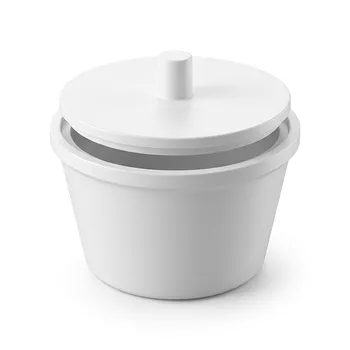
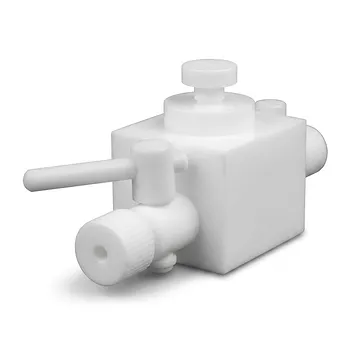
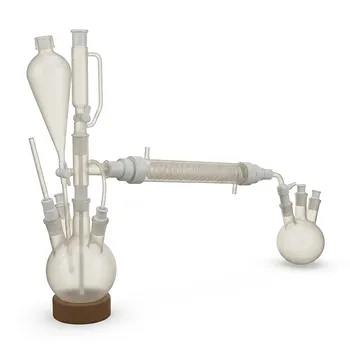
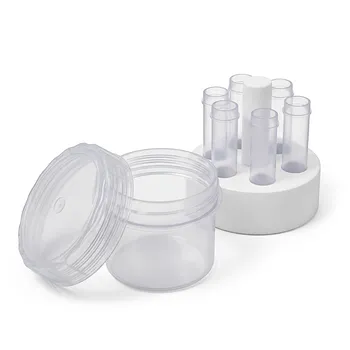
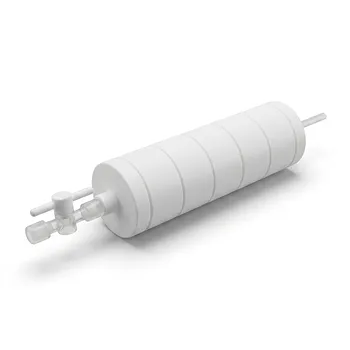
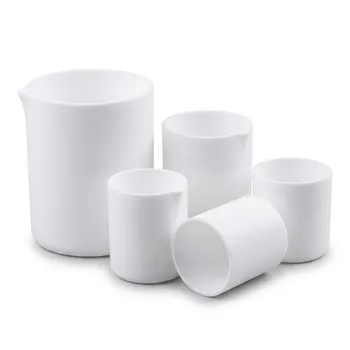
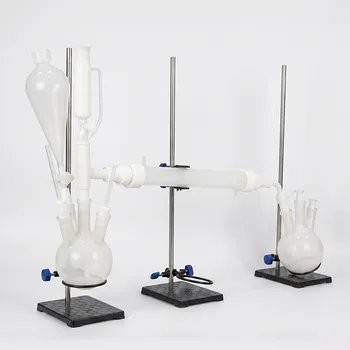
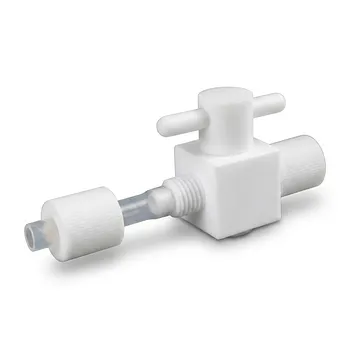
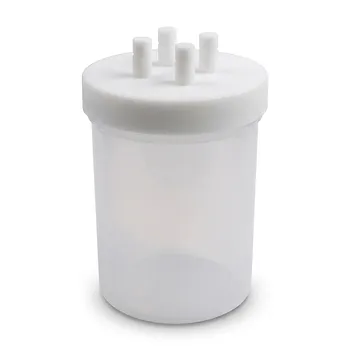
Fluoropolymers are particularly suitable because they combine exceptional resistance to caustic chemicals with high-temperature stability. Strong carbon–fluorine bonds and the electron-withdrawing effect of fluorine protect the polymer backbone from oxidation and chemical attack, while highly fluorinated materials retain their integrity in concentrated alkaline solutions at elevated temperatures. This makes materials such as PTFE and PFA well suited to digestion vessels, reagent containers, tubing, valves, and storage tanks used with harsh bases.
The central advantage is simultaneous protection against chemical attack, heat, contamination, and material degradation. Fluoropolymers allow aggressive alkaline processes to operate at demanding temperatures without the container becoming a significant source of failure or impurities.
Why Harsh Alkaline Processes Challenge Materials
Alkaline Reagents Can Attack Conventional Materials
Strong bases such as potassium hydroxide and sodium hydroxide can cause swelling, embrittlement, dissolution, or surface degradation in ordinary plastics. At elevated temperatures, these reactions generally become more severe because heat accelerates chemical interactions and material aging.
Glass is not universally safe either. Prolonged exposure to extreme pH and elevated temperature can damage some glass compositions or introduce extractable components such as silicates, compromising sensitive processes.
Heat Increases Chemical Stress
A material that performs adequately at room temperature may fail when the same reagent is heated. High-temperature alkaline digestion, cleaning, and hydrothermal processing place simultaneous demands on chemical resistance, mechanical stability, and dimensional integrity.
The container must remain stable while resisting pressure, thermal cycling, permeation, and prolonged contact with the reagent.
The Molecular Basis of Fluoropolymer Performance
Strong Carbon–Fluorine Bonds Resist Attack
Fluoropolymers contain a high proportion of carbon–fluorine bonds, among the strongest bonds in organic polymer structures. These bonds make the polymer backbone difficult for aggressive reagents to break apart.
The fluorine atoms also shield the carbon backbone from direct exposure, reducing opportunities for oxidation and other chemical reactions.
Fluorine Reduces Polymer Reactivity
Fluorine strongly attracts electrons, changing the electronic structure of the polymer and lowering the energy of its reactive molecular orbitals. In practical terms, this reduces the likelihood that alkaline reagents, oxidants, or other chemicals will initiate destructive reactions within the material.
This molecular stability explains why highly fluorinated polymers are far less reactive than many conventional plastics.
Low Surface Energy Limits Residue and Contamination
Fluorination also produces very low surface energy. Liquids spread and adhere less readily, so residues are easier to remove and samples are less likely to remain trapped on the surface.
For trace analysis and digestion work, this supports more complete liquid recovery, easier cleaning, and lower risk of cross-contamination.
How Fluoropolymers Perform Under Hot Alkali
PFA Maintains Mechanical Integrity
PFA has demonstrated strong compatibility with sodium hydroxide solutions from approximately 10% to 50% at temperatures up to 120°C over seven-day exposures. Reported weight changes were negligible, while tensile strength and elongation remained at roughly 93% to 99% of their original values.
PFA is also compatible with potassium hydroxide solutions up to their boiling points, making it appropriate for demanding alkaline reagent handling and heated process equipment.
Thermal Stability Extends the Operating Envelope
Highly fluorinated polymers can have thermal decomposition temperatures above 450°C, although the practical operating temperature depends on the specific polymer, design, load, pressure, and exposure time. PFA and PTFE components are commonly specified for applications requiring structural stability and low outgassing at temperatures approaching 260°C.
The decomposition temperature should not be confused with a recommended continuous-use temperature. Equipment design and process conditions still determine the safe operating limit.
Structural Stability Protects the Process
When the fluoropolymer remains dimensionally and mechanically stable, it is less likely to crack, deform, shed particles, or release degradation products into the process. This is especially important for digestion vessels, storage containers, transfer tubing, valves, and seals.
Material stability protects both the equipment and the chemical procedure.
Why Purity Matters in Chemical Processing
Low Extractables Support Trace Analysis
Fluoropolymers are highly resistant to concentrated acids, strong bases, and many organic solvents. Their low reactivity reduces the likelihood of ion leaching or chemical extraction from the container into the sample.
This is valuable when analyzing trace concentrations, where even small amounts of contamination can affect results.
Nonstick Surfaces Improve Recovery
The low surface energy of PTFE and PFA helps prevent aggressive reagents and dissolved samples from adhering strongly to the equipment. More complete recovery improves reproducibility and reduces the amount of analyte lost during transfers and cleaning.
This benefit is operational as well as chemical: equipment can be cleaned more efficiently between runs.
Low Outgassing Reduces Interference
Fluoropolymer components generally exhibit low volatility and low outgassing within their intended temperature range. That characteristic helps limit contamination in enclosed digestion or high-purity handling environments.
As with all materials, performance depends on proper cleaning, conditioning, and use within the specified temperature limits.
Understanding the Trade-offs
Fluoropolymers Are Not Suitable for Every Condition
Fluoropolymers are highly resistant to hot alkaline media, but they are not universally immune to every chemical or process condition. Certain highly reactive fluorinating agents, molten alkali metals, radiation environments, or temperatures beyond the material’s rating can cause damage.
Compatibility must therefore be checked against the exact reagent concentration, temperature, pressure, exposure time, and mechanical conditions.
Mechanical Strength Can Limit Design
Chemical resistance does not eliminate mechanical limitations. PTFE, in particular, has relatively high creep and can deform under sustained load, pressure, or elevated temperature.
PFA may provide advantages where melt-processability, transparency, or improved dimensional control is important, but the final design still needs appropriate wall thickness, support, and pressure ratings.
Cost and Fabrication May Be Higher
Fluoropolymer components typically cost more than standard plastic or glass alternatives. Machining, welding, sealing, and joining may also require specialized methods.
The additional cost is most defensible when failure, contamination, replacement, or loss of analytical validity would be more expensive than the material itself.
Permeation Still Requires Consideration
Low reactivity does not mean zero permeation for every chemical. Long exposure to some solvents or gases can lead to transport through the polymer, so storage and fluid-handling designs should consider permeation as well as corrosion resistance.
Making the Right Choice for Your Goal
The appropriate fluoropolymer and component design should be selected from the full process envelope, not from temperature or chemical concentration alone.
- If your primary focus is hot alkaline digestion: Use a highly fluorinated material such as PFA or PTFE that is rated for the reagent concentration, temperature, pressure, and exposure duration.
- If your primary focus is trace analytical purity: Prioritize low extractables, low contamination risk, cleanability, and validated preparation procedures.
- If your primary focus is long-term reagent storage: Evaluate chemical compatibility together with permeation, sealing performance, dimensional stability, and temperature cycling.
- If your primary focus is fluid transfer or valve operation: Consider low friction, wear resistance, creep, seal design, and the mechanical demands of repeated operation.
- If your primary focus is cost control: Reserve fluoropolymers for process steps where chemical attack, contamination, or thermal failure would create significant operational risk.
Fluoropolymers are effective in harsh alkaline processes because their molecular stability preserves both equipment performance and chemical purity under conditions that challenge ordinary materials.
Summary Table:
| Key Advantage | Description |
|---|---|
| Chemical Resistance | Strong C-F bonds resist attack from concentrated bases and oxidizers. |
| Thermal Stability | Maintains integrity at temperatures up to 260°C (PFA/PTFE). |
| Low Contamination | Low extractables and nonstick surface prevent sample contamination. |
| Structural Integrity | Resists deformation and cracking under thermal and chemical stress. |
| Cleanability | Easy to clean, improving recovery and reducing cross-contamination. |
Enhance your alkaline digestion and high-purity processes with KINTEK's PTFE and PFA labware, designed for extreme chemical and thermal demands. From digestion vessels to custom CNC-machined parts, our fluoropolymer products ensure reliability and purity. Contact us today to discuss your requirements and get a quote: #ContactForm.
Related Products
- High Purity PTFE PFA Plastic Crucible for Corrosion Resistant Acid Digestion and Trace Analysis
- Custom PTFE Filtration System Acid Resistant High Purity Semiconductor Grade Chemical Processing Filter
- High Purity PFA Crucible and Corrosion Resistant PTFE Beaker for Trace Analysis and Custom Laboratory Applications
- PTFE PFA Vacuum Filtration System Corrosion Resistant Customizable Shatterproof Laboratory Device
- PTFE Distillation Condensation Apparatus High Temperature Hydrofluoric Acid Resistant Fluorination Reaction Flask
People Also Ask
- Why use high-purity PFA/PTFE for PtAu/Graphene ICP digestion? Ensure Ultra-Trace Accuracy & Resist Aqua Regia.
- How does heat-activated persulfate degrade PFOA? Key insights for PFAS analysis and digestion vessels
- Why is PFA material considered essential for high-purity trace analysis laboratory equipment? Achieve ppt-Level Precision
- Why is the use of high-purity PFA or PTFE labware critical during TiO2 nanoparticle purification? Protect Sample Purity
- Why are PTFE or PFA vessels ideal for biomass acid/base treatments? Ensure Purity and Accuracy in Your Research.