PFA material is the definitive choice for high-purity trace analysis. Its essential nature stems from its near-total chemical inertness and an exceptionally low metal ion leaching background. By eliminating the risk of sample contamination and preventing the loss of target analytes through surface adsorption, PFA ensures the ultra-high sensitivity and data reproducibility required in advanced analytical research.
The central takeaway: PFA is indispensable because it acts as a neutral vessel that neither adds impurities to a sample nor absorbs the elements being measured. This dual protection is the only way to maintain the integrity of results when measuring elements at parts-per-billion (ppb) or parts-per-trillion (ppt) levels.
The Mechanics of Sample Integrity
Eliminating Metal Ion Leaching
Traditional laboratory materials, such as standard plastics or glass, can leach metal ions into a sample over time. PFA possesses an extremely low metal ion background, meaning it does not introduce secondary contamination during storage or digestion. This property is critical for ensuring that the "background noise" in an experiment remains low enough to detect trace elements.
Preventing Analyte Loss via Adsorption
In trace analysis, the concentration of target elements is so low that even a small amount of sticking to the container walls can ruin the data. PFA features superior surface anti-adsorption properties that prevent target analytes from bonding to the vessel walls. This ensures that the full concentration of the sample reaches the analytical instrument, maintaining high sensitivity.
Unmatched Chemical Inertness
Trace analysis often requires the use of aggressive reagents like concentrated nitric or hydrofluoric acids. PFA is chemically inert to almost all solvents and corrosive chemicals, ensuring the material does not degrade or react during complex sample treatments. This stability prevents the introduction of reaction byproducts that could interfere with analytical results.
Comparison with Traditional Materials
Why Glass Fails in Trace Analysis
While glass is a laboratory staple, it is often unsuitable for high-purity work because it can leach boron, silicon, and various metal ions. Furthermore, the active sites on glass surfaces frequently lead to significant adsorption of metal cations, which skews results downward. PFA avoids these biological and chemical interactions entirely.
PFA vs. Standard Fluoropolymers
Compared to other plastics like PTFE or FEP, high-purity PFA offers a more consistent and lower leaching profile. The smooth surface morphology of PFA reduces the likelihood of physical entrapment of contaminants, making it easier to clean and reuse without risking cross-contamination between experiments.
Understanding the Trade-offs
Cost and Resource Investment
The primary drawback of PFA labware is its significantly higher initial cost compared to glass or standard polypropylene. However, this is usually offset by its long-term durability and the reduction in "lost" research hours caused by contaminated samples or inaccurate data.
Physical Limitations
While PFA is thermally stable, it is a softer material than glass and can be prone to scratching if handled with abrasive tools. Scratches can create micro-pockets that trap contaminants, so users must follow specific cleaning protocols to maintain the material's high-purity performance.
Applying PFA to Your Laboratory Workflow
Choosing the right equipment depends on the sensitivity of your specific analytical goals and the nature of your samples.
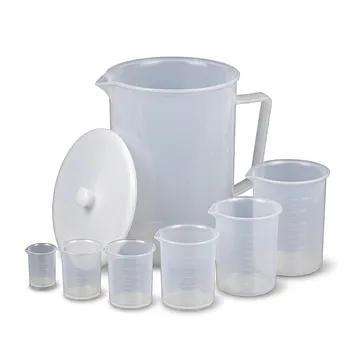
- If your primary focus is ppt-level detection: Utilize high-purity PFA beakers and reagent bottles to ensure the lowest possible background interference.
- If your primary focus is sample digestion with strong acids: Rely on PFA digestion vessels, as they resist chemical attack and prevent the leaching of metallic impurities during heating.
- If your primary focus is long-term sample storage: Standardize on PFA containers to minimize the risk of analyte adsorption and maintain sample stability over weeks or months.
By integrating PFA material into your workflow, you establish a foundation of material purity that guarantees the accuracy and rigor of your experimental data.
Summary Table:
| Feature | PFA Performance | Impact on Trace Analysis |
|---|---|---|
| Metal Leaching | Exceptionally low background | Eliminates secondary sample contamination |
| Surface Adsorption | Minimal analyte bonding | Prevents loss of target elements at ppt levels |
| Chemical Resistance | Inert to almost all acids/solvents | Safe for use with HF, HNO₃, and aggressive reagents |
| Surface Morphology | Ultra-smooth & non-porous | Easy to clean; prevents cross-contamination |
| Thermal Stability | Wide temperature range | Suitable for heated digestion and storage |
Elevate Your Research with KINTEK’s Precision Fluoropolymer Solutions
Achieving accurate results in trace analysis requires a sample environment that is as pure as your methodology. KINTEK specializes in manufacturing high-performance laboratory supplies crafted exclusively from PTFE and PFA, ensuring your workflow is free from contamination and analyte loss.
From everyday basics like beakers, measuring cylinders, and reagent bottles to specialized tools like digestion tubes, separatory funnels, and high-purity filters, we provide the essential vessels for your most sensitive work. Need something unique? Our end-to-end custom CNC fabrication allows us to deliver everything from complex non-standard machined parts to advanced reaction apparatus, including custom electrochemical cells and microwave digestion vessels.
Ready to secure your data integrity? Contact us today to explore how our expertise in high-performance fluoropolymers can deliver the absolute reliability your laboratory demands.
References
- Wenrui Sun, Ying Li. Modification of Nickel–Cobalt–Manganese Cathode Material Prepared Using Hydrothermal Method under Pulsed High Magnetic Field. DOI: 10.1002/cnma.202500015
This article is also based on technical information from Kintek Knowledge Base .
Related Products
- High Purity PFA Nitrogen Purge System Corrosion Resistant 4 and 6 Position Evaporation Setup Customizable Laboratory Trace Analysis Equipment
- High Purity PFA Crucible and Corrosion Resistant PTFE Beaker for Trace Analysis and Custom Laboratory Applications
- High Purity Corrosion Resistant PFA Reaction Vessel with PTFE Holder and Integrated Sampling Tube for Trace Analysis
- High Purity PFA Chromatography Column with Collection Bottle Corrosion Resistant Fluoropolymer Filtration System for Trace Analysis
- High Purity PFA Beakers with Handles and Cleaning Baskets for Trace Analysis and Industrial Chemical Processing
People Also Ask
- Why is high-purity nitric acid digestion required before performing AAS on birnessite? Achieve Precise Trace Analysis.
- What is the function of an argon (Ar) purging system in photocatalytic mechanism trapping? Identify Active Radicals.
- How can purging compounds assist in cleaning Teflon residue? A Step-by-Step Guide to Effective Equipment Cleaning
- Why is a high-precision battery performance testing system required for VS2/MoS2@S cathodes? Ensure Accuracy.
- Why is continuous high-purity Argon gas purging necessary during nitrate electroreduction (NO3RR) testing? Ensure Accuracy