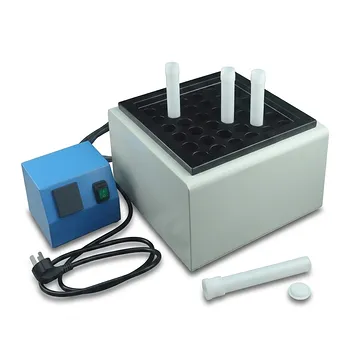
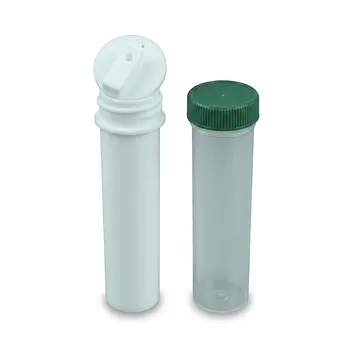
Digesting birnessite manganese dioxide with high-purity nitric acid is a critical sample preparation step designed to transform solid mineral structures into a clear, liquid ionic state. This conversion is mandatory for Atomic Absorption Spectroscopy (AAS), as the instrument requires an aerosolized liquid to measure the specific absorption of light by metal ions. By using high-purity reagents and chemically stable vessels, you ensure that the elements measured—such as sodium and manganese—originate solely from the sample rather than from environmental contamination.
The primary purpose of nitric acid digestion is to achieve a complete elemental release into a stable ionic solution while maintaining a sterile chemical environment to prevent background interference during sensitive AAS analysis.
Transitioning from Solid Mineral to Ionic Solution
The Chemical Breakdown of Birnessite
Atomic Absorption Spectroscopy cannot analyze solid minerals directly; the sample must be introduced as an aqueous solution. Nitric acid acts as a powerful oxidizing agent that breaks down the birnessite manganese dioxide matrix, dissolving the solid into its constituent ions.
Releasing Bound Metal Ions
Birnessite often contains metal ions like sodium (Na) and potassium (K) trapped within its layered structure or associated organic matter. High-temperature digestion ensures these ions are fully released into the solution, allowing the AAS to provide a precise and total elemental count rather than a surface-level estimate.
Ensuring a Clear Matrix
A successful digestion must result in a clear ionic solution free of suspended solids. Any remaining particulate matter can clog the AAS nebulizer or cause light scattering, which leads to significant errors in the final data.
The Necessity of High-Purity Reagents and Vessels
Eliminating Background Interference
Because AAS is capable of detecting elements at trace levels, even minute impurities in standard laboratory-grade acid can skew results. High-purity nitric acid is refined to remove these background contaminants, ensuring that the detected sodium or manganese levels are a true reflection of the birnessite sample.
The Role of Chemically Stable Vessels
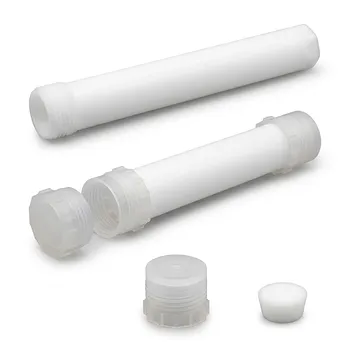
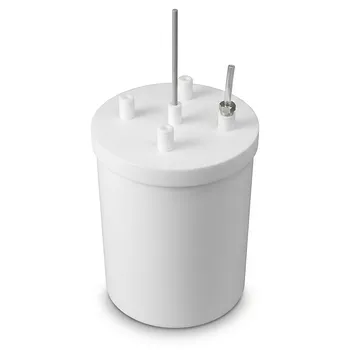
The use of PFA (Perfluoroalkoxy) polymer vessels is essential during the high-temperature digestion process. Unlike standard glass, PFA is highly resistant to corrosion and exhibits extremely low trace element leaching, preventing the vessel walls from "bleeding" ions into the sample.
Maintaining Precision in Trace Analysis
Using the combination of high-purity acid and inert polymer vessels minimizes background interference. This rigorous control of the chemical environment is what allows for the high degree of precision required in modern elemental analysis.
Understanding the Trade-offs
Cost vs. Detection Limits
The primary trade-off when using high-purity nitric acid is the significant increase in reagent cost. While standard-grade acids are sufficient for bulk concentration analysis, they are unsuitable for the trace-level detection where high-purity reagents become a technical necessity.
Safety and Handling Requirements
Concentrated nitric acid is a highly corrosive oxidizer that requires specialized storage and handling protocols. The digestion process often involves high temperatures and pressure, necessitating robust safety equipment and trained personnel to manage the risk of acid fumes and potential vessel failure.
Processing Time
Complete digestion is not instantaneous and often requires a lengthy heating cycle to ensure the mineral matrix is fully destroyed. Rushing this process can lead to incomplete recovery of the target metals, compromising the integrity of the entire study.
How to Apply This to Your Analysis
When preparing birnessite manganese dioxide for AAS, your choice of reagents and equipment should be dictated by your specific analytical goals.
- If your primary focus is detecting trace sodium or potassium: Use PFA digestion vessels and "Optima" or "Suprapur" grade nitric acid to keep background noise below your detection threshold.
- If your primary focus is measuring bulk manganese concentration: You may use high-purity acid to ensure solution clarity, but the extreme purity levels required for trace analysis may be less critical.
- If your primary focus is high-throughput routine testing: Ensure your digestion protocol is standardized for temperature and time to maintain consistency across large sample batches.
Consistent results in atomic spectroscopy begin with the uncompromising chemical integrity of your sample preparation.
Summary Table:
| Factor | Role in Digestion | Benefit for AAS Analysis |
|---|---|---|
| Nitric Acid | Oxidizing agent for matrix breakdown | Converts solid mineral to aerosol-ready ionic solution |
| High-Purity Grade | Eliminates reagent-borne impurities | Prevents background interference and false positives |
| PFA Vessels | Ultra-low leaching storage/reaction | Ensures sample integrity at high temperatures |
| Heat Cycle | Complete elemental release | Guarantees accurate total elemental concentration |
| Clarity | Elimination of particulates | Prevents nebulizer clogging and light scattering |
Elevate Your Trace Analysis with KINTEK Precision
Achieving uncompromising results in Atomic Absorption Spectroscopy requires more than just high-purity reagents—it demands the world's most chemically inert laboratory equipment. KINTEK specializes in high-performance fluoropolymer solutions designed specifically for sensitive digestion workflows.
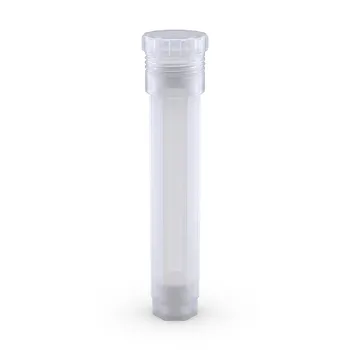
From everyday essentials like PFA digestion tubes, beakers, and reagent bottles to advanced microwave digestion vessels and custom-machined reaction apparatus, our products ensure zero leaching and absolute chemical resistance. Whether you require standard consumables or complex, non-standard parts through our end-to-end custom CNC fabrication, KINTEK is your partner for high-volume orders and bespoke laboratory setups.
Ensure your research integrity—contact our experts at KINTEK today to source the ultimate PFA and PTFE labware.
References
- Azadeh Abdi, Andreas Bund. Optimization of in situ hydrothermal synthesis of birnessite MnO2/graphene composite: thermodynamic insights and enhanced electrochemical performance for Li-ion battery anodes. DOI: 10.1007/s10854-025-15800-0
This article is also based on technical information from Kintek Knowledge Base .
Related Products
- High Purity TFM Microwave Digestion Vessels for Trace Analysis and Custom Sample Preparation Systems
- High Purity PTFE PFA Microwave Digestion Vessels Custom Acid Digestion Tanks for Laboratory Sample Preparation
- High Purity Laboratory Microwave Digestion Vessel Customizable PFA PTFE Digestion Tank for Analytical Sample Preparation Trace Metal Analysis
- High Purity TFM Microwave Digestion Vessels PTFE Acid Evaporation Liners Domestic GT-400 Equivalent Laboratory Reaction Containers
- High Purity PFA Sample Dissolution Cups Acid Resistant Chemical Digestion Vessels with Lids Trace Analysis Labware
People Also Ask
- What are the advantages of using microwave digestion vessels for environmental analysis? Boost speed and sample accuracy.
- What safety features are commonly integrated into microwave digestion vessels? Ensuring High-Pressure Laboratory Safety
- What are the advantages of using microwave digestion vessels? Optimize EG@MO synthesis with superior thermal control.
- How do microwave digestion vessels support pharmaceutical elemental impurity testing? Achieve Precise USP Compliance
- What are the structural functions of the outer jacket in a microwave digestion vessel assembly? Ensure High-Pressure Safety