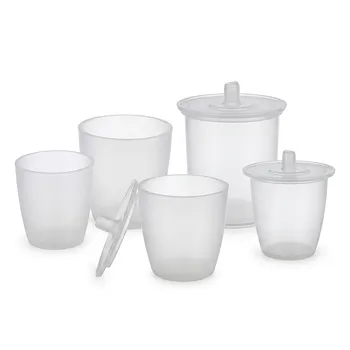
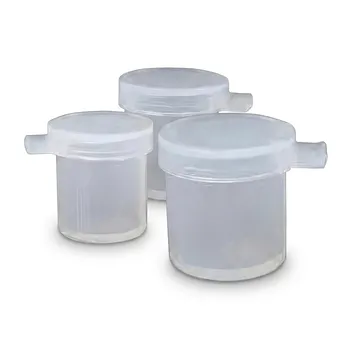
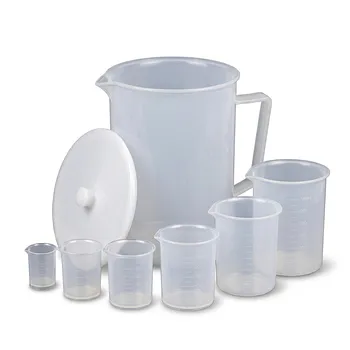
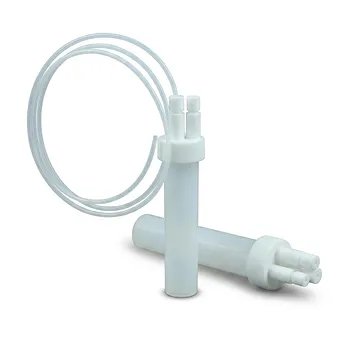
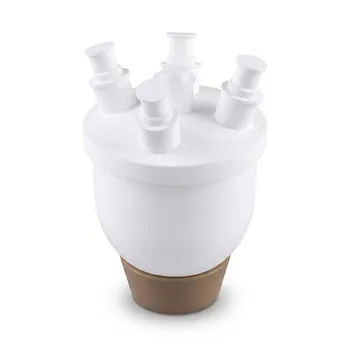
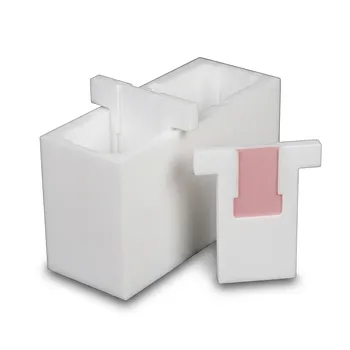
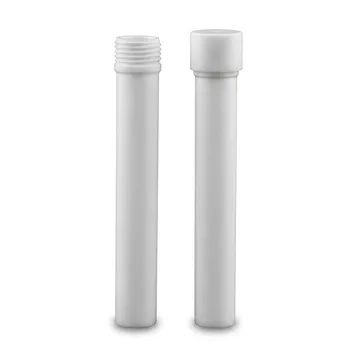
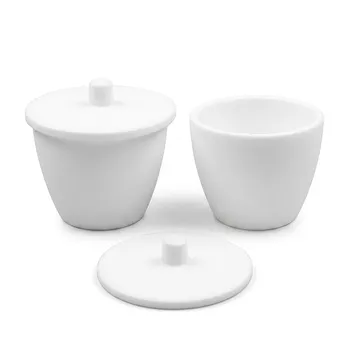
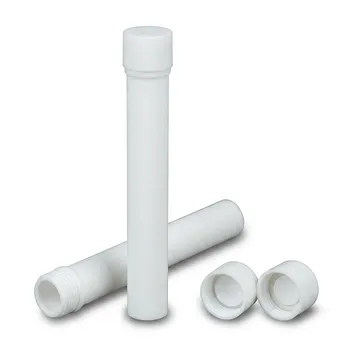
High-purity fluoropolymer vessels (PTFE and PFA) are the gold standard for biomass preparation due to their near-universal chemical inertness and ultra-low leaching profiles.
These materials withstand the aggressive corrosive environments created by strong acids (e.g., nitric and sulfuric acid) and strong bases (e.g., sodium hydroxide) required for biomass modification. Unlike glass or standard plastics, fluoropolymers do not leach metal ions or organic impurities, ensuring that the chemical integrity of the sample and the accuracy of trace analysis remain uncompromised.
High-purity PTFE and PFA protect the integrity of biomass research by providing a chemically non-reactive environment that eliminates sample contamination and ion adsorption. This ensures that experimental data reflects the sample's true properties rather than interference from the vessel.
Superior Chemical Inertness and Stability
Resisting Aggressive Reagents
High-purity fluoropolymers can withstand extreme pH levels, including strong acids like 0.1 M HNO3 and concentrated H2SO4, as well as strong bases like 0.5 M NaOH. While standard plastics may degrade or become brittle in these environments, PTFE and PFA maintain their structural integrity and do not react with the reagents.
Thermal and Oxidative Resistance
Biomass treatments often involve heating or the use of strong oxidizers like perchloric acid. Fluoropolymers offer exceptional thermal stability and resistance to oxidation, allowing for safe digestion and modification processes that would be hazardous or impossible in lower-grade containers.
Elimination of Sample Contamination
Preventing Leaching of Impurities
A critical advantage of these materials is their exceptionally low leaching rate. Unlike laboratory glass, which can leach silica or metallic ions into a solution, high-purity fluoropolymers prevent the introduction of trace metal ions or organic impurities into the corrosive environment.
Preventing Ion Adsorption
The surface properties of PFA and PTFE effectively prevent the adsorption of metal ions onto the container walls. This is vital for maintaining the background concentration in adsorption experiments and ensuring that sensitive oxidation states or trace elements are not lost during the transfer and storage of samples.
Practical Advantages in Biomass Processing
Managing Viscous Materials
Biomass preparation often involves "raw oils" or viscous intermediates from transesterification. The low surface energy of fluoropolymers facilitates the easy pouring and cleaning of these materials, reducing sample loss and preventing cross-contamination between batches.
Ensuring Analytical Precision
By maintaining a stable chemical environment, these vessels provide a reliable foundation for high-precision spectroscopic and kinetic research. They ensure that colorimetric reactions and nutrient analyses are not skewed by background interference from the labware itself.
Understanding the Trade-offs
Cost and Visibility
The primary drawback of high-purity fluoropolymers is their higher initial cost compared to glass or polypropylene. Additionally, while PFA is translucent and allows for some visibility of the contents, PTFE is opaque, which can make it difficult to monitor reactions that require visual observation of color changes or phase separations.
Mechanical Limitations
Although these materials are chemically robust, they are softer than glass and can be prone to scratching if cleaned with abrasive tools. Scratches can create sites for potential contamination or make cleaning more difficult, requiring specific handling protocols to maintain their high-purity status.
Selecting the Right Vessel for Your Research
Choosing between PFA and PTFE depends on your specific experimental requirements and the need for visual monitoring or specialized closures.
- If your primary focus is trace metal analysis: Utilize high-purity PFA vessels, as they offer the lowest potential for ion adsorption and are easier to clean to a "metal-free" state.
- If your primary focus is high-temperature acid digestion: Opt for PTFE components, which offer excellent thermal stability and near-universal resistance to concentrated mineral acids.
- If your primary focus is handling viscous biomass oils: Use fluoropolymer beakers to take advantage of their low surface energy, ensuring maximum sample recovery and simplified cleaning.
Investing in high-purity fluoropolymers is a critical step in ensuring the reproducibility and absolute accuracy of your biomass research.
Summary Table:
| Feature | Advantage for Biomass Preparation | Recommended Material |
|---|---|---|
| Chemical Inertness | Resists strong acids (HNO3, H2SO4) and bases (NaOH) without degradation. | PTFE & PFA |
| Ultra-Low Leaching | Prevents metal ion and organic contamination for trace-level analysis. | PFA |
| Thermal Stability | Safely handles high-temperature acid digestion and oxidation. | PTFE |
| Non-Stick Surface | Facilitates easy pouring and recovery of viscous biomass oils. | PTFE & PFA |
| Ion Adsorption | Minimizes loss of sensitive trace elements to container walls. | PFA |
Elevate Your Biomass Research with KINTEK’s High-Performance Fluoropolymers
Precision in biomass modification starts with the purity of your vessels. At KINTEK, we manufacture virtually all imaginable laboratory supplies crafted from PTFE and PFA, ensuring your results are never compromised by leaching or contamination.
Our Comprehensive Solutions Include:
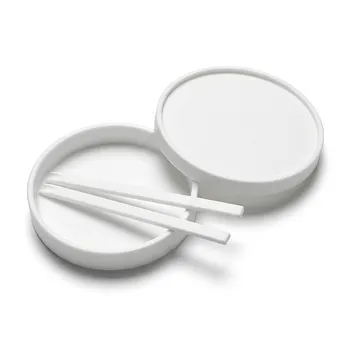
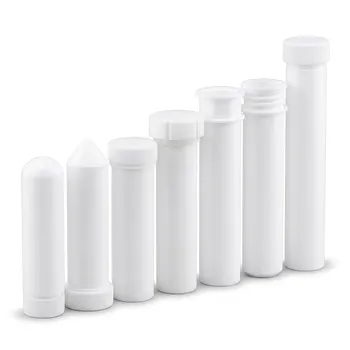
- Everyday Labware: High-purity beakers, measuring cylinders, crucibles, reagent bottles, and digestion tubes.
- Fluid Transfer & Filtration: Tubing, fittings, valves, separatory funnels, and high-precision filters.
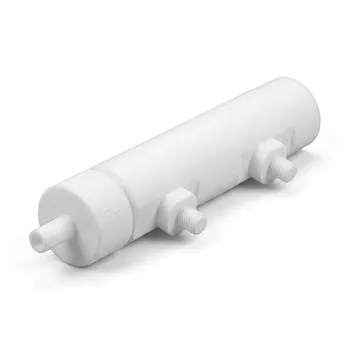
- Advanced Apparatus: Custom electrochemical cells, battery testing fixtures, microwave digestion vessels, and microchannel reactors.
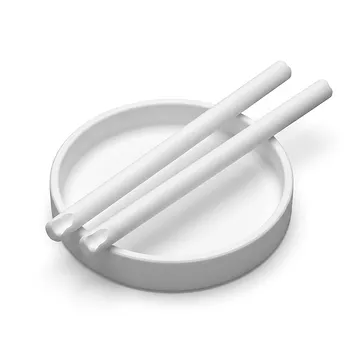
- General Consumables: Precision-machined stirring bars, O-rings, gaskets, and seal tapes.
The KINTEK Advantage: Backed by end-to-end custom CNC fabrication, we are uniquely equipped to deliver everything from complex, non-standard machined parts and bespoke laboratory setups to high-volume orders. We maintain an exclusive and absolute focus on high-performance fluoropolymer materials to provide the reliability your research demands.
Contact KINTEK today for a custom quote or to explore our full product range!
References
- Chisom Theresa Umeh, Refilwe Mogale. Adsorptive Effect of Corn Silk-Loaded Nickel Oxide and Copper Oxide Nanoparticles for Elimination of Ciprofloxacin from Wastewater. DOI: 10.1021/acsomega.4c09192
This article is also based on technical information from Kintek Knowledge Base .
Related Products
- High Purity PFA Crucible and Corrosion Resistant PTFE Beaker for Trace Analysis and Custom Laboratory Applications
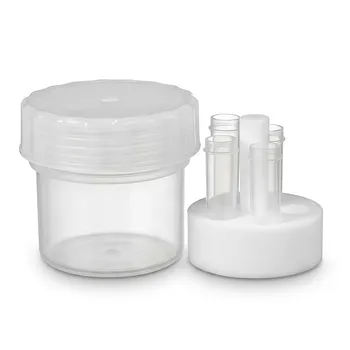
- Corrosion Resistant PTFE Support with PFA Transparent Reaction Tank and High Purity PFA Sampling Tube for Trace Analysis
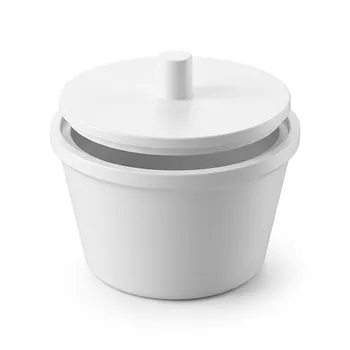
- High Purity PTFE PFA Plastic Crucible for Corrosion Resistant Acid Digestion and Trace Analysis
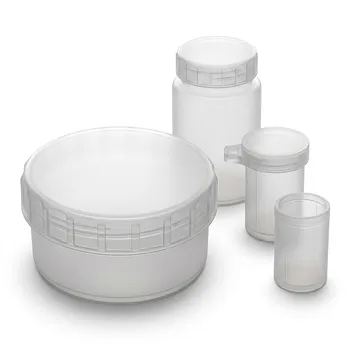
- PFA Reaction Jar Corrosion Resistant Wide Mouth PTFE Lab Bottle High Purity Chemical Vessel
- High Purity PTFE Trays Corrosion Resistant Laboratory Labware Customizable Square Round Fluoropolymer Trays
People Also Ask
- Why are high-purity vessels critical for BiFeO3 synthesis? Ensuring Phase Purity
- Why is the use of high-purity PFA or PTFE labware critical during TiO2 nanoparticle purification? Protect Sample Purity
- Why is high-purity PFA labware necessary for Znx@LS-2 zeolite ICP-OES analysis? Ensure Trace-Level Precision
- Why is high-purity PFA trace analysis labware used for MXene? Ensure Superior Material Integrity in Research
- What key material characteristics make PTFE and PFA suitable for high-purity laboratory labware, trace analysis containers, and medical microporous tubing? Discover the essential properties that ensure purity.