Suspension-polymerized PTFE generally provides exceptional chemical permeation resistance because its very high molecular weight creates a densely entangled, chemically inert matrix. However, standard homopolymer PTFE does not flow readily when heated, so sintering may leave a small amount of microscopic free volume or interconnected porosity. That residual structure can increase diffusion of aggressive gases, vapors, and trace chemicals through molded laboratory vessels.
High molecular weight preserves the chemical and mechanical integrity of PTFE, while effective sintering controls the void volume that governs permeation. For the lowest possible permeability, modified PTFE or melt-processable PFA may outperform standard sintered PTFE.
Why Molecular Weight Matters
High molecular weight strengthens the polymer network
Suspension polymerization produces granular PTFE with molecular weights commonly in the range of 10^6 to 10^7. The long chains generate a high entanglement density after molding, helping the vessel resist deformation, cracking, and damage during exposure to aggressive chemicals.
This matters for permeation because a mechanically stable matrix is less likely to develop cracks, defects, or enlarged pathways through which chemicals can migrate.
Molecular weight does not make PTFE chemically reactive
PTFE's fundamental chemical resistance comes from its fully fluorinated carbon backbone. The tightly bound fluorine atoms shield the carbon chain, making PTFE highly resistant to most acids, bases, solvents, oxidizers, vapors, and gases under ordinary laboratory conditions.
Molecular weight reinforces the physical integrity of this chemically inert structure, but it is not the primary source of PTFE's resistance to chemical attack.
High molecular weight limits melt flow
The same long-chain structure that provides strength also makes PTFE difficult to process. Above its melting point, standard homopolymer PTFE becomes a viscous, non-flowing mass rather than a freely flowing melt.
As a result, molding depends on particle coalescence and sintering, rather than conventional melt injection. The resin particles must fuse sufficiently to form a continuous vessel wall.
How Sintering Controls Permeation
Sintering consolidates the granular structure
Heating PTFE above its melting point, approximately 342 °C, allows adjacent resin particles to coalesce. Industrial processing commonly uses temperatures around 360-380 °C, with longer holds required for thick components.
Effective sintering reduces interparticle gaps, increases density, and lowers the amount of internal microporosity. This improves resistance to diffusion and increases mechanical strength, dimensional stability, and resistance to pressure or thermal cycling.
Residual micro-voids create diffusion pathways
Because standard PTFE does not fully flow during sintering, a molded vessel can retain a small fraction of microscopic voids or free-volume regions. These defects may not be visible or cause liquid leakage, yet they can still increase transport of small molecules.
Permeation usually occurs through molecular diffusion, so aggressive gases, vapors, or trace solvents may gradually migrate through the polymer even when the vessel appears completely solid and chemically unaffected.
Crystallinity affects molecular transport
Sintering also changes PTFE's supramolecular structure, including its crystallinity and the distribution of amorphous regions. Crystalline regions generally restrict molecular movement more strongly than less ordered regions.
The final permeation behavior therefore depends on the combined effects of crystallinity, chain packing, residual voids, wall thickness, temperature, and the chemical species being contained.
Why Modified PTFE Can Improve Barrier Performance
Comonomers improve particle coalescence
Modified PTFE resins may contain small amounts of comonomers such as perfluoropropyl vinyl ether, or PPVE. These modifications disrupt perfect crystallization and can reduce melt viscosity during sintering.
Improved flow and coalescence help minimize internal void volume, producing a more uniform and less permeable vessel wall than standard homopolymer PTFE in demanding applications.
Lower porosity supports trace analysis
For trace-analysis containers, microwave digestion vessels, and other applications where vapor transmission or solvent absorption could affect results, minimizing microporosity is important.
Modified PTFE can reduce the risk of reagent loss, sample contamination, and cross-contamination when standard sintered PTFE's residual permeability is unacceptable.
Flex-life can also improve
The altered crystallization behavior of modified PTFE may provide better flexibility and resistance to repeated thermal or mechanical cycling. This is relevant when a vessel must tolerate repeated heating, cooling, handling, or pressure changes without developing defects that could increase permeation.
What the Processing Window Changes
Adequate temperature and hold time improve density
Sintering above the melting point for an appropriate time allows polymer particles to coalesce more completely. Thick parts require longer heat exposure because the interior reaches the target temperature more slowly.
A well-controlled cycle improves tensile strength, elongation, dielectric strength, and resistance to dimensional change, while reducing the structural pathways available for diffusion.
Excessive heat can reduce long-term resistance
Processing temperatures above roughly 380-385 °C, or unnecessarily long holds, can cause thermal degradation. Degradation reduces molecular weight, increases brittleness, and weakens the molded component.
A brittle or degraded vessel is more susceptible to cracking and mechanical damage. Those defects can dominate permeation behavior even if the bulk PTFE remains chemically inert.
Vessel geometry affects the result
Thick walls, sharp transitions, complex fittings, and molded closures can sinter less uniformly than simple shapes. Local differences in temperature history may produce variations in density or residual porosity.
For custom valves, fittings, reaction-cell caps, and digestion vessels, process control must therefore account for the actual component geometry rather than relying only on a nominal furnace temperature.
Understanding the Trade-offs
Standard PTFE offers the broadest chemical confidence
Homopolymer PTFE remains an excellent choice when resistance to chemical attack, high-temperature stability, low friction, and non-contamination are the primary requirements.
Its limitation is not ordinary chemical corrosion. The concern is the small amount of permeability associated with residual micro-voids and the possibility of diffusion through the polymer over long exposure periods.
Modified PTFE may reduce permeability but changes material behavior
Modified grades can improve coalescence and reduce void volume, but their altered crystallization and processing characteristics may differ from those of standard PTFE. Material selection should therefore consider mechanical strength, flexibility, dimensional stability, temperature, and chemical exposure together.
“More impermeable” does not mean universally superior for every vessel design or operating condition.
PFA can provide a stronger barrier
PFA is melt-processable and can form an intrinsically void-free structure more readily than sintered PTFE. For gases, aggressive vapors, solvent absorption, and very high-purity applications, this can result in lower permeation coefficients.
PFA is not automatically the best choice, however. Its suitability still depends on maximum temperature, mechanical loads, fabrication method, dimensional requirements, and chemical exposure.
Permeation is not the same as corrosion
PTFE may remain chemically unchanged while allowing a small quantity of a molecule to diffuse through it. A vessel can therefore show excellent chemical compatibility but still fail a strict containment or contamination-control requirement.
This distinction is especially important for volatile reagents, trace-level measurements, long storage periods, and pressure or vacuum service.
Making the Right Choice for Your Goal
Select the material and sintering process according to the dominant failure mode and the required level of containment.
- If your primary focus is broad chemical compatibility: Use properly sintered high-molecular-weight homopolymer PTFE, provided the expected permeation level is acceptable.
- If your primary focus is minimum permeability in trace analysis: Consider modified PTFE with improved coalescence or a melt-processed PFA grade, and evaluate actual permeation under service conditions.
- If your primary focus is mechanical durability and repeated cycling: Preserve the high molecular weight through a controlled sintering cycle and avoid excessive temperature or hold time that could cause degradation.
- If your primary focus is custom molded or machined vessel reliability: Control the thermal history, wall thickness, geometry, and post-sintering inspection because local porosity or defects can govern performance.
The practical rule is simple: high molecular weight supplies the robust PTFE matrix, while controlled sintering and appropriate resin selection determine how effectively that matrix blocks chemical diffusion.
Summary Table:
| Factor | Impact on Permeation |
|---|---|
| High molecular weight (10^6-10^7) | Dense polymer network, fewer defects, but does not eliminate free volume |
| Sintering (360-380°C) | Consolidates particles, reduces voids, but residual micro-porosity remains |
| Crystallinity | Crystalline regions restrict diffusion more than amorphous regions |
| Modified PTFE (e.g., PPVE) | Improved coalescence, lower void volume, better barrier |
| PFA (melt-processable) | Intrinsic void-free structure, lower permeation |
| Processing window | Adequate temperature/hold improves density; excessive heat degrades PTFE |
| Geometry | Thick walls/complex shapes may sinter unevenly, increasing permeation pathways |
Enhance your lab's chemical resistance with high-performance PTFE and PFA labware from KINTEK. Our exclusively dedicated fluoropolymer products, including modified PTFE and PFA vessels, are precision-molded and custom-machined to minimize permeation and ensure the highest purity for your trace analysis. Contact us today to find the ideal solution for your application and benefit from our expert guidance on material selection and sintering optimization.
Related Products
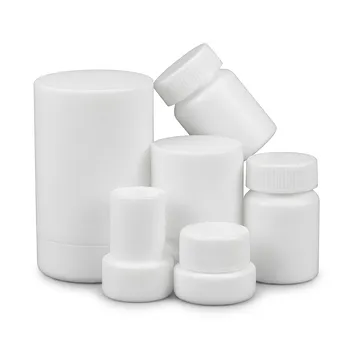
- Corrosion Resistant PTFE Small Reaction Bottle One Piece Molded Teflon Sample Storage Tank
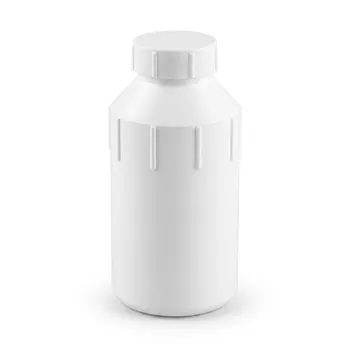
- Custom PTFE Wide Mouth Reagent Reaction Bottle Corrosion Resistant High Temperature Large Capacity Straight Body Laboratory Vessel
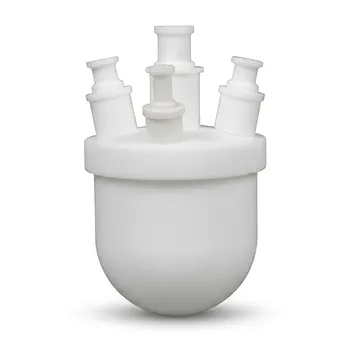
- Custom PTFE Flask 250ml High Purity Fluoropolymer Laboratory Vessel for Chemical Research
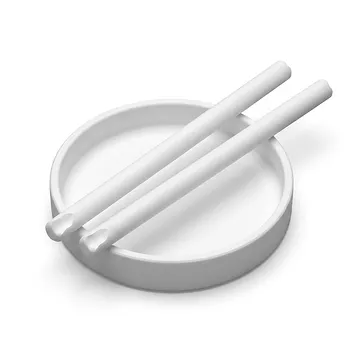
- Custom PTFE Petri Dish 80mm Diameter Corrosion Resistant Low Background High Purity Laboratory Culture Vessel
- High Performance Customizable PTFE Reaction Vessel and Corrosion Resistant Polytetrafluoroethylene Flask for Chemical Laboratory Use
People Also Ask
- What are the temperature limits for the PTFE bottle? Ensure Safety from -200°C to 260°C
- What are the advantages of the PTFE bottle's non-stick surface? Ensure Purity and Efficiency in Your Lab
- What are the key features of PTFE reagent bottles? Superior Chemical Resistance and Durability
- What are the key applications of the PTFE bottle? Ensure Chemical Safety and Sample Purity
- What material is the PTFE bottle made from? Discover the Benefits of 100% Virgin PTFE