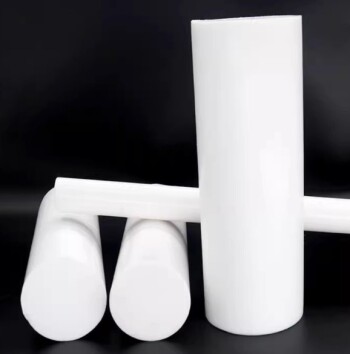
PTFE provides the higher continuous service temperature, while FEP offers easier melt processing and more uniform material behavior. PTFE is typically rated for continuous operation up to 260°C (500°F) and combines strong chemical resistance with room-temperature tensile strength of approximately 20–35 MPa and elongation of 300%–550%. FEP generally supports continuous service to about 204–205°C (400°F), but its melt processability, optical clarity, and absence of PTFE’s ambient phase transition can make it preferable for certain laboratory components.
Core takeaway: Choose PTFE when maximum temperature resistance, chemical inertness, and high ductility are the primary requirements. Choose FEP when the design benefits from melt-processable fabrication, optical transparency, low porosity, or more stable dimensions around room temperature.
How the Temperature Limits Affect Apparatus Design
PTFE Supports the Highest Continuous Operating Temperature
PTFE’s upper continuous service limit is approximately 260°C. This makes it suitable for demanding laboratory apparatus such as digestion vessels, high-temperature reaction components, crucibles, seals, and fluid-transfer parts exposed to aggressive chemicals.
The 260°C value is a continuous-use boundary, not a recommended target operating temperature. Designs should include thermal margin because prolonged operation near the limit can accelerate deformation, dimensional change, and loss of seal performance.
FEP Has a Lower but Still High Service Limit
FEP is generally rated for continuous use at approximately 204–205°C. This is lower than PTFE’s limit but substantially higher than many conventional laboratory plastics.
FEP can therefore serve in elevated-temperature tubing, liners, transparent vessels, and fluid-handling components, provided the actual operating temperature remains below its continuous-use rating with an appropriate design margin.
Melting Point and Service Temperature Are Different
PTFE melts at roughly 340–342°C, while FEP melts in the range of approximately 260–270°C. Neither melting point should be treated as a safe operating temperature.
A component can lose stiffness, deform, or fail in a seal long before the polymer visibly melts. Laboratory apparatus should therefore be designed around the continuous service temperature and the mechanical loads present during operation.
Mechanical Performance Profiles
PTFE Combines Ductility With Chemical Resistance
At room temperature, PTFE typically has a tensile strength of about 20–35 MPa and elongation of approximately 300%–550%. The high elongation indicates substantial ductility before rupture.
This flexibility helps PTFE accommodate thermal expansion, assembly tolerances, and contact with irregular sealing surfaces. However, its relatively soft and creep-prone behavior must be considered in clamped joints, threaded components, thin walls, and continuously loaded seals.
PTFE Requires Attention to Creep and Dimensional Stability
PTFE can remain flexible at extremely low temperatures, including cryogenic conditions approaching absolute zero. That low-temperature flexibility is valuable in specialized laboratory equipment, but it does not eliminate the need to evaluate contraction, load transfer, and seal compression during thermal cycling.
PTFE also undergoes a room-temperature phase transition near 19°C. This can produce step changes in volume and contribute to dimensional movement in precision components as ambient temperature crosses that transition.
FEP Provides Flexible, Processable Construction
FEP is also a flexible perfluorinated fluoropolymer, with high flexibility above approximately −79°C and functional utility extending to roughly −267°C. The reference information does not provide a directly comparable room-temperature tensile-strength and elongation range for FEP, so its mechanical profile should not be represented as numerically identical to PTFE’s.
FEP’s main mechanical and manufacturing advantage is that it is melt-processable. It can be formed into consistent tubing, films, liners, and transparent parts using conventional thermoplastic processing methods.
FEP Avoids PTFE’s Ambient Phase Transition
Unlike PTFE, FEP does not exhibit the same 19°C room-temperature phase transition. This avoids the associated step-change volume fluctuation around ordinary laboratory ambient temperatures.
That characteristic can improve dimensional predictability in transparent vessels, precision liners, and components exposed to repeated room-temperature cycling. It does not mean that FEP is dimensionally inert; thermal expansion and temperature-dependent stiffness still require evaluation.
Selecting the Polymer for Laboratory Apparatus
When PTFE Is the Better Choice
PTFE is generally the stronger choice when the apparatus must withstand the highest continuous temperatures, highly aggressive chemical environments, or severe thermal cycling.
Typical applications include high-temperature digestion equipment, reaction vessels, chemical liners, crucibles, and components where ductility and chemical inertness are more important than optical transparency or melt-processable fabrication.
When FEP Is the Better Choice
FEP is often preferable when the design requires optical clarity, low porosity, or transparent inspection of a sample or fluid path. Its melt processability also supports manufactured geometries that are difficult or uneconomical to produce from conventional PTFE forms.
FEP is appropriate only when its lower continuous service temperature remains compatible with the complete thermal profile, including heating, dwell time, cooling, pressure, and mechanical loading.
Understanding the Trade-offs
Higher Temperature Resistance Does Not Mean Unlimited Load Capacity
PTFE’s 260°C rating does not guarantee dimensional stability under load at that temperature. Sustained compression, internal pressure, or clamping force can cause creep and deformation before chemical or thermal breakdown occurs.
FEP’s lower service limit creates a narrower operating window, particularly for pressure-bearing components or parts that must retain tight tolerances while hot.
Chemical Compatibility Is Not the Only Design Variable
Both materials provide strong resistance to many laboratory chemicals, but material selection must also account for temperature, concentration, pressure, stress, permeation, and exposure duration.
A chemical that is compatible with the polymer at room temperature may produce unacceptable swelling, permeation, or mechanical loss at elevated temperature.
Exceeding the Limits Can Cause Component Failure
Operation beyond the continuous service limit can lead to dimensional deformation, loss of seal integrity, embrittlement or other mechanical changes, and eventual thermal decomposition.
High-temperature fabrication and processing equipment should also account for potential decomposition emissions at excessive temperatures and use suitable corrosion-resistant construction materials.
Making the Right Choice for Your Goal
Select the polymer according to the complete thermal, mechanical, chemical, and inspection requirements of the apparatus.
- If your primary focus is maximum continuous temperature resistance: Choose PTFE and design for operation comfortably below 260°C, while evaluating creep, thermal expansion, and seal compression.
- If your primary focus is optical clarity or transparent fluid handling: Choose FEP when the operating temperature remains below approximately 204–205°C.
- If your primary focus is predictable ambient dimensions: FEP avoids PTFE’s near-19°C phase transition and may provide more stable behavior during ordinary laboratory temperature cycling.
- If your primary focus is cryogenic flexibility: Both materials can support very low-temperature service, but the design must still account for thermal contraction, stiffness changes, and seal behavior.
- If your primary focus is precision under sustained mechanical load: Compare creep, wall thickness, stress, pressure, and temperature together rather than relying on the polymer’s maximum temperature rating alone.
PTFE is the choice for the broadest thermal and chemical operating envelope, while FEP is the choice when processability, transparency, and stable ambient behavior justify its lower temperature limit.
Summary Table:
| Property | PTFE | FEP |
|---|---|---|
| Continuous Service Temp | ~260°C (500°F) | ~204-205°C (400°F) |
| Melting Point | ~340-342°C | ~260-270°C |
| Tensile Strength (RT) | 20-35 MPa | Not specified |
| Elongation at Break (RT) | 300-550% | Not specified |
| Melt Processable | No | Yes |
| Optical Clarity | Opaque | Transparent |
| Ambient Phase Transition | Yes (~19°C) | No |
| Best For | High-temp, aggressive chem, ductility | Clarity, lower porosity, melt-processed parts |
Ready to select the ideal fluoropolymer for your lab apparatus? At KINTEK, we specialize in high-performance PTFE and PFA products, not FEP. Our custom CNC machining and complete line of labware ensure your exact specifications are met. Contact our experts today to discuss your application and get a tailored solution.
Related Products
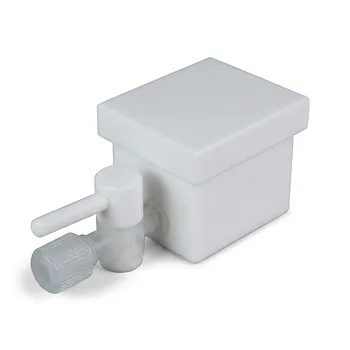
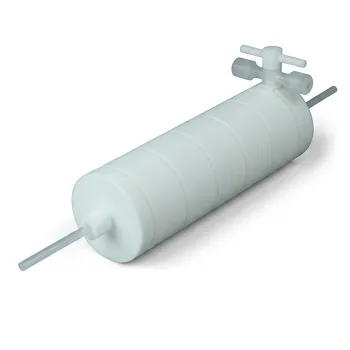
- Custom PTFE Filtration System Acid Resistant High Purity Semiconductor Grade Chemical Processing Filter
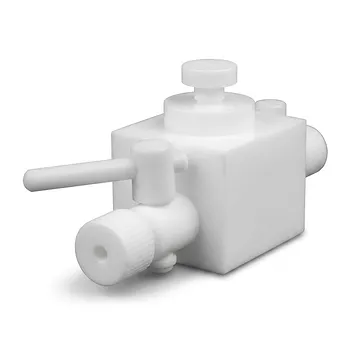
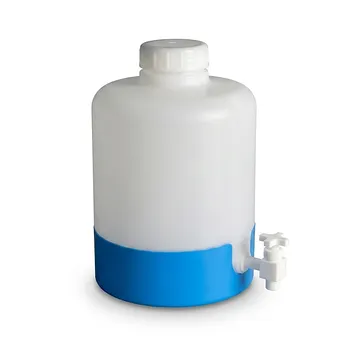
- High Corrosion Resistant PTFE Faucet Polytetrafluoroethylene Valve for Chemical Storage Drums and Fluid Transfer Systems Customizable Industrial Grade
- PTFE PFA Vacuum Filtration System Corrosion Resistant Customizable Shatterproof Laboratory Device
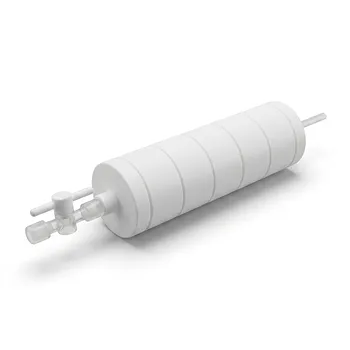
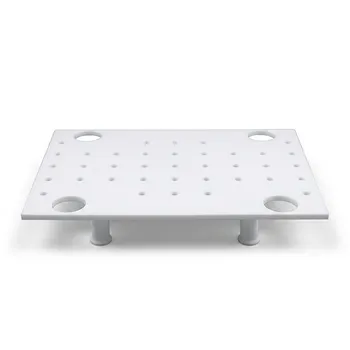
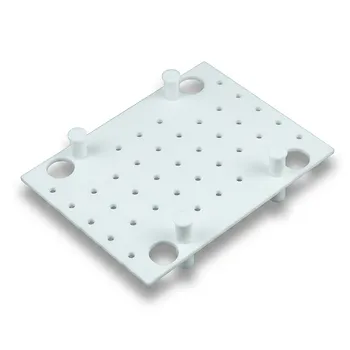
- PTFE Corrosion Resistant Filter with PFA Valve Connections and Integrated Sieve Plate
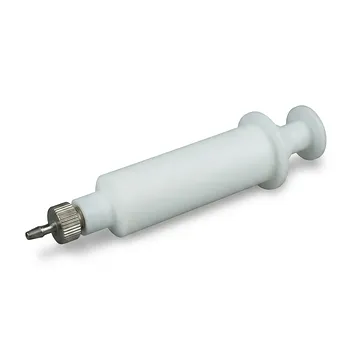
- High Temperature Chemical Resistant 50ml PTFE Syringe Customized Teflon Injector with Threaded Seal for Trace Analysis
People Also Ask
- What makes PTFE filtration systems advantageous for industrial and scientific use? Unmatched Chemical & Thermal Stability
- What sizes and pore options are available for PTFE filters? Choose the Right Filter for Your Application
- What steps are involved in selecting the proper PTFE filter? A 4-Step Guide to Optimal Filtration
- How does the hydrophobicity of PTFE filters benefit their use? Ensure Uninterrupted Gas Flow and Solvent Filtration
- What temperature resistance do PTFE filters offer? Unmatched Thermal Stability from -200°C to +260°C