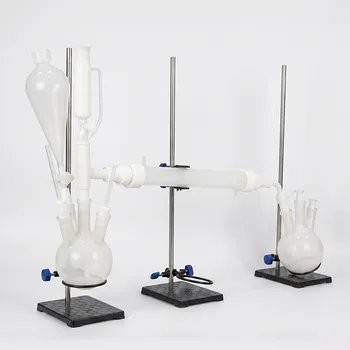
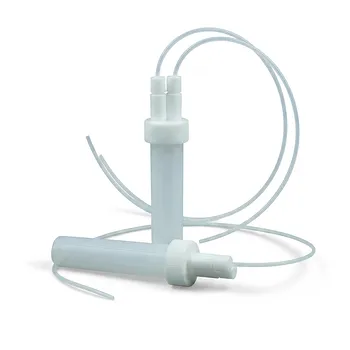
Fluorinated copolymers with PEO side chains combine chemical durability with lithium-ion transport. A chlorotrifluoroethylene (CTFE)-based fluorinated backbone can provide thermal stability above approximately 250–300 °C, strong chemical inertness, and a broad electrochemical stability window. The attached poly(ethylene oxide) (PEO) chains coordinate lithium salts through their ether oxygens, creating pathways that support Li+ conduction. High-purity PTFE or PFA labware is essential because trace metal ions, moisture, and organic contaminants can alter polymer purification, electrolyte chemistry, and ultimately battery performance.
The material design separates two functions: the fluorinated backbone provides stability, while PEO side chains provide lithium-salt coordination and ion-transport functionality. During synthesis and handling, inert, low-leaching fluoropolymer equipment helps preserve those properties by preventing additional contamination.
Why the Polymer Architecture Is Advantageous
The Fluorinated Backbone Improves Stability
CTFE-containing backbones are highly fluorinated and chemically inert. This makes them more resistant to thermal degradation and chemical attack than many conventional polymer electrolyte frameworks.
Their reported degradation temperatures above 250–300 °C provide a substantial thermal margin during processing and battery operation. Thermal stability alone does not guarantee battery safety, but it reduces the likelihood of polymer breakdown under elevated-temperature conditions.
Fluorination Supports Electrochemical Durability
Fluorinated structures can tolerate both relatively low and high electrode potentials, giving the electrolyte a wide electrochemical stability window. This is important because the electrolyte must remain stable while the cell operates between the cathode and anode voltage limits.
A stable polymer matrix can also reduce unwanted reactions with active electrode materials. The exact usable voltage range still depends on the polymer composition, lithium salt, electrode surface, impurities, and test conditions.
PEO Side Chains Coordinate Lithium Salts
PEO contains ether oxygen atoms that interact with lithium ions. These coordination sites help dissolve and distribute lithium salts within the polymer phase.
Lithium transport depends on more than salt dissolution. The polymer must also allow sufficient local molecular motion for Li+ to move between coordination sites, so PEO chain mobility and the overall copolymer morphology are important.
The Copolymer Balances Competing Requirements
A polymer electrolyte must be both mechanically and chemically robust and sufficiently permissive to ion motion. A fully fluorinated, rigid material may offer excellent stability but limited ion transport, while a highly mobile PEO-rich material may transport ions more effectively but sacrifice strength or dimensional stability.
Combining the two components allows the fluorinated segment and PEO segment to contribute different properties. The resulting performance depends on side-chain length, composition, molecular weight, salt concentration, and phase behavior.
Why Purity Directly Affects Electrolyte Performance
Transition-Metal Residues Are Especially Harmful
Polymerization methods such as atom transfer radical polymerization can use transition-metal catalysts. If purification is incomplete, residual metal ions may remain in the polymer or associated processing solutions.
These ions can interfere with lithium-ion transport, promote parasitic electrochemical reactions, and shorten battery life. They may also distort conductivity measurements, making the material appear to perform differently from its intended composition.
High-purity labware cannot remove catalyst residues already present in the product. It does, however, prevent additional contamination during reaction, filtration, washing, concentration, and storage.
Container Leaching Creates Hidden Variables
Conventional glass, metal, or lower-grade polymer components can contribute trace metals, additives, or organic residues to sensitive electrolyte systems. Even very small contaminant levels can matter when studying low-concentration impurities or electrochemical degradation.
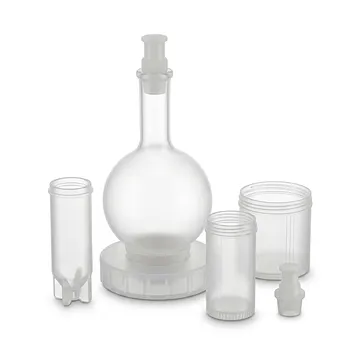
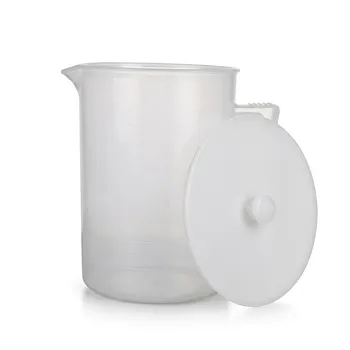
PTFE and PFA offer exceptional chemical inertness and very low leaching levels. Using them for reaction vessels, filtration components, beakers, reagent bottles, and stirring components reduces the chance that the equipment becomes an uncontrolled source of contamination.
Moisture Control Is Critical
Lithium salts and organic electrolyte components are often hygroscopic or moisture-sensitive. Trace water can change salt speciation, alter interfacial reactions, and accelerate degradation pathways.
This issue is particularly important for low-temperature measurements, where small changes in composition or impurity level can strongly affect viscosity, conductivity, and interfacial stability. Dry, clean fluoropolymer containers help preserve the intended chemical environment, although they must still be properly dried and handled under suitable atmospheric conditions.
Non-Stick Surfaces Improve Recovery and Dosing
PTFE and PFA surfaces are non-stick and chemically resistant. This reduces polymer and salt retention on vessel walls, improving material recovery and reducing uncertainty in component ratios.
Accurate composition matters because the polymer-to-salt ratio influences lithium coordination, ionic conductivity, mechanical behavior, and electrochemical stability. A small dosing or recovery error can therefore be mistaken for an intrinsic materials effect.
How Labware Should Be Used During Synthesis
Reaction Components Must Be Compatible
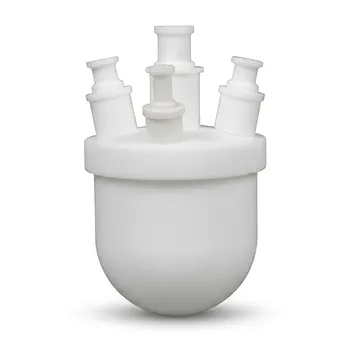
Fluoropolymer reaction vessels and accessories are well suited to aggressive solvents, lithium salts, and polymer-processing chemicals. They reduce concerns about corrosion and chemical attack that could occur with less resistant materials.
The selected equipment should still be verified for the specific solvent, temperature, pressure, and reaction duration. Chemical inertness is not a substitute for process qualification.
Filtration and Purification Need the Same Standard
Contamination can be introduced after polymerization during precipitation, filtration, washing, or solvent exchange. Filters, funnels, tubing, and collection vessels should therefore be selected with the same purity requirements as the reaction vessel.
The purification process must specifically address transition-metal removal. Fluoropolymer equipment supports that process by minimizing new contaminants, but it does not replace validated washing, chelation, adsorption, membrane, or other appropriate metal-removal steps.
Storage Must Preserve the Purified Material
Clean PTFE or PFA bottles can limit contact with leachable metals and organic residues after purification. Proper sealing and dry storage are also needed to prevent moisture uptake and environmental contamination.
The storage container should not be treated as an isolated control. Dry solvents, clean handling tools, controlled atmosphere, and documented cleaning procedures are part of the same purity strategy.
Understanding the Trade-offs
PEO Can Increase Ion Transport but Reduce Mechanical Robustness
PEO is valuable because it coordinates lithium ions, but a high PEO fraction can increase softness, swelling, or dimensional instability. The formulation must provide enough PEO for transport without compromising the polymer electrolyte's structural role.
The optimum balance is application-dependent. A material designed for high conductivity may require different composition from one designed for high-voltage stability or mechanical integrity.
PEO Crystallinity and Low Temperature Can Limit Conductivity
PEO-based transport is closely linked to segmental motion. When PEO becomes more ordered or less mobile, lithium-ion movement can decrease.
This is particularly relevant at low temperatures. Fluoropolymer labware can prevent impurity-related performance losses, but it cannot eliminate intrinsic limitations caused by polymer crystallinity, viscosity, or restricted chain motion.
Fluorination Does Not Automatically Guarantee Compatibility
A fluorinated backbone generally improves chemical and electrochemical robustness, but compatibility with a specific lithium salt, solvent, electrode, or additive must still be measured. Interfacial behavior can differ substantially from bulk electrolyte behavior.
Claims about a “wide stability window” should therefore be supported by the relevant electrochemical tests rather than inferred from fluorine content alone.
High-Purity Labware Adds Handling Requirements
PTFE and PFA reduce contamination risk, but they can retain residues if cleaning is inadequate. Their non-stick surfaces also do not guarantee quantitative transfer of every viscous polymer or concentrated electrolyte.
Cleaning, drying, blank testing, and material-balance checks remain necessary. The most reliable workflow combines high-purity equipment with analytical verification of moisture, metals, residual solvent, and electrochemical performance.
Making the Right Choice for Your Goal
The best design depends on whether the priority is transport, stability, reproducibility, or low-temperature operation.
- If your primary focus is lithium-ion conductivity: Optimize PEO content, salt concentration, and chain mobility, then measure conductivity under the actual temperature and electrochemical conditions of use.
- If your primary focus is thermal or high-voltage stability: Use the fluorinated backbone as the stability component, but verify the complete polymer-salt-electrode system rather than relying on backbone chemistry alone.
- If your primary focus is reproducible synthesis: Use high-purity PTFE or PFA equipment throughout reaction, purification, filtration, and storage, while separately validating removal of transition-metal catalyst residues.
- If your primary focus is low-temperature performance: Control moisture and trace impurities rigorously, and evaluate PEO crystallinity and segmental mobility because equipment purity cannot compensate for intrinsic transport limitations.
A successful fluorinated PEO copolymer electrolyte depends on both molecular design and contamination control: one creates the desired balance of stability and transport, while the other ensures that the measured material actually reflects that design.
Summary Table:
| Aspect | Fluorinated Copolymer with PEO Side Chains | High-Purity Fluoropolymer Labware |
|---|---|---|
| Key Advantage | Combines chemical/electrochemical stability with Li+ conduction | Minimizes contamination, ensuring accurate synthesis and results |
| Stability | Thermal stability >250-300°C, wide electrochemical window | Chemically inert, low leaching, moisture barrier |
| Ion Transport | PEO side chains coordinate Li+ and provide pathways | Non-stick surfaces improve recovery and dosing accuracy |
| Potential Issues | PEO crystallinity may limit low-T conductivity | Not a substitute for proper cleaning and drying |
| Role in Synthesis | Molecular design must balance stability and transport | Essential for reaction, purification, and storage to prevent trace metal/water contamination |
Ensure the purity and performance of your fluoropolymer electrolyte research. At KINTEK, we specialize in high-purity PTFE and PFA labware – from reaction vessels and filtration systems to storage bottles – designed to minimize contamination and maximize reproducibility. Our custom CNC machining capabilities allow us to deliver bespoke solutions for your unique synthesis needs. Contact us today to discuss your requirements and elevate the quality of your research. Get in touch with our experts.
Related Products
- Custom PFA Pear Shaped Flask High Purity Corrosion Resistant Labware Custom Molded Fluoropolymer Flask Glass Replacement Solution
- High Purity PFA Beaker with Handle and Large Capacity Washable Soak Basket Multi Spec Teflon Laboratory Labware
- Custom PTFE Flask 250ml High Purity Fluoropolymer Laboratory Vessel for Chemical Research
- Custom PTFE Petri Dish 200mm High Purity Corrosion Resistant Low Background Laboratory Ware
- High Purity PTFE Single Neck Reaction Flask Acid Resistant Customizable Fluoropolymer Laboratory Reactor
People Also Ask
- What are the chemical compatibility boundaries of PFA fluoropolymer labware, and how can PFA surfaces be treated for adhesive bonding? Learn safe usage and bonding methods.
- How does end-group stabilization during PFA polymer synthesis influence purity? Achieve Ultra-High Purity & Reliability in Lab Components.
- Why Use PFA Labware for MnFe2O4/rGO Precursors? Ensure Stoichiometric Precision and Purity
- How does PFA labware enhance the accuracy of ultra-trace element analysis? Achieving PPT Precision with Zero Leaching
- What are the primary properties of PFA for high-performance labware? Achieve ultra-trace purity & thermal stability.