The key difference is structural, not simply chemical: melt-processed PFA generally forms a continuous, non-porous polymer barrier, while sintered PTFE can retain microscopic interparticle interfaces and residual porosity. Because permeation is primarily governed by molecular diffusion through the polymer, PFA typically provides a more consistent barrier against gases, aggressive vapors, and solvent absorption in high-purity vessels and fluid-handling components.
PFA’s melt-processable structure supports smooth, void-free, leak-tight geometries with lower and more predictable permeation. Sintered PTFE remains highly chemically resistant, but its processing history can introduce microscopic pathways that increase vapor transmission, absorption, and contamination risk.
Why Processing Changes the Barrier
PFA Forms a Continuous Polymer Structure
PFA contains perfluoroalkoxy comonomer groups that reduce crystallinity and melt viscosity enough for conventional extrusion, injection molding, blow molding, and welding. When properly processed, the material flows into a continuous structure rather than being assembled from compacted powder particles.
This enables smooth internal surfaces and complex geometries with fewer interfaces between material regions. In tubing, vessels, valves, and fittings, that continuity supports more uniform containment and a lower likelihood of localized permeation paths.
PTFE Requires Sintering
High-molecular-weight PTFE does not flow readily as a conventional melt. It is generally compression-molded from powder, sintered, or machined from a previously sintered billet.
Sintering can produce a dense and highly useful component, but the final morphology depends on powder characteristics, molding pressure, sintering conditions, cooling, and machining. Microscopic interparticle regions or residual porosity may remain, particularly when processing is not optimized for maximum density.
The Difference Is Not Absolute
PFA should not be treated as automatically defect-free. Inadequate molding, voids, weld lines, poor consolidation, or mechanical damage can also create local permeation or leakage paths.
Likewise, a well-sintered PTFE component may be highly dense and perform effectively. The practical distinction is that PFA’s melt processing makes a continuous, low-porosity structure easier to produce consistently, especially in thin-wall or complex components.
How Permeation Occurs
Molecular Diffusion Through the Polymer
For a dense fluoropolymer, a chemical species must first dissolve into the material and then diffuse through it. Permeation therefore depends on both the chemical’s affinity for the polymer and its mobility within the polymer structure.
A useful conceptual relationship is that the permeation coefficient reflects solubility multiplied by diffusivity. PFA’s fully fluorinated chemistry limits many interactions with aggressive chemicals, while its continuous morphology reduces additional transport through physical defects or porous regions.
Microporosity Adds Shortcuts
A porous or partially consolidated region can provide transport pathways that are less constrained than diffusion through the polymer matrix. These paths may increase the apparent permeation rate of gases, vapors, or solvent molecules.
Porosity does not mean that a chemical will freely flow through a PTFE component like liquid through a pipe. At microscopic scale, however, interconnected voids and interfaces can reduce the effective barrier thickness and increase transport relative to a dense, continuous structure.
Surface Absorption Can Become a Contamination Source
Permeation is only part of the concern in trace analysis. Chemicals can also sorb onto internal surfaces, diffuse into near-surface regions, and later desorb into another sample or reagent.
PFA’s smooth, non-porous molded surface generally limits these retention sites and makes cleaning more predictable. This helps reduce reagent loss, memory effects, and cross-contamination when vessels or tubing are reused.
Impact on Laboratory Vessels
Trace Analysis Containers
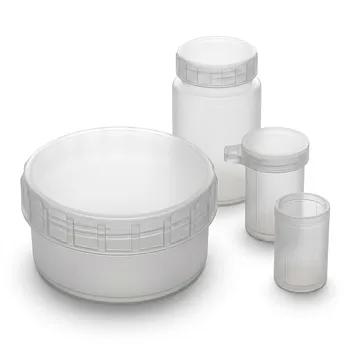
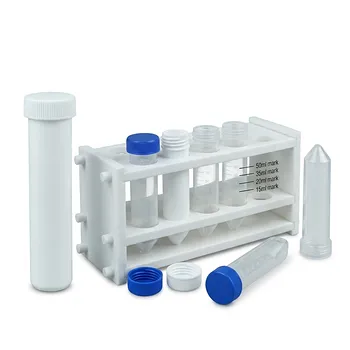
In trace-metal and ultra-trace applications, even small amounts of extractable material or retained residue can affect results. PFA is well suited to digestion vessels, sample containers, and storage bottles because it combines broad chemical resistance with smooth surfaces and low ionic extractables.
Its translucency or transparency can also aid visual inspection of samples and residues. The main analytical benefit, however, is the reduction of sites where contaminants can be retained or transported through the vessel wall.
Chemical Storage Tanks
For stored solvents, reagents, and aggressive vapors, lower vapor transmission helps preserve concentration and reduce material loss. It also limits the movement of external contaminants into the stored chemical.
This matters most when the storage period is long, the chemical is volatile, or the concentration must remain tightly controlled. Vessel wall thickness, temperature, closure design, and exposed surface area still influence the result.
Digestion and Thermal Applications
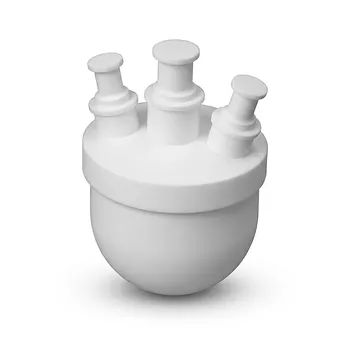
PFA retains a high thermal rating and strong chemical resistance comparable to PTFE for many laboratory uses. Its ability to be molded into seamless or integrated geometries can reduce joints and crevices around the sample chamber.
Temperature must still be controlled according to the specific PFA grade and application. Higher temperature generally accelerates diffusion and can change the permeation behavior of both PFA and PTFE.
Impact on Fluid Handling Components
Tubing and Transfer Lines
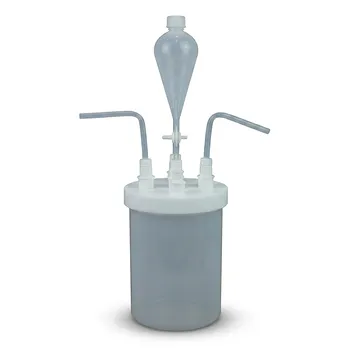
Melt-extruded PFA tubing has a smooth, continuous inner surface and consistent wall structure. This supports low dead volume, easier cleaning, and more predictable resistance to vapor transmission and solvent absorption.
In gas or vapor service, the reduced defect-related transport can be especially important. For liquid service, the lower tendency to absorb or retain chemicals helps reduce carryover between batches.
Valves and Fittings
PFA can be molded into complex channels, valve bodies, and custom fittings with fewer machined interfaces. That makes it easier to create leak-tight parts with controlled internal passages and fewer dead zones.
These features support high-purity fluid handling, but sealing performance also depends on mechanical design. Creep, compression, temperature cycling, and the compatibility of external seals can dominate leakage even when the PFA body itself has low permeation.
Welded and Integrated Assemblies
PFA’s melt-processability permits thermal joining and the manufacture of integrated components. Reducing the number of mechanical joints can eliminate potential leak locations and crevices where contamination may accumulate.
The quality of a weld or molded connection is critical. Poor joining conditions can create defects that offset the material’s intrinsic low-porosity advantage.
Understanding the Trade-offs
PTFE Remains Highly Capable
Sintered PTFE is not unsuitable for high-purity work. It offers exceptional chemical inertness, high-temperature capability, low friction, and strong resistance to many harsh environments.
It is often a sound choice for robust machined blocks, seals, gaskets, and components where mechanical strength, temperature resistance, or established fabrication methods matter more than minimum vapor permeation.
PFA Does Not Eliminate All Permeation
PFA is a stronger barrier than porous or incompletely consolidated PTFE in many applications, but it is not an impermeable metal barrier. Molecules can still dissolve into and diffuse through a dense fluoropolymer, particularly over long exposure times or at elevated temperatures.
The correct comparison is usually lower and more predictable permeation, not zero permeation.
Geometry and Operating Conditions Matter
Permeation increases with exposed area and decreases with wall thickness. Temperature, pressure gradient, chemical concentration, exposure duration, and the identity of the permeant can all materially affect performance.
A thin PFA tube may therefore transmit more vapor than a thick PTFE vessel, even if PFA has the more favorable material morphology. Material selection must be based on the complete component design and operating conditions.
Manufacturing Quality Controls the Outcome
For PFA, inspect molding quality, weld integrity, wall uniformity, and surface finish. For PTFE, evaluate density, sintering quality, porosity, machining damage, and whether the component was manufactured from suitable high-purity stock.
Cleanliness and post-processing are equally important. A chemically resistant polymer can still contaminate a process if it contains manufacturing residues, extractables, or previously absorbed chemicals.
Making the Right Choice for Your Goal
The material should be selected according to the dominant contamination, permeation, thermal, and mechanical risks.
- If your primary focus is minimizing vapor transmission and solvent absorption: Prefer properly processed PFA, particularly for thin-wall tubing, storage vessels, and components exposed to volatile or aggressive chemicals.
- If your primary focus is ultra-trace cleanliness and low carryover: Use high-purity PFA with smooth, low-dead-volume geometry and validated cleaning procedures.
- If your primary focus is mechanical robustness or extreme thermal service: Consider dense, well-sintered or machined PTFE, provided its porosity and permeation performance are suitable for the application.
- If your primary focus is complex leak-tight fluid geometry: Favor melt-processed PFA, which supports molded channels, integrated fittings, and thermally joined assemblies.
- If your primary focus is long-term containment: Compare measured permeation for the actual chemical, temperature, wall thickness, and exposure duration rather than relying only on the polymer name.
For high-purity laboratory systems, the most reliable choice is the material and process combination that provides the required chemical resistance, controlled morphology, and verified permeation performance.
Summary Table:
| Feature | Melt-Processed PFA | Sintered PTFE |
|---|---|---|
| Processing | Melt extruded/injection molded | Compression molded & sintered |
| Structure | Continuous, non-porous | May retain micro-porosity |
| Permeation Barrier | Lower, more predictable | Higher potential for vapor/gas transmission |
| Surface Finish | Smooth, low dead volume | Can be rougher with interfaces |
| Trace Cleanliness | Excellent, low extractables | Good, but can retain contaminants |
| Complex Geometry | Good – molded into complex shapes | Limited – requires machining |
| Mechanical Strength | Good, but lower than PTFE | Excellent, especially for heavy-duty |
| Thermal Capability | Up to 260°C | Up to 260°C |
| Chemical Resistance | Excellent | Excellent |
Ensure the highest purity and performance in your lab with KINTEK's precision-machined PFA and PTFE components. Our expert team can help you select the right material for your application, whether you need low-permeation PFA vessels or robust PTFE parts. Contact us today for a consultation and discover how our advanced fluoropolymer solutions can enhance your analytical results. Get in touch now!
Related Products
- PFA Reaction Jar Corrosion Resistant Wide Mouth PTFE Lab Bottle High Purity Chemical Vessel
- High Performance Customizable PTFE Reaction Vessel and Corrosion Resistant Polytetrafluoroethylene Flask for Chemical Laboratory Use
- Corrosion Resistant PFA Translucent Reaction Bottle with PTFE Screw Cap and Standard 19 24 Ground Joint Neck for High Temperature Lab Applications
- Custom PFA Reaction Bottles High Purity PTFE Reaction Vessels Corrosion Resistant Petrochemical Containers
- Custom PTFE Flask Large Volume 18L Corrosion Resistant Low Background High Purity Chemical Vessel
People Also Ask
- Role of reaction vessels in alkali treatment for oil palm waste: Achieve High-Purity Cellulose with PTFE Vessels
- Why are well-sealed reaction vessels necessary for superacid-promoted Friedel-Crafts polycondensation? Optimize Synthesis
- How do specialized reaction vessels facilitate floating transfer for graphene? Achieve Uniform 4-SBD Functionalization
- Why are corrosion-resistant vessels needed for alkaline cellulose extraction? Ensure Purity and Process Safety
- How do the material choice and sealing integrity of the reaction vessel affect the growth of NiFe-LDH? Optimize Synthesis