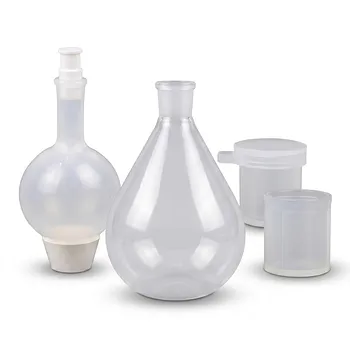
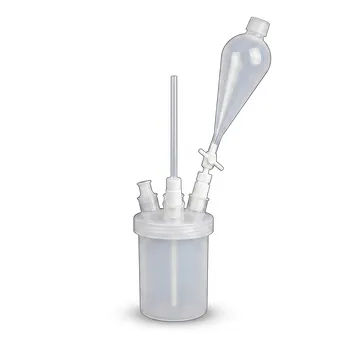
The vessel is part of the oxidative-stability experiment. Evaluating sulfonated fluorinated membranes in Fenton’s reagent requires reaction vessels that remain chemically inert at elevated temperature and do not introduce trace metals or degradation products. PTFE or PFA vessels are therefore the preferred choice, because they resist peroxide-driven oxidation, iron-containing Fenton chemistry, and thermal exposure near 80 °C without contributing significantly to the measured membrane weight loss.
Core takeaway: The vessel must preserve the intended Fenton reaction rather than alter it. PTFE and PFA containers minimize vessel-derived contamination and degradation, helping ensure that changes in membrane mass and structure reflect the polymer itself.
Why Fenton’s Reagent Requires Careful Vessel Selection
The test environment is aggressively oxidative
Fenton testing commonly combines hydrogen peroxide with an iron salt, such as FeSO₄, to generate highly reactive oxidative species. At elevated temperatures, these species can attack vulnerable sites in sulfonated polymer membranes.
The same aggressive environment can also interact with unsuitable laboratory materials. A vessel that corrodes, degrades, or releases contaminants can change the reaction chemistry and compromise the result.
Trace metals can distort reaction kinetics
Iron is intentionally present in Fenton’s reagent, but uncontrolled metal contamination from the vessel adds an uncontrolled variable. Other trace metals can also promote peroxide decomposition and alter radical-generation rates.
This makes vessel-derived contamination especially problematic: it can increase or suppress apparent membrane degradation independently of the membrane’s actual oxidative stability.
Vessel degradation can corrupt weight-loss measurements
Oxidized or softened plastics may release extractables into the test solution. Vessel degradation can also produce particles or residues that become associated with the membrane specimen.
Because oxidative stability is often assessed through weight loss and exposure time, these effects can create false indications of polymer degradation or stability.
Why PTFE and PFA Are Appropriate
They resist the chemical environment
PTFE and PFA are fluoropolymer materials with strong carbon–fluorine bonds and high resistance to aggressive oxidants, acids, bases, and solvents. This resistance helps prevent the vessel from participating in the reaction.
Their chemical inertness is particularly valuable when the objective is to isolate the effect of Fenton’s reagent on the membrane’s polymer backbone.
They tolerate elevated-temperature testing
Fenton evaluations may be conducted at approximately 80 °C. PTFE and PFA maintain their structural and chemical integrity under this type of laboratory heating, making them suitable for reaction vessels, digestion containers, and custom test apparatus.
The vessel must be selected for the complete operating condition—not only the reagent at room temperature, but also the reagent concentration, temperature, exposure time, and vessel geometry.
They reduce uncontrolled surface effects
A chemically resistant fluoropolymer vessel provides a comparatively nonreactive contact surface. This reduces the likelihood that vessel walls will consume peroxide, release contaminants, or initiate unwanted catalytic reactions.
The practical benefit is better attribution: observed membrane oxidation is more likely to arise from the membrane’s own chemistry.
What the Vessel Choice Helps You Measure
Effects of sulfonation and ion exchange capacity
Higher sulfonation degree and ion exchange capacity can reduce oxidative stability in fluorinated poly(arylene ether) membranes. Increased populations of hydrophilic sulfonic acid groups can make the polymer more susceptible to attack in the Fenton environment.
Reported testing illustrates the difference: a lower-IEC membrane such as BPAQSH-20 showed stability up to 29.6 hours, while a higher-IEC variant such as BPAQSH-60 showed stability of approximately 3.8 hours under the cited conditions.
These comparisons are meaningful only if the vessel does not introduce a second source of variation.
Effects of porosity and cross-linking
Greater porosity and internal surface area expose more polymer backbone to reactive species. This can increase oxidative attack and produce greater weight loss.
Conversely, covalent cross-linking reinforces the polymer network and can suppress weight loss to below 3% in the cited fluorinated PBI membrane context. An inert vessel helps preserve these material-to-material differences instead of masking them with vessel effects.
Differences in reaction time
The time until visible damage, substantial weight loss, or structural failure is often used as an oxidative-stability indicator. Any vessel contribution that changes radical chemistry can shift this apparent lifetime.
Using PTFE or PFA supports more reliable comparisons across membrane composition, IEC, porosity, and cross-linking condition.
Understanding the Trade-offs
Glass is not automatically equivalent
Glass may appear suitable because it tolerates many aqueous and peroxide-based solutions. However, under heated Fenton conditions, conventional glassware may not provide the same control over trace contamination and surface interactions as purpose-selected PTFE or PFA.
For comparative oxidative-stability work, the priority is not simply whether the vessel survives. It is whether the vessel remains sufficiently nonreactive and analytically clean.
Lower-grade plastics are a poor compromise
Some plastics can soften, oxidize, swell, or release additives during prolonged exposure to hot peroxide and iron-containing solutions. Even if the vessel remains visually intact, chemical changes at its surface may affect the experiment.
A nominally inexpensive container can therefore create greater uncertainty than its purchase price suggests.
Metallic vessels should be avoided
Metal surfaces can introduce catalytic species directly into a Fenton system. They may also corrode or react with the test solution, making them unsuitable when the goal is to control radical chemistry.
The vessel should not become an unmeasured reagent.
Inert vessels do not remove all experimental variables
PTFE or PFA cannot correct for inconsistent membrane dimensions, surface area, porosity, temperature, reagent composition, or exposure time. They control one important source of error; they do not replace a complete test protocol.
Appropriate blanks and consistent handling remain necessary for interpreting weight-loss results.
How to Apply This to Your Project
Select the vessel based on chemical inertness, temperature resistance, and low contamination risk under the complete Fenton test conditions.
- If your primary focus is accurate membrane weight-loss data: Use PTFE or PFA vessels to minimize vessel degradation, extractables, and trace-metal effects.
- If your primary focus is comparing membranes with different IEC or sulfonation levels: Keep the vessel material, geometry, temperature, reagent composition, and exposure time constant across all specimens.
- If your primary focus is high-temperature or extended testing: Choose PTFE or PFA digestion containers or custom vessels rated for the required temperature and exposure duration.
- If your primary focus is identifying genuine polymer improvements: Use an inert vessel so that effects from cross-linking, reduced porosity, or backbone architecture are not confused with vessel-induced reaction changes.
A properly selected PTFE or PFA vessel turns the container from a possible source of error into a controlled part of the oxidative-stability measurement.
Summary Table:
| Vessel Material | Chemical Resistance | Temperature Tolerance | Contamination Risk | Suitability for Fenton's Testing |
|---|---|---|---|---|
| PTFE/PFA | Excellent | High (up to ~260°C) | Low | Highly Suitable |
| Glass | Good | High | Medium (trace metals possible) | Less Suitable |
| Lower-grade Plastics | Poor | Low to Medium | High (additives, degradation) | Unsuitable |
| Metal | Poor | High | High (catalytic activity) | Unsuitable |
Ensure the integrity of your membrane oxidative stability tests with our high-purity PTFE and PFA laboratory vessels. At KINTEK, we specialize in manufacturing virtually all labware from these premium fluoropolymers, from standard beakers and digestion tubes to custom reaction cells. Our inert, contamination-free vessels are designed to withstand Fenton's reagent and elevated temperatures, so you can trust your results reflect your membrane's true performance. Whether you need standard or custom solutions, our end-to-end CNC machining capabilities deliver the perfect vessel for your research. Contact us today to discuss your requirements and elevate the accuracy of your experiments. Reach out to our experts now!
Related Products
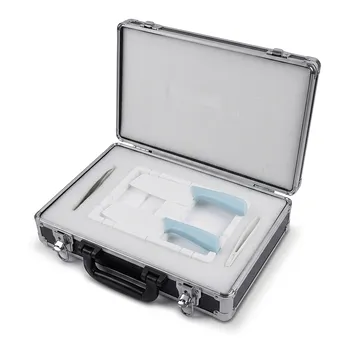
- High Purity PTFE Square Membrane Cutter Equipartition Device for Trace Analysis and Disease Control Centers Clean Non Stick No Leaching
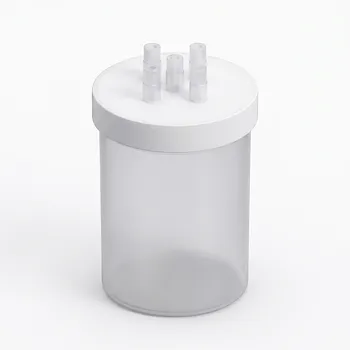
- High Purity 4L PFA Reaction Tank for Proton Exchange Membrane Electrolysis Water Oxygen Separation Systems
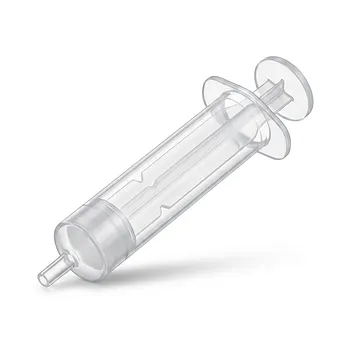
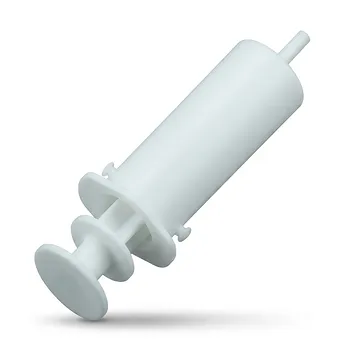
- Corrosion Resistant PFA Syringe Translucent Visual Fluoropolymer Labware 10ml Chemical Handling Tool
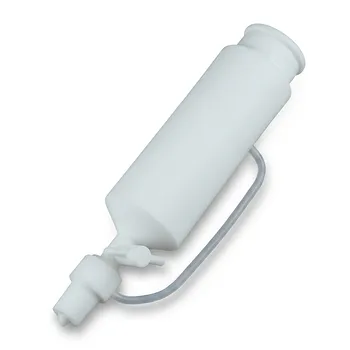
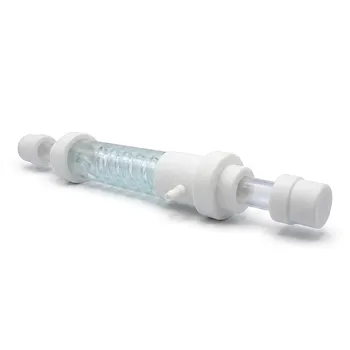
- Custom PTFE Constant Pressure Separatory Funnel 100ml Fluoropolymer Labware for Corrosive Chemical Transfer
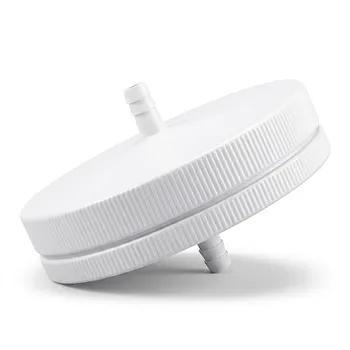
- PTFE Filter Membrane Holder for Hydrogen Chloride and Water Filtration 90mm Environmental Sampling Clamp Customizable
People Also Ask
- How is the pore size and permeability of a PTFE membrane controlled during the stretching process? Expert Control Guide
- How does the hydrophobicity of Polytetrafluoroethylene (PTFE) membranes improve the performance of air and gas filtration?
- How do Teflon membranes enhance chemical resistance in laboratory equipment? Maximize Purity and Durability
- How does the non-stick surface of PTFE membranes improve dust collection efficiency? Boost release & reduce energy.
- How do Polytetrafluoroethylene (PTFE) membranes facilitate membrane distillation? Key Benefits for Water Treatment