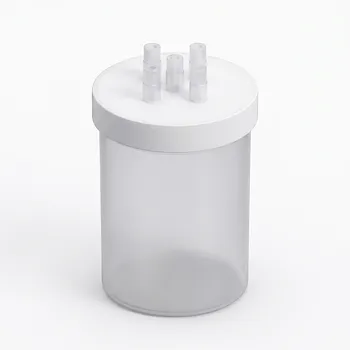
PFA and FEP are easier to shape than PTFE because their molecular structures reduce crystallinity and melt viscosity. PTFE generally requires compression molding, sintering, paste extrusion, or machining, while PFA and FEP can be injection molded, extruded, welded, and, in some applications, blow molded. For custom laboratory apparatus and fluid components, PFA is usually the stronger choice for high-temperature, high-purity, complex geometries, while FEP is attractive when optical clarity, lower-temperature melt flow, or cost-sensitive fabrication matters.
The key distinction is processability, not basic chemical class. PTFE, PFA, and FEP are all highly fluorinated materials with excellent chemical resistance, but PFA and FEP trade a small amount of PTFE's structural regularity for conventional thermoplastic processing and more design freedom.
How Molecular Structure Changes the Design Options
PTFE's highly regular backbone
PTFE consists of a highly regular chain of carbon atoms surrounded by fluorine atoms. This structure produces exceptional chemical inertness, low surface energy, hydrophobicity, and thermal stability.
The same structural regularity also creates high crystallinity and extremely high melt viscosity. PTFE does not flow readily in the molten state, so conventional injection molding and melt extrusion are generally impractical.
PFA's bulky comonomer groups
PFA combines a tetrafluoroethylene backbone with perfluoroalkoxy vinyl ether comonomers. These bulky side-chain groups disrupt the regular packing of the PTFE-like backbone.
The result is reduced crystallinity and sufficient melt flow for conventional thermoplastic processing. PFA retains much of PTFE's chemical and thermal performance while allowing designers to form intricate, integrated components.
FEP's hexafluoropropylene modification
FEP copolymerizes tetrafluoroethylene with hexafluoropropylene. The comonomer also interrupts the regular PTFE chain structure, lowering crystallinity and enabling melt processing.
FEP generally melts and flows at lower temperatures than PFA. That makes it useful for applications where processing ease, optical clarity, or lower-temperature fabrication is more important than the maximum continuous-use temperature.
Processability Determines Manufacturing Strategy
PTFE: shape first, machine later
PTFE is commonly compression molded or sintered into billets, tubes, sheets, and other stock shapes. Fine-powder paste extrusion is also used for certain tubing and profile applications.
These stock shapes can then be machined into custom reaction vessels, valve bodies, electrochemical cell components, seals, and other specialized apparatus. This approach supports customization, but it adds machining time, material waste, and geometric limitations.
PFA: conventional melt molding
PFA can be processed using injection molding, extrusion, blow molding, and related thermal techniques. It can therefore be designed as a single molded component rather than assembled from multiple machined pieces.
This is particularly valuable for fittings, valves, vessels, tubing, and fluid pathways with internal channels or complex external geometry. Fewer joints can reduce potential leak paths and simplify cleaning.
FEP: efficient melt flow and forming
FEP is also suitable for injection molding and melt extrusion. Its lower melting point and favorable melt flow can simplify processing for tubing, liners, films, coatings, and molded laboratory components.
FEP is often selected when translucent or optically clear parts are useful for observing fluid levels, bubbles, phase boundaries, or contamination. Its processing window and final properties remain dependent on the specific resin grade and manufacturing process.
Powder coating for intricate surfaces
Some melt-processable fluoropolymers can be applied as solvent-free powder coatings. When properly processed, these coatings can form thick, continuous, pore-free protective layers over complex substrates.
This approach is relevant when a component needs a chemically resistant fluoropolymer surface but cannot be manufactured entirely from a fluoropolymer. Coating adhesion, substrate compatibility, thickness control, and thermal exposure must be validated for the application.
Suitability for Laboratory Apparatus and Fluid Components
PFA for high-purity vessels and complex fluid paths
PFA is well suited to trace-analysis digestion vessels, high-purity bottles, fittings, valves, and smooth-bore tubing. Its melt processability supports seamless or near-seamless geometries with fewer assembled interfaces.
Its combination of chemical resistance, thermal stability, low surface energy, and available translucent grades is useful in applications involving aggressive reagents and contamination-sensitive workflows. PFA is commonly the more conservative choice for demanding hot-fluid transfer and ultra-trace analysis.
FEP for clarity and lower-temperature applications
FEP is useful for transparent or translucent tubing, liners, films, molded components, and fluid-handling parts operating within its thermal limits. Its lower-temperature melt flow can make it attractive for some geometries and production methods.
FEP should not automatically be treated as an equivalent substitute for PFA. Its lower melting point generally gives it less temperature margin, so the material choice should reflect actual operating temperature, exposure duration, pressure, and chemical environment.
PTFE for machined custom hardware
PTFE remains valuable when the required part is best produced from stock material or when the design benefits from PTFE's established performance profile. Custom-machined PTFE can be appropriate for heavy-duty reaction vessels, specialized seals, gaskets, valve seats, and electrochemical or microwave-digestion components.
PTFE is also a strong option for relatively simple geometries, low-volume prototypes, and parts that require a combination of low friction, chemical inertness, and high-temperature resistance. Its manufacturing constraints become more significant as the design requires integrated channels, thin uniform walls, or large production quantities.
Fluid-system design implications
Melt-processable fluoropolymers allow designers to reduce the number of fittings, bonded joints, and mechanically assembled interfaces. This can support leak-tight fluid paths and lower dead volume, both of which matter in high-purity analytical systems.
However, molding does not eliminate the need for careful design. Gate locations, weld lines, wall thickness, shrinkage, thermal cycling, pressure loading, and cleaning access can all affect component performance.
Understanding the Trade-offs
PFA and FEP are not identical to PTFE
PFA and FEP preserve much of the chemical resistance associated with PTFE, but their comonomers change crystallinity, melting behavior, rheology, mechanical response, and optical properties. Material selection should therefore be based on the complete operating envelope rather than on the word “fluoropolymer” alone.
For example, a component exposed to aggressive reagents may still require evaluation of temperature, pressure, stress, permeation, extractables, and repeated cleaning cycles.
Processing flexibility can add design constraints
Injection molding and extrusion provide geometric freedom, but they also impose manufacturing requirements. Thin sections, sharp internal corners, long flow paths, uneven wall thickness, and difficult-to-vent cavities can create defects or dimensional variation.
A design intended for PFA or FEP should be reviewed with the processor early. Mold-flow behavior, tolerances, cooling, demolding, and post-processing can determine whether the theoretical geometry is practical.
Machined PTFE is not automatically inferior
PTFE's need for sintering or machining is a manufacturing limitation, not proof that the finished part is unsuitable. A well-designed machined PTFE component may be the best solution for a low-volume, highly customized, or mechanically demanding application.
The relevant comparison is often molded PFA or FEP versus machined PTFE, not “modern” material versus “obsolete” material. Production volume, geometry, tolerances, validation requirements, and service conditions should drive the decision.
Claims about porosity and joints require context
Melt molding can reduce the number of interfaces created during assembly, but sintered PTFE parts are not inherently unusable or porous in every application. Surface finish, density, processing quality, machining, joining method, and cleaning procedures all influence contamination and leak performance.
For trace analysis, the finished component should be tested for extractables, leachables, blank contribution, particle shedding, and compatibility with the intended analytical method.
Temperature ratings depend on the grade and duty cycle
PFA generally provides greater high-temperature capability than FEP, while FEP offers lower-temperature processing and useful optical properties. Neither statement replaces a review of the resin manufacturer's continuous-use, intermittent-use, pressure, and chemical compatibility data.
A material that performs well in static contact may behave differently under pressure, flexing, thermal cycling, or prolonged exposure to solvents and oxidizing reagents.
Making the Right Choice for Your Goal
The most reliable selection process starts with the component's geometry, operating conditions, cleanliness requirements, and production volume.
- If your primary focus is maximum chemical and thermal performance in a complex molded component: Choose a suitable PFA grade and validate its temperature, pressure, extractables, and chemical compatibility for the specific service.
- If your primary focus is optical clarity or lower-temperature melt processing: Evaluate FEP, particularly for transparent tubing, liners, films, and fluid components operating within its lower thermal margin.
- If your primary focus is low-volume customization or CNC-defined geometry: Use machined PTFE when its processing route, tolerances, and service properties meet the design requirements.
- If your primary focus is leak-tight, low-dead-volume fluid handling: Prefer a molded PFA or FEP design when it can reduce joints and integrated pathways without creating unacceptable molding defects.
- If your primary focus is trace-analysis cleanliness: Compare finished components using extractables, leachables, blank, particle, and cleaning-validation data rather than relying only on the base polymer name.
The right choice balances fluoropolymer performance with the geometry, manufacturing process, and contamination risk of the finished apparatus.
Summary Table:
| Property | PTFE | PFA | FEP |
|---|---|---|---|
| Processability | Compression molding, sintering, paste extrusion, machining | Injection molding, extrusion, blow molding, welding | Injection molding, extrusion, blow molding, welding |
| Melt Viscosity | Extremely high, not melt-processable | Moderate, melt-processable | Low, melt-processable |
| Crystallinity | High | Reduced | Reduced |
| Max Continuous Use Temp | ~260°C (500°F) | ~260°C (500°F) | ~200°C (392°F) |
| Optical Clarity | Opaque (white) | Translucent | Transparent |
| Chemical Resistance | Excellent | Excellent | Excellent |
| Design Flexibility | Limited by machining; simple geometries | Complex, integrated components; reduced joints | Complex components; good for clarity |
| Typical Lab Applications | Seals, gaskets, valve seats, custom machined parts | High-purity vessels, fittings, tubing, molded complex parts | Transparent tubing, liners, films, lower-temp components |
Need a custom fluoropolymer solution for your lab? At KINTEK, we specialize in high-performance PTFE, PFA, and FEP components, from standard labware to complex custom-machined parts. Our expert team can help you choose the right material and manufacturing process to meet your exact specifications, ensuring purity, durability, and leak-tight performance. Whether you need a single prototype or high-volume production, we're here to help. Contact us today to discuss your project and get a free consultation!
Related Products
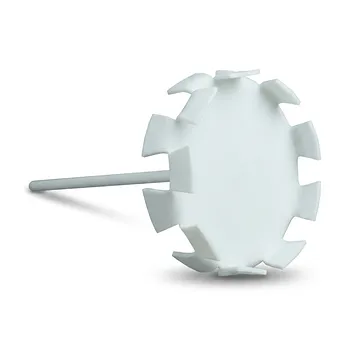
- High Purity PTFE Dispersion Disk for Food and Cosmetic Processing Non Stick Corrosion Resistant Large Stirring Paddle Customizable Fluoropolymer Impeller
- Custom PTFE Reaction Tank Corrosion Resistant Fluoropolymer Chemical Processing Barrel 10L 20L 30L
- High Temperature Resistant Thickened PTFE Beaker 2000ml for Chemical Processing and Laboratory Trace Analysis
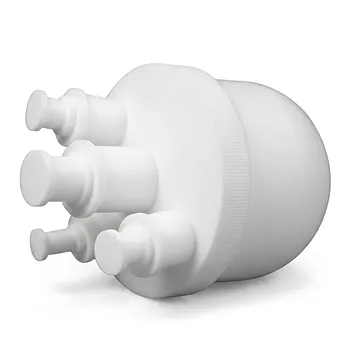
- Large Capacity PTFE Reaction Flask 20L Custom Multi Neck Laboratory Boiling Flask Fluoropolymer Chemical Processing Vessel
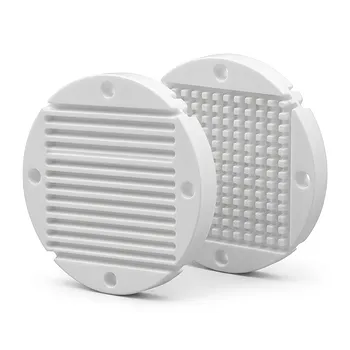
- Corrosion Resistant PTFE Reaction Trays and Custom Teflon Cassettes for Semiconductor Processing and High Purity Chemical Handling
People Also Ask
- How many variations of PTFE disks are available and what parameters do they differ in? Choose the Right Material for Your Application
- What is the chemical formula and material of PTFE Disk? Unlock the Power of C₂F₄ Polymer
- What are the tolerance specifications for the thickness of PTFE disks? Why ±20% is the Industry Standard
- What is Dispersion PTFE used for? Creating Thin, High-Performance Coatings and Films
- Why are simple short-chain perfluoroalkyl carboxylic acids (such as C4 perfluorobutanoate) inadequate direct replacements for long-chain surfactants in high-solid PTFE dispersion manufacturing?