APFO’s structural role is interfacial, not architectural: it acts as a processing surfactant in aqueous PTFE dispersion polymerization rather than becoming part of the PTFE backbone. Its perfluorinated C7F15 tail is compatible with TFE and fluoropolymer surfaces, while its ionic head remains associated with water, lowering interfacial tension and stabilizing the growing PTFE particles. High-purity PFA labware is essential in trace PFAS analysis because it minimizes analyte loss, chemical attack, and contamination, provided the material is appropriately certified and verified by blank testing.
APFO helps create and maintain a stable aqueous PTFE dispersion by positioning itself at the water–fluoropolymer interface. In the laboratory, PFA protects trace PFAS measurements from adsorption and extractable contamination, but only PFAS-controlled, high-purity labware supported by suitable blanks can provide reliable results.
How APFO Supports PTFE Dispersion Polymerization
APFO Has Two Chemically Different Regions
APFO contains a hydrophobic perfluorinated alkyl chain, commonly represented as C7F15, and a hydrophilic anionic head group. This amphiphilic structure allows one part of the molecule to associate with fluoropolymer material while the other remains compatible with the aqueous phase.
The result is an interface-active molecule that can concentrate around fluoropolymer particles suspended in water.
The Perfluorinated Tail Matches the Polymer Environment
The C7F15 chain has strong affinity for the highly fluorinated environment of TFE monomers and growing PTFE chains. This compatibility helps APFO associate with the particle surface instead of behaving like a conventional hydrocarbon surfactant.
That matching is important because PTFE is exceptionally hydrophobic and chemically inert. Without effective interfacial stabilization, newly formed polymer particles would tend to aggregate rather than remain uniformly dispersed.
The Ionic Head Stabilizes the Aqueous Dispersion
The anionic head group remains hydrated in the water phase and contributes electrostatic stabilization around the PTFE particles. The surfactant layer helps keep particles separated during polymerization.
APFO therefore performs a colloidal stabilization function. It is not a structural comonomer and does not form the repeating molecular backbone of PTFE.
Lower Surface Tension Enables High-Solids Dispersions
By lowering aqueous surface tension and reducing the tendency of particles to coalesce, APFO supports stable PTFE dispersions at high solid contents, reported in the reference as approximately 45–50% by weight.
This stability affects particle formation, dispersion handling, and the consistency of the resulting fluoropolymer product.
Why APFO Became a Manufacturing and Analytical Concern
Processing Function Does Not Eliminate Environmental Risk
APFO and related PFOA chemistry were historically effective processing aids, but their environmental persistence and potential for bioaccumulation led to strict regulatory action and global phase-outs.
The fact that a substance is useful during polymerization does not make its residual presence acceptable in finished materials or waste streams.
Modern Processes Reduce Legacy Surfactant Residues
Manufacturers have moved toward alternative fluorinated processing aids, including fluoropolyether-based substances, and toward polymerization approaches that avoid legacy PFOA-related chemistry.
These changes can reduce residual surfactant and organic contamination in modern fluoropolymer resins. They do not, however, remove the need to test the resin, finished labware, and analytical workflow.
Manufacturing and Measurement Are Connected
Trace PFAS analysis is especially vulnerable to background contamination because the compounds being measured may occur at very low concentrations. Residual processing chemicals, contaminated tubing, seals, solvents, containers, or handling materials can all influence the result.
A clean manufacturing process and a controlled analytical workflow are therefore part of the same quality system.
Why PFA Is Valuable for Trace PFAS Work
PFA Resists Aggressive Sample Preparation
PFA has exceptional chemical resistance and can tolerate many aggressive reagents used in extraction, digestion, cleaning, and sample treatment. It is less likely than ordinary plastics or reactive metals to degrade, swell, or release contaminants under these conditions.
This chemical inertness helps preserve sample composition throughout preparation and storage.
Low Extractables Protect the Analytical Blank
High-purity PFA is manufactured to provide very low levels of extractable and leachable impurities. It also has low metal-ion leaching characteristics, which is important when workflows measure PFAS alongside trace elemental contaminants.
The practical benefit is a lower and more stable laboratory background. A lower blank improves the ability to distinguish a real sample signal from contamination introduced by the container.
PFA Can Reduce Analyte Loss
Hydrophobic PFAS analytes can interact with container surfaces and may be lost from solution during transfer or storage. PFA’s chemically inert, fluorinated surface can reduce problematic adsorption compared with some conventional container materials, including glass in certain PFAS workflows.
Preventing wall losses supports more accurate recovery and improves reproducibility between samples.
PFA Provides Broad Workflow Compatibility
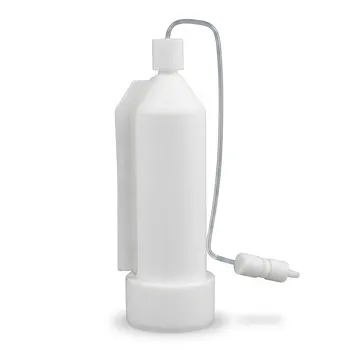
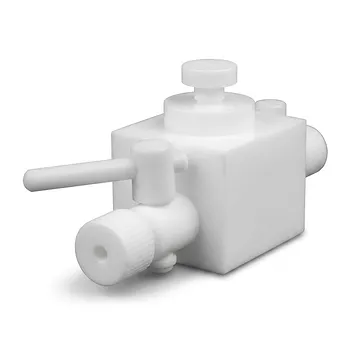
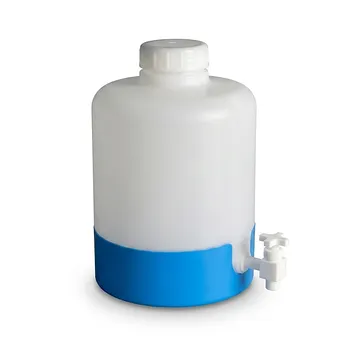
PFA wash bottles, reagent bottles, beakers, centrifuge tubes, digestion vessels, and custom fluid-transfer components can be used across multiple stages of a controlled analytical process.
Using compatible materials throughout the workflow reduces the number of interfaces where contamination or analyte loss can occur.
Understanding the Trade-offs
PFA Is Not Automatically PFAS-Free
PFA is itself a fluoropolymer, so the label “PFA” alone does not prove that a product is suitable for trace PFAS analysis. Manufacturing history, additives, surface treatments, processing aids, and handling can affect its contamination profile.
For critical work, specify high-purity, PFAS-free or PFAS-controlled PFA with appropriate certification and lot-specific extractables information where available.
Material Selection Does Not Replace Blank Controls
Even high-purity labware can be contaminated during manufacturing, packaging, transport, or laboratory handling. Reagent blanks, equipment blanks, field blanks where relevant, and container blanks remain necessary.
A container should be treated as one controlled variable in the method, not as a guarantee of clean data.
Fluoropolymer Products Can Differ by Quality Grade
Commercial PFA items may vary in resin grade, fabrication method, cleaning history, and allowable extractables. A general industrial component may not meet the cleanliness requirements of a trace analytical workflow.
The specification should cover the material, manufacturing controls, cleaning procedure, packaging, and verification method.
Residual Manufacturing Chemistry Requires Verification
PFOA-free or APFO-free production is valuable, but it should be supported by analytical evidence when trace PFAS measurements depend on extremely low background levels. The relevant question is not only whether a legacy surfactant was intentionally used, but whether the finished component contributes detectable target compounds.
Making the Right Choice for Your Goal
Select the labware and controls according to the measurement risk, not simply the material name.
- If your primary focus is stable PTFE dispersion manufacturing: Treat APFO as an interfacial processing surfactant that lowers surface tension and stabilizes high-solids PTFE particles, while controlling or replacing it to meet current regulatory requirements.
- If your primary focus is trace PFAS quantification: Use certified high-purity, PFAS-controlled PFA throughout sample preparation and storage, and verify its contribution through procedural and container blanks.
- If your primary focus is trace elemental analysis: Choose high-purity PFA for its low extractables, low metal-ion leaching, and resistance to strong digestion reagents.
- If your primary focus is finished fluoropolymer cleanliness: Confirm the resin and fabricated components through targeted extractables and leachables testing rather than relying solely on a PFOA-free process claim.
Understanding APFO’s interfacial function and validating PFA’s actual contamination profile are the foundations of defensible fluoropolymer manufacturing and trace PFAS analysis.
Summary Table:
| Aspect | APFO's Role | PFA Labware's Role |
|---|---|---|
| Primary Function | Interfacial surfactant (not polymer backbone) | Inert, low-extractable material for sample handling |
| Mechanism | C7F15 tail associates with fluoropolymer; ionic head stabilizes aqueous dispersion | Minimizes analyte adsorption and chemical attack |
| Impact on Analysis | Residual APFO can contaminate; modern processes reduce residues | Certified high-purity PFA reduces background contamination |
| Key Consideration | Must be controlled or replaced for regulatory compliance | Requires blank testing to verify cleanliness |
Ensure accurate, contamination-free PFAS analysis with our high-purity PFA labware. Our products are manufactured from certified low-extractable resins and are available in a wide range of configurations, from basic beakers and bottles to custom digestion vessels. With our PTFE/PFA custom CNC machining capabilities, we can design and produce bespoke labware tailored to your specific analytical workflows, including high-throughput systems. Contact us today to discuss your requirements and benefit from our expertise in trace analysis and fluoropolymer manufacturing. Contact us now.
Related Products
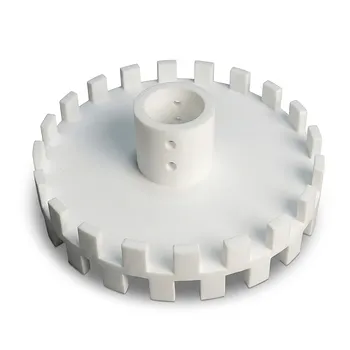
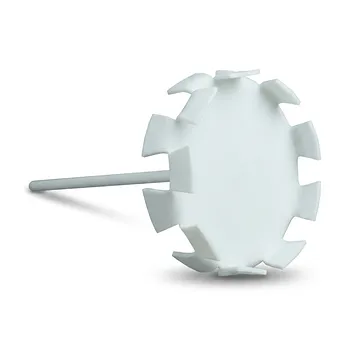
- Corrosion Resistant PTFE Turbine Stirring Disk and High Performance Fluoropolymer Dispersion Impeller for Industrial Chemical Mixing
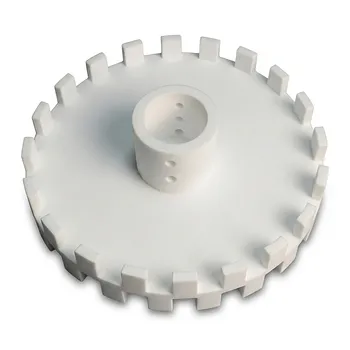
- High Purity PTFE Dispersion Disk for Food and Cosmetic Processing Non Stick Corrosion Resistant Large Stirring Paddle Customizable Fluoropolymer Impeller
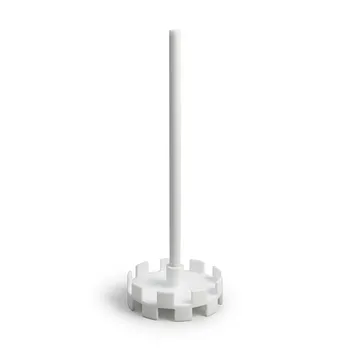
- Corrosion Resistant PTFE Stirring Disk Chemical Dispersion Plate 350mm Diameter Fluoropolymer Mixer Accessory
- High Purity Corrosion Resistant PTFE Dispersion Disk and Inert Stirring Paddle for Food Pharmaceutical and Cosmetic Mixing
- Corrosion Resistant PTFE Stirring Impeller and Customizable Polytetrafluoroethylene Dispersion Disk
People Also Ask
- How do Polytetrafluoroethylene (PTFE) impellers enhance efficiency? Maximize Pump Lifespan & Low-Friction Performance
- What are the challenges in manufacturing PTFE impellers? Overcoming the Complexities of Machining
- Can both PTFE and stainless steel impellers be sterilized in an autoclave? Yes, and here's how to choose.
- What are the non-stick properties of PTFE impellers? Achieve Purity & Prevent Buildup in Critical Mixing
- What are the main industrial applications of PTFE impellers? Handling Corrosive & High-Purity Processes