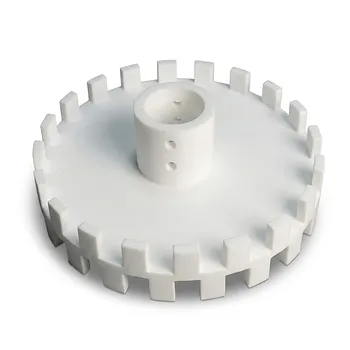
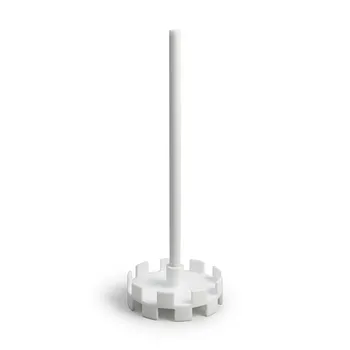
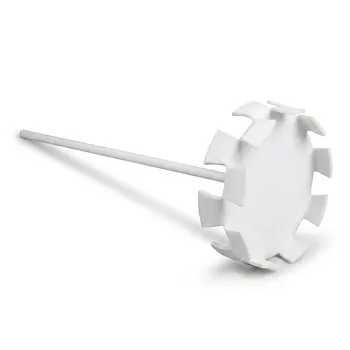
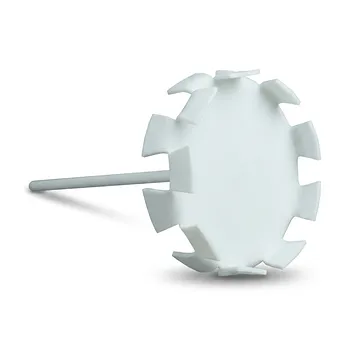
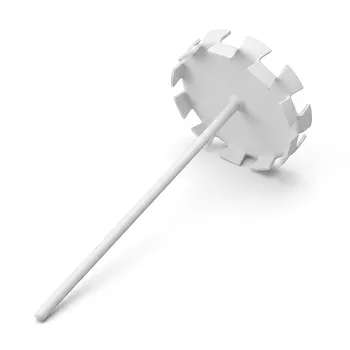
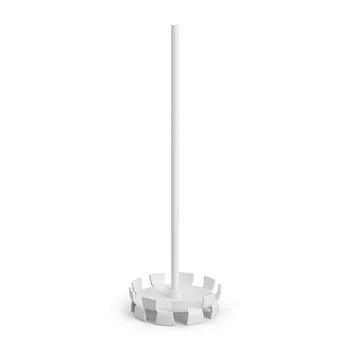
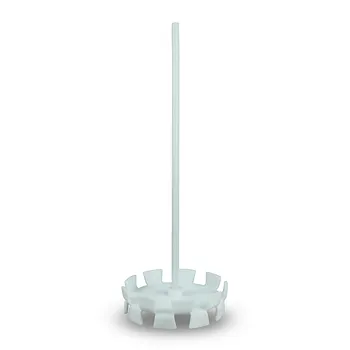
PTFE impellers enhance pump performance by combining near-universal chemical inertness with the lowest friction coefficient of any solid material. These components significantly extend equipment lifespan by eliminating corrosive wear and improve efficiency by reducing the energy required to move fluids while preventing performance-robbing material buildup.
Core Takeaway: PTFE impellers provide a dual benefit of extreme durability in corrosive environments and high operational efficiency through their unique non-stick and low-friction properties, making them essential for high-reliability chemical processing.
Superior Chemical Inertness and Longevity
Resistance to Aggressive Process Media
PTFE is virtually immune to chemical attack from almost all process media, including aggressive acids, bases, and solvents. This resistance ensures the impeller maintains its structural integrity where metallic or alloy alternatives would suffer from rapid thinning or pitting.
Extending Service Life
Because the material does not corrode, the service life of a PTFE impeller is significantly longer than that of traditional metals. This durability is especially critical in industries like water treatment and chemical manufacturing, where constant exposure to purifiers and reactants is common.
Thermal and Environmental Stability
The material possesses high thermal stability, allowing it to maintain its shape and performance characteristics across a wide range of operating temperatures. This stability prevents the mechanical failures often associated with the thermal expansion or degradation of lesser materials.
Efficiency through Fluid Dynamics and Low Friction
Minimizing Energy Consumption
PTFE has one of the lowest coefficients of friction among solid materials. This property reduces the energy lost to mechanical drag and fluid resistance, allowing the pump to move the same volume of liquid with less power.
Reducing the Risk of Cavitation
The smooth, low-friction surface of PTFE impellers optimizes fluid flow and reduces the risk of cavitation. By minimizing the turbulent pressure drops that cause vapor bubbles to form, the pump operates more smoothly and suffers less internal mechanical damage.
Maintaining Consistent Flow Rates
The non-stick properties of PTFE prevent polymers, scale, or minerals from building up on the impeller blades. This ensures that the pump maintains a consistent flow rate over time, preventing the efficiency decay typically caused by "crusting" or material accumulation.
Understanding the Trade-offs and Limitations
Chemical and Structural Vulnerabilities
While highly resistant, PTFE can still be attacked by molten alkali metals and specific fluorinated compounds. Furthermore, pure PTFE is softer than many metals, which may limit its use in high-pressure applications where structural rigidity is the primary concern.
The Complexity of Material Enhancements
To overcome structural weaknesses, manufacturers often add performance-enhancing fillers. However, these fillers must be carefully selected to withstand the high temperatures required for sintering (curing) the PTFE, or they risk compromising the impeller's integrity.
Mechanical Wear and Tear
Although PTFE reduces friction, it is still subject to mechanical wear in processes involving abrasive slurries. In these specific cases, the "softness" of the material can lead to faster erosion compared to hardened steel or specialized ceramic-coated components.
How to Apply This to Your Project
Making the Right Choice for Your Goal
Choosing the correct impeller configuration depends on your specific chemical environment and mechanical requirements.
- If your primary focus is maximum chemical purity: Use pure, unfilled PTFE to ensure zero contamination and total resistance to aggressive acids or bases.
- If your primary focus is high-load or abrasive applications: Opt for PTFE impellers reinforced with fillers like glass or carbon to increase structural strength and wear resistance.
- If your primary focus is reducing operational downtime: Prioritize PTFE's non-stick properties to eliminate the need for frequent cleaning and unplanned maintenance due to scale buildup.
By aligning the unique low-friction and inert properties of PTFE with your specific fluid-handling needs, you can achieve a more reliable and energy-efficient pumping system.
Summary Table:
| Feature | Primary Benefit | Ideal Application |
|---|---|---|
| Chemical Inertness | Prevents corrosive wear and structural thinning | Aggressive acids, bases, and solvents |
| Low Friction | Reduces energy consumption and mechanical drag | High-efficiency, low-power fluid transfer |
| Non-stick Surface | Prevents scale, mineral, and polymer buildup | Maintaining consistent flow rates |
| Thermal Stability | Maintains integrity across wide temperature ranges | Varying thermal process environments |
| Reduced Cavitation | Minimizes turbulent pressure drops and damage | Smooth, high-reliability pumping |
Optimize Your Fluid Systems with KINTEK’s Fluoropolymer Expertise
Elevate your operational reliability with KINTEK’s comprehensive range of high-performance labware and industrial components. From everyday essentials like beakers, crucibles, reagent bottles, and centrifuge tubes to specialized fluid transfer components (tubing, fittings, valves) and sample prep tools, we provide the durability your processes demand.
Beyond standard supplies, KINTEK excels in advanced derivative and reaction apparatus, including custom electrochemical cells, hydrothermal synthesis liners, and microwave digestion vessels. Every product is crafted from premium PTFE and PFA, backed by our end-to-end custom CNC fabrication capabilities. Whether you require complex non-standard machined parts or high-volume orders, we deliver bespoke solutions tailored to your unique chemical environment.
Ready to enhance your lab’s efficiency? Contact our engineering team today to discuss your custom requirements and experience the KINTEK advantage.
Related Products
- Corrosion Resistant PTFE Turbine Stirring Disk and High Performance Fluoropolymer Dispersion Impeller for Industrial Chemical Mixing
- Corrosion Resistant PTFE Stirring Impeller and Customizable Polytetrafluoroethylene Dispersion Disk
- PTFE Dispersion Disk Food Cosmetic Grade Non Stick Corrosion Resistant Large Stirring Paddle Customizable Impeller
- High Purity PTFE Dispersion Disk for Food and Cosmetic Processing Non Stick Corrosion Resistant Large Stirring Paddle Customizable Fluoropolymer Impeller
- High Purity Corrosion Resistant PTFE Dispersion Disk and Inert Stirring Paddle for Food Pharmaceutical and Cosmetic Mixing
People Also Ask
- What are the challenges in manufacturing PTFE impellers? Overcoming the Complexities of Machining
- Can both PTFE and stainless steel impellers be sterilized in an autoclave? Yes, and here's how to choose.
- What are the non-stick properties of PTFE impellers? Achieve Purity & Prevent Buildup in Critical Mixing
- What are the main industrial applications of PTFE impellers? Handling Corrosive & High-Purity Processes
- Why is specialized equipment needed for PTFE impeller manufacturing? Precision Machining for Critical Performance