All Questions
What Is The Function Of Lab Magnetic Stir Bars In Cau-63 Preparation? Achieve Homogeneity & High Phase Purity
Discover how magnetic stir bars optimize CAU-63 synthesis by ensuring homogeneous mixing, simultaneous nucleation, and uniform particle growth.
How Does A Ptfe Rotor Function In The Context Of An Overhead Laboratory Stirrer? Learn The Mechanics Of Inert Mixing.
Discover how PTFE rotors provide chemically inert fluid displacement and shear forces for overhead stirrers in aggressive laboratory environments.
What Factors Influence The Wear And Operational Lifetime Of A Ptfe Rotor? Maximize Durability & Performance
Discover how pressure, speed, and material composition impact PTFE rotor wear. Learn key strategies to maximize service life and lab efficiency.
Why Is Ptfe Preferred Over Metal For Icp-Ms Rotors? Eliminate Metallic Contamination And Ensure Trace-Level Sensitivity.
Discover why PTFE is the industry standard for ICP-MS rotors. Eliminate metallic contamination and ensure sample integrity with inert fluoropolymers.
What Are The Typical Pressure And Temperature Limitations For Ptfe Rotors In Fluid-Handling Applications? Performance Guide
Understand the critical pressure and temperature trade-offs for PTFE rotors to prevent 'cold flow' and ensure system reliability in fluid handling.
How Does The Design Of A Ptfe Rotor Minimize Dead Volume? Achieve Microliter Precision In Fluidic Systems
Learn how PTFE rotors use geometric alignment and radiused transitions to reduce dead volume to 1-10µL for high-precision analytical fluidics.
What Are The Advantages Of Using Glass-Filled Or Carbon-Filled Ptfe For Rotor Fabrication? Enhance Mechanical Stability
Learn how glass and carbon fillers improve PTFE rotor performance by reducing creep, increasing wear resistance, and enhancing thermal conductivity.
How Does A Ptfe Rotor Achieve A Leak-Tight Seal In A Rotary Selector Valve? The Power Of Axial Face Sealing
Learn how axial compression and face sealing allow PTFE rotors to create leak-tight seals in rotary selector valves for superior fluid integrity.
What Material Properties Make Polytetrafluoroethylene (Ptfe) Suitable For Use In High-Precision Laboratory Rotors?
Discover why PTFE's chemical inertness, low friction, and thermal stability make it the ideal material for high-precision laboratory rotors.
How Do Ptfe Rotors Benefit Specialty Machinery? Non-Stick & Insulative Solutions For Purity
Learn how PTFE rotors prevent fouling and static discharge in machinery, ensuring high purity, safety, and operational longevity in fluid systems.
What Are The Benefits Of Using Reinforced Or Filled Ptfe For Industrial Rotors And Valves? Enhance Strength & Durability
Learn how reinforced PTFE grades improve compressive strength, wear resistance, and dimensional stability for high-pressure industrial applications.
Why Are Polytetrafluoroethylene (Ptfe) Rotors Specified For Pharmaceutical And Biotech? Ensure Purity & Compliance.
Learn why PTFE rotors are essential for pharma and food processing, offering chemical inertness, FDA compliance, and efficient cleaning cycles.
How Do Polytetrafluoroethylene (Ptfe) Impellers Enhance Efficiency? Maximize Pump Lifespan & Low-Friction Performance
Learn how PTFE impellers improve pump lifespan and efficiency through chemical inertness, low friction, and non-stick properties in harsh processing.
What Are The Primary Advantages Of Ptfe Rotors In Laboratory Environments? Ensure High Purity And Chemical Immunity.
Discover the benefits of PTFE rotors for labs: exceptional chemical resistance, thermal stability, and low friction for high-purity research.
What Materials And Constructions Are Used For Ptfe Rotors? Optimized Designs For Industrial High-Torque Mixing
Explore PTFE rotor constructions—solid, encapsulated, and filled—to balance chemical inertness with mechanical strength in industrial processes.
How Are Ptfe Stirrers And Shafts Typically Constructed For Industrial Use? Choose The Right Method For Your Process
Learn the 3 primary PTFE stirrer constructions: solid PTFE, steel-core with lining, or coated. Select the right balance of strength and chemical resistance.
What Are The Advantages Of Using Ptfe Stirrers And Shafts In Corrosive Applications? Ensure Purity And Reliability
Discover why PTFE stirrers and shafts offer unmatched chemical inertness, thermal stability, and non-stick performance for corrosive applications.
What Are The Advantages Of Using Ptfe Impellers Despite Their Manufacturing Challenges? Unlock Superior Performance In Harsh Conditions
Discover why PTFE impellers are chosen for unmatched chemical resistance, non-stick properties, and low friction, despite complex machining.
What Are The Cost And Availability Differences Between Ptfe And Stainless Steel Impellers? A Guide To Material Selection
Compare PTFE vs. stainless steel impellers: cost, availability, chemical resistance, and lifespan. Make the right choice for your application.
How Do Stainless Steel Impellers Compare To Ptfe Impellers In Terms Of Non-Stick Properties? Prevent Residue & Buildup
PTFE impellers offer vastly superior non-stick properties vs. stainless steel for sticky substances, ensuring purity and consistent mixing performance.
What Are The Non-Stick Properties Of Ptfe Impellers? Achieve Purity & Prevent Buildup In Critical Mixing
Learn how PTFE impellers' exceptional non-stick properties prevent residue, ensure process purity, and handle sticky materials like adhesives and polymers.
Can Both Ptfe And Stainless Steel Impellers Be Sterilized In An Autoclave? Yes, And Here's How To Choose.
Learn why PTFE and stainless steel impellers are autoclave-safe and how to select the right material for your mixing application.
What Are The Limitations Of Ptfe Impellers In Terms Of Durability? Balancing Chemical Resistance And Mechanical Wear
Explore the key durability limitations of PTFE impellers, including susceptibility to mechanical wear and a strict thermal ceiling of 260°C (500°F).
What Are The Strength And Durability Characteristics Of Stainless Steel Impellers? Superior Mechanical & Thermal Performance
Explore the strength, heat resistance, and durability of stainless steel impellers versus PTFE for high-speed, abrasive, and high-temperature mixing.
How Do Stainless Steel Impellers Perform In Corrosive Environments? Weighing Strength Against Chemical Risk
Stainless steel impellers offer strength & heat resistance but risk corrosion & contamination in aggressive chemical environments. Learn the trade-offs.
What Are The Advantages Of Ptfe Impellers In Terms Of Chemical Resistance? Unmatched Inertness For Demanding Applications
Discover why PTFE impellers offer superior chemical resistance to strong acids, bases, and solvents, ensuring process purity and reliability.
What Are The Main Materials Considered For Laboratory Impellers? Ptfe Vs. Stainless Steel
Explore the critical trade-off between PTFE's chemical resistance and stainless steel's mechanical durability for your lab impeller needs.
Related Products
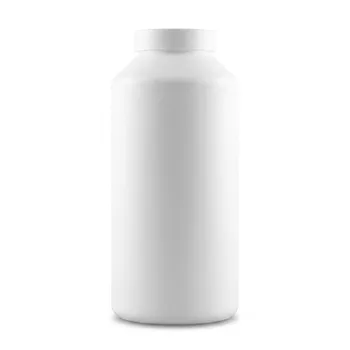
Large Capacity PTFE Reaction Bottle 2L Wide Mouth Fluoropolymer Extraction Vessel Compatible with Rotary Agitators

PTFE Deep Evaporating Dishes Customizable Laboratory and Industrial Solutions
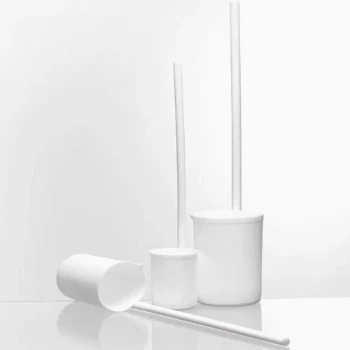
PTFE Chemical Solvent Sampling Spoon
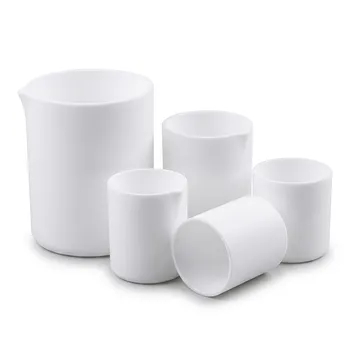
Large Scale PTFE Beakers and Flasks for High Temperature Corrosion Resistant Laboratory Applications with Custom CNC Fabrication
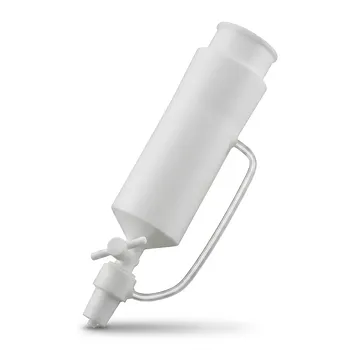
Custom PTFE Constant Pressure Separatory Dropping Funnel Corrosion Resistant Low Background Labware Trace Analysis Dropping Funnel