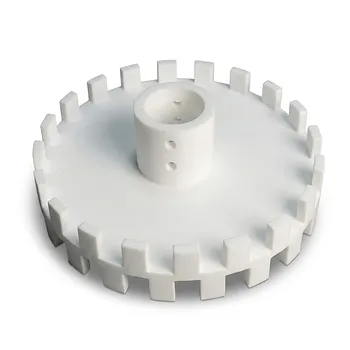
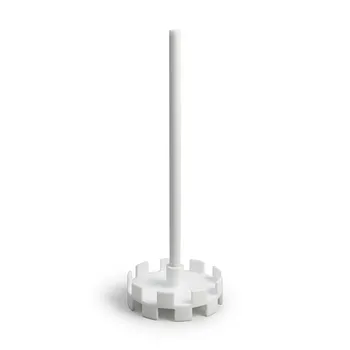
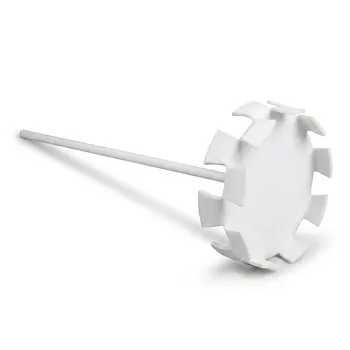
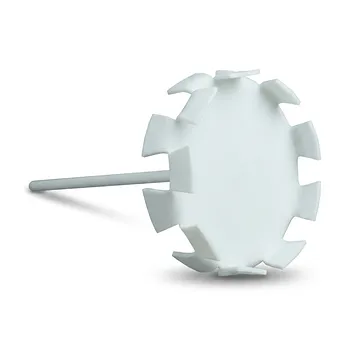
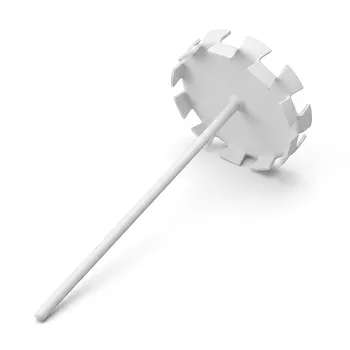
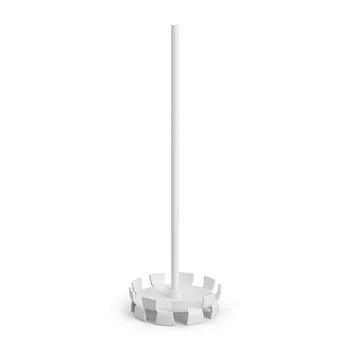
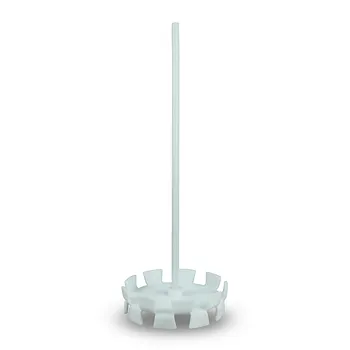
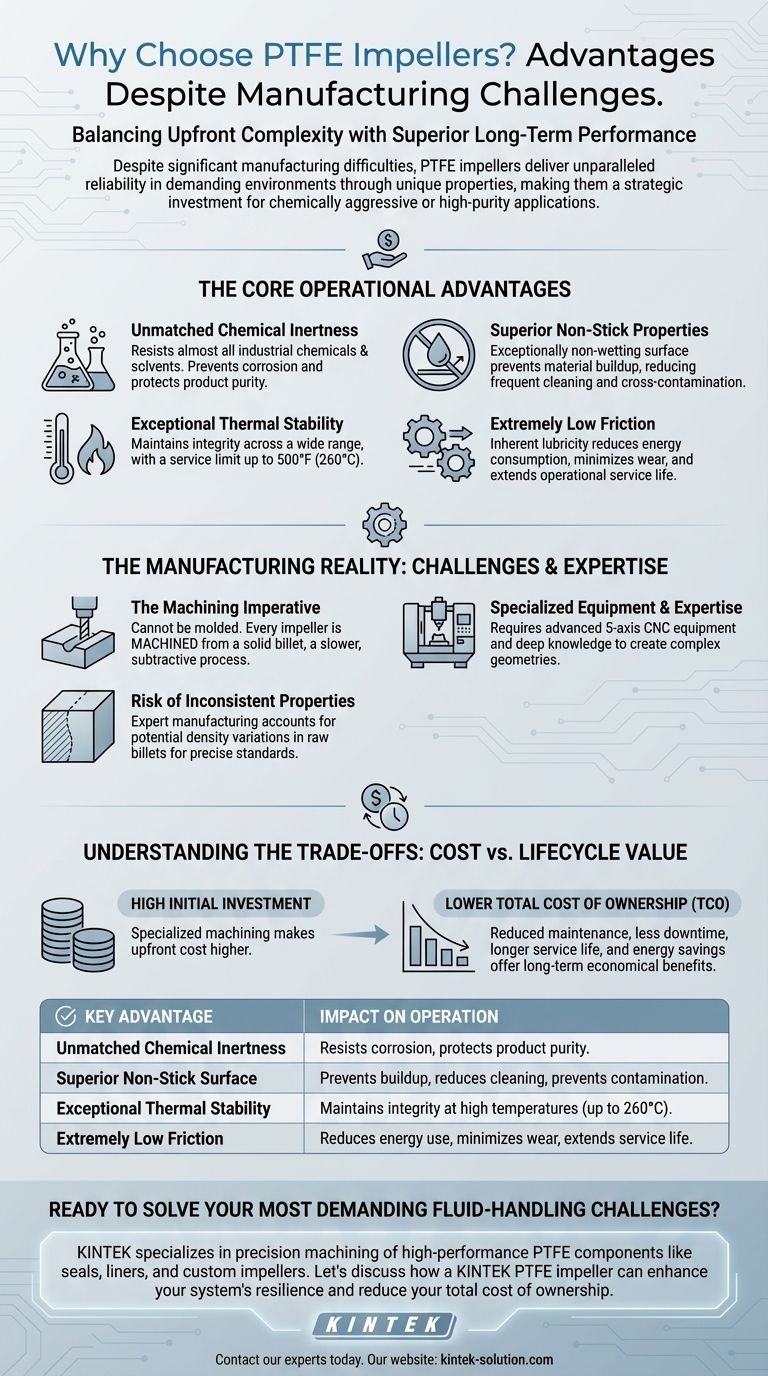
Despite significant manufacturing challenges, PTFE impellers are chosen for their unique combination of properties that deliver unparalleled reliability in demanding environments. Their value lies in unmatched chemical resistance, non-stick surfaces, broad thermal stability, and an extremely low coefficient of friction, which together solve critical operational problems that other materials cannot.
The core decision to use a PTFE impeller is a strategic trade-off. You accept a higher initial cost and complex manufacturing process in exchange for superior long-term performance, significantly reduced maintenance, and a lower total cost of ownership in chemically aggressive or high-purity applications.
The Core Operational Advantages of PTFE
The benefits of PTFE are not just incremental improvements; they are fundamental properties that change how equipment performs and lasts in harsh conditions.
Unmatched Chemical Inertness
PTFE is virtually inert to almost all industrial chemicals and solvents. This means it will not corrode, degrade, or leach contaminants into the fluid being processed.
This property is critical for protecting both the impeller itself and the purity of the end product, making it essential in chemical processing, pharmaceutical, and food-grade applications.
Superior Non-Stick Properties
The surface of PTFE is exceptionally non-stick and non-wetting. This characteristic prevents materials from building up on the impeller blades.
This reduces the need for frequent cleaning, prevents cross-contamination between batches, and maintains consistent fluid dynamics and pumping efficiency over time.
Exceptional Thermal Stability
PTFE maintains its integrity across a wide range of temperatures, with a service limit often cited around 500°F (260°C).
This thermal resilience allows PTFE impellers to be used reliably in high-temperature processes where other polymers would fail, providing a wider operational window.
Extremely Low Friction
PTFE has one of the lowest coefficients of friction of any solid material. This inherent lubricity means the impeller moves through fluid with less resistance.
The direct results are reduced energy consumption for the pump motor, less wear on the impeller and associated components, and a longer operational service life.
The Manufacturing Reality: Why PTFE is Challenging
Understanding the advantages requires acknowledging why these impellers are a specialized product. The material's unique properties make it impossible to process with conventional methods.
The Machining Imperative
Unlike most polymers, PTFE cannot be injection molded or melt-processed into complex shapes. It lacks a true fluid phase, so it cannot flow into a mold.
Consequently, every PTFE impeller must be machined from a solid billet of raw material. This is a subtractive process that is inherently slower and produces more waste than molding.
The Need for Specialized Equipment and Expertise
Machining PTFE is a craft that requires deep knowledge of both polymer science and advanced machining techniques. It often demands sophisticated 5-axis CNC equipment to create the complex blade geometries.
The process is time-consuming, with a single impeller taking several hours to produce, which directly contributes to its higher cost.
The Risk of Inconsistent Properties
The process of creating the initial PTFE billet can lead to variations in density and other physical properties throughout the block.
Expert manufacturers must know how to account for these potential inconsistencies to ensure the final machined impeller meets precise performance and structural standards.
Understanding the Trade-offs: Cost vs. Lifecycle Value
The decision to specify a PTFE impeller is rarely based on initial price alone. It is an investment in operational stability and long-term savings.
High Initial Investment
The specialized, time-consuming machining process makes the upfront cost of a PTFE impeller significantly higher than one made from a moldable polymer or even some metals.
Reduced Maintenance and Downtime
This initial cost is frequently offset by a dramatic reduction in maintenance costs. An impeller that doesn't corrode or require constant cleaning minimizes process downtime, which is often far more expensive than the component itself.
Lower Total Cost of Ownership
When evaluating the entire lifecycle, PTFE often proves more economical. The combination of longer service life, lower energy use, and reduced maintenance labor creates a lower total cost of ownership (TCO) in the right application.
Making the Right Choice for Your Application
Choosing a PTFE impeller is justified when the operational environment demands its specific set of elite properties.
- If your primary focus is handling aggressive chemicals: PTFE is the definitive choice for preventing corrosion and ensuring equipment longevity.
- If your primary focus is product purity and preventing buildup: The non-stick and inert properties of PTFE are essential for pharmaceutical, food, and semiconductor applications.
- If your primary focus is minimizing long-term operational costs: The reduced maintenance and energy savings offered by PTFE can justify the initial investment in high-use systems.
- If your application involves non-corrosive fluids at moderate temperatures: A less expensive material like polypropylene or stainless steel is likely a more practical and cost-effective solution.
Ultimately, specifying a PTFE impeller is a calculated investment in operational resilience for your most critical fluid-handling challenges.
Summary Table:
| Key Advantage | Impact on Operation |
|---|---|
| Unmatched Chemical Inertness | Resists corrosion, protects product purity in chemical, pharma, and food processing. |
| Superior Non-Stick Surface | Prevents material buildup, reduces cleaning, and prevents cross-contamination. |
| Exceptional Thermal Stability | Maintains integrity at high temperatures (up to 260°C / 500°F). |
| Extremely Low Friction | Reduces energy consumption, minimizes wear, and extends service life. |
Ready to solve your most demanding fluid-handling challenges?
The decision to invest in a PTFE impeller is a strategic one, balancing upfront manufacturing complexity against long-term operational superiority. For semiconductor, medical, laboratory, and industrial applications where chemical resistance, purity, and reliability are non-negotiable, PTFE is the definitive choice.
At KINTEK, we specialize in precision machining of high-performance PTFE components like seals, liners, labware, and custom impellers. We transform the challenges of PTFE fabrication into your competitive advantage, delivering custom solutions from prototypes to high-volume orders.
Let's discuss how a KINTEK PTFE impeller can enhance your system's resilience and reduce your total cost of ownership.
Contact our experts today to get started
Visual Guide
Related Products
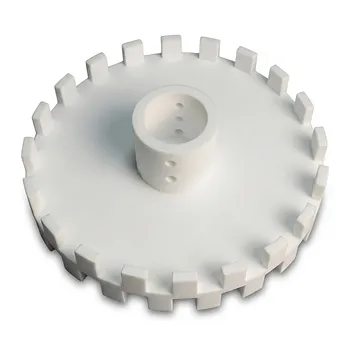
- Corrosion Resistant PTFE Turbine Stirring Disk and High Performance Fluoropolymer Dispersion Impeller for Industrial Chemical Mixing
- Corrosion Resistant PTFE Stirring Impeller and Customizable Polytetrafluoroethylene Dispersion Disk
- PTFE Dispersion Disk Food Cosmetic Grade Non Stick Corrosion Resistant Large Stirring Paddle Customizable Impeller
- High Purity PTFE Dispersion Disk for Food and Cosmetic Processing Non Stick Corrosion Resistant Large Stirring Paddle Customizable Fluoropolymer Impeller
- High Purity Corrosion Resistant PTFE Dispersion Disk and Inert Stirring Paddle for Food Pharmaceutical and Cosmetic Mixing
People Also Ask
- How do Polytetrafluoroethylene (PTFE) impellers enhance efficiency? Maximize Pump Lifespan & Low-Friction Performance
- What are the challenges in manufacturing PTFE impellers? Overcoming the Complexities of Machining
- Can both PTFE and stainless steel impellers be sterilized in an autoclave? Yes, and here's how to choose.
- What are the non-stick properties of PTFE impellers? Achieve Purity & Prevent Buildup in Critical Mixing
- What are the main industrial applications of PTFE impellers? Handling Corrosive & High-Purity Processes