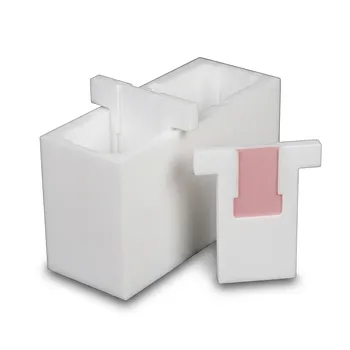
Filled PTFE grades outperform virgin PTFE in rotor fabrication by offering superior mechanical stability and wear resistance in demanding industrial environments. While virgin PTFE is unmatched in pure chemical inertness, it lacks the structural rigidity required for high-pressure cycling or handling abrasive slurries. Integrating glass or carbon fillers transforms the polymer into a robust composite capable of maintaining its shape and functionality under extreme physical stress.
Core Takeaway: Choosing glass or carbon-filled PTFE over virgin grades is essential for rotors that must withstand high pressures, abrasive particulates, or heavy mechanical loads. These fillers significantly reduce "creep" and wear, extending the operational lifespan of the component at the cost of slight increases in mating-surface friction or specialized chemical compatibility.
Enhancing Mechanical Integrity and Longevity
Eliminating Creep and Cold Flow
Virgin PTFE is prone to "cold flow," a phenomenon where the material deforms over time under a constant load. Glass and carbon fillers act as a structural internal skeleton, significantly reducing this tendency to creep and ensuring the rotor maintains its dimensional tolerances. This stability is critical for preventing leaks and maintaining precise flow rates in rotary valves and pumps.
Increasing Compressive Strength
Filled PTFE grades exhibit much higher compressive strength than their unfilled counterparts. This allows the rotor to handle high-pressure cycling without losing its structural shape or failing prematurely. By reinforcing the polymer matrix, these composites provide a level of safety and reliability that pure PTFE cannot achieve in heavy-duty applications.
Maximizing Wear Resistance
In applications involving viscous slurries or abrasive particulates, virgin PTFE wears down rapidly due to its soft surface. Filled grades are engineered for durability, providing the hardness necessary to resist surface erosion. This increased resistance directly translates to longer service intervals and reduced downtime for equipment like gear pumps and wastewater treatment machinery.
Material-Specific Advantages: Glass vs. Carbon
The Durability of Glass Fillers
Glass is the most common filler, typically added at a ratio of approximately 25% by weight to enhance strength and durability. It is particularly effective at increasing resistance to creep and wear in high-pressure hydraulic applications, such as piston rings. Furthermore, if the material undergoes inert gas sintering, its porosity is further reduced, making it even more impermeable.
The Conductivity and Lubricity of Carbon
Carbon fillers, whether in powder or fiber form, provide unique functional benefits such as electrical and thermal conductivity. This makes carbon-filled PTFE an ideal choice for applications requiring static dissipation to prevent electrical buildup. Additionally, carbon acts as a natural lubricant, significantly improving wear resistance while maintaining a low coefficient of friction.
Thermal Management in High-Speed Rotors
Because carbon-filled PTFE has higher thermal conductivity, it is better at dissipating heat generated by friction during high-speed rotation. This prevents localized melting or thermal degradation of the rotor. This property is a significant advantage over glass fillers, which do not offer the same level of thermal management.
Understanding the Trade-offs
Impact on Mating Surfaces
The primary disadvantage of glass-filled PTFE is its highly abrasive nature toward mating surfaces. While the rotor itself becomes more durable, it can cause accelerated wear on the housing or shafts it contacts. In contrast, carbon is less corrosive and more "mating-surface friendly" due to its inherent lubricity.
Chemical and Environmental Limits
While filled PTFE remains highly resistant to most environments, the addition of fillers can create specific chemical vulnerabilities that virgin PTFE does not have. For example, glass-filled grades can be attacked by certain strong bases or hydrofluoric acid. You must ensure the filler material is compatible with the specific fluids being processed in your system.
How to Apply This to Your Project
Selecting the Right Grade
The choice between glass and carbon should be dictated by the specific mechanical and electrical requirements of your operating environment.
- If your primary focus is maximum structural strength and high-pressure durability: Use glass-filled PTFE to leverage its superior compressive strength and resistance to cold flow.
- If your primary focus is static dissipation or heat management: Opt for carbon-filled PTFE to utilize its electrical conductivity and improved thermal properties.
- If your primary focus is minimizing wear on the pump housing: Select carbon-filled PTFE, as it is significantly less abrasive on mating surfaces than glass-filled alternatives.
- If your primary focus is pure chemical purity with no mechanical load: Stick with virgin PTFE to ensure the highest possible level of chemical inertness.
Selecting the appropriate filled PTFE grade ensures that your rotors achieve the necessary balance of chemical resistance and mechanical endurance for long-term industrial success.
Summary Table:
| Material Type | Key Advantages | Best For... |
|---|---|---|
| Virgin PTFE | Maximum chemical purity, lowest friction | Low-load, high-purity chemical applications |
| Glass-Filled | Superior compressive strength, minimal creep | High-pressure hydraulics & abrasive environments |
| Carbon-Filled | Electrical/thermal conductivity, self-lubricating | High-speed rotation & static dissipation |
| Composite | Optimized wear resistance, structural rigidity | Heavy-duty industrial pump & valve rotors |
Upgrade Your Lab Performance with KINTEK Precision
Need rotors that can withstand extreme pressures and abrasive environments? KINTEK specializes in high-performance fluoropolymer solutions tailored to your exact specifications. From everyday basic labware like beakers, crucibles, and centrifuge tubes to advanced components like custom electrochemical cells and microchannel reactors, we provide the durability your research demands.
Leveraging our end-to-end custom CNC fabrication, KINTEK delivers everything from complex non-standard machined parts to high-volume orders of PTFE and PFA supplies. Whether you require glass-filled strength for high-pressure cycling or carbon-filled conductivity for thermal management, our experts are ready to assist.
Maximize your equipment lifespan today. Contact us now to discuss your custom fabrication needs!
Related Products
- Custom Graphite Filled PTFE Rods for Advanced Industrial Applications
- Custom PTFE Teflon Parts Manufacturer Conductive Glass Substrate Cleaning Rack
- Custom Machined Molded PTFE Teflon Parts Manufacturer for Laboratory ITO FTO Conductive Glass Cleaning Flower Basket
- High Purity PTFE Wide Mouth Extraction Bottle Large Capacity Reaction Vessel for Rotary Agitators
- Large Capacity PTFE Reaction Bottle 2L Wide Mouth Fluoropolymer Extraction Vessel Compatible with Rotary Agitators
People Also Ask
- What property does graphite filler provide to PTFE? Achieve Superior Self-Lubrication and Low Friction
- How does graphite-filled PTFE perform? A Guide to Superior Self-Lubricating Components
- What are the advantages of Polytetrafluoroethylene (PTFE) with Graphite Fill? Enhance Wear and Friction Performance
- How do graphite fillers enhance PTFE? Achieve Superior Self-Lubrication and Wear Resistance
- How is graphite filler typically used in PTFE? Enhance Wear Resistance & Self-Lubrication