The primary function of magnetic stir bars in CAU-63 synthesis is to facilitate the complete dissolution of reactants and maintain a homogeneous chemical environment. By providing continuous kinetic energy, these tools eliminate concentration gradients, ensuring that nucleation occurs simultaneously throughout the entire solution. This synchronization is the fundamental requirement for achieving uniform crystal particle sizes and high phase purity in the final CAU-63 product.
Magnetic stir bars act as the primary drivers of kinetic uniformity in the CAU-63 reaction vessel, converting a mixture of discrete organic and inorganic components into a perfectly blended precursor solution. This homogeneity ensures that crystallization begins at the same time and concentration across the entire volume, preventing the formation of irregular particles or secondary phases.
Optimizing the Precursor Solution
Dissolution of Organic and Inorganic Components
During the initial preparation stage, the stir bar ensures the thorough mixing of the organic ligand (2,4-pyridinedicarboxylic acid), the aluminum source, and the alkaline solutions. Without this active mechanical energy, these components may not interact efficiently, leading to incomplete reactions or unreacted starting materials.
Elimination of Concentration Gradients
Continuous stirring prevents the formation of "pockets" where the concentration of one reactant is higher than others. By maintaining a dynamic equilibrium throughout the liquid phase, the stir bar prevents localized supersaturation, which is often the cause of inconsistent crystal growth.
Facilitating Mass Transfer
In small-scale batch reactions, high-speed rotation effectively overcomes mass transfer resistance at the solid-liquid interface. This ensures that the reactants are always available at the necessary concentrations for the chemical reactions to proceed at a predictable and reproducible rate.
Controlling Crystallization and Morphology
Promoting Simultaneous Nucleation
The transition from a solution to a solid crystal (nucleation) must be tightly controlled to ensure quality. Because the stir bar ensures a uniform concentration distribution, the nucleation process is triggered simultaneously throughout the reaction vessel rather than in sporadic clusters.
Achieving Uniform Particle Size Distribution
When nucleation is synchronized, the resulting crystals grow at the same rate. This mechanical intervention prevents the growth of coarse crystals that typically result from localized high supersaturation, leading to a final product with a highly consistent morphology.
Ensuring Phase Purity
In complex metal-organic framework (MOF) synthesis like CAU-63, maintaining the correct stoichiometric ratio at every point in the solution is critical. By preventing stagnant zones, magnetic stirring ensures that only the desired CAU-63 phase is formed, minimizing the presence of impurities or alternative structural phases.
Understanding the Trade-offs and Limitations
Impact of Rotation Speed
While high-speed stirring (often 500-1000 rpm) is beneficial for mixing, excessive speeds can create a vortex that introduces air into the system or causes splashing. Inconsistent speeds can lead to variability between batches, compromising the accuracy of kinetic test data.
Physical Constraints and Geometry
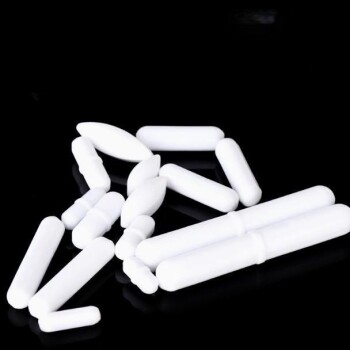
The shape of the stir bar (e.g., oval, egg-shaped, or cylindrical) must be matched to the reaction vessel to ensure efficient shear force. An improperly sized bar may leave "dead zones" in the corners of a flat-bottomed flask where reactants can settle and aggregate.
Potential for Particle Agglomeration
While stirring generally prevents agglomeration, the mechanical shear generated at very high speeds can, in some chemical systems, lead to the unintended fracturing of delicate precursor structures. Finding the balance between "thorough mixing" and "excessive turbulence" is a critical step in protocol optimization.
How to Apply This to Your Synthesis
Making the Right Choice for Your Goal
- If your primary focus is Phase Purity: Ensure the stir bar is active from the moment the alkaline solution is added to maintain a perfectly homogeneous stoichiometric environment.
- If your primary focus is Particle Size Uniformity: Use a consistent, high-speed setting (e.g., 500 rpm) to ensure that nucleation is triggered simultaneously across the entire volume of the vessel.
- If your primary focus is Reproducibility: Standardize the geometry of the stir bar and the vessel shape to ensure that the mass transfer dynamics remain identical across every experimental run.
Mastering the kinetic environment through precise magnetic stirring is the most effective way to transition from a successful laboratory-scale reaction to a reliable, high-quality CAU-63 synthesis.
Summary Table:
| Key Function | Impact on CAU-63 Synthesis | Critical Control Factor |
|---|---|---|
| Dissolution | Ensures complete interaction of ligands and aluminum source | Rotation Speed (RPM) |
| Homogeneity | Eliminates concentration gradients to prevent secondary phases | Stir Bar Geometry |
| Mass Transfer | Overcomes solid-liquid resistance for predictable kinetics | Stirring Duration |
| Nucleation Control | Triggers simultaneous crystallization for uniform particle size | Vessel Shape & Volume |
Elevate Your CAU-63 Synthesis with High-Performance Fluoropolymers
Precision in MOF synthesis requires chemical inertness and consistent kinetic control. KINTEK specializes in manufacturing high-performance laboratory supplies crafted exclusively from PTFE and PFA, ensuring zero contamination and maximum durability for your most sensitive reactions.
From everyday basic labware like magnetic stirring bars, beakers, and reagent bottles to advanced reaction apparatus such as hydrothermal synthesis liners, microwave digestion vessels, and custom electrochemical cells, we provide the tools necessary for superior results. Whether you need high-purity trace analysis instruments, fluid transfer components (tubing, valves, fittings), or bespoke laboratory setups via end-to-end custom CNC fabrication, KINTEK is your absolute partner for fluoropolymer excellence.
Ready to optimize your lab's performance? Contact KINTEK today to discuss your custom requirements!
References
- Lasse Wegner, Norbert Stock. CAU-63, an Ultramicroporous Al-MOF with a Honeycomb-Shaped 2D IBU. DOI: 10.1021/acs.inorgchem.5c03315
This article is also based on technical information from Kintek Knowledge Base .
Related Products
- Custom PTFE Teflon Parts Manufacturer PTFE Magnetic Stirring Bar
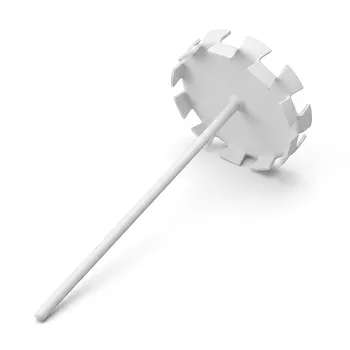
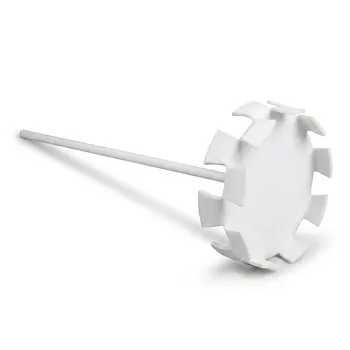
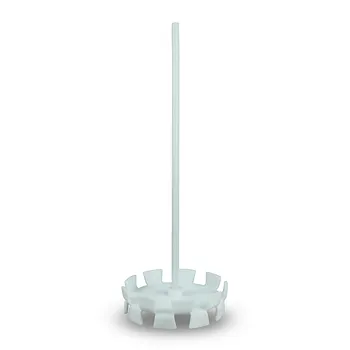
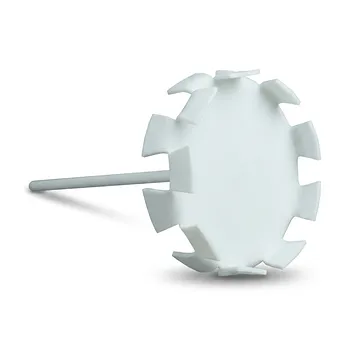
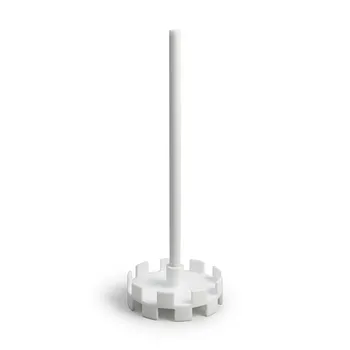
- High Purity Corrosion Resistant PTFE Dispersion Disk and Inert Stirring Paddle for Food Pharmaceutical and Cosmetic Mixing
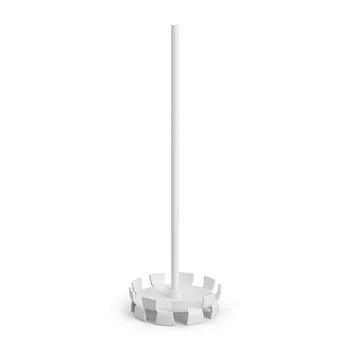
- Custom PTFE Dispersing Disc and Stirring Rod for Chemical Processing and Laboratory Mixing
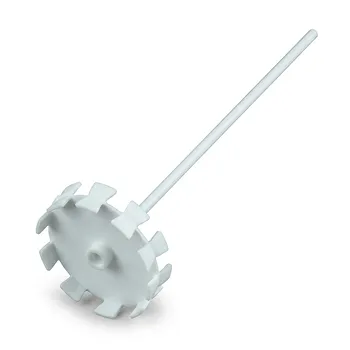
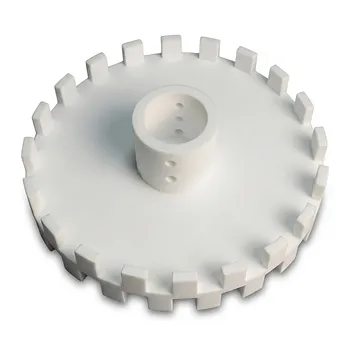
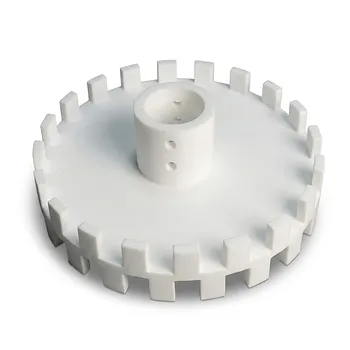
- Corrosion Resistant PTFE Stirring Paddle and Customizable Toothed Dispersion Disk for Chemical Pharmaceutical Mixing
- PTFE Dispersion Disk Food Cosmetic Grade Non Stick Corrosion Resistant Large Stirring Paddle Customizable Impeller
People Also Ask
- What are some specialized PTFE stirring bars available? Optimize Your Lab Mixing Efficiency
- Can you provide examples of industries where PTFE bars have been successfully applied? Discover Key Applications
- How can the lifespan and performance of PTFE bars be maintained? A Guide to Proactive Care
- What are some future trends in the application of PTFE bars in the chemical industry? Engineering for Extreme Performance
- What are the primary applications of PTFE bars in the chemical industry? Solve Your Toughest Corrosion Problems