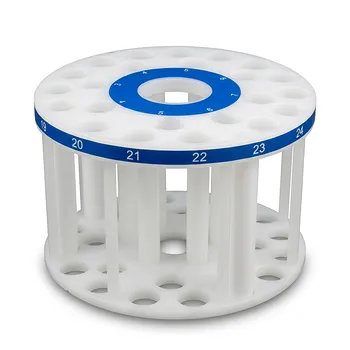
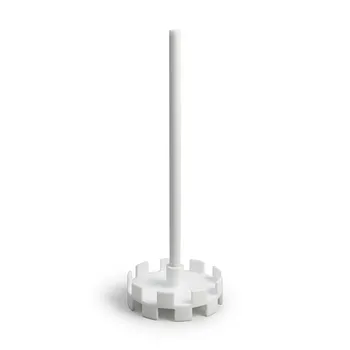
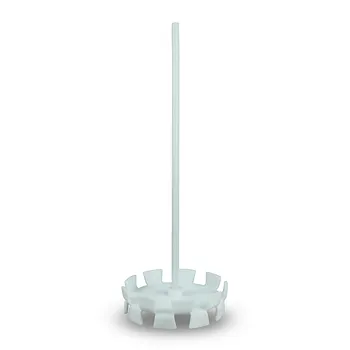
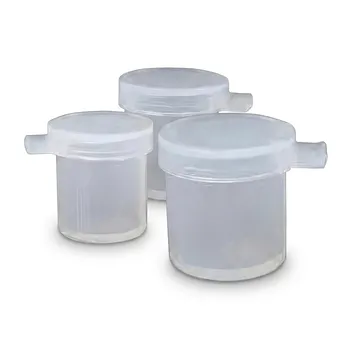
PTFE is the industry standard for analytical rotors because it provides a chemically inert, metal-free environment. By using fluoropolymers for all wetted parts, instrumentation like ICP-MS can eliminate the risk of metallic contamination and corrosion. This ensures the integrity of high-purity samples while protecting sensitive hardware from aggressive chemical reagents.
The shift from metal to PTFE rotors is driven by the need for absolute chemical purity and hardware longevity. PTFE’s combination of universal chemical resistance and low surface energy prevents sample contamination and carryover, which is essential for the parts-per-trillion sensitivity required in modern mass spectrometry.
Eliminating Metallic Interference and Contamination
Maintaining Ultra-Trace Sensitivity
ICP-MS measures elements at extremely low concentrations, often at the parts-per-trillion level. Metal rotors can leach ions into the sample stream, creating background noise that masks the actual analytes you are trying to measure.
Chemical Inertness Against Aggressive Reagents
Analytical processes often involve concentrated acids, bases, or organic solvents that would quickly corrode traditional metals. PTFE provides near-universal resistance, preventing the material degradation and "pitting" common in stainless steel or alloy rotors.
Preventing Sample Leaching
Unlike glass or certain metals, PTFE has extremely low extractables. This ensures that no trace metals or silicates are released into the fluid path, maintaining the pristine nature of high-purity samples.
Enhancing Fluid Dynamics and Sample Integrity
Hydrophobic Surfaces and Quantitative Transfer
The non-wetting properties of PTFE ensure that fluids move through the system without leaving droplets behind on the rotor surface. This facilitates the complete recovery of analytes, which is vital for achieving reproducible, quantitative results.
Minimizing Adsorption and Carryover
The low surface energy of fluoropolymers prevents pesticide molecules and other analytes from sticking to the rotor. This significantly reduces the risk of "memory effects" or cross-contamination between consecutive sample runs.
Ease of Maintenance and Cleaning
The non-stick nature of PTFE facilitates easy cleaning and minimizes residue buildup. This reduces the time required for decontamination and increases the overall operational efficiency of the lab.
Mechanical Advantages in Rotating Components
Low Friction and Wear Resistance
Because PTFE has an exceptionally low coefficient of friction, it functions effectively in rotating mechanisms with minimal mechanical resistance. This inherent wear resistance allows the rotor to operate smoothly without the need for traditional lubricants that could contaminate the sample.
Thermal Stability Across Extremes
PTFE maintains its structural integrity across a wide temperature range, from -200 °C to +260 °C. This stability allows for reliable performance in applications ranging from cryogenic research to high-temperature synthesis.
Extended Equipment Lifespan
By resisting chemical attack and mechanical wear better than many metals or ceramics, PTFE rotors suffer less degradation over time. This results in reduced equipment downtime and lower long-term maintenance costs for the facility.
Understanding the Trade-offs and Limitations
Structural Rigidity and Pressure Limits
PTFE is significantly softer than most metals and can undergo "cold flow" or deformation under extreme mechanical loads. In ultra-high-pressure applications, this lack of rigidity can lead to seal failure or dimensional changes.
Thermal Expansion Considerations
The material has a much higher coefficient of thermal expansion than stainless steel. If the rotor is subject to rapid temperature fluctuations, the changing tolerances can impact the precision of the fit within the instrument housing.
Porosity and Gas Permeability
While PTFE is chemically inert, it can be slightly more permeable to certain gases compared to dense metals. In specialized vacuum or anaerobic applications, this permeability must be accounted for to prevent atmospheric contamination.
How to Apply This to Your Project
When selecting rotor materials for analytical instrumentation, your choice should be dictated by the sensitivity of your analysis and the chemistry of your mobile phases.
- If your primary focus is trace metal analysis (ICP-MS/ICP-OES): PTFE is essential to eliminate background interference and prevent metal ion leaching.
- If your primary focus is high-pressure chromatography (UHPLC): Consider PEEK or reinforced fluoropolymers, as pure PTFE may lack the structural rigidity required for high-psi environments.
- If your primary focus is workflow efficiency and throughput: The non-stick properties of PTFE are ideal for reducing cleaning time and preventing sample carryover between runs.
Choosing PTFE rotors is a fundamental step in ensuring that your analytical results reflect the sample's true composition rather than the limitations of your hardware.
Summary Table:
| Feature | PTFE Rotors | Metal Rotors (Steel/Alloy) |
|---|---|---|
| Contamination Risk | Zero metallic leaching (metal-free) | High risk of ion leaching/background noise |
| Chemical Resistance | Near-universal (concentrated acids/bases) | Susceptible to corrosion and pitting |
| Surface Properties | Hydrophobic (low carryover/memory) | Higher surface energy (adsorption risk) |
| Lubrication | Self-lubricating (low friction) | Often requires external lubricants |
| Sensitivity Level | Ideal for Parts-Per-Trillion (PPT) | Limited by background interference |
| Durability | Resists chemical attack & wear | Degrades in aggressive chemical environments |
Elevate Your Analytical Precision with KINTEK
Ensure absolute sample integrity and eliminate metallic interference in your lab. KINTEK specializes in high-performance fluoropolymer solutions, offering an exhaustive range of laboratory supplies crafted from PTFE and PFA.
From everyday essentials like beakers, centrifuge tubes, and filtration tools to advanced components including:
- Fluid Transfer: Tubing, fittings, and valves.
- Sample Prep: Digestion tubes, separatory funnels, and high-purity filters.
- Reaction Apparatus: Custom electrochemical cells, battery testing fixtures, and microwave digestion vessels.
Backed by end-to-end custom CNC fabrication, we deliver everything from high-volume standard orders to complex, bespoke machined parts tailored to your unique instrumentation needs.
Ready to upgrade to a contamination-free workflow? Contact us today to discuss your custom fluoropolymer requirements!
Related Products
- Custom PTFE Multilayer Reaction Apparatus High Temperature Corrosion Resistant Threaded Modular Sieve System
- High Throughput Microwave Digestion Rotor for TFM Vessels and Trace Element Sample Preparation
- Corrosion Resistant PTFE Stirring Impeller and Customizable Polytetrafluoroethylene Dispersion Disk
- Corrosion Resistant PTFE Dispersing Disc and High Temperature Propeller Stirring Paddle for Laboratory Chemical Mixing
- Custom PTFE Constant Pressure Separatory Funnel Corrosion Resistant Low Background Labware for PFA Flasks
People Also Ask
- What are the mechanical and safety advantages of using PTFE apparatus in a laboratory? Enhance Safety & Durability
- How does PTFE's melting behavior affect custom lab apparatus? Key insights for manufacturing.
- Why are PP or PTFE reactors preferred over glass in tribocatalysis? Maximize Charge Separation & Catalytic Efficiency
- What are the primary fabrication methods for capillary-based and monolithic PTFE reactors? Expert Production Insights
- What functional advantages do PTFE reactors provide over glass? Achieve Superior Purity and Safety in Synthesis