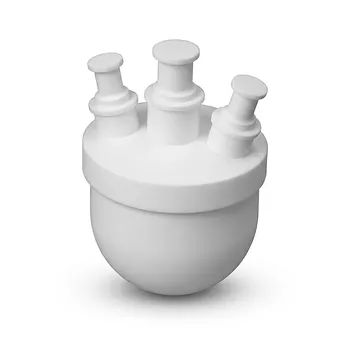
Fluoropolymers such as PTFE and PFA are ideal for high-purity fluid handling because they combine chemical inertness, thermal stability, low surface adhesion, and exceptionally low contamination risk. They resist aggressive acids, solvents, and corrosive media while maintaining their integrity across broad operating temperatures. Their non-wetting surfaces reduce fluid retention and sample carryover, making them valuable for tubing, valves, vessels, fittings, and trace-analysis equipment.
The central advantage of PTFE and PFA is material stability: they are difficult for chemicals to attack, difficult for fluids to wet, and unlikely to introduce contaminants when correctly specified and processed. These properties support both reliable fluid transfer and sensitive laboratory measurements.
Why Chemical Inertness Matters
Resistance to Aggressive Reagents
The strong carbon–fluorine molecular structure gives fluoropolymers exceptional resistance to chemical attack. PTFE and PFA can handle many aggressive acids, organic solvents, and corrosive reagents that would degrade conventional plastics or metals.
This resistance is especially important in chemical synthesis, digestion, trace analysis, and reagent handling, where even minor material degradation can compromise results.
Reduced Leaching and Extractables
A high-purity component must not release unwanted species into the fluid it carries. PTFE and PFA are valued because they generally resist chemical degradation and exhibit low levels of extractable contamination when properly manufactured and cleaned.
“Zero leaching” should not be treated as an unconditional claim. Performance depends on the resin grade, additives, processing history, cleaning procedure, temperature, and the specific chemical being handled.
Protection Against Corrosion
Unlike many metals, fluoropolymers do not rely on a passive oxide layer to resist corrosion. Their inherent chemical stability helps prevent surface deterioration, particulate generation, and premature component failure in corrosive systems.
Why Thermal Stability Matters
Broad Operating Temperature Capability
PTFE and PFA maintain useful performance across a wide temperature range. This allows them to function in processes involving heated reagents, thermal cycling, digestion, and demanding laboratory workflows.
Their thermal stability helps prevent softening, degradation, and loss of dimensional integrity under conditions that challenge ordinary polymeric materials.
Stability During Temperature Changes
Laboratory equipment may experience repeated transitions between ambient, heated, and cooled conditions. Fluoropolymer components are well suited to these environments because they combine thermal resistance with strong resistance to chemical degradation.
The actual safe operating temperature must still be established for the specific grade, pressure, geometry, and application. Temperature capability is not independent of mechanical load.
Why Low Surface Energy Supports Purity
Non-Wetting Behavior
Fluoropolymers have very low surface energy, giving them hydrophobic and oleophobic characteristics. Fluids are less likely to spread across or strongly wet the material surface.
This helps minimize fluid hold-up, residue, and cross-contamination in tubing, vessels, valves, and fittings.
Non-Stick and Low-Adhesion Surfaces
PTFE and PFA surfaces resist the adhesion of many chemicals and biological materials. That makes them easier to drain, rinse, and clean than materials with higher surface adhesion.
For trace analysis, this is particularly valuable because residual material from a previous operation can distort subsequent measurements.
Low Friction and Wear Resistance
PTFE is well known for its low-friction behavior and self-lubricating characteristics. These properties can reduce mechanical resistance and wear in moving or sealing components.
In fluid-handling equipment, lower friction can support smoother operation of valves and other components. However, mechanical design must account for fluoropolymers’ relatively soft and creep-prone nature.
Additional Properties That Enable Specialized Equipment
Electrical Insulation
Fluoropolymers provide high dielectric strength and strong electrical insulation. This is useful in laboratory equipment where fluid-contact components must remain electrically isolated from sensors, heaters, electrodes, or surrounding hardware.
Flame Resistance
Fluoropolymers also offer strong flame resistance. The primary reference identifies a Limiting Oxygen Index of approximately 95%, indicating that the material requires an unusually oxygen-rich environment to sustain combustion.
This improves safety in specialized equipment, but it does not eliminate the need for appropriate fire controls, ventilation, and process safeguards.
Environmental and Biological Stability
Fluoropolymers exhibit strong resistance to weathering and environmental degradation. Their biological stability and chemical inertness also make them useful where long-term exposure to laboratory reagents or biological materials is expected.
These characteristics support durable equipment with less risk of material breakdown during service.
PTFE and PFA: Similar Strengths, Different Practical Roles
PTFE for Broad Chemical Resistance
PTFE is widely selected for chemically resistant labware, tubing, seals, digestion vessels, and custom-machined components. Its combination of chemical inertness, low friction, thermal stability, and non-stick behavior makes it a strong general-purpose choice for severe chemical environments.
PFA for High-Purity Fluid Paths
PFA provides the same general fluoropolymer advantages while being particularly useful in high-purity fluid-handling applications. Its suitability for tubing, fittings, vessels, and other fluid-contact components comes from its chemical resistance, low contamination potential, and ability to maintain integrity under demanding conditions.
The appropriate choice depends on the required temperature, mechanical strength, flexibility, fabrication method, purity specification, and chemical exposure.
Understanding the Trade-offs
Chemical Resistance Is Not Universal
No fluoropolymer is immune to every chemical or operating condition. Certain aggressive substances, elevated temperatures, pressure, permeation requirements, or mechanical loads can limit performance.
Material selection should therefore consider the exact chemical, concentration, temperature, pressure, exposure time, and stress state.
Mechanical Performance Requires Attention
PTFE’s low friction and softness are valuable, but they can also create challenges such as deformation, creep, and reduced resistance to mechanical loading. Seals, threaded parts, thin tubing, and pressure-containing components require careful design.
Chemical compatibility alone is not enough to qualify a component.
Purity Depends on the Entire System
A highly pure fluoropolymer component cannot compensate for contamination introduced during manufacturing, assembly, packaging, cleaning, or connection to other materials. Fittings, elastomeric seals, lubricants, and handling procedures can all affect final system purity.
The resin and the complete fluid path must be evaluated together.
Surface Non-Stick Behavior Does Not Mean Zero Retention
Low adhesion reduces residue, but geometry, flow conditions, dead legs, roughness, and fluid properties still influence retention. Proper system design and cleaning validation remain necessary.
Making the Right Choice for Your Goal
The best material decision combines fluoropolymer properties with the actual process conditions.
- If your primary focus is chemical resistance: Choose a properly rated PTFE or PFA component after verifying compatibility with the specific reagents, concentration, temperature, and exposure time.
- If your primary focus is trace-analysis purity: Prioritize high-purity grades, low extractables, controlled processing, validated cleaning, and a complete low-contamination fluid path.
- If your primary focus is reduced carryover: Use the low-surface-energy and non-stick characteristics of PTFE or PFA, while also minimizing dead volume and optimizing drainage and rinsing.
- If your primary focus is thermal service: Confirm the material’s temperature and pressure limits for the actual geometry and load rather than relying on a general polymer temperature rating.
- If your primary focus is specialized equipment durability: Evaluate chemical stability, friction, wear, electrical insulation, flame resistance, and mechanical behavior as one integrated design problem.
PTFE and PFA are powerful high-purity materials because their chemical, thermal, surface, electrical, and durability advantages work together to protect both the equipment and the integrity of the fluid being handled.
Summary Table:
| Property | Benefit | Relevance |
|---|---|---|
| Chemical Inertness | Resists acids, solvents, corrosion; low leaching | High-purity fluid handling, trace analysis |
| Thermal Stability | Broad operating temperature range, withstands thermal cycling | Digestion, heated reagents, demanding workflows |
| Low Surface Energy | Non-wetting, non-stick surfaces; low adhesion | Reduces residue, carryover, and cross-contamination |
| Low Friction & Wear | Self-lubricating, reduces mechanical wear | Moving parts, valves, seals |
| Electrical Insulation | High dielectric strength | Electrically isolated components |
| Flame Resistance | LOI ~95%, difficult to ignite | Safety in specialized equipment |
| Environmental/Biological Stability | Resists weathering and biological attack | Durable lab equipment |
Ready to enhance your laboratory with the highest purity fluoropolymer components? At KINTEK, we specialize in PTFE and PFA labware, fluid handling systems, and custom-machined parts. From beakers and digestion vessels to complex electrochemical cells and high-volume orders, our end-to-end CNC machining ensures precision and purity. Contact us today to discuss your requirements and discover how our solutions can improve your results. Get in touch now.
Related Products
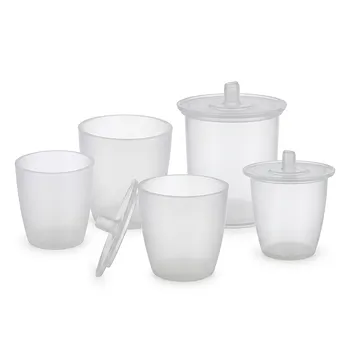
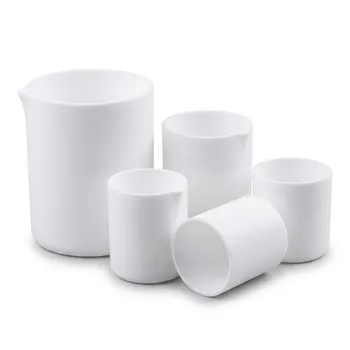
- High Purity PFA Crucible and Corrosion Resistant PTFE Beaker for Trace Analysis and Custom Laboratory Applications
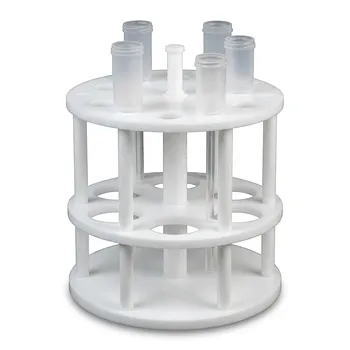
- Custom PFA Microcolumn Racks and PTFE Machined Low Background Corrosion Resistant Laboratory Fixtures
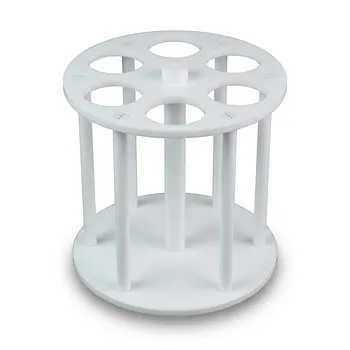
- Custom PFA Separatory Funnel Rack PTFE Machined Laboratory Support Stand Corrosion Resistant Low Background Fluoropolymer Fixture
- PTFE PFA Vacuum Filtration System Corrosion Resistant Customizable Shatterproof Laboratory Device
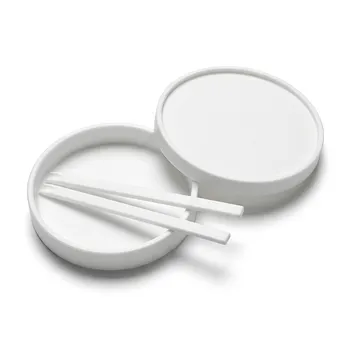
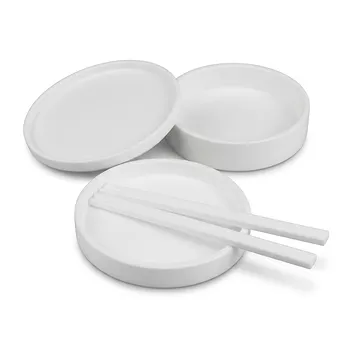
- Custom Polytetrafluoroethylene PTFE Petri Dishes 60mm Corrosion Resistant Low Background Labware
People Also Ask
- Why are high-purity vessels critical for BiFeO3 synthesis? Ensuring Phase Purity
- Why is the use of high-purity PFA or PTFE labware critical during TiO2 nanoparticle purification? Protect Sample Purity
- Why is high-purity PFA labware necessary for Znx@LS-2 zeolite ICP-OES analysis? Ensure Trace-Level Precision
- Why is high-purity PFA trace analysis labware recommended for trace element detection? Achieve Gold Standard PPT Accuracy
- Why is high-purity PFA trace analysis labware used for MXene? Ensure Superior Material Integrity in Research