The decisive distinction is whether hydrogen remains in the polymer structure. Perfluorinated fluoropolymers such as PTFE and PFA have carbon backbones shielded almost completely by fluorine, with PTFE built from repeating fluorocarbon units and PFA incorporating perfluoroalkoxy groups. Partially fluorinated polymers such as PVDF and ETFE retain hydrogen, while related materials such as ECTFE also retain non-fluorine atoms in the chain; this difference affects chemical resistance, thermal stability, extractables, and contamination control.
For high-purity laboratory apparatus, full fluorination creates a more chemically protected and thermally stable material surface. PTFE and PFA are therefore preferred when aggressive reagents, elevated temperatures, and extremely low contamination levels could compromise analytical results.
What Separates the Polymer Structures
Perfluorinated Backbones Are Fluorine-Saturated
PTFE contains a carbon backbone in which the carbon atoms are bonded to fluorine rather than hydrogen. PFA has the same highly fluorinated foundation, modified with perfluoroalkoxy groups that improve melt processability while preserving the essential perfluorinated character.
The fluorine atoms form a dense protective sheath around the carbon chain. This makes the backbone difficult for most chemical reagents to attack.
Partially Fluorinated Polymers Retain Other Atoms
Partially fluorinated polymers replace only some of the potential hydrogen sites with fluorine. PVDF, for example, retains carbon-hydrogen bonds, while ETFE combines fluorinated and non-fluorinated segments.
These remaining hydrogen or other non-fluorine atoms change the polymer's polarity, reactivity, mechanical behavior, and resistance to heat and chemicals.
The Bonding Pattern Matters More Than Fluorine Content Alone
The important issue is not simply that a material contains a large amount of fluorine. It is where fluorine occurs and how completely it shields the carbon backbone.
PTFE and PFA provide extensive carbon-fluorine bonding throughout the structure. In partially fluorinated materials, exposed or chemically different portions of the chain can provide more opportunities for chemical interaction, degradation, or extractable release.
Why Full Fluorination Improves Laboratory Performance
Chemical Inertness Protects Against Aggressive Reagents
PTFE and PFA resist attack from a broad range of organic and inorganic chemicals, including strong acids, bases, and many solvents. Their fluorinated structures are especially valuable in digestion, concentration, and transfer steps involving chemically severe conditions.
Partially fluorinated materials can still offer substantial chemical resistance, but their compatibility is more application-dependent. A reagent that is harmless to PTFE or PFA may impose greater limits on PVDF, ETFE, or other partially fluorinated choices.
Thermal Stability Supports Digestion and Reaction Work
Strong carbon-fluorine bonding contributes to the high thermal tolerance of perfluorinated materials. This allows PTFE and PFA apparatus to remain reliable during elevated-temperature digestion and related laboratory processes.
Temperature limits still depend on the specific grade, design, pressure, exposure time, and chemical environment. Full fluorination improves the material's margin, but it does not make every operating condition automatically safe.
Low Extractables Reduce Background Contamination
High-purity analysis is sensitive to trace quantities of ions, metals, organic compounds, and other residues. PTFE and PFA are selected because they generally contribute very low levels of extractable material when properly manufactured, cleaned, and handled.
This is better understood as ultra-low contamination potential, not an unconditional guarantee of zero extractables. Manufacturing residues, surface damage, cleaning procedures, and environmental exposure can still affect performance.
Low Surface Reactivity Helps Preserve Samples
The fluorine-rich surface is highly non-wetting and non-stick. This reduces the tendency of many samples and reagents to adhere to vessel walls or transfer components.
Lower adsorption helps improve recovery, reduce carryover, and make trace measurements more representative of the original sample. It is particularly important when analytes are present at very low concentrations.
Why This Matters for High-Purity Apparatus
Trace Analysis Depends on Controlling the Container
In trace analysis, the apparatus is part of the measurement system. A vessel or fitting can introduce contaminants, retain analytes, or react with the sample even when the analytical instrument itself is operating correctly.
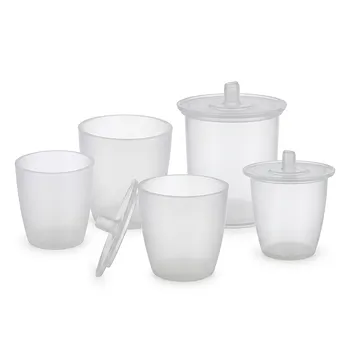
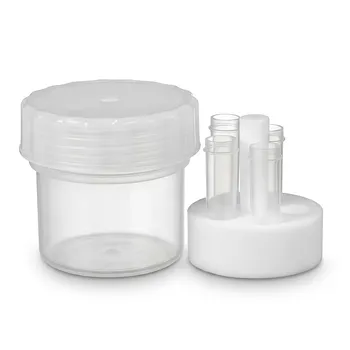
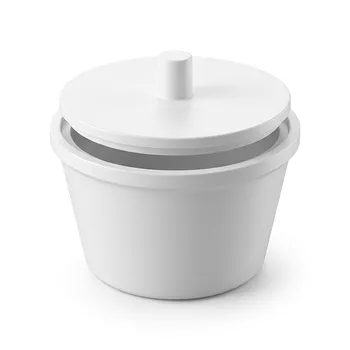
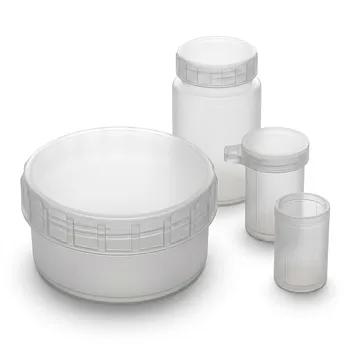
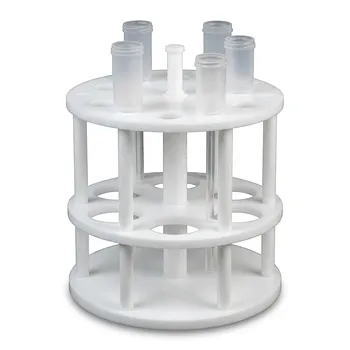
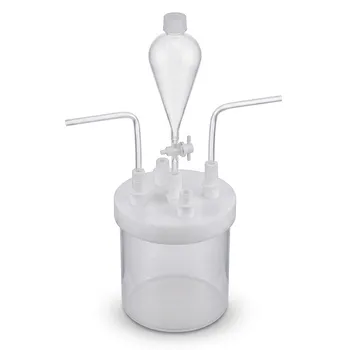
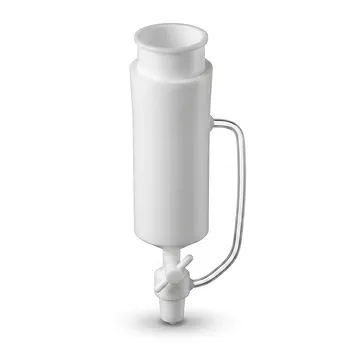
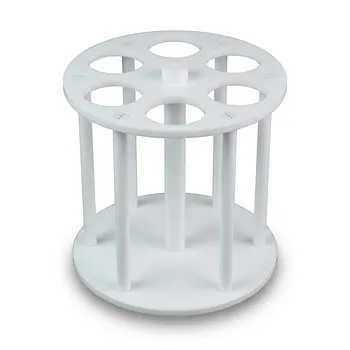
PTFE and PFA trace vessels, digestion tubes, reagent bottles, and liquid-transfer fittings reduce these material-related sources of error.
Digestion Vessels Face Multiple Stressors
Chemical digestion can combine aggressive reagents, high temperatures, long exposure times, and concentrated samples. The apparatus must resist chemical attack while avoiding contamination and maintaining dimensional integrity.
Perfluorinated materials address these requirements simultaneously, which is why they are commonly used for severe digestion and chemical-processing applications.
Fluid-Handling Components Can Affect Purity
Tubing, valves, fittings, and custom-machined components may contact the sample repeatedly. Even small amounts of leaching, adsorption, or residue can become significant in closed systems or low-volume transfers.
PFA and PTFE are useful for these components because their chemical resistance and low surface reactivity remain available in manufactured flow paths, not only in vessels.
PFA and PTFE Serve Different Processing Needs
PTFE is valued for broad chemical resistance and high-temperature performance, but it is difficult to melt-process. PFA retains comparable perfluorinated behavior while being melt-processable, making it well suited to transparent vessels, tubing, and more complex molded components.
The selection between them depends on fabrication method, transparency requirements, flexibility, temperature, pressure, and the specific chemical exposure.
Understanding the Trade-offs
Partially Fluorinated Materials Can Be Mechanically Advantageous
Retaining hydrogen or other atoms can produce materials with greater hardness, stiffness, toughness, or easier processing. These properties may make partially fluorinated polymers useful for structural parts or applications where extreme chemical inertness is not the primary requirement.
Choosing PTFE or PFA solely because they are more chemically inert can therefore be inefficient when mechanical rigidity or wear resistance dominates the design.
Perfluoropolymers Are Not the Hardest Materials
Perfluorinated polymers can be softer and less mechanically rigid than some partially fluorinated alternatives. They may deform under sustained loads, require careful support, or need a design that accounts for creep and dimensional stability.
Apparatus exposed to pressure, clamping forces, abrasion, or repeated mechanical cycling must be evaluated as a complete system rather than by chemical compatibility alone.
Purity Requires Manufacturing and Handling Controls
A chemically inert polymer can still be unsuitable for ultra-trace work if it has been contaminated during machining, packaging, storage, or cleaning. Surface scratches and prior chemical exposure can also create retention or carryover problems.
Material selection should therefore include grade qualification, cleaning validation, blank testing, and contamination controls appropriate to the analytical method.
“Universal Compatibility” Is Not an Operating License
PTFE and PFA resist virtually all common laboratory solvents and harsh reagents, but no polymer should be treated as immune to every combination of temperature, pressure, concentration, and exposure duration.
Compatibility data for the exact material grade and operating conditions should control the final decision, especially for unusual reagents or high-pressure systems.
Choosing the Right Material for the Application
Material choice should reflect the dominant risk: contamination, chemical attack, heat, mechanical loading, or manufacturing complexity.
- If your primary focus is trace analytical purity: Choose qualified PTFE or PFA components, and verify cleanliness and blank performance rather than relying on polymer identity alone.
- If your primary focus is aggressive chemical digestion: Favor perfluorinated materials with a documented temperature and reagent compatibility envelope.
- If your primary focus is melt processing or transparent fluid components: Consider PFA, which combines perfluorinated chemical behavior with greater processing flexibility than PTFE.
- If your primary focus is stiffness, toughness, or structural hardness: Evaluate partially fluorinated polymers such as PVDF or ETFE, provided their chemical and thermal compatibility is adequate.
- If your primary focus is reliable fluid transfer: Compare PTFE and PFA based on flexibility, permeability, fabrication method, pressure, temperature, and the risk of adsorption or extractables.
For high-purity laboratory work, the structural advantage of PTFE and PFA is their fluorine-protected backbone, but dependable results come from combining that material choice with validated manufacturing, cleaning, and operating controls.
Summary Table:
| Property | Perfluorinated (PTFE/PFA) | Partially Fluorinated (PVDF/ETFE) |
|---|---|---|
| Carbon backbone | Fully shielded by fluorine | Contains hydrogen or other atoms |
| Chemical resistance | Exceptional; resists almost all reagents | Good but more application-dependent |
| Thermal stability | High; suitable for elevated-temperature digestion | Lower; temperature limits may be restrictive |
| Extractables | Ultra-low; minimal contamination risk | Higher potential for extractable release |
| Surface reactivity | Non-wetting, non-stick; reduces sample adsorption | Greater reactivity; may cause sample retention |
| Mechanical properties | Softer; may creep under load | Harder, stiffer, tougher; structural advantages |
| Key lab applications | Trace analysis, digestion vessels, fluid handling | Structural parts where chemical inertness is less critical |
Ready to elevate your high-purity lab results? At KINTEK, our exclusively PTFE and PFA products—from custom-machined parts to complete digestion vessels—ensure the lowest contamination for your most demanding analyses. With end-to-end CNC machining and full-spectrum labware, we deliver bespoke solutions that protect your data. Contact us today to discuss your application and experience the KINTEK advantage.
Related Products
- High Purity PFA Crucible and Corrosion Resistant PTFE Beaker for Trace Analysis and Custom Laboratory Applications
- Corrosion Resistant PTFE Support with PFA Transparent Reaction Tank and High Purity PFA Sampling Tube for Trace Analysis
- High Purity PTFE PFA Plastic Crucible for Corrosion Resistant Acid Digestion and Trace Analysis
- PFA Reaction Jar Corrosion Resistant Wide Mouth PTFE Lab Bottle High Purity Chemical Vessel
- High Purity PTFE Trays Corrosion Resistant Laboratory Labware Customizable Square Round Fluoropolymer Trays
People Also Ask
- Why are high-purity vessels critical for BiFeO3 synthesis? Ensuring Phase Purity
- Why is the use of high-purity PFA or PTFE labware critical during TiO2 nanoparticle purification? Protect Sample Purity
- Why is high-purity PFA trace analysis labware used for MXene? Ensure Superior Material Integrity in Research
- Why is high-purity PFA trace analysis labware recommended for trace element detection? Achieve Gold Standard PPT Accuracy
- Why is high-purity PFA labware necessary for Znx@LS-2 zeolite ICP-OES analysis? Ensure Trace-Level Precision