Lower MFR generally means higher molecular weight—and greater PFA component reliability. In PFA resin, a low Melt Flow Rate (MFR) indicates longer polymer chains and typically produces higher toughness, thermal resistance, stress-crack resistance, and flex-fatigue life. Higher-MFR, lower-molecular-weight PFA may be easier to process, but it generally provides less mechanical margin for laboratory vessels and fluid-transfer components exposed to heat, pressure, aggressive chemicals, or repeated movement.
Core takeaway: For demanding PFA laboratory vessels, tubing, valves, fittings, and bottles, specify a resin with sufficiently high molecular weight and low MFR. This does not fundamentally change PFA’s chemical identity, but it improves the component’s ability to retain its shape, resist cracking, limit permeation and leaching, and remain chemically reliable throughout service.
How MFR and Molecular Weight Are Related
MFR is an indirect indicator of chain length
Melt Flow Rate measures how readily molten resin flows under specified test conditions. MFR and molecular weight are inversely related: lower MFR generally corresponds to longer polymer chains and higher molecular weight.
For PFA, high-molecular-weight grades are commonly associated with MFR values in approximately the 1–16 g/10 min range. MFR values above about 17 g/10 min generally indicate substantially reduced molecular weight and lower physical strength.
Polymerization controls the final performance
Chain-transfer reactions during polymerization can prematurely terminate growing polymer chains. This reduces molecular weight and increases MFR.
Manufacturers control polymerization conditions, surfactant chemistry, and chain-transfer activity to achieve the desired balance between melt processability and finished-part durability.
Mechanical Integrity of PFA Components
Higher molecular weight improves toughness
Longer polymer chains create greater resistance to deformation and crack growth. As a result, high-molecular-weight PFA generally offers better tensile strength, toughness, thermal endurance, and stress-crack resistance.
This is particularly important for microwave digestion vessels, reagent bottles, fittings, and tubing that may experience internal pressure, thermal cycling, assembly stresses, or impact.
Low MFR greatly improves flex-fatigue life
The effect is especially significant in components that repeatedly bend or flex. MIT flex-life testing under ASTM D2176 conditions reported an increase from approximately 15,000 cycles at 14 g/10 min MFR to approximately 1,800,000 cycles at 1.7 g/10 min MFR for a 0.19 mm specimen.
The exact result depends on specimen geometry and test conditions, but the engineering implication is clear: lower-MFR PFA is strongly preferred for dynamic tubing, valve diaphragms, and repeatedly flexed assemblies.
Lower MFR improves abrasion resistance
High-molecular-weight PFA also tends to resist mechanical wear more effectively. Reported Taber abrasion data show a Wear Index of approximately 9–10.5 mg/1,000 cycles for PFA with an MFR of 2–3 g/10 min, compared with approximately 15.5–17 mg/1,000 cycles for grades with an MFR of 12–15 g/10 min.
Lower wear can extend the useful life of fittings, valves, tubing, and machined components exposed to friction, repeated assembly, or particle-containing flows.
Dimensional stability depends on both resin and design
Higher molecular weight helps a component resist deformation under temperature and pressure. This supports dimensional stability in vessels, seals, tubing connections, and fluid paths.
However, dimensional performance also depends on wall thickness, fabrication method, temperature, pressure, crystallinity, residual stress, and component geometry. Resin MFR should therefore be treated as an important design variable, not the sole predictor of service life.
Chemical Performance and Reliability
Chemical compatibility is primarily a chemical-structure property
PFA’s broad chemical resistance comes primarily from its highly fluorinated polymer structure. Changing molecular weight does not transform a lower-MFR grade into a fundamentally different chemical polymer or make a higher-MFR grade chemically incompatible with a particular reagent.
The more accurate distinction is that molecular weight affects how well the finished component maintains its integrity while exposed to that chemical environment.
Higher molecular weight improves stress-crack resistance
Aggressive chemicals, elevated temperature, pressure, and mechanical stress can act together to produce environmental stress cracking. A component may be chemically inert at the molecular level but still fail if it develops a crack or loses structural integrity.
High-molecular-weight, low-MFR PFA provides greater resistance to crack initiation and propagation. This is valuable in digestion vessels, reagent containers, valve bodies, fittings, and tubing under sustained chemical and mechanical load.
Lower permeation and leaching can support high-purity service
High-molecular-weight PFA is associated with lower permeation and reduced trace-element leaching compared with lower-molecular-weight material. These properties matter in trace-analysis bottles, semiconductor-related fluid handling, analytical equipment, and other applications where contamination control is important.
The actual result depends on resin purity, processing, post-treatment, surface condition, and exposure conditions. Resin selection should therefore be combined with supplier extractables and leachables data when analytical purity is critical.
Chemical resistance is lost if mechanical failure occurs
Even when PFA remains chemically resistant, a crack, abrasion path, distorted seal, or failed fitting can cause leakage or contamination. In practical terms, high molecular weight improves chemical performance by helping the component survive the chemical environment as a physical structure.
This distinction is important: material compatibility data alone cannot guarantee component reliability.
Why the Application Determines the Appropriate MFR
Static laboratory vessels
Microwave digestion vessels and reagent bottles often need resistance to heat, pressure, thermal cycling, and aggressive reagents. High-molecular-weight PFA with low or moderate MFR generally provides the best mechanical margin and stress-crack resistance.
For a static container, flex fatigue may be less important than wall strength, dimensional stability, closure integrity, and resistance to thermal-chemical stress.
Flexible tubing and dynamic assemblies
Tubing that is repeatedly bent, compressed, or connected and disconnected benefits strongly from low-MFR PFA. The same is true for valve diaphragms and other components exposed to continuous flexing.
In these applications, flex-life data and crack resistance should receive more weight than ease of melt processing.
Fittings, valves, and wear-prone parts
Fluid-transfer fittings and valves may experience installation torque, vibration, pressure cycling, particle abrasion, and repeated actuation. Low-MFR grades can provide improved toughness and abrasion resistance, reducing the risk of premature leakage or dimensional loss.
The fitting design must still control stress concentration, thread geometry, sealing load, and assembly torque.
Thin-wall or complex molded components
More complex geometries may require a resin with sufficient flow to fill the mold or form the desired profile. Higher molecular weight increases melt viscosity, which can make processing more demanding.
The correct selection is therefore not necessarily the lowest available MFR. It is the lowest MFR that can be processed consistently into the required geometry without introducing defects or excessive residual stress.
Understanding the Trade-offs
Lower MFR improves durability but increases processing difficulty
High-molecular-weight PFA has higher melt viscosity, particularly at low shear rates. It may require more carefully controlled molding, extrusion, draw ratios, temperatures, and cooling conditions.
A resin that is mechanically excellent on paper can underperform if poor processing produces voids, weld-line weaknesses, excessive orientation, or residual stress.
Higher MFR improves flow but reduces mechanical margin
Higher-MFR PFA can simplify molding, extrusion, and fabrication of complex shapes. However, the associated lower molecular weight generally reduces toughness, flex-fatigue resistance, abrasion resistance, and resistance to stress cracking.
This trade-off is acceptable only when the component’s service conditions do not require the additional mechanical margin.
Excessively high molecular weight is not automatically better
Very high molecular weight can make processing difficult and may increase sensitivity to fabrication conditions. Supplementary data also indicate that inappropriate processing parameters, including uncontrolled draw ratios, can contribute to fragility.
Material grade and manufacturing process must therefore be qualified together.
MFR alone is not a complete specification
MFR does not describe every property relevant to a PFA component. A robust specification may also need to address:
- Molecular-weight distribution
- Resin purity and additive content
- Perfluoropropyl vinyl ether comonomer content
- Tensile and flex-fatigue performance
- Stress-crack resistance
- Permeation and extractables
- Processing history and dimensional tolerances
For critical laboratory service, requesting only a nominal MFR may leave important performance variables uncontrolled.
Making the Right Choice for Your Goal
Select the resin and fabrication process according to the component’s actual failure risks.
- If your primary focus is mechanical strength and long-term vessel integrity: Choose high-molecular-weight, lower-MFR PFA and validate performance under the intended temperature, pressure, chemical, and thermal-cycling conditions.
- If your primary focus is flex life in tubing or diaphragms: Prioritize low-MFR PFA with verified flex-fatigue data, because molecular weight has a major effect on resistance to repeated bending.
- If your primary focus is chemical purity and trace analysis: Use high-molecular-weight PFA from a controlled-purity source and verify leachables, extractables, and permeation performance rather than relying on MFR alone.
- If your primary focus is abrasion and wear resistance: Favor lower-MFR PFA, particularly for fittings, valves, machined parts, or fluid paths exposed to friction or suspended particles.
- If your primary focus is molding complex geometries: Select the lowest-MFR grade that can be processed reliably, then qualify the finished part for residual stress, dimensional stability, and mechanical performance.
For demanding PFA laboratory and fluid-handling applications, low MFR and high molecular weight provide the strongest foundation for durable, chemically reliable components when matched with sound processing and design.
Summary Table:
| Property | Low MFR (High MW) | High MFR (Low MW) |
|---|---|---|
| Toughness | Higher | Lower |
| Flex-fatigue life | Much longer (e.g., 1.8M cycles) | Shorter (e.g., 15k cycles) |
| Stress-crack resistance | Better | Worse |
| Abrasion resistance | Better (lower wear index) | Worse |
| Permeation & leaching | Lower | Higher |
| Processability | Harder | Easier |
| Best for | Vessels, tubing, fittings | Complex shapes |
For high-performance PFA labware with precise material selection, trust KINTEK's expertise. We offer custom PTFE/PFA components engineered for maximum durability and chemical purity. Contact us today to discuss your requirements and get a tailored solution. Contact us
Related Products
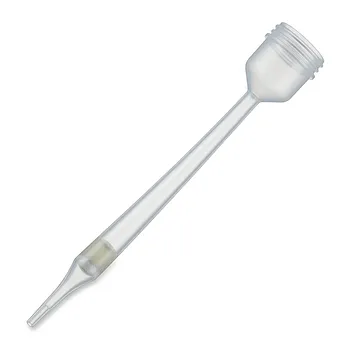
- High Purity PFA Chromatography Microcolumn Corrosion Resistant Resin Column with Sieve Plate for Trace Analysis
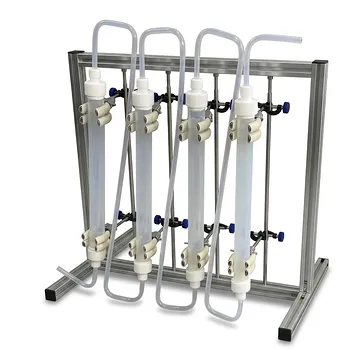
- PFA Chromatography Column Series and Corrosion Resistant Resin Exchange Column with Filter Frit Support for Trace Analysis Customizable
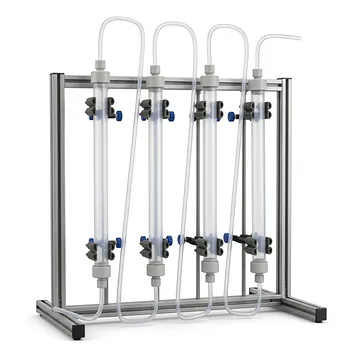
- High Purity PFA Chromatography Columns Series Filtration Resin Ion Exchange System with Sieve Plate Rack Customizable Corrosion Resistant Laboratory Fluid Handling
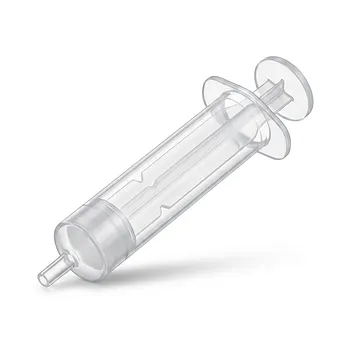
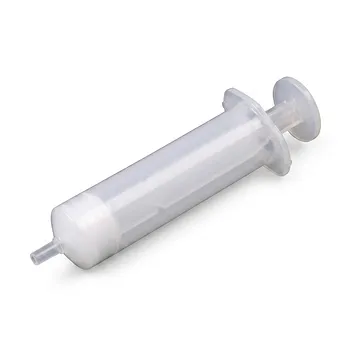
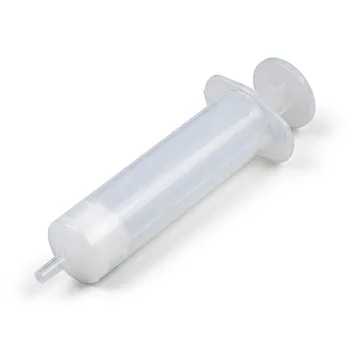
- Corrosion Resistant PFA Syringe Translucent Visual Fluoropolymer Labware 10ml Chemical Handling Tool
- Corrosion Resistant High Purity PFA Syringe Translucent Chemical Sampling Tool
People Also Ask
- How does surfactant choice during fluoropolymer synthesis affect the molecular weight and Melt Flow Rate (MFR) of PFA resin used in high-performance laboratory equipment?
- Why is PFA preferred over PTFE for complex lab components? Achieve precision and purity with melt-processable fluoropolymers.
- Why is the chemical stability of polymer endgroups critical when selecting melt-processible fluoropolymers like PFA for high-purity laboratory apparatus? Choose Stable Endgroups for Reliable Performance
- Why is PFA often selected over traditional PTFE for manufacturing complex fluoropolymer fluid components, custom fittings, and sealed laboratory digestion vessels? Discover the key advantages for your lab.
- What are the characteristics of PFA material? A Guide to Its High-Performance Balance