Surfactant choice can determine whether PFA resin has long, mechanically durable chains or shorter, more processable chains. During aqueous emulsion polymerization, surfactants with labile chemical groups—especially non-fluorinated structures containing transferable hydrogen atoms—can participate in chain-transfer reactions. This prematurely terminates growing polymer chains, lowers molecular weight, and raises Melt Flow Rate (MFR). Suitable fluorinated surfactants reduce unintended chain transfer, supporting higher-molecular-weight PFA with lower MFR for demanding laboratory equipment.
The relationship is direct: more surfactant-driven chain transfer generally means lower molecular weight and higher MFR; minimizing that activity produces higher molecular weight, lower-MFR PFA with better toughness, stress-crack resistance, and long-term reliability.
How Surfactants Influence PFA Polymerization
Growing chains are vulnerable to chain transfer
PFA is produced through free-radical polymerization in an aqueous medium. As a polymer radical grows, it can abstract a labile atom—commonly hydrogen—from another molecule.
If that molecule is a surfactant, the growing chain is terminated prematurely. A new radical may form elsewhere, but the original polymer chain remains shorter than it would have been without the transfer reaction.
Non-fluorinated structures can increase transfer activity
Surfactants containing non-fluorinated hydrocarbon segments or other labile chemical groups may provide sites that are relatively easy for growing fluoropolymer radicals to attack.
This makes the surfactant an unintended chain-transfer agent. The effect is not simply related to how well the surfactant disperses the polymer particles; its chemical compatibility with the polymerization reaction is equally important.
Fluorinated surfactants help preserve chain length
Appropriately selected fluorinated surfactants are less likely to introduce transferable atoms into the growing fluoropolymer chains. This allows polymerization to proceed to a higher molecular weight while maintaining the colloidal control required for aqueous emulsion polymerization.
The key principle is chemical inertness under polymerization conditions, not merely surfactant performance in isolation.
Why Molecular Weight Changes MFR
Higher molecular weight produces lower MFR
Molecular weight reflects the average length of the polymer chains. Longer chains entangle more strongly and resist flow, so the resin requires greater force or temperature to move through a melt-flow test die.
As a result, higher molecular weight generally corresponds to lower MFR. Conversely, shorter chains flow more easily and produce a higher MFR.
Chain transfer raises MFR
When surfactant-induced chain transfer terminates chains early, the average molecular weight falls. The resulting resin has lower melt viscosity and typically a higher MFR.
The referenced performance ranges illustrate this distinction: high-molecular-weight PFA is commonly associated with MFR values around 1–16 g/10 min, while stronger unintended chain transfer can drive MFR above approximately 17 g/10 min. Exact values depend on the test method, grade, formulation, and processing history.
MFR is a practical indicator, not the entire molecular-weight profile
MFR is useful for comparing resin flow behavior, but it does not fully describe molecular-weight distribution, comonomer content, or melt rheology. Two resins with similar MFR values may not behave identically during extrusion, molding, or thermoforming.
For critical components, MFR should therefore be considered alongside mechanical, thermal, dimensional, and chemical-resistance data.
What This Means for Laboratory Equipment
Low-MFR PFA supports mechanical durability
Higher-molecular-weight, lower-MFR PFA generally provides better toughness and resistance to stress cracking. These properties matter when parts must withstand aggressive chemicals, elevated temperatures, pressure, or repeated handling.
Applications include trace-analysis reagent bottles, microwave digestion vessels, tubing, valves, fittings, and custom-machined fluid-handling components.
Dynamic components benefit from longer chains
Flex fatigue is particularly sensitive to molecular weight and MFR. The supplementary data reports that reducing MFR from 14 g/10 min to 1.7 g/10 min increased MIT flex life from approximately 15,000 cycles to 1,800,000 cycles for a 0.19 mm specimen.
This illustrates why lower-MFR grades are valuable for flexible tubing, valve diaphragms, and other components subjected to repeated bending. The exact result is grade- and test-specific, but the direction of the relationship is important: lower MFR generally supports longer flex life.
Lower permeation and leaching can improve reliability
High-molecular-weight PFA can also provide improved resistance to permeation and reduced trace-element leaching, supporting high-purity laboratory applications.
These advantages are especially relevant where the equipment contacts aggressive reagents or where contamination could compromise trace analysis. They complement PFA’s inherent chemical inertness rather than replacing it.
Dimensional stability depends on the complete processing system
Higher molecular weight increases melt viscosity, which can help preserve mechanical integrity but makes melt processing more demanding. Correct temperature, shear, tooling, draw ratio, and cooling conditions remain necessary to produce dimensionally stable parts.
Resin selection and processing conditions must therefore be evaluated together.
Understanding the Trade-offs
Lower MFR improves endurance but reduces flowability
A low-MFR, high-molecular-weight PFA grade is usually more resistant to cracking, fatigue, and mechanical deformation. However, its higher melt viscosity can make it harder to mold complex geometries or process through small flow paths.
A higher-MFR grade may fill tooling more easily and reduce processing resistance, but excessive chain transfer can sacrifice strength and long-term fatigue performance.
More chain transfer is not automatically undesirable
Controlled chain transfer can be used deliberately to adjust molecular weight and improve processability. The problem is uncontrolled or excessive transfer, particularly when caused by a surfactant that was not selected for polymerization compatibility.
The target is not the highest possible molecular weight; it is the molecular-weight range that provides adequate processing while meeting the component’s mechanical and chemical demands.
Surfactant selection cannot be judged by MFR alone
A shift in MFR may reflect changes in surfactant chemistry, chain-transfer conditions, comonomer content, initiator conditions, or molecular-weight distribution. Treating MFR as proof of a single causal mechanism can lead to incorrect process conclusions.
Manufacturers should correlate MFR with molecular-weight measurements, mechanical testing, flex-fatigue data, and production consistency.
High molecular weight does not eliminate processing risk
Excessively high melt viscosity can complicate extrusion, molding, and forming. Processing-induced defects, inappropriate draw ratios, or inadequate thermal control can still reduce part performance, even when the resin has a favorable molecular-weight grade.
The best resin is therefore the one that balances flow behavior with the service requirements of the finished laboratory component.
How to Apply This to Your Project
Surfactant selection should be treated as a molecular-weight-control decision as well as a dispersion decision.
- If your primary focus is maximum chemical-service life: Specify a PFA grade produced with tightly controlled chain transfer and a low MFR consistent with the required processing method.
- If your primary focus is flex fatigue or repeated motion: Favor higher-molecular-weight, lower-MFR PFA and verify performance with application-relevant flex testing.
- If your primary focus is complex molding or extrusion: Use a controlled higher-MFR grade only when its mechanical and stress-crack properties meet the component’s service requirements.
- If your primary focus is trace analysis and purity: Evaluate low-leaching, high-molecular-weight PFA together with surfactant-residue control and contamination data.
- If your primary focus is process consistency: Qualify the surfactant chemistry, polymerization conditions, MFR, molecular-weight distribution, and finished-part performance as one integrated system.
By controlling surfactant-driven chain transfer, manufacturers can select PFA molecular weight and MFR deliberately rather than accepting them as uncontrolled consequences of synthesis.
Summary Table:
| Surfactant Type | Effect on Chain Transfer | Resulting Molecular Weight | MFR (g/10 min) | Implications for Lab Equipment |
|---|---|---|---|---|
| Non-fluorinated (labile H) | High | Low | >17 | Easier processing, but reduced toughness and flex life |
| Fluorinated (inert) | Low | High | 1-16 | Superior mechanical strength, stress-crack resistance, and purity |
Optimize Your PFA Lab Equipment Performance
Choosing the right PFA resin is critical for durability, purity, and reliability. At KINTEK, we specialize in high-performance fluoropolymers and offer a wide range of PFA labware and custom components. Our expertise in surfactant-controlled synthesis ensures you get the ideal molecular weight and MFR for your application. Whether you need low-MFR PFA for demanding chemical resistance or higher-MFR for complex molding, our team is ready to assist. Contact us today to discuss your requirements and discover how our PTFE/PFA solutions can enhance your lab's efficiency and accuracy.
Related Products
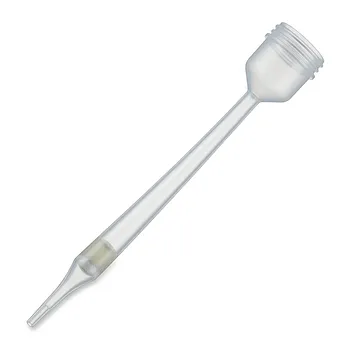
- High Purity PFA Chromatography Microcolumn Corrosion Resistant Resin Column with Sieve Plate for Trace Analysis
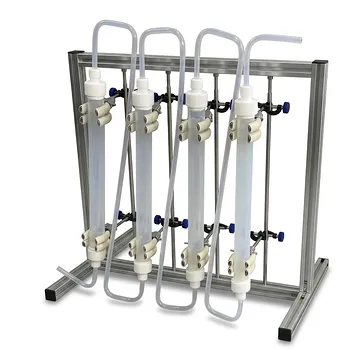
- PFA Chromatography Column Series and Corrosion Resistant Resin Exchange Column with Filter Frit Support for Trace Analysis Customizable
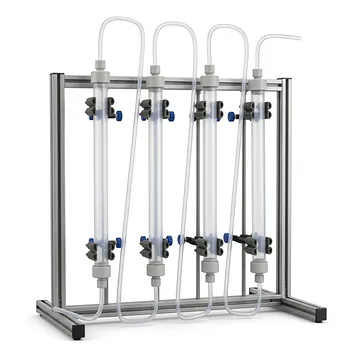
- High Purity PFA Chromatography Columns Series Filtration Resin Ion Exchange System with Sieve Plate Rack Customizable Corrosion Resistant Laboratory Fluid Handling
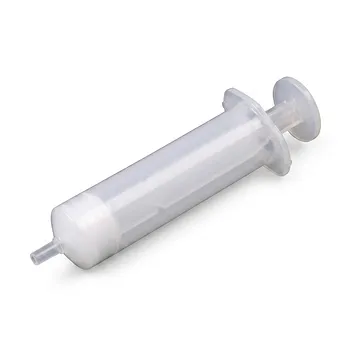
- Corrosion Resistant PFA Syringe Translucent Visual Fluoropolymer Labware 10ml Chemical Handling Tool
- Corrosion Resistant High Purity PFA Syringe Translucent Chemical Sampling Tool
People Also Ask
- Why is PFA preferred over PTFE for complex lab components? Achieve precision and purity with melt-processable fluoropolymers.
- What are the structural and thermal performance advantages of PFA resin compared to FEP and standard PTFE in high-purity laboratory labware and fluid transfer systems? Discover how PFA combines PTFE-level endurance with melt processability.
- How does MFR and molecular weight of PFA resin impact performance? Choose low MFR for durable labware
- Why is the chemical stability of polymer endgroups critical when selecting melt-processible fluoropolymers like PFA for high-purity laboratory apparatus? Choose Stable Endgroups for Reliable Performance
- Why is PFA often selected over traditional PTFE for manufacturing complex fluoropolymer fluid components, custom fittings, and sealed laboratory digestion vessels? Discover the key advantages for your lab.