PFA resin’s main advantage is that it combines PTFE-level thermal and chemical performance with practical melt processability. Compared with FEP, PFA supports substantially higher continuous operating temperatures. Compared with standard PTFE, PFA retains the approximately 260°C continuous-use capability while allowing injection molding, extrusion, welding, and fabrication of complex high-purity components.
PFA is the strongest overall choice when a system needs PTFE-like purity, chemical resistance, and continuous thermal endurance, but also requires complex molded geometries, transparency, seamless construction, or welded fluid connections. PTFE remains superior for certain extreme-temperature and machined applications, while FEP is useful when lower-temperature melt processing and transparency are more important.
Why PFA Offers a Structural Advantage
PFA can be conventionally melt-processed
Standard PTFE has an exceptionally high melt viscosity, typically cited around 10^10 to 10^12 Pa·s. Above its melting point, it forms a stiff, non-flowing gel rather than a conventional processing melt.
As a result, PTFE components generally require compression molding and sintering, paste extrusion, or precision machining. These methods are effective, but they limit geometric complexity and can increase manufacturing steps.
PFA incorporates perfluoroalkoxy groups, commonly derived from comonomers such as PPVE or PEVE. These bulky side groups disrupt regular PTFE crystallization and reduce melt viscosity enough for conventional extrusion, injection molding, and other melt-processing methods.
Complex geometries are easier to produce
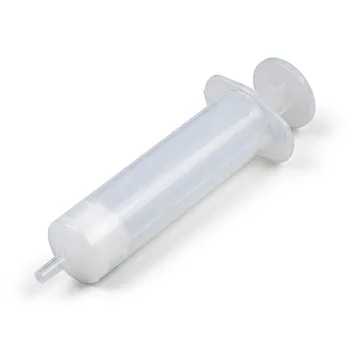
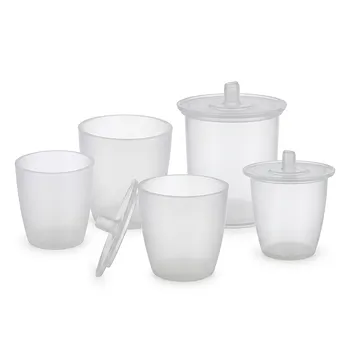
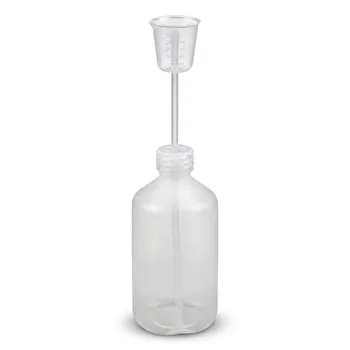
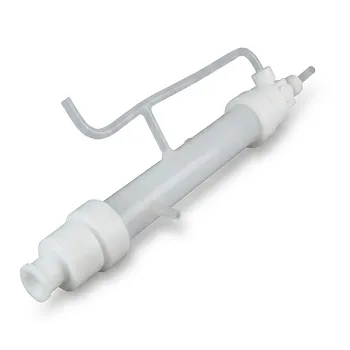
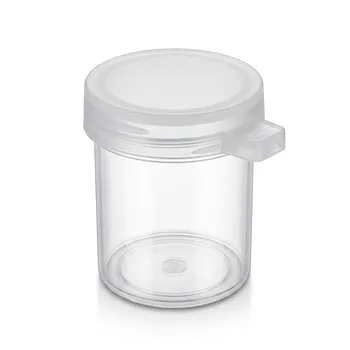
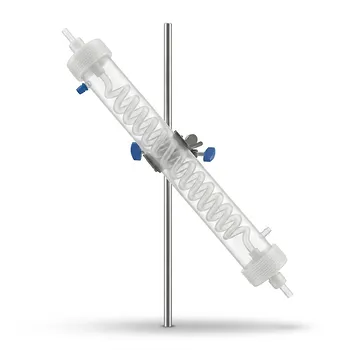
PFA can be formed into intricate tubing, valves, fittings, bottles, vessels, and fluidic assemblies with fewer secondary machining operations. This is valuable when internal passages, thin walls, integrated ports, or compact sealing features are required.
The manufacturing advantage is especially important in laboratory systems, where a component may need to combine several functions in one part. Melt processing can produce geometries that would be difficult, expensive, or impractical to create from a sintered PTFE blank.
PFA supports seamless and welded assemblies
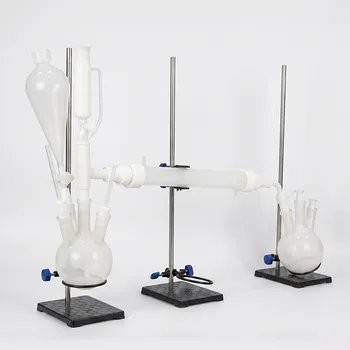
PFA can be heat-welded or fusion-joined into fluid-handling assemblies. This supports non-porous, leak-tight constructions with fewer mechanical joints and fewer potential contamination or leakage points.
For high-purity systems, reducing joints is more than a manufacturing convenience. It can simplify cleaning, limit dead volume, and reduce locations where residues or particulates might accumulate.
PFA provides useful dimensional and sealing behavior
The perfluoroalkoxy side groups interfere with polymer-chain slippage and can reduce cold flow, or creep under sustained pressure, compared with conventional PTFE in relevant component designs.
That can help PFA fittings, valves, and seals maintain dimensional stability and leak-tight performance. The actual result still depends on temperature, pressure, wall thickness, stress, processing quality, and the specific resin grade.
PFA offers higher transparency
PFA is generally more translucent or transparent than standard PTFE. In high-purity tubing and containers, this allows operators to observe fluid movement, bubbles, discoloration, particulates, or changes in fluid condition without opening the system.
That visibility is particularly useful in trace-analysis workflows and automated sampling systems, where detecting a problem early can prevent loss of a sample or contamination of downstream equipment.
How PFA Compares Thermally
PFA exceeds FEP in continuous-use temperature
FEP lowers melt viscosity and is readily melt-processible, but its continuous operating temperature is approximately 200°C. PFA retains a continuous-use temperature of approximately 260°C, aligning it with standard PTFE.
This gives PFA a significant thermal advantage in elevated-temperature laboratory labware and fluid transfer systems. Applications may include hot chemical transfer, heated sampling lines, high-temperature fittings, and laboratory vessels exposed to repeated thermal cycles.
PFA matches PTFE for continuous service
PFA and PTFE both provide an upper continuous-use temperature of approximately 260°C. In normal continuous operation, PFA therefore does not require the same thermal compromise associated with FEP.
This combination is the central thermal benefit of PFA: its melt-processability does not reduce its stated continuous-use range to the level of FEP.
PTFE retains advantages at extreme temperatures
PFA should not be described as thermally superior to PTFE in every respect. PTFE has a higher melting point, approximately 342°C, while PFA melts at roughly 305°C to 310°C.
At extreme temperatures around 400°C to 425°C, the references indicate that PTFE has substantially better thermal stability, with a reported weight-loss rate of approximately 0.01% per hour, compared with about 1% per hour for PFA. PFA’s pendant perfluoroalkoxy groups contribute to this difference.
The practical conclusion is important: PFA matches PTFE for continuous service near 260°C, but PTFE is the better choice for exceptional short-duration exposure or applications approaching fluoropolymer decomposition conditions.
Why These Differences Matter in High-Purity Systems
PFA combines structural flexibility with chemical inertness
Both PFA and PTFE are fully fluorinated materials with very high chemical resistance, low surface energy, and strong electrical insulating properties. PFA preserves these fundamental characteristics while offering more flexible manufacturing options.
This makes PFA suitable for transporting many aggressive chemicals, including strong acids, bases, and organic solvents, subject to compatibility validation for the exact chemical, concentration, temperature, pressure, and exposure duration.
Smooth internal surfaces support fluid purity
PFA tubing can provide smooth internal walls that reduce fluid resistance and limit opportunities for solute adsorption. These properties matter when transferring low-concentration samples or reagents through analytical instruments.
Lower adsorption helps reduce carryover and sample loss, while smooth flow paths can support reliable operation in automated sampling and fluid distribution systems. PFA’s suitability should still be confirmed against the specific analyte and cleaning protocol.
Molded construction can reduce contamination risks
Complex PFA components can be manufactured as integrated, non-porous parts rather than assembled from multiple machined or mechanically joined pieces. Fewer interfaces can mean fewer crevices, dead spaces, and potential sources of extractables or trapped residue.
This is particularly valuable in trace analysis, semiconductor-related laboratory work, and other applications where contamination control is more important than minimizing initial material cost.
Transparency improves process monitoring
Opaque PTFE can make it difficult to verify whether a line is filled, whether bubbles are present, or whether a sample has changed appearance. PFA’s higher transparency provides direct visual access to the fluid path.
That feature does not improve chemical resistance by itself, but it improves operational control. Operators can identify flow interruptions, trapped gas, or visible contamination without dismantling the system.
Understanding the Trade-offs
PFA does not replace PTFE in every high-temperature application
PTFE remains preferable when maximum melting-point margin, extreme thermal stability, ultra-low friction, or custom machining is the dominant requirement. Heavy-duty reaction vessels and specialized apparatus may be more practical as machined or sintered PTFE components.
PFA is the better choice when processability and complex geometry are central requirements, not simply because it has a higher temperature rating.
FEP may still be appropriate for moderate temperatures
FEP offers excellent chemical resistance and easy melt processing, often with strong transparency. If the system remains comfortably below approximately 200°C, FEP may provide an economical and effective solution.
Choosing PFA solely for its 260°C capability can add cost or processing requirements that are unnecessary for a moderate-temperature application.
Continuous-use temperature is not a universal design limit
A 260°C rating does not mean that every PFA component can operate indefinitely at 260°C under every pressure or mechanical load. Pressure, wall thickness, thermal cycling, chemical exposure, stress concentration, and connection design all affect service life.
The resin grade and finished component should therefore be evaluated under the actual operating conditions, especially for pressurized tubing, valves, and seals.
Processability does not eliminate fabrication quality concerns
Melt processing enables complex PFA designs, but poor molding, welding, or extrusion can still introduce defects. Weld quality, dimensional tolerances, internal cleanliness, and post-processing controls are critical in high-purity systems.
A well-designed PTFE component can outperform a poorly fabricated PFA component. Material selection and manufacturing control must be considered together.
Making the Right Choice for Your Goal
PFA is most valuable when structural design freedom and high-temperature purity must coexist.
- If your primary focus is maximum continuous operating temperature with complex molded geometry: Choose PFA because it combines approximately 260°C continuous service with injection molding, extrusion, and welding capability.
- If your primary focus is moderate-temperature transparency and economical melt processing: Consider FEP when the application remains within its approximately 200°C continuous-use range.
- If your primary focus is extreme thermal stability or heavy-duty custom-machined apparatus: Choose standard PTFE because its higher melting point and superior stability at extreme temperatures provide greater thermal margin.
- If your primary focus is high-purity fluid transfer and visual process monitoring: Choose PFA tubing and fittings for their chemical resistance, smooth internal surfaces, transparency, and potential for seamless welded assemblies.
PFA is the balanced choice when a high-purity system needs the chemical and thermal endurance of PTFE without giving up the structural freedom of a melt-processible resin.
Summary Table:
| Feature | PFA | FEP | PTFE |
|---|---|---|---|
| Continuous Use Temp | ~260°C | ~200°C | ~260°C |
| Melting Point | ~305-310°C | ~260-280°C | ~342°C |
| Processability | Melt-processable (injection molding, extrusion, welding) | Melt-processable | Not melt-processable; requires sintering/machining |
| Transparency | Good | Excellent | Opaque |
| Chemical Resistance | Excellent | Excellent | Excellent |
| Typical Applications | Complex labware, tubing, fittings | Moderate-temp labware | Extreme-temp, machined parts |
For high-purity labware and fluid systems that demand PFA's superior thermal and structural performance, trust KINTEK's precision-crafted PTFE and PFA components. From custom-machined parts to complete fluid transfer assemblies, our expert team ensures contamination-free operation. Contact us today to discuss your specific requirements and benefit from our advanced manufacturing capabilities. Get in touch.
Related Products
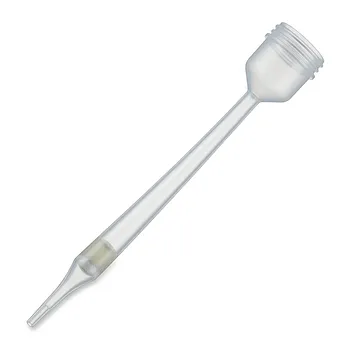
- High Purity PFA Chromatography Microcolumn Corrosion Resistant Resin Column with Sieve Plate for Trace Analysis
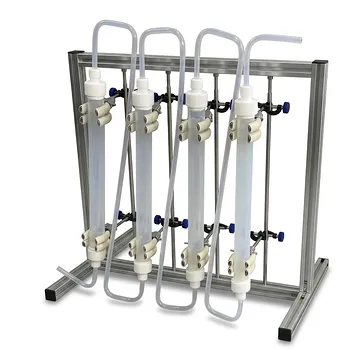
- PFA Chromatography Column Series and Corrosion Resistant Resin Exchange Column with Filter Frit Support for Trace Analysis Customizable
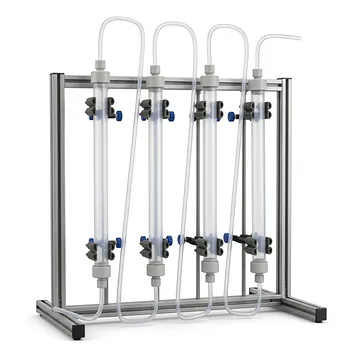
- High Purity PFA Chromatography Columns Series Filtration Resin Ion Exchange System with Sieve Plate Rack Customizable Corrosion Resistant Laboratory Fluid Handling
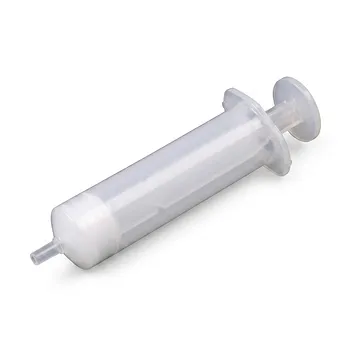
- Corrosion Resistant PFA Syringe Translucent Visual Fluoropolymer Labware 10ml Chemical Handling Tool
- Corrosion Resistant High Purity PFA Syringe Translucent Chemical Sampling Tool
People Also Ask
- How does surfactant choice during fluoropolymer synthesis affect the molecular weight and Melt Flow Rate (MFR) of PFA resin used in high-performance laboratory equipment?
- Why is PFA preferred over PTFE for complex lab components? Achieve precision and purity with melt-processable fluoropolymers.
- How does MFR and molecular weight of PFA resin impact performance? Choose low MFR for durable labware
- Why is the chemical stability of polymer endgroups critical when selecting melt-processible fluoropolymers like PFA for high-purity laboratory apparatus? Choose Stable Endgroups for Reliable Performance
- Why is PFA often selected over traditional PTFE for manufacturing complex fluoropolymer fluid components, custom fittings, and sealed laboratory digestion vessels? Discover the key advantages for your lab.