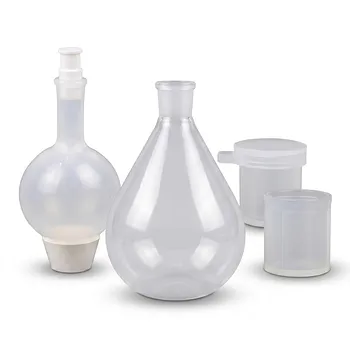
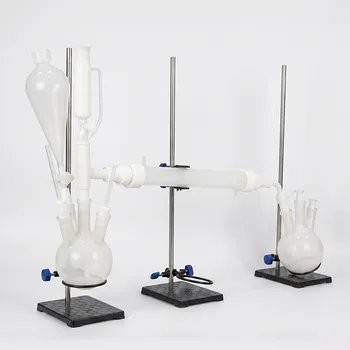
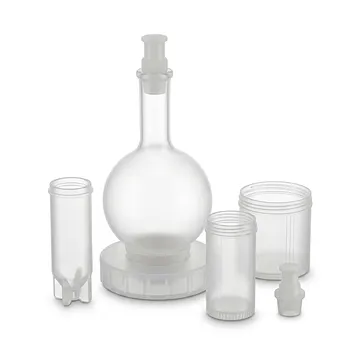
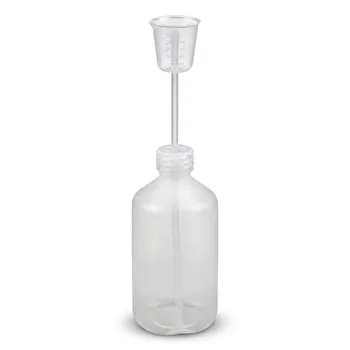
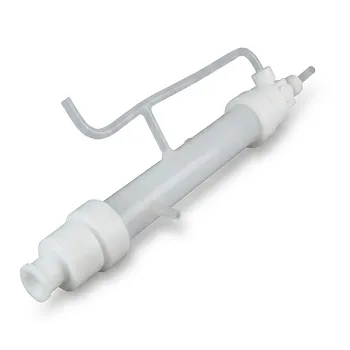
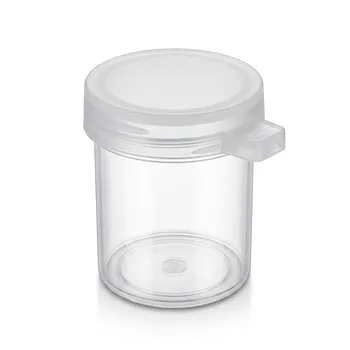
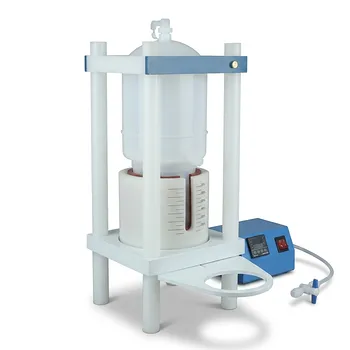
PFA is preferred because it combines PTFE-like chemical and thermal performance with true melt-processability. Standard PTFE’s extremely high melt viscosity prevents conventional injection molding, so complex parts generally require sintering, compression molding, or machining. PFA can be injection-molded and melt-extruded into intricate, smooth, low-porosity components such as valves, fittings, tubing connectors, and microwave digestion vessels while retaining broad chemical inertness and high-temperature capability.
The central advantage of PFA is manufacturing freedom without giving up fluoropolymer performance. Its lower melt viscosity enables precise, seamless molding, while its smooth and comparatively non-porous structure supports leak resistance, low contamination, and reliable handling of aggressive laboratory reagents.
Why Standard PTFE Is Difficult to Mold
PTFE does not flow like conventional thermoplastics
PTFE has an exceptionally high melt viscosity. Above its melting point, it forms a stiff, non-flowing material rather than flowing readily through an injection-molding tool.
As a result, standard PTFE cannot normally be processed using conventional injection molding or ordinary melt extrusion.
PTFE requires alternative manufacturing methods
PTFE components are typically produced through compression or suspension molding followed by sintering. Complex parts may then require CNC machining to achieve threads, channels, ports, sealing surfaces, or other detailed geometry.
These methods are effective, but they add manufacturing steps and can make intricate, seamless designs more difficult and expensive to produce consistently.
Processing can affect part structure
Sintered PTFE can retain small voids or pores associated with its fabrication process. Although PTFE remains highly chemically inert, these microscopic features can contribute to permeation or reagent retention in demanding fluid-handling applications.
That distinction matters in ultra-pure analytical work, where trace contamination, sample loss, and cross-contamination must be minimized.
Why PFA Is Better Suited to Complex Components
PFA is a true melt-processable fluoropolymer
PFA is a copolymer of tetrafluoroethylene and perfluoroalkyl vinyl ether. The comonomer structure substantially lowers melt viscosity compared with standard PTFE.
This allows PFA to be processed using conventional injection molding, melt extrusion, and related melt-forming techniques.
Complex geometries can be molded directly
PFA can form intricate shapes such as valve bodies, threaded fittings, tubing connectors, manifolds, and specialized vessel geometries.
Direct molding reduces dependence on extensive machining and makes it easier to produce repeatable features, integrated passages, and consistent sealing surfaces.
Melt processing supports smooth, low-porosity surfaces
During melt processing, PFA can form a continuous structure with fewer fabrication-related voids than sintered PTFE. The resulting surfaces are smooth, clean, and well suited to high-purity fluid handling.
Smooth internal surfaces also reduce areas where reagents, particles, or residues can collect.
Why These Characteristics Matter in the Laboratory
Reduced contamination risk
Laboratory fluid systems often handle acids, solvents, digested samples, and trace-level analytes. A smooth, low-porosity PFA component reduces opportunities for absorption, reagent retention, and cross-contamination.
This is particularly important in trace analysis, where contamination at very small levels can compromise an otherwise valid result.
More reliable leak-tight sealing
Molded PFA fittings and valve components can be produced with precise interfaces and consistent dimensions. That supports reliable sealing in assemblies exposed to pressure, thermal cycling, and aggressive chemicals.
Dimensional stability is especially important for threaded connections, valve seats, and vessel closures.
Suitable for aggressive reagents and elevated temperatures
PFA retains the broad chemical resistance and thermal stability associated with PTFE. Depending on the specific grade and application conditions, PFA is commonly used for continuous service temperatures around 260°C (500°F).
The actual limit must still be verified against the resin grade, pressure, chemical environment, exposure time, and applicable design requirements.
Useful for digestion vessels
Microwave and other digestion vessels must withstand aggressive reagents, elevated temperatures, repeated thermal cycling, and strict cleanliness requirements. PFA’s melt-moldability enables vessel designs with controlled wall geometry, smooth surfaces, and reliable closures.
Its low-permeability, low-contamination characteristics also help preserve sample integrity during digestion and transfer.
How PFA Retains PTFE-Like Performance
Chemical inertness remains the foundation
PFA preserves the highly fluorinated molecular structure responsible for resistance to many aggressive acids, bases, solvents, and oxidizing environments.
This means the decision to use PFA is not primarily a compromise from PTFE to a less-resistant material. It is generally a choice to gain manufacturability while retaining comparable fluoropolymer resistance.
Thermal capability remains high
PFA maintains high thermal stability and a service-temperature capability broadly comparable to PTFE for many laboratory applications.
However, temperature ratings are not interchangeable across every product. Engineers should use the manufacturer’s pressure-temperature curves and chemical compatibility data for the selected grade.
Improved design and mechanical consistency
PFA’s melt-formed construction supports precise, continuous parts with good structural integrity. Its copolymer structure also helps limit chain slippage and can provide better resistance to deformation than might be expected from a highly fluorinated polymer.
This supports dimensionally stable fittings, valves, and vessels that must maintain sealing performance over time.
Understanding the Trade-offs
PFA is not automatically superior for every part
Standard PTFE remains an excellent choice where maximum chemical inertness, low friction, non-wetting behavior, or established machined-part designs are the primary requirements.
If the geometry is simple and the part can be effectively compression-molded or machined, PTFE may be entirely appropriate.
PFA still has creep and design limitations
PFA can deform under sustained load, particularly at elevated temperature and pressure. Although its structure can reduce cold flow relative to some PTFE applications, it should not be treated as a rigid engineering plastic.
Sealing stresses, wall thickness, support geometry, temperature, and pressure must be evaluated together.
Processing does not eliminate material selection
Melt-processability is valuable only when the selected PFA grade is compatible with the actual reagents and operating conditions. Chemical exposure, thermal cycling, mechanical loads, and cleaning procedures can all influence service life.
Designers should also consider resin purity, extractables, surface finish, transparency requirements, and regulatory or analytical protocols.
Cost and tooling may favor PTFE in some cases
PFA molding generally requires appropriate high-temperature processing equipment and tooling. For low-volume parts, machining PTFE may be simpler or more economical than developing a molded PFA process.
The correct comparison is therefore the total cost and performance of the finished component, not resin price alone.
Making the Right Choice for Your Goal
PFA is most compelling when the component’s geometry, cleanliness, and sealing performance are more important than using the simplest established PTFE fabrication route.
- If your primary focus is complex geometry: Choose PFA when injection molding or melt extrusion can produce intricate passages, threads, valve features, or vessel shapes with fewer machining operations.
- If your primary focus is ultra-pure fluid handling: Favor melt-processed PFA for smooth, low-porosity surfaces that reduce permeation, residue retention, and cross-contamination risk.
- If your primary focus is digestion vessels: Use an appropriate PFA grade when aggressive reagents, elevated temperatures, repeated use, and sample integrity must be managed in one molded design.
- If your primary focus is maximum low-friction performance or a simple machined part: Standard PTFE may remain the better choice, provided its porosity, creep, sealing, and fabrication requirements are acceptable.
- If your primary focus is long-term reliability: Evaluate the specific PFA or PTFE grade against temperature, pressure, chemical exposure, thermal cycling, and sealing loads rather than relying on resin family names alone.
PFA is preferred when its melt-processability delivers a cleaner, more precise, and more reliable component without sacrificing the chemical and thermal performance required from PTFE-class materials.
Summary Table:
| Feature | PTFE | PFA |
|---|---|---|
| Melt-processability | Difficult (sintering/machining) | Excellent (injection molding/extrusion) |
| Complex geometry | Limited or requires machining | Direct molding of intricate shapes |
| Surface smoothness | May have porosity | Smooth, low-porosity |
| Contamination risk | Higher (porosity) | Lower (smooth surface) |
| Chemical inertness | Superior | Comparable |
| Temperature range | Up to 260°C | Up to 260°C |
| Suitability for digestion vessels | Possible but less ideal | Excellent (molded designs) |
Ready to enhance your lab's performance with precision-molded PFA components? At KINTEK, we specialize in high-quality fluoropolymer labware, from standard PFA beakers and vessels to custom-machined parts. Our expertise in PTFE and PFA ensures you get the right solution for your complex fluid handling needs. Contact us today to discuss your requirements and benefit from our OEM/ODM support, reliable supply, and commitment to purity. Get in touch now!
Related Products
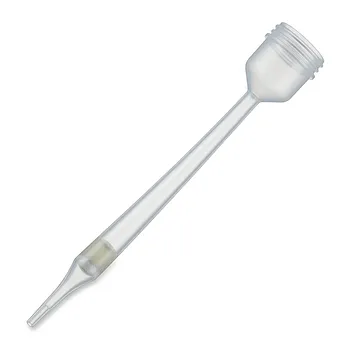
- High Purity PFA Chromatography Microcolumn Corrosion Resistant Resin Column with Sieve Plate for Trace Analysis
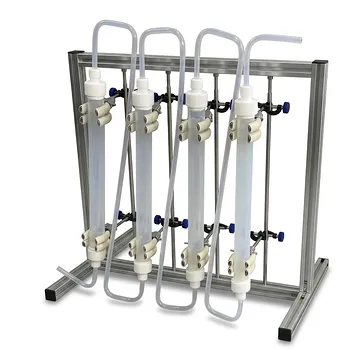
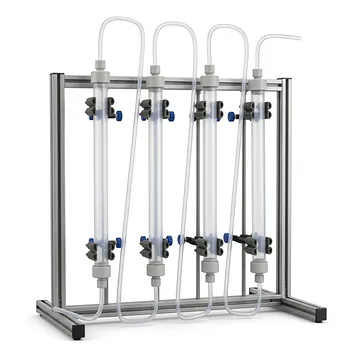
- PFA Chromatography Column Series and Corrosion Resistant Resin Exchange Column with Filter Frit Support for Trace Analysis Customizable
- High Purity PFA Chromatography Columns Series Filtration Resin Ion Exchange System with Sieve Plate Rack Customizable Corrosion Resistant Laboratory Fluid Handling
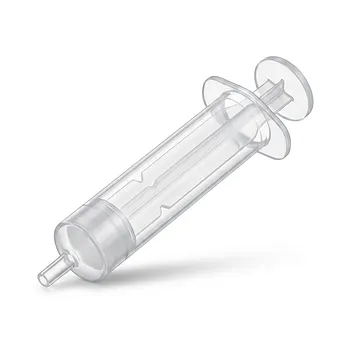
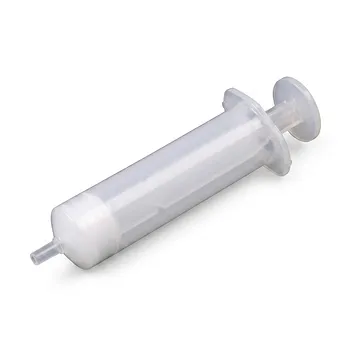
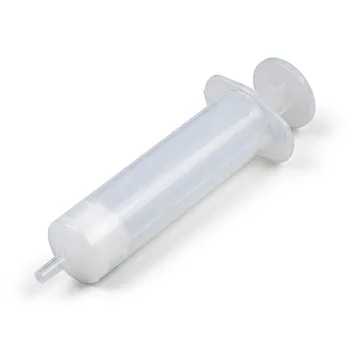
- Corrosion Resistant PFA Syringe Translucent Visual Fluoropolymer Labware 10ml Chemical Handling Tool
- Corrosion Resistant High Purity PFA Syringe Translucent Chemical Sampling Tool
People Also Ask
- How does surfactant choice during fluoropolymer synthesis affect the molecular weight and Melt Flow Rate (MFR) of PFA resin used in high-performance laboratory equipment?
- What are the structural and thermal performance advantages of PFA resin compared to FEP and standard PTFE in high-purity laboratory labware and fluid transfer systems? Discover how PFA combines PTFE-level endurance with melt processability.
- How does MFR and molecular weight of PFA resin impact performance? Choose low MFR for durable labware
- Why is the chemical stability of polymer endgroups critical when selecting melt-processible fluoropolymers like PFA for high-purity laboratory apparatus? Choose Stable Endgroups for Reliable Performance
- Why is PFA often selected over traditional PTFE for manufacturing complex fluoropolymer fluid components, custom fittings, and sealed laboratory digestion vessels? Discover the key advantages for your lab.