Fluorinated monomer units generally raise the thermal stability of functionalized fluoropolymer copolymers by replacing more thermally vulnerable segments with highly resistant C–F-rich structures. Unfluorinated vinyl ether segments may begin degrading near 150 °C, whereas fluorinated units such as chlorotrifluoroethylene, hexafluoropropylene, and perfluoromethyl vinyl ether can resist breakdown until approximately 300 °C. In representative functionalized copolymers, this shifts the 5% weight-loss temperature above 255 °C and the 10% weight-loss temperature above 285 °C, with major thermo-oxidative degradation occurring near 450 °C.
Fluorinated monomers increase the decomposition margin, but the practical operating limit remains lower than the decomposition temperature and depends on fluorine content, hydrogen in the backbone, functional groups, mechanical loading, and the chemical environment.
How Fluorinated Units Improve Thermal Stability
Stronger resistance to bond scission
The principal advantage comes from the high bond energy of carbon-fluorine bonds. Fluorine-rich structures are less vulnerable to the chain scission reactions that initiate thermal and oxidative degradation in less fluorinated polymer segments.
This effect is strongest when fluorinated monomers form a substantial portion of the backbone rather than appearing only as isolated functional groups.
Reduced vulnerability of the polymer backbone
Fluorinated monomers dilute or replace thermally sensitive hydrocarbon and vinyl ether sequences. As a result, degradation begins at higher temperatures and proceeds more slowly under comparable atmospheric conditions.
The improvement is reflected in higher thermogravimetric analysis thresholds, including Td,5% and Td,10%, which indicate the temperatures at which 5% or 10% mass loss occurs.
Influence of fluorinated side groups
Pendant groups such as trifluoromethyl (-CF3) and perfluoroalkyl groups can further improve resistance to thermal and oxidative degradation. Bulky fluorinated groups may also increase glass transition temperature, with some specialized fluorinated materials exhibiting glass transition temperatures above 170 °C.
These structural changes can improve dimensional stability, although they may also affect flexibility, free volume, permeability, and processability.
What the Decomposition Data Means for Operation
Decomposition temperature is not a service temperature
A decomposition temperature identifies when measurable chemical breakdown begins under a specific test method. It does not define the temperature at which a component can operate indefinitely while maintaining its mechanical properties, seal performance, dimensional accuracy, and chemical purity.
For example, a material with a Td,10% above 285 °C may still have a recommended continuous-use temperature much lower than 285 °C.
Representative functionalized copolymer limits
The primary thermal profile indicates that functionalized fluoropolymer copolymers can support reliable operating windows of approximately -25 °C to +150 °C in relevant high-performance applications. This range is more useful for equipment selection than the much higher temperature at which decomposition becomes measurable.
The practical limit accounts for properties that may fail before chemical decomposition, including creep, loss of elasticity, seal relaxation, embrittlement, and dimensional changes.
Fully fluorinated versus hydrogen-containing polymers
Fully fluorinated polymers contain no hydrogen in the main chain and can support continuous service temperatures exceeding approximately 300 °C to 315 °C in suitable formulations and conditions. Their lack of backbone hydrogen reduces the risk of dehydrofluorination and related high-temperature degradation mechanisms.
Fluoropolymers that retain hydrogen in the backbone generally have lower long-term operating limits, often around 200 °C to 215 °C, and may be more sensitive to dehydrofluorination, particularly in the presence of metal oxides.
How Monomer Selection Changes the Thermal Profile
Chlorotrifluoroethylene, HFP, and PMVE
Chlorotrifluoroethylene, hexafluoropropylene, and perfluoromethyl vinyl ether each introduce fluorinated character, but they do not produce identical material behavior. Their effects depend on concentration, sequence distribution, molecular weight, crystallinity, and the functional groups incorporated elsewhere in the copolymer.
PMVE-containing structures are particularly useful where low-temperature flexibility is important, because thermal resistance must be balanced against the risk of embrittlement or loss of compliance at subambient temperatures.
TFE-rich compositions
Adding tetrafluoroethylene can raise the fluorine content of certain copolymers from roughly 66 wt.% to approximately 68–69.5 wt.%. This generally improves heat resistance and resistance to aromatic solvents.
The benefit is not simply proportional to total fluorine content, however. Backbone architecture and morphology determine how effectively the additional fluorinated units protect the material during long-term exposure.
TFE/propylene compositions
TFE/propylene formulations are selected when resistance to strong bases is a dominant requirement. Their value illustrates an important design principle: the best copolymer composition is determined by the combined thermal, chemical, mechanical, and low-temperature requirements rather than by thermal stability alone.
Why Functionalization Requires Careful Evaluation
Cross-linkable end groups
Functional end groups can enable cross-linking and improve dimensional stability or solvent resistance. Supplementary data indicate that some fluorinated, cross-linkable systems reach Td,10% values between approximately 480 °C and 530 °C in air.
These values describe specialized formulations and should not be generalized to every functionalized fluoropolymer copolymer. The cross-linking chemistry, cure state, additive package, and test conditions can materially change the result.
Mechanical performance can govern first
A polymer may remain chemically intact while becoming too soft, too brittle, or too prone to creep for its intended application. This is especially important for gaskets, valve seals, tubing fittings, pressure vessels, and reaction components exposed to sustained load.
For these products, the usable temperature limit must be based on mechanical retention and dimensional stability, not thermogravimetric decomposition alone.
Chemical environment changes the boundary
Air, oxygen, vacuum, solvents, corrosive reagents, radiation, and metal-contact surfaces can produce different degradation behavior. Metal oxides, for example, can accelerate dehydrofluorination in hydrogen-containing fluoropolymers.
A temperature rating established in inert nitrogen cannot automatically be applied to an oxidizing chemical process or a loaded sealing application.
Understanding the Trade-offs
Higher fluorine content is not a universal solution
Increasing fluorine content generally supports higher heat and chemical resistance, but it can change crystallinity, flexibility, permeability, surface energy, and adhesion. The resulting material may be better for an aggressive solvent environment but less suitable for a low-temperature seal or a highly compliant component.
Thermal stability and low-temperature flexibility compete
Structures optimized for high thermal resistance may lose flexibility at low temperatures. PMVE and related monomer choices can improve low-temperature behavior, but the formulation must still be evaluated across the full thermal cycle.
For equipment specified from approximately -25 °C to +150 °C, both endpoints should be tested rather than inferred from a single high-temperature decomposition value.
Laboratory ratings require application-specific validation
PTFE and PFA reaction apparatus, digestion vessels, crucibles, and high-pressure reaction tubes benefit from fluoropolymer chemical inertness and thermal stability. Nevertheless, pressure, heating rate, reagent composition, vessel geometry, wall thickness, and repeated thermal cycling can all reduce the practical safety margin.
The same principle applies to fluid-transfer components: a seal or fitting may tolerate the chemical reagent but fail mechanically under pressure and temperature.
Test values are method-dependent
Thermogravimetric temperatures vary with atmosphere, heating rate, sample size, and the selected mass-loss threshold. Values such as Td,5%, Td,10%, and the approximate 450 °C thermo-oxidative breakdown region should therefore be treated as comparative material data, not universal operating specifications.
How to Apply This to Your Project
Select the material against the complete operating envelope, not the headline decomposition temperature.
- If your primary focus is maximum high-temperature endurance: Favor highly fluorinated or fully fluorinated formulations, then verify continuous-use temperature, mechanical retention, pressure capability, and oxidative stability under the actual process conditions.
- If your primary focus is reliable operation around -25 °C to +150 °C: Use the application-specific operating window as the starting specification and confirm flexibility, creep resistance, and seal recovery across repeated thermal cycles.
- If your primary focus is aggressive solvents or corrosive reagents: Compare monomer composition and fluorine content with the complete chemical exposure profile, because thermal stability alone does not guarantee resistance to every reagent.
- If your primary focus is high-temperature laboratory vessels or labware: Evaluate dimensional stability, contamination risk, pressure conditions, and thermal shock in addition to Td,5% and Td,10% data.
- If your primary focus is fluid sealing or transfer: Treat the temperature rating as a coupled chemical-mechanical limit and validate leakage, compression set, and long-term load retention.
Fluorinated monomer units create a larger thermal degradation margin, but dependable high-performance operation comes from matching the specific copolymer architecture and service rating to the real thermal, chemical, and mechanical demands.
Summary Table:
| Property | Unfluorinated Vinyl Ethers | Fluorinated Copolymers | Fully Fluorinated Polymers |
|---|---|---|---|
| Degradation onset | ~150 °C | ~300 °C | >315 °C |
| Td,5% weight loss | - | >255 °C | - |
| Td,10% weight loss | - | >285 °C | - |
| Major thermo-oxidative degradation | - | ~450 °C | - |
| Practical continuous-use limit | - | -25 °C to +150 °C | 300 °C to 315 °C |
Ready to select the right fluoropolymer for your high-temperature application? KINTEK's PTFE and PFA labware, reaction vessels, and custom-machined components are engineered to perform reliably from -25 °C to +150 °C and beyond. Our experts can help you match the exact monomer composition to your thermal, chemical, and mechanical demands. Contact us today for a consultation and discover how our high-performance solutions can optimize your processes.
Related Products
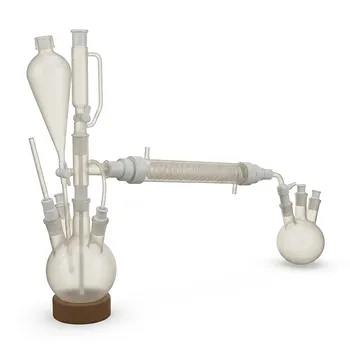
- PTFE Distillation Condensation Apparatus High Temperature Hydrofluoric Acid Resistant Fluorination Reaction Flask
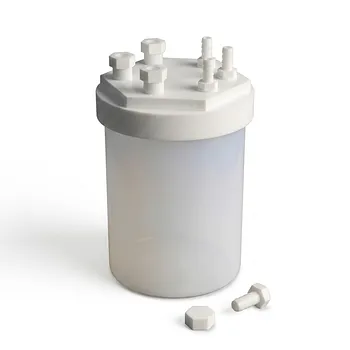
- PFA Chemical Reaction Tank with Customizable Fittings for Corrosive Solvent Synthesis and High Purity Lab Applications
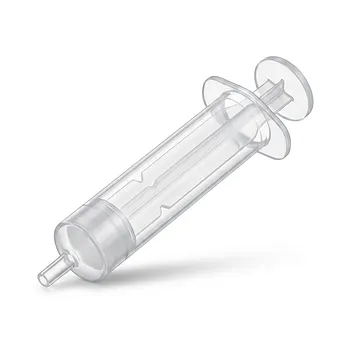
- Corrosion Resistant PFA Syringe Translucent Visual Fluoropolymer Labware 10ml Chemical Handling Tool
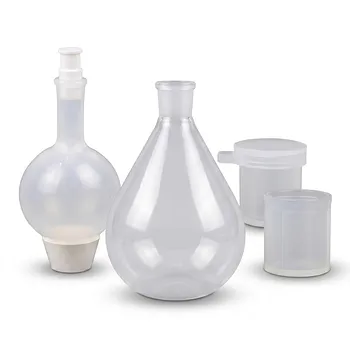
- PFA Eggplant Flask Custom Molded Pear Shaped Laboratory Flask Corrosion Resistant Glass Alternative
- High Purity PFA Chromatography Column with Collection Bottle Corrosion Resistant Fluoropolymer Filtration System for Trace Analysis
People Also Ask
- How does the low surface energy of PTFE benefit the condensation process? Boost Heat Transfer and Prevent Fouling
- What structural characteristics provide PTFE fluoropolymer laboratory apparatus with high thermal stability? Strong C-F bonds, dense fluorine shielding, and rigid helical conformation ensure stability during high-temperature analysis.
- How can autopolymerization of TFE gas be prevented during storage and handling? Master TFE safety with oxygen control, inhibitors, and robust system design.
- When synthesizing fluorinated polymers using volatile and toxic monomers like octafluorocyclopentene (OFCP) or decafluorocyclohexene (DFCH), what material safety and thermal features are required for fluoropolymer laboratory reaction apparatus and fluid h
- How do pyrolysis temperature and steam diluent ratios influence tetrafluoroethylene (TFE) conversion and yield in fluoropolymer monomer reaction apparatus? Optimize TFE yield with temperature and steam control