Fluorination improves stability by creating a chemically shielded, thermally robust polymer structure. Fluorine’s high electronegativity and the exceptional strength of the carbon–fluorine (C–F) bond make fluoropolymers such as PTFE and PFA difficult for hydroxide, oxidants, solvents, and heat to attack. As a result, fluoropolymer laboratory equipment can retain its integrity in conditions such as concentrated alkaline solutions, strong oxidizing media, and elevated-temperature digestion or reaction processes.
Core takeaway: Fluorination protects the polymer backbone both chemically and electronically. Fully fluorinated materials, particularly PTFE and PFA, therefore combine exceptional chemical inertness, oxidative resistance, low contamination risk, and high-temperature capability—but their mechanical design limits and operating conditions must still be considered.
Why Fluorination Resists Chemical Attack
The C–F bond protects the polymer backbone
The carbon–fluorine bond is highly stable, and fluorine atoms form a dense protective environment around the carbon backbone. This shielding makes it difficult for reactive species to reach and break the underlying polymer structure.
The effect is especially important in PTFE and PFA, where extensive fluorination produces a highly inert, perfluorinated backbone.
Fluorine reduces electronic reactivity
Fluorine strongly attracts electron density. This changes the electronic structure of the polymer and lowers the energy of its frontier orbitals, making the backbone less susceptible to reactions with aggressive chemical species.
In practical terms, oxidizing reagents have fewer favorable pathways for extracting electrons from or attacking the polymer chain.
Strong alkalis have limited effect
Concentrated hydroxide solutions can attack many plastics through hydrolysis, chain scission, or oxidation-assisted degradation. Fluoropolymers lack the readily reactive functional groups that make those mechanisms efficient.
This is why fluoropolymer equipment can be used in severe alkaline environments, including concentrated 7 M KOH at approximately 120°C, provided the specific product design and pressure conditions are suitable.
How Fluorination Improves Thermal Stability
Higher bond strength delays decomposition
The robust C–F structure requires substantial energy to disrupt. Fluorination therefore raises the temperature at which the polymer begins significant thermal decomposition, compared with many non-fluorinated polymers.
Some highly fluorinated polymer systems show decomposition onset temperatures in the approximate 480–530°C range in air, while selected non-sulfonated fluorinated segments can resist decomposition to even higher temperatures under particular test conditions.
These values describe thermal degradation tests, not automatically safe continuous operating temperatures.
Oxidation is slowed at elevated temperature
Heat accelerates reactions with oxygen and other oxidants. Fluorination reduces the polymer’s susceptibility to these reactions, providing substantially greater oxidative stability than many hydrocarbon-based polymers.
This helps fluoropolymer labware retain its chemical and structural performance during hot digestion, prolonged exposure to oxidizing reagents, and repeated thermal cycling.
Service temperature remains application-dependent
PTFE and PFA commonly support continuous-use temperatures around 260°C, but the allowable temperature depends on load, pressure, wall thickness, thermal cycling, processing history, and the particular grade.
A material’s decomposition temperature is therefore not a design temperature. Equipment should be selected using the manufacturer’s continuous-use and pressure-temperature ratings.
Why PTFE and PFA Are Used in Laboratory Equipment
Chemical purity is preserved
PTFE and PFA resist leaching, swelling, and chemical sorption across a broad range of aggressive reagents. This reduces the risk that the vessel itself will contaminate a sample.
That advantage is critical in trace analysis, digestion, reagent storage, and high-purity fluid handling.
Low surface energy reduces sample adhesion
Fluorinated surfaces have very low surface energy and are strongly hydrophobic. Samples are less likely to wet, adhere to, or remain absorbed in the equipment surface.
This improves recovery and simplifies cleaning, especially when handling reactive, valuable, or low-concentration samples.
Equipment retains functional integrity
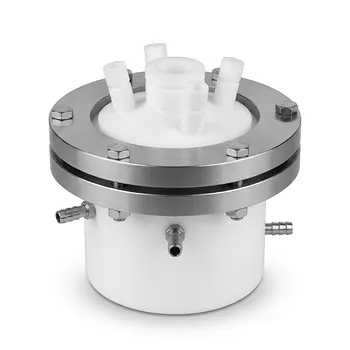
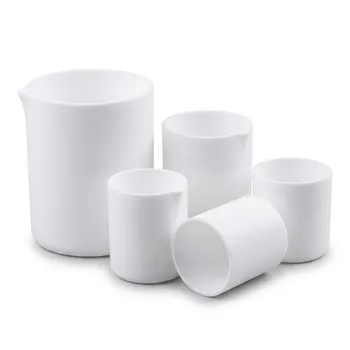
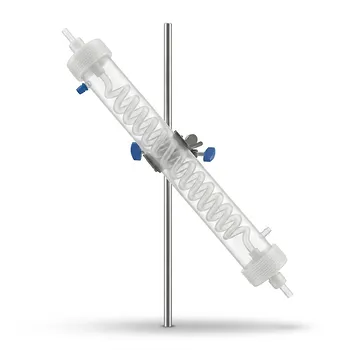
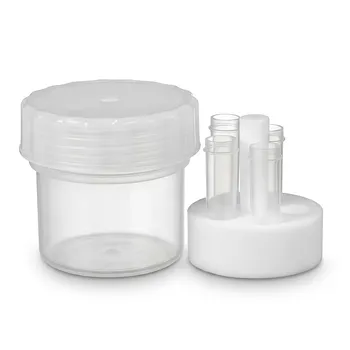
Reaction vessels, digestion tubes, beakers, crucibles, tubing, and custom-machined components benefit from fluorination because the material resists both chemical attack and thermal degradation.
The result is more reliable dimensional stability and fewer failures caused by embrittlement, cracking, swelling, or surface deterioration.
How Structure Affects Performance
Fully fluorinated polymers maximize inertness
Perfluoropolymers such as PTFE and PFA contain a high proportion of fluorinated structural units. They are generally selected when maximum resistance to acids, bases, oxidants, and organic solvents is the primary requirement.
PFA offers melt-processability and can be advantageous for molded or transparent laboratory components, while PTFE is widely used where extreme inertness and low friction are important.
Partially fluorinated materials may trade some resistance for strength
Increasing fluorine content generally improves chemical and thermal resistance, but it can reduce certain mechanical properties, including cut-through resistance, toughness, or load-bearing performance.
Partially fluorinated polymers may therefore be preferable when mechanical rigidity, strength, or wear resistance is more important than maximum chemical inertness.
Fluorinated side groups can improve high-temperature behavior
Fluorinated groups such as –CF₃ and perfluoroalkyl substituents can increase resistance to thermal and oxidative degradation. In some engineered polymer systems, they also raise glass-transition temperatures and improve solvent resistance.
These benefits are material-specific and should not be assumed to apply identically to every fluorinated polymer or laboratory product.
Understanding the Trade-offs
Thermal decomposition is not the same as safe operation
A high decomposition temperature indicates when chemical breakdown begins under a particular test method. It does not account for creep, pressure, mechanical loading, dimensional change, or seal performance during actual use.
For heated or pressurized equipment, the manufacturer’s application limits are more important than the headline decomposition temperature.
Fluoropolymers are not universally immune
Fluoropolymers resist most laboratory chemicals exceptionally well, but extreme conditions can still cause damage. Certain highly reactive fluorinating agents, molten alkali metals, plasma environments, and unusual high-energy chemical systems require separate compatibility review.
Chemical compatibility must also consider concentration, temperature, exposure time, mechanical stress, and the presence of contaminants.
Mechanical performance may limit equipment design
Fluoropolymers can have lower stiffness, greater creep, or reduced resistance to cutting and wear than engineering plastics or metals. Under sustained load and elevated temperature, dimensional stability may become the limiting factor even when chemical resistance remains excellent.
Designers may need thicker walls, external support, reinforcement, or a different polymer grade.
Permeability and sealing require attention
Fluorination lowers surface energy but does not eliminate gas or vapor transport through the polymer. Some fluorinated structures can exhibit increased gas permeability, depending on their free volume and molecular architecture.
For volatile reagents, vacuum service, or high-pressure systems, the vessel wall, closure, gasket, and tubing must be evaluated as a complete system.
Making the Right Choice for Your Goal
Select the material based on the complete operating envelope rather than fluorine content alone.
- If your primary focus is maximum chemical inertness: Choose a fully fluorinated material such as PTFE or PFA, and verify compatibility with the exact reagent concentration, temperature, and exposure duration.
- If your primary focus is high-temperature processing: Use the manufacturer’s continuous-use and pressure-temperature ratings, not the polymer’s decomposition temperature alone.
- If your primary focus is trace analysis and sample recovery: Favor fluoropolymer surfaces with low sorption and low surface energy, while checking cleanliness, extractables, and fabrication quality.
- If your primary focus is mechanical strength or load-bearing performance: Consider a partially fluorinated or reinforced design if it provides adequate chemical resistance for the application.
- If your primary focus is pressurized or vacuum operation: Evaluate creep, permeability, seals, wall thickness, and thermal cycling in addition to chemical compatibility.
Fluorination gives laboratory equipment a powerful combination of chemical shielding and thermal resilience, but reliable performance comes from matching the specific fluoropolymer and design to the full operating environment.
Summary Table:
| Factor | How Fluorination Helps | Practical Benefit |
|---|---|---|
| C–F bond strength | Strong, stable bonds protect polymer backbone | Resists attack by alkalis, acids, oxidants |
| Electronic structure | Fluorine lowers reactivity | Reduced oxidation and chemical degradation |
| Thermal stability | High decomposition temperature (~480-530°C) | Sustains performance under elevated temperatures |
| Chemical inertness | Minimal leaching and sorption | Maintains sample purity in trace analysis |
| Surface properties | Low surface energy, hydrophobic | Reduces sample adhesion, easy cleaning |
Ready to upgrade your lab with high-performance fluoropolymer equipment? Trust KINTEK's PTFE and PFA labware, designed to withstand extreme conditions. From beakers and digestion vessels to custom CNC-machined parts, we deliver reliability and purity for your most demanding applications. Contact us today to find the perfect solution for your lab.
Related Products
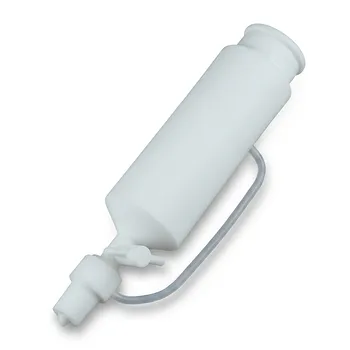
- Custom PTFE Constant Pressure Separatory Funnel 100ml Fluoropolymer Labware for Corrosive Chemical Transfer
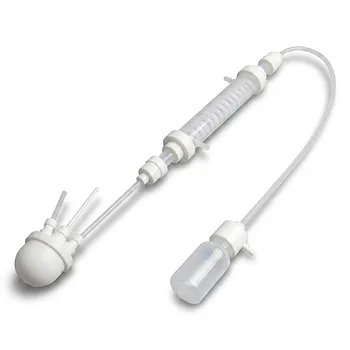
- Corrosion Resistant Hydrogen Fluoride Reflux Apparatus PTFE Flask Condenser Separatory Funnel Collection Bottle High Temperature Laboratory System
- Custom PTFE Flask 250ml High Purity Fluoropolymer Laboratory Vessel for Chemical Research
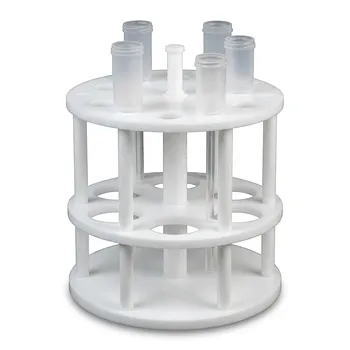
- Custom PFA Microcolumn Racks and PTFE Machined Low Background Corrosion Resistant Laboratory Fixtures
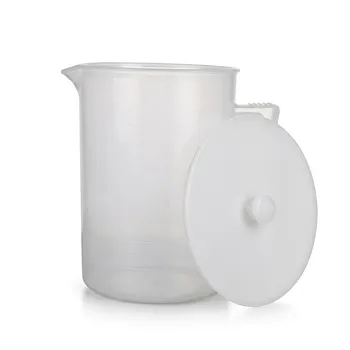
- High Purity PFA Beaker with Handle and Large Capacity Washable Soak Basket Multi Spec Teflon Laboratory Labware
People Also Ask
- How do synthetic processability advantages of semi-fluorinated aromatic ether polymers influence custom fluoropolymer equipment? Discover how PTFE/PFA apparatus enhances synthesis
- How does increasing fluorine content affect the physical and chemical performance of fluoropolymer laboratory supplies and components?
- Which material characteristics make fluoropolymers suitable for lithium-ion battery separators, and how do fluoropolymer laboratory supplies support separator performance testing?
- How do block length and domain segregation in fluoropolymers influence surface tension and interfacial behavior? Choosing PTFE & PFA Labware for Non-Wetting
- How does substituting fluorine for hydrogen in polymer backbones enhance the performance of fluoropolymer laboratory supplies exposed to aggressive chemicals? Discover the key benefits for your lab.