The initiator affects PTFE purity by determining which ionic residues must be controlled during synthesis. Ammonium persulfate (APS) is generally preferred for high-purity PTFE because it does not introduce potassium or sodium ions that could remain as inorganic contaminants in the resin. Potassium persulfate can leave potassium-derived residues, so PTFE intended for trace analysis, digestion vessels, or reagent storage requires tighter control of washing, extraction, and leachables when alkali-metal initiators are used.
APS reduces the risk of metallic ionic contamination, but it does not make the finished PTFE automatically residue-free. The polymerization process, surfactants, resin purification, thermal history, and fabrication steps all determine the final purity of fluoropolymer laboratory supplies.
Why the Initiator Matters in PTFE Synthesis
Initiators introduce more than free radicals
Persulfates generate sulfate radicals that initiate tetrafluoroethylene polymerization. Their counterions remain part of the aqueous reaction chemistry and can influence the types of inorganic species that must later be removed from the resin.
With APS, the counterion is ammonium. With potassium persulfate, it is potassium; with sodium persulfate, it is sodium. This distinction matters because alkali-metal ions can become residual inorganic contaminants if purification is incomplete.
APS avoids an intentional metal source
APS is often selected when the resin must meet demanding ionic purity requirements because it does not add potassium or sodium to the polymerization system. Ammonium species are water-soluble and can be removed or transformed during processing without creating a persistent alkali-metal residue in the polymer matrix.
This does not mean that every ammonium-derived species disappears under all reaction conditions. It means APS generally creates a more favorable impurity profile for producing low-metal PTFE than potassium or sodium persulfate.
Potassium persulfate increases the metal-residue burden
Potassium introduced through the initiator may remain in the aqueous phase, associate with polymer particles, or persist in incompletely washed resin. Even very small quantities can matter when PTFE contacts samples used for trace-element analysis or electrochemical measurements.
The practical consequence is not that potassium-initiated PTFE is unusable. It is that the resin and finished component need more rigorous evidence of ionic cleanliness, especially when the application has strict potassium, sodium, or total ionic contamination limits.
How Resin Purity Becomes Supply Purity
Washing and purification determine actual risk
Initiator selection sets the potential contaminant profile, but resin purification determines how much of that profile reaches the finished product. Repeated washing, controlled coagulation, drying, and appropriate extraction testing are essential for removing soluble inorganic residues.
A low-residue initiator cannot compensate for contaminated process water, residual surfactant, poor washing, or cross-contamination during handling.
Polymerization mode also affects extractables
Emulsion polymerization may involve surfactants and inorganic additives that can leave residual ionic species or other extractables. These materials must be controlled because they may leach from laboratory components into reagents or analytical samples.
Suspension polymerization avoids some surfactant-related residues and can therefore be advantageous when low extractables are the priority. The complete process history remains more important than the initiator name alone.
End groups and low-molecular-weight species matter
Initiator-derived sulfate species may contribute to end groups or other low-molecular-weight residues in the polymer. Their behavior depends on the polymerization chemistry and subsequent treatment, including hydrolysis and purification.
Claims that a particular initiator guarantees no sulfur or ionic leaching are too broad without product-specific analytical data. Extractables testing is the meaningful measure of finished-supply performance.
What This Means for Laboratory Supplies
Trace-analysis labware needs low ionic background
Vessels, bottles, tubing, and containers used for trace analysis must not add measurable quantities of the elements being measured. For these products, alkali-metal residues from potassium or sodium initiators can be relevant even when they are present only at low concentrations.
APS-based resin can reduce this specific risk, but suppliers should still document results from controlled extraction or leachables testing rather than relying only on the nominal initiator.
Digestion vessels face severe chemical conditions
Microwave digestion vessels and related components contact hot acids, oxidizing mixtures, and concentrated samples. These conditions can increase the release of soluble residues from the surface or from contamination introduced during fabrication.
The purity specification should therefore address ionic extractables, total metals, cleaning history, and resistance under the intended digestion conditions.
Electrochemical components require controlled ions
Electrochemical cells and components can be sensitive to trace ions because ionic contamination may affect background currents, conductivity, electrode interfaces, or sample composition. PTFE made with a low-metal process is a useful starting point, but component-level cleaning and extraction validation remain necessary.
PFA may be preferable for complex molded parts
PTFE is not normally melt-processed like conventional thermoplastics and is commonly compression-molded, sintered, or paste-extruded. PFA is melt-processible and can be used for complex, seamless, or translucent high-purity components.
The resin-purity principles still apply to PFA: initiator residues, surfactants, processing aids, equipment cleanliness, and post-fabrication treatment all influence leachables.
Understanding the Trade-offs
APS reduces one impurity pathway, not every impurity
The main benefit of APS is the avoidance of alkali-metal counterions. It does not eliminate contamination from surfactants, process equipment, water, handling, fillers, machining fluids, or cleaning chemicals.
A specification based only on “APS-initiated” is therefore incomplete. The finished product must meet a measurable purity requirement.
Potassium persulfate is not automatically disqualifying
Potassium persulfate may be acceptable for applications where trace potassium is not critical or where the resin is demonstrably purified to the required level. Rejecting a material solely because potassium persulfate was used can be unnecessarily restrictive.
The correct decision depends on the application limit, resin washing, analytical verification, and expected contact conditions.
“Zero leaching” is not a defensible general claim
No polymer supply should be described as having zero ionic leaching without defining the test method, detection limits, extraction solvent, temperature, duration, and surface-area-to-volume ratio. Even highly inert fluoropolymers can carry removable surface contamination or release trace residues under aggressive testing.
Use quantified, application-specific language such as low ionic extractables under defined test conditions.
Fabrication can compromise high-purity resin
CNC machining, molding, sintering, assembly, and packaging can introduce contamination after polymerization. Cutting fluids, metal contact surfaces, dust, and cleaning agents may all become relevant to the final laboratory component.
High-purity supply chains therefore need controls after resin manufacture, not just an appropriate initiator at the reactor stage.
Choosing the Right Purity Controls
Specify the contaminant rather than the brand of initiator
A useful procurement requirement identifies the elements and extractables that matter: potassium, sodium, ammonium-related species, sulfate, total metals, particles, or nonvolatile residues.
This gives the supplier a performance target and avoids treating initiator selection as a substitute for qualification data.
Request process and test documentation
For critical applications, ask for the polymerization method, initiator family, surfactant use, resin purification approach, and finished-component cleaning process. Request certificates or test reports that identify analytical methods and detection limits.
The evidence should cover the actual finished supply, not only the incoming PTFE resin.
Match testing to real use
Extraction testing should reflect the intended chemistry and temperature. A bottle used for dilute reagents has different requirements from a microwave digestion vessel exposed to hot concentrated acid.
The most credible qualification uses representative samples, realistic contact conditions, and defined acceptance criteria.
Making the Right Choice for Your Goal
The initiator is an important design input, but final suitability depends on the entire manufacturing and verification chain.
- If your primary focus is trace-metal analysis: Prefer PTFE resin made without alkali-metal initiator residues, such as APS-based processing, and require quantified metal-extractables data from the finished component.
- If your primary focus is general chemical resistance: Potassium- or sodium-initiated PTFE may be acceptable when the resin is properly purified and the application does not impose stringent ionic limits.
- If your primary focus is microwave digestion or aggressive extraction: Specify application-relevant leachables testing after molding, sintering, machining, and cleaning, rather than relying only on the polymerization record.
- If your primary focus is complex seamless geometry: Evaluate high-purity PFA alongside PTFE, while applying the same requirements for initiator residues, processing aids, cleaning, and extractables.
- If your primary focus is procurement consistency: Establish limits for specific ions and total extractables, then require lot-level or periodic verification against those limits.
Choose the initiator to minimize the contaminants that matter, then qualify the finished fluoropolymer supply under the conditions in which it will actually be used.
Summary Table:
| Initiator | Counterion | Key Residue Risk | Typical Purity Impact | Preferred For | Consideration |
|---|---|---|---|---|---|
| Ammonium persulfate (APS) | Ammonium (NH4+) | Low metal residues; ammonia can be removed | Easier to achieve low ionic background | Trace analysis labware, digestion vessels, electrochemical components | Requires proper washing and purification to remove sulfate end groups |
| Potassium persulfate (KPS) | Potassium (K+) | Potassium residues may persist | Higher alkali-metal residue burden unless rigorously purified | General chemical resistance, non-trace applications | Requires more rigorous extraction and leachables testing |
| Sodium persulfate (NaPS) | Sodium (Na+) | Sodium residues may persist | Similar to KPS; sodium contamination risk | General uses with sodium tolerance | Same concerns as KPS; verify sodium levels |
Ensure your fluoropolymer lab supplies meet the strictest purity requirements. At KINTEK, we specialize in high-performance PTFE and PFA products—from trace-analysis labware to custom machined components. Our end-to-end CNC machining and rigorous quality control guarantee low ionic extractables, backed by comprehensive testing. Whether you need digestion vessels, electrochemical cells, or high-purity tubing, we deliver solutions tailored to your application. Contact us today to discuss your specific purity needs and see how KINTEK can enhance the reliability of your lab results. Get in touch now!
Related Products
- Custom PTFE Flask 250ml High Purity Fluoropolymer Laboratory Vessel for Chemical Research
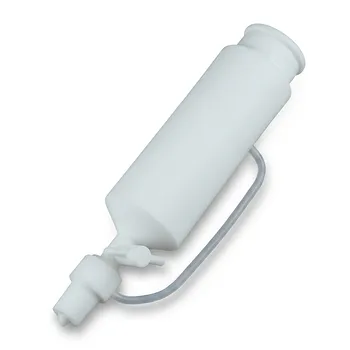
- Custom PTFE Constant Pressure Separatory Funnel 100ml Fluoropolymer Labware for Corrosive Chemical Transfer
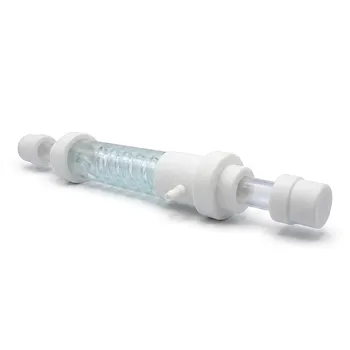
- Custom PTFE Condenser Tube 100ml Serpentine and Straight Fluoropolymer Laboratory Heat Exchanger with Flask Adapters
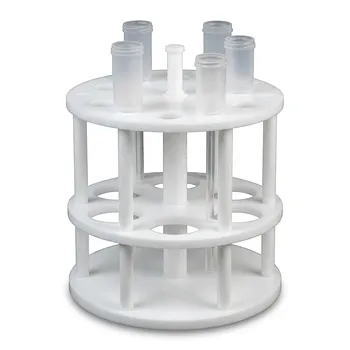
- Custom PFA Microcolumn Racks and PTFE Machined Low Background Corrosion Resistant Laboratory Fixtures
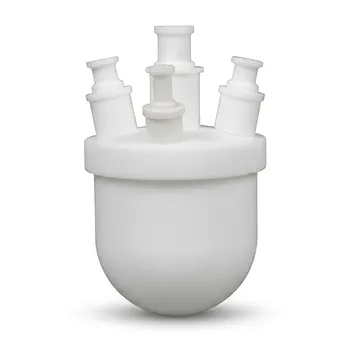
- Custom Corrosion Resistant PFA PTFE Multi Neck Laboratory Reaction Flask GL Standard Mouth Fluoropolymer Flasks
People Also Ask
- What are the key steps for structural integrity in molded PTFE lab reaction vessels? Master fine powder processing.
- What toxicological hazards and safe handling protocols must be established when PTFE fluoropolymer reaction vessels are subjected to pyrolysis temperatures? Learn essential safety measures now.
- When synthesizing TFVE monomers involving reactive organometallic reagents and aggressive polar solvents, what material performance characteristics are required? Ensure purity with PTFE/PFA.
- Why Are High-Purity Fluoropolymer Vessels and Tubing Critical for Trace Analysis? Prevent Contamination Reliably
- How does pressure management influence molar mass distribution and reaction rate in the iodine transfer emulsion polymerization of vinylidene fluoride, and how do custom fluoropolymer reaction vessels support this process?