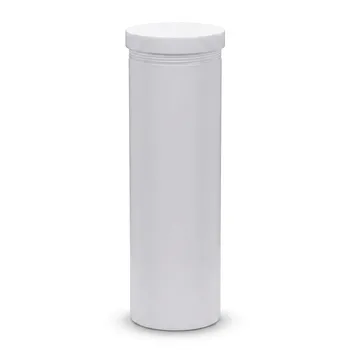
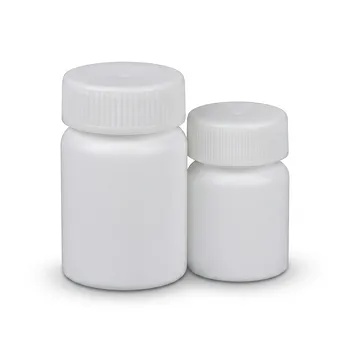
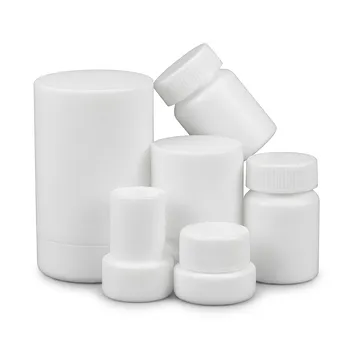
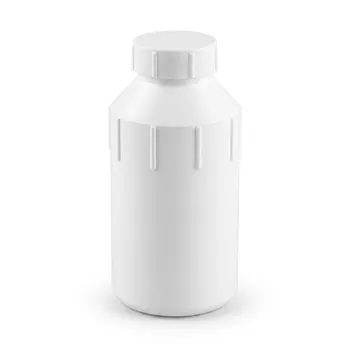
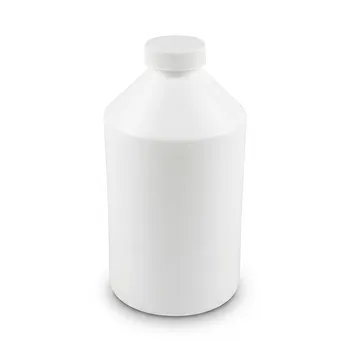
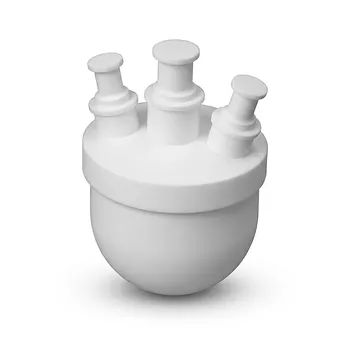
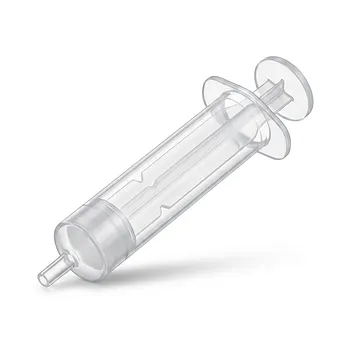
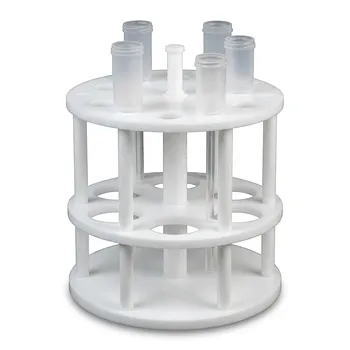
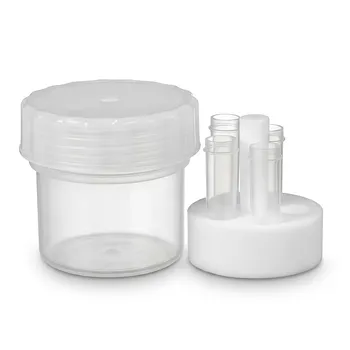
Fluoropolymers are preferred because they combine exceptional chemical inertness with low contamination risk and long service life. Strong carbon-fluorine bonds protect the polymer backbone from attack by many aggressive acids, bases, oxidizing reagents, and organic solvents. Materials such as PTFE and PFA therefore resist dissolution, swelling, corrosion, and chemical degradation while helping preserve sample purity during storage, transfer, digestion, and trace analysis.
PTFE and PFA act as chemically protective interfaces: they are unlikely to react with aggressive fluids, shed significant contaminants, or retain samples on their surfaces, making them well suited to high-purity storage and fluid handling.
Why Fluoropolymers Resist Aggressive Chemicals
Strong Carbon-Fluorine Bonds
The defining feature of fluoropolymers is their highly fluorinated molecular structure. Strong carbon-fluorine bonds shield the carbon backbone from oxidation and chemical attack, which gives these materials broad resistance to strong acids, bases, solvents, and corrosive environmental agents.
This stability is especially valuable when containers or tubing remain in contact with reagents for extended periods. The material is less likely to dissolve, embrittle, or undergo surface degradation than many standard polymers.
Broad Chemical Compatibility
PTFE and PFA resist erosion from a wide range of aggressive chemicals, including many mineral acids, strong bases, oxidizing reagents, and organic solvents. They are therefore used in reagent bottles, digestion vessels, sample tubes, valves, fittings, and transfer tubing.
However, “chemically inert” does not mean compatible with every chemical under every condition. Temperature, concentration, exposure time, mechanical stress, and the specific fluoropolymer grade must still be evaluated before use.
Thermal and Environmental Stability
Fluoropolymers also maintain their performance across demanding temperature ranges and harsh laboratory environments. Their thermal stability and resistance to environmental degradation support applications involving heated digestion, chemical processing, and repeated cleaning.
Some fluoropolymers can tolerate highly alkaline conditions and elevated temperatures without rapid degradation. The actual operating limit depends on the material, component design, pressure, and chemical combination.
How Fluoropolymers Protect Sample Integrity
Reduced Leaching and Background Contamination
A storage vessel or fluid path can become a source of contamination if its material releases ions, additives, degraded fragments, or other extractables. PTFE and PFA minimize this risk because they are highly resistant to chemical attack and do not readily generate leachables under appropriate service conditions.
This is critical in trace analysis, where contamination that would be insignificant in routine chemistry can materially affect the result.
Low Surface Energy and Anti-Adhesion
Fluorination gives these materials low surface energy, producing smooth, non-wetting surfaces to which many chemicals and analytes adhere less readily. This reduces residue buildup and makes cleaning easier.
For trace organic analysis, low adhesion can help limit the loss of analytes through adsorption onto container walls. It also reduces the risk that material retained from one sample will contaminate the next.
Low Absorption and Permeation
Fluoropolymers generally have low water and solvent absorption compared with many conventional plastics. This helps prevent the container or tubing from becoming a reservoir for previously handled chemicals.
Permeation is still chemical- and temperature-dependent, so applications involving volatile solvents, long storage periods, or thin tubing require a specific permeation assessment rather than a general compatibility assumption.
Where These Properties Matter Most
Sample Storage and Trace Analysis
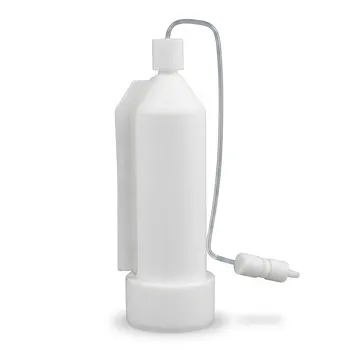
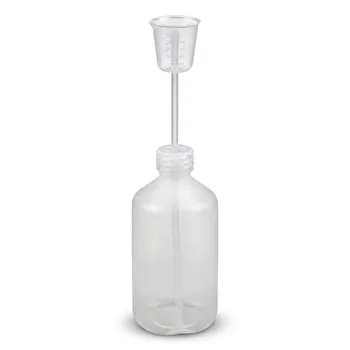
PFA and PTFE bottles, tubes, and sampling tools are useful when samples must remain chemically unchanged over time. Their resistance to leaching and surface adsorption helps preserve the original composition of high-purity and low-concentration samples.
This is particularly important in trace chlorine and other trace organic analyses, where container-derived impurities or analyte loss can distort measurements.
Acid Digestion and Sample Preparation
Digestion procedures often combine strong acids, oxidants, heat, and extended exposure. PFA digestion tubes and related fluoropolymer vessels help withstand these conditions without the surface etching and leachable generation associated with some alternative materials.
Their chemical stability allows the vessel to serve as a controlled reaction environment rather than an additional source of reactive chemistry.
Fluid Transfer and Metering
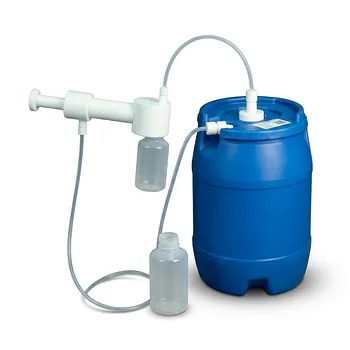
Tubing, valves, fittings, and pump components made from fluoropolymers help maintain chemical compatibility throughout the entire fluid path. This matters because a resistant storage bottle cannot protect a sample if it becomes contaminated during transfer.
Fluoropolymer components are also useful where repeated exposure, cleaning cycles, and high-purity requirements make long-term surface stability important.
Understanding the Trade-offs
Chemical Resistance Is Not Universal
PTFE and PFA have very broad resistance, but no material is suitable for every chemical, concentration, temperature, and pressure combination. Certain highly reactive fluorinating conditions, molten alkali metals, and extreme operating environments may require specialized compatibility review.
Consult the manufacturer’s chemical-resistance data for the exact material and operating conditions rather than relying solely on the name “fluoropolymer.”
Mechanical Performance Can Limit the Design
Fluoropolymers are chemically robust but can be softer, less rigid, or more prone to deformation under load than metals or engineering plastics. PTFE, in particular, can exhibit creep under sustained compression or pressure.
For valves, fittings, tubing, and custom-machined labware, design factors such as wall thickness, support, pressure, temperature, and sealing method are as important as chemical compatibility.
Formulation and Purity Matter
Not every product described as fluoropolymer has the same performance or purity. Blends with lower fluoropolymer content, fillers, additives, or poorly controlled manufacturing can increase the risk of degradation, surface cracking, chalking, or leaching.
High-purity applications should specify the appropriate grade, manufacturing process, cleaning protocol, and material documentation. A high fluoropolymer concentration can improve long-term surface retention and degradation resistance, but the finished component still needs qualification for its intended use.
Cleanability Does Not Eliminate Cross-Contamination
Low surface energy reduces residue retention, but it does not make contamination impossible. Inadequate cleaning, incompatible seals, dirty fittings, or particles introduced during machining can still compromise a sample.
The complete handling system, including closures, gaskets, connectors, and cleaning procedures, must meet the required purity standard.
Making the Right Choice for Your Goal
Select the material and component design according to the chemical exposure, purity requirement, temperature, pressure, and duration of service.
- If your primary focus is sample purity: Use high-purity PTFE or PFA components to reduce leaching, adsorption, residue buildup, and background contamination.
- If your primary focus is aggressive chemical compatibility: Choose PTFE or PFA after checking compatibility for the exact reagent concentration, temperature, and exposure time.
- If your primary focus is trace analysis: Favor low-adhesion, low-absorption fluoropolymer vessels and fluid paths, and qualify the complete system for analyte recovery and blank levels.
- If your primary focus is long service life: Specify a suitable fluoropolymer grade and design components to account for creep, pressure, thermal cycling, and mechanical wear.
- If your primary focus is reliable fluid transfer: Evaluate tubing, valves, fittings, seals, and connection points as one chemical-handling system rather than selecting the storage vessel alone.
For demanding chemical handling, the right fluoropolymer specification protects both the equipment and the validity of the result.
Summary Table:
| Property | Benefit for Aggressive Chemicals |
|---|---|
| Strong C-F bonds | High resistance to acids, bases, oxidizers |
| Low surface energy | Reduces adsorption and residue buildup |
| Low absorption/permeation | Prevents contamination and sample loss |
| Thermal stability | Suitable for high-temperature digestion |
| Chemical inertness | Long service life in corrosive environments |
Ensure reliable, contamination-free performance with KINTEK's high-purity PTFE and PFA labware. From bottles and tubes to custom CNC-machined parts, we provide durable solutions for aggressive chemical handling. Contact us today to discuss your requirements!
Related Products
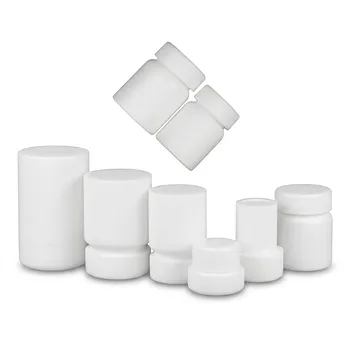
- PTFE Small Reaction Bottle Corrosion Resistant Teflon Sample Dissolution Tank One Piece Molded Fluoropolymer Storage Container
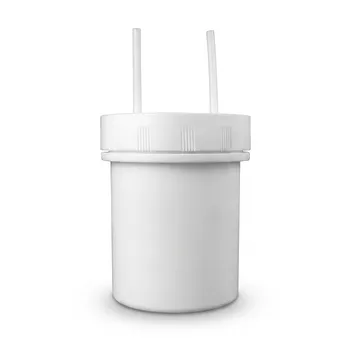
- High Purity Opaque White PTFE Chemical Storage Barrels and Customizable Fluoropolymer Reaction Sampling Vessels
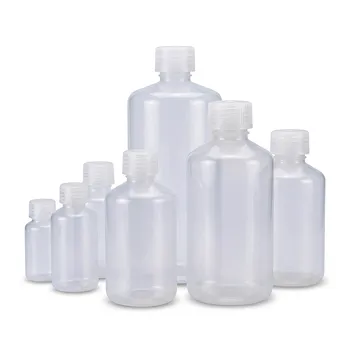
- Semiconductor Electronic Grade PFA Sampling Bottle for Ultrapure Reagent Storage and Trace Analysis
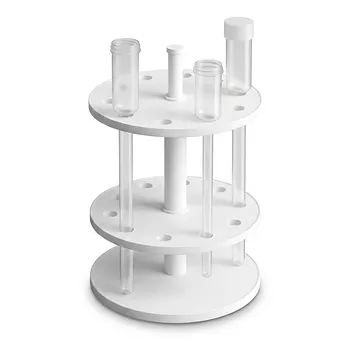
- Custom PFA Micro Column Rack and PTFE Machined Storage Solutions for Trace Analysis
- Custom High Purity PTFE Storage Barrel with Corrosion Resistant Threaded Sealing Lid and Low Background Properties 15L
People Also Ask
- What are the temperature limits for the PTFE bottle? Ensure Safety from -200°C to 260°C
- What are the advantages of the PTFE bottle's non-stick surface? Ensure Purity and Efficiency in Your Lab
- How do Polytetrafluoroethylene (PTFE) containers perform regarding gas permeation? Expert Insights on Solvent Absorption
- What key inherent material properties make PTFE fluoropolymers suitable for demanding lab applications? Discover chemical inertness, thermal stability, and more for reliable storage and reactions.
- What are the key features of PTFE reagent bottles? Superior Chemical Resistance and Durability