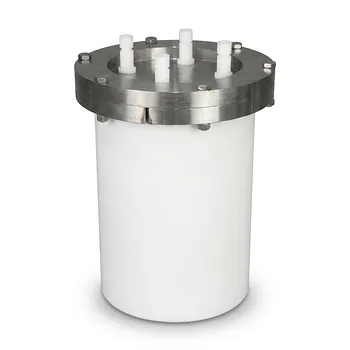
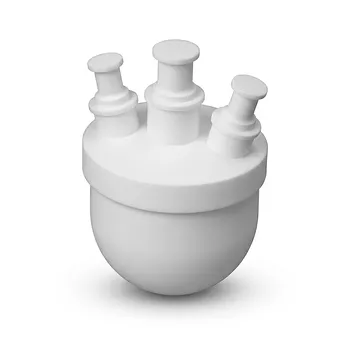
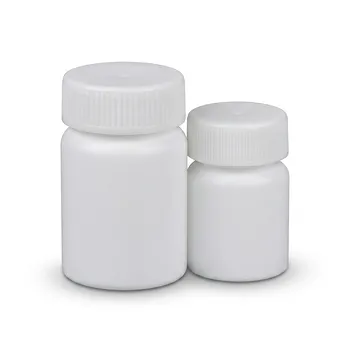
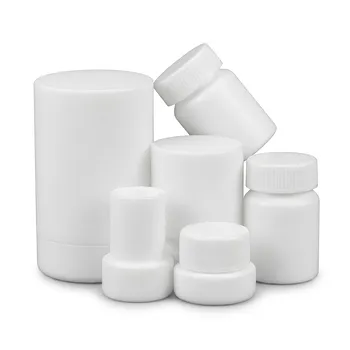
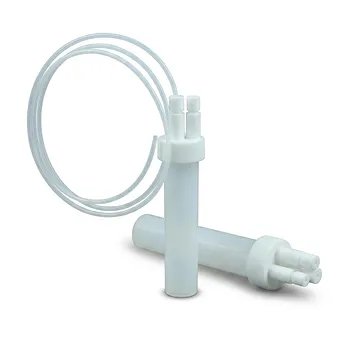
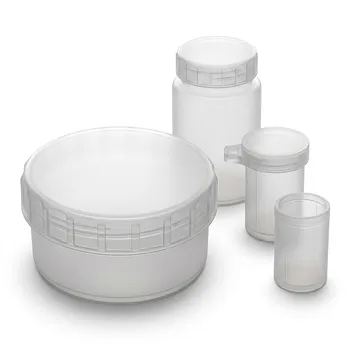
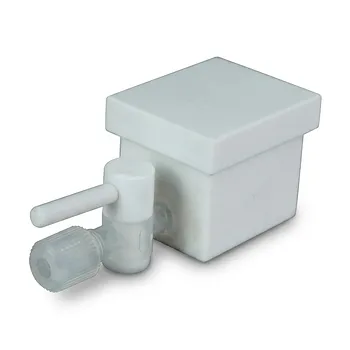
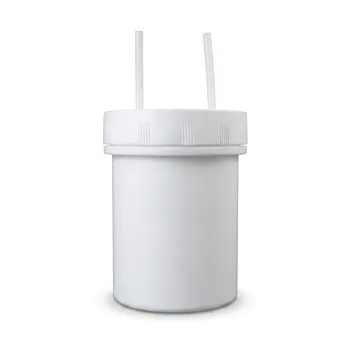
PTFE is suitable for demanding laboratory applications because it combines exceptional chemical inertness, wide thermal stability, nonflammability, and very low surface energy. These properties allow PTFE containers and reaction vessels to resist aggressive acids, bases, solvents, and digestion conditions without readily degrading or contaminating samples. Its nonstick surface also reduces residue retention, while its electrical insulation and low-friction behavior support specialized laboratory and fluid-handling applications.
The central advantage of PTFE is its chemical and thermal stability: it protects both the vessel and the sample when conventional plastics or glass may corrode, react, retain residues, or fail under severe conditions.
Why PTFE Performs Well in Laboratory Service
Extreme Chemical Inertness
PTFE is built around strong carbon-fluorine bonds, giving it unusually high resistance to chemical attack. It generally withstands aggressive acids, bases, organic solvents, and corrosive reagents without dissolving or reacting significantly.
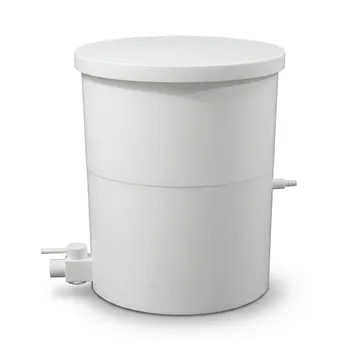
This inertness is especially valuable in chemical storage containers, digestion tubes, crucibles, and reaction vessels, where contact with the vessel must not alter the sample or weaken the equipment.
Low Risk of Contamination
Because PTFE does not readily react with or absorb many laboratory chemicals, it helps minimize leaching, extractables, and cross-contamination. This is critical in trace analysis, pharmaceutical work, environmental testing, and other applications where very small amounts of contamination can affect results.
The material itself is not automatically suitable for every purity requirement, however. Manufacturing cleanliness, handling, seals, additives, and the specific PTFE grade also influence contamination performance.
Broad Thermal Stability
PTFE remains useful across a wide temperature range, including cryogenic service and elevated-temperature laboratory processes. It can maintain its chemical resistance and functional integrity during many heating, cooling, and digestion cycles.
This makes it suitable for procedures involving heated reagents, thermal digestion, and rapid temperature changes. Thermal limits still depend on the product design and must be followed because prolonged exposure near the upper service range can affect mechanical performance.
Flame Resistance
PTFE has very high flame resistance and a high limiting oxygen index. It does not readily support combustion under ordinary atmospheric conditions, which provides an important safety advantage near heat sources and reactive chemicals.
Flame resistance does not mean that PTFE can be exposed indefinitely to direct flame or excessive temperatures. At sufficiently high temperatures, the polymer can decompose, so laboratory use must remain within the manufacturer’s specified limits.
Very Low Surface Energy
PTFE has exceptionally low surface energy, producing strongly hydrophobic and oleophobic behavior. Liquids and residues are less likely to wet or adhere to the surface compared with many conventional materials.
For laboratory vessels, this supports easier cleaning, lower carryover risk, and improved recovery of valuable or sensitive samples. It is particularly useful in trace analysis, where retained residues can compromise subsequent measurements.
Low Friction and Nonstick Behavior
The same low surface energy that limits wetting also gives PTFE a naturally nonstick, low-friction surface. This can help powders, viscous materials, and reaction residues release more easily from vessels.
Low friction is also useful in caps, seals, valves, tubing, and other fluid-management components. It reduces sticking and supports smooth handling without requiring additional lubricants that could introduce contamination.
Electrical Insulation
PTFE has a low dielectric constant and high volume resistivity, making it an effective electrical insulator. This property is not the primary reason for selecting PTFE labware, but it matters in equipment that combines chemical exposure with electrical, microwave, or sensor-related functions.
Electrical performance can vary with frequency, temperature, geometry, and environmental conditions. It should therefore be evaluated as part of the complete apparatus rather than treated as an isolated guarantee.
Resistance to Environmental Degradation
PTFE is highly resistant to ultraviolet and infrared radiation and does not readily embrittle or age from ordinary environmental exposure. This supports long service life in laboratory and industrial environments.
Its resistance to weathering and chemical degradation helps preserve containment performance, but dimensional stability also depends on mechanical load, temperature, pressure, and the design of the vessel.
How These Properties Protect Laboratory Work
Chemical Storage Containers
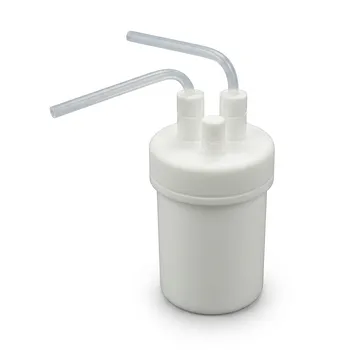
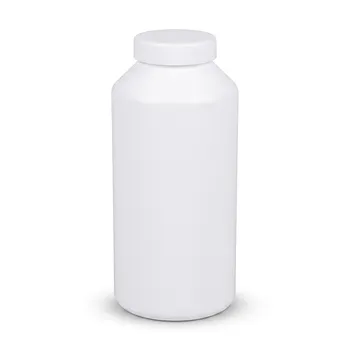
For reagent bottles and wash bottles, chemical inertness helps prevent the container from reacting with or being attacked by stored contents. The low-adhesion surface can also make rinsing and cleaning more effective.
This is particularly important for highly corrosive or high-purity reagents, where container degradation could create both a safety issue and a measurement error.
Reaction and Digestion Vessels
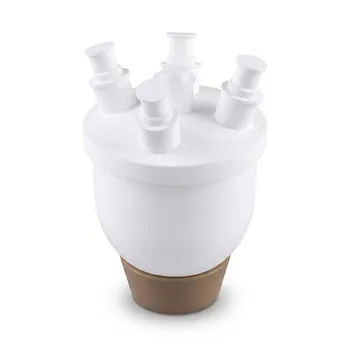
During chemical synthesis and acid digestion, PTFE vessels can tolerate severe chemical environments while limiting vessel-derived contamination. Their thermal stability also allows them to support many heated reaction processes.
The material’s performance is strongest when the temperature, pressure, reagent chemistry, and exposure duration remain within validated operating conditions.
Trace Analysis Equipment
Trace analysis requires materials that contribute as little background contamination as possible. PTFE’s inertness, low extractability, and low surface energy make it useful for vessels, liners, crucibles, and transfer components used with sensitive samples.
Cleaning remains essential. A nonstick surface reduces residue retention but does not eliminate contamination introduced through poor cleaning, particulate handling, or incompatible accessories.
Fluid Transfer Components
PTFE is also used for tubing, fittings, valves, and seals exposed to corrosive fluids. Its chemical resistance and low friction help maintain reliable fluid handling without rapid swelling, dissolution, or surface degradation.
The final design must still account for permeability, flex fatigue, pressure, creep, and connection compatibility, since chemical resistance alone does not determine component life.
Understanding the Trade-offs
Chemical Resistance Is Not Universal
PTFE resists most laboratory chemicals, but no polymer should be described as universally resistant. Certain highly reactive substances, extreme temperatures, and combinations of chemical exposure and mechanical stress can damage or degrade it.
Compatibility should be checked against the specific reagent, concentration, temperature, pressure, and exposure time rather than inferred from the material name alone.
Mechanical Performance Has Limits
PTFE is relatively soft and can deform or creep under sustained load, particularly at elevated temperatures. It may also have lower stiffness and dimensional precision than glass, ceramics, or engineered structural plastics.
For pressurized or load-bearing equipment, PTFE may need reinforcement, a supporting structure, or a different material altogether.
Thermal Stability Does Not Equal High-Temperature Immunity
PTFE tolerates a broad thermal range, but heating beyond its specified limits can cause decomposition and loss of performance. Thermal cycling, pressure, and mechanical loading can further reduce the allowable operating range.
Manufacturers’ limits should govern vessel selection and operating procedures, especially for sealed reactions and microwave digestion.
Surface Properties Can Affect Handling
Low surface energy improves release and cleaning, but it also makes PTFE difficult to bond, print, coat, or reliably grip with some adhesives. This can complicate fabrication and assembly.
Designers may need mechanical retention, specialized surface treatment, or compatible sealing methods.
Making the Right Choice for Your Goal
PTFE is most valuable when chemical compatibility, sample integrity, and resistance to harsh operating conditions are the primary requirements.
- If your primary focus is chemical storage: Select PTFE when the reagent is highly corrosive or reactive and minimizing container degradation and contamination is essential.
- If your primary focus is heated digestion or reaction work: Use PTFE when broad chemical resistance and thermal stability are needed across repeated severe processing cycles.
- If your primary focus is trace analysis: Prioritize clean, high-purity PTFE components because inertness and low surface adhesion can reduce background contamination and residue carryover.
- If your primary focus is fluid handling: Consider PTFE for chemically aggressive streams where low friction and resistance to swelling or dissolution are important.
- If your primary focus is mechanical strength or pressure containment: Verify creep, load, pressure, and temperature performance carefully, because chemical resistance alone may not make PTFE the correct structural material.
PTFE is a strong laboratory material choice when its chemical inertness, thermal stability, flame resistance, and low-energy surface are matched to the actual operating conditions.
Summary Table:
| Property | Benefit for Lab Applications |
|---|---|
| Chemical inertness | Resists acids, bases, and solvents, preventing corrosion and contamination. |
| Low surface energy | Nonstick, easy cleaning, reduces residue carryover. |
| Thermal stability | Withstands wide temperature ranges, suitable for digestion and heating. |
| Flame resistance | High safety near heat and reactive chemicals. |
| Low friction | Smooth fluid handling and component movement. |
| Electrical insulation | Useful in specialized equipment. |
Ready to upgrade your lab with high-performance PTFE/PFA solutions?
At KINTEK, we specialize in manufacturing premium labware crafted from PTFE and PFA, designed to meet the rigorous demands of your applications. From chemical storage containers and reaction vessels to custom machined parts and complex setups, our products deliver exceptional chemical resistance, thermal stability, and purity.
Why choose KINTEK?
- Custom CNC Machining: Tailored to your exact specifications.
- Broad Product Range: Beakers, digestion tubes, fluid transfer components, and more.
- High-Purity Options: Ideal for trace analysis and sensitive workflows.
Contact us today to discuss your requirements and discover how KINTEK can enhance your lab's performance and reliability.
Related Products
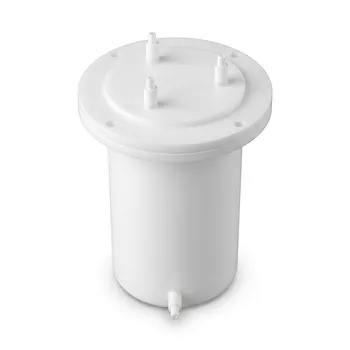
- High Purity Opaque White PTFE Chemical Storage Barrels and Customizable Fluoropolymer Reaction Sampling Vessels
- High Purity Customizable PTFE Storage Tank Corrosion Resistant Chemical Reaction Vessel
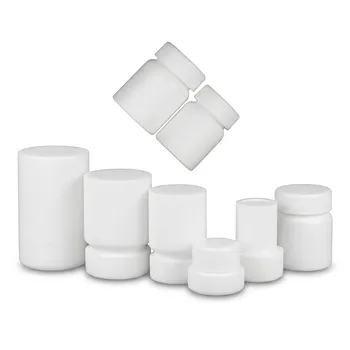
- PTFE Small Reaction Bottle Corrosion Resistant Teflon Sample Dissolution Tank One Piece Molded Fluoropolymer Storage Container
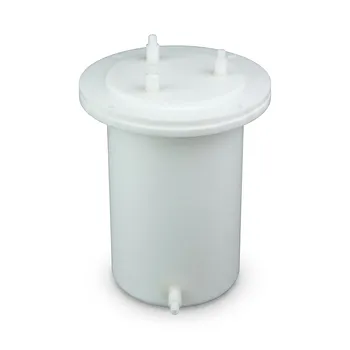
- Custom High Purity PTFE Storage Tank Corrosion Resistant Chemical Reaction Vessel Drum
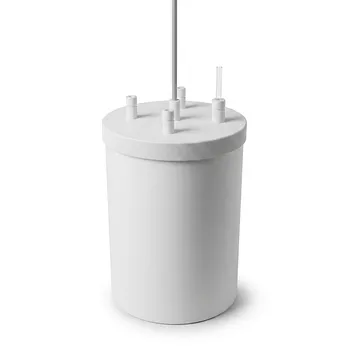
- High Purity PTFE Reaction Vessel Polyfluortetraethylene Cylindrical Tank Petrochemical Reaction Container
People Also Ask
- How does thixotropic flow behavior affect liquid formulation storage in PTFE chemical storage tanks and containers? Maximize Stability with PTFE
- Why is fluorination via PTFE degradation thermally different from oxide formation when processing reactive metal formulations in custom PTFE vessels? Key safety insights for high-risk reactions
- Why do PTFE fluoropolymer laboratory vessels and containers exhibit superior chemical resistance against harsh solvents and corrosive acids compared to standard plastic labware? Discover the molecular secrets
- Why is the choice of reaction vessel material critical during B-NiBDC synthesis? Optimize MOF Purity & Performance
- What are some future trends in the application of PTFE bars in the chemical industry? Engineering for Extreme Performance