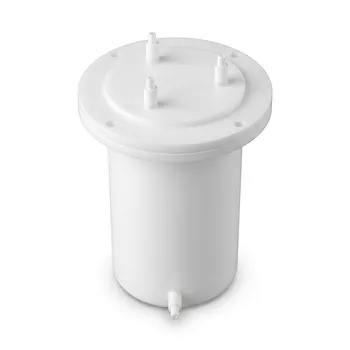
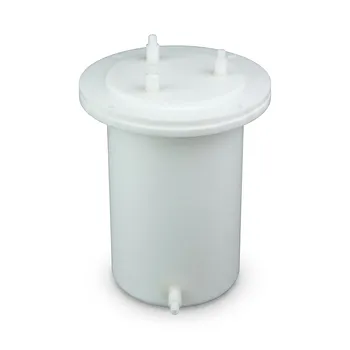
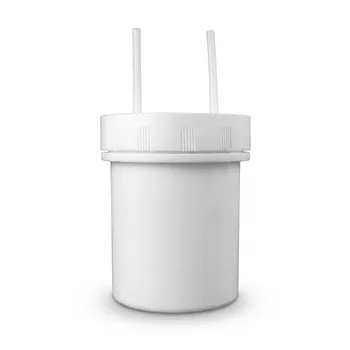
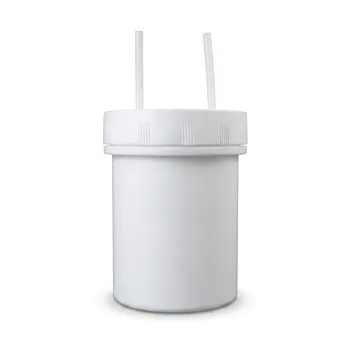
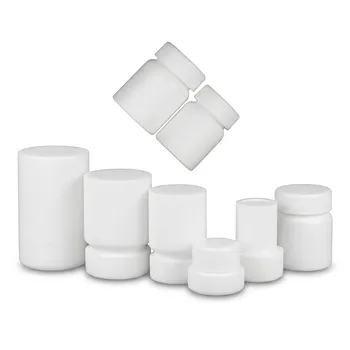
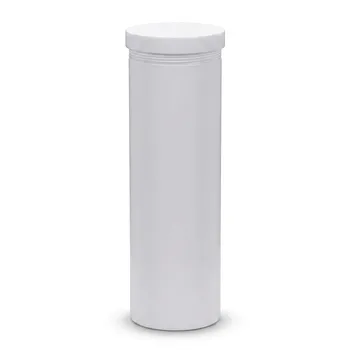
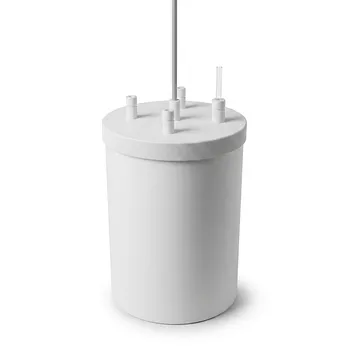
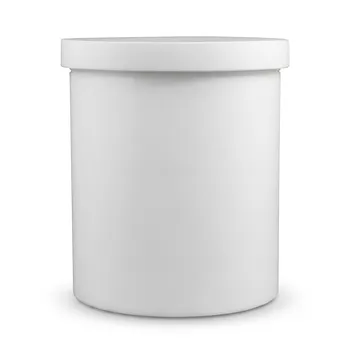
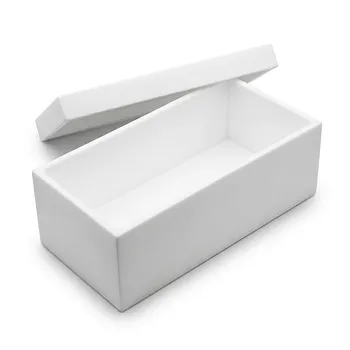
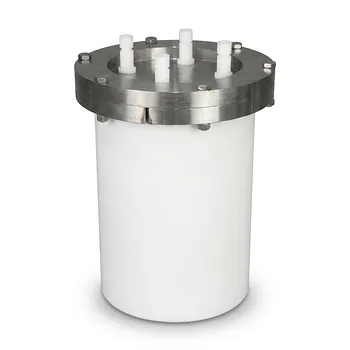
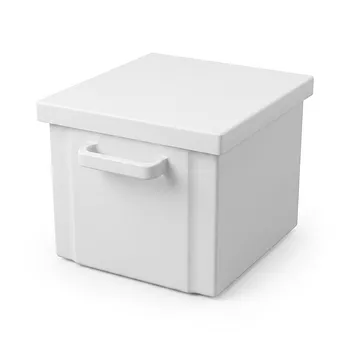
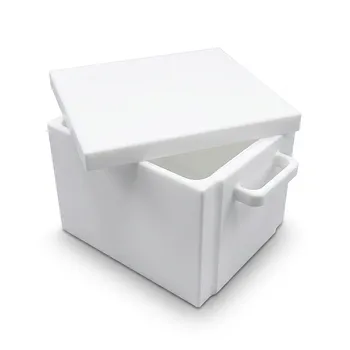
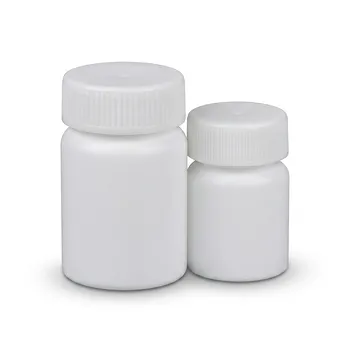
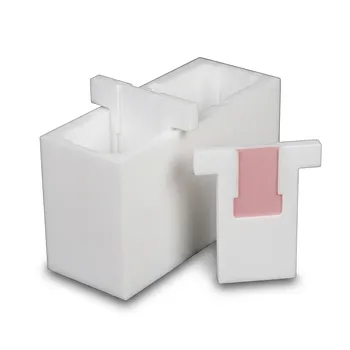
Thixotropic flow behavior can improve formulation stability during storage, but it makes handling history important. A thixotropic liquid becomes less viscous when agitated, pumped, or transferred, then gradually regains viscosity after the shear stops. In PTFE tanks and containers, this behavior can help keep suspended solids from settling while PTFE's non-wetting and chemically inert surface helps prevent contamination and unwanted buildup on vessel walls.
The central storage benefit is controlled viscosity recovery: shear makes a formulation easier to transfer, while viscosity recovery after filling helps maintain solids suspension. High-purity PTFE supports this behavior by providing a clean, chemically resistant, low-adhesion storage surface.
Why Thixotropy Matters During Storage
Viscosity Changes With Handling
Thixotropic formulations do not have one fixed viscosity. Their apparent viscosity depends on how much shear they have experienced and how long they have been left undisturbed.
During pumping, mixing, or filling, shear temporarily reduces viscosity. This makes the liquid easier to move through transfer lines and into bottles, tanks, or reaction vessels.
After filling, the formulation gradually rebuilds its internal structure. The resulting viscosity increase can slow the settling of pigments, powders, fillers, or other suspended solids.
Recovery Helps Limit Solid Settling
The storage objective is usually not to make the formulation permanently thick. It is to make the liquid flow readily during processing while becoming sufficiently viscous at rest to maintain a more uniform suspension.
This can extend practical shelf life by reducing the rate at which solids accumulate at the bottom of the container. However, thixotropy generally reduces settling rather than eliminating it.
Storage History Affects the Result
A formulation that has just been pumped or vigorously mixed may remain temporarily less viscous. If it is inspected immediately after filling, it may appear thinner than it will be after recovery.
The time required for recovery depends on the formulation and its additives. Storage specifications should therefore account for both the liquid's behavior immediately after shear and its viscosity after a defined rest period.
How PTFE Containers Influence the Formulation
Non-Wetting Surfaces Reduce Wall Interaction
High-purity PTFE has a low-energy, non-wetting surface. This reduces the tendency of many liquid formulations to spread across or adhere strongly to the vessel wall.
For thixotropic coatings and similar mixtures, that can reduce the amount of material left behind as the structure rebuilds. It also supports more complete discharge and helps maintain a more consistent formulation composition from one container to the next.
Chemical Inertness Protects Formulation Purity
PTFE is highly resistant to many aggressive chemicals and is generally non-reactive in demanding chemical storage applications. This makes it suitable where contact with the container could otherwise introduce extractables, corrosion products, or reactive contaminants.
The material of construction does not replace compatibility testing. The complete storage system still includes closures, gaskets, valves, liners, and transfer components, each of which can affect purity and chemical compatibility.
Wall Effects Still Require Evaluation
Low adhesion does not mean that every formulation will release completely from every PTFE surface. Some additives, concentrated solids, contaminants, surface damage, or prolonged exposure can change discharge behavior.
A practical evaluation should examine residue, sediment formation, cleanability, and composition uniformity after the intended storage period.
What Happens During Filling and Withdrawal
Filling Can Temporarily Thin the Liquid
Transfer pumps, valves, narrow tubing, and high-velocity filling operations apply shear. This may reduce viscosity and make the formulation flow more easily than it would in an undisturbed container.
The liquid may therefore enter the storage vessel in a temporarily destructured state. The container should be designed so that the formulation can recover without creating dead zones or difficult-to-remove deposits.
Withdrawal Can Re-Suspend Settled Material
If some solids have settled, withdrawal or renewed mixing may apply enough shear to reduce viscosity and re-disperse the material. This can be useful, but it can also produce a temporary change in flow resistance and dosing behavior.
For repeatable dispensing, operators should control mixing intensity, pump conditions, and rest time before measurement or filling.
Geometry Affects Practical Performance
Tank outlet location, bottom shape, internal corners, and the height-to-diameter ratio influence how easily a thixotropic formulation can be removed. A low-adhesion PTFE surface helps, but poor vessel geometry can still trap settled material.
Storage equipment should be assessed as a complete system rather than selected solely by its polymer material.
Understanding the Trade-Offs
Thixotropy Does Not Guarantee Uniformity
A high resting viscosity can slow particle settling, but it does not ensure that the formulation remains perfectly uniform. Particle density, particle size, solids loading, temperature, and storage duration continue to influence stability.
If the formulation is sensitive to composition variation, define a controlled re-mixing and sampling procedure before use.
Excessive Shear Can Complicate Process Control
Because viscosity changes with shear and recovery time, two samples from the same batch can behave differently if they have experienced different handling histories. This can affect pumping pressure, filling accuracy, coating thickness, and apparent product consistency.
Testing should record shear conditions and rest time rather than relying on a single viscosity value without context.
PTFE Has Mechanical Limitations
PTFE's chemical resistance and low friction do not make it mechanically rigid under every storage condition. Under sustained compressive load, PTFE can exhibit cold flow, meaning gradual deformation over time.
This is especially relevant to closures, flanges, gaskets, and seals. Excessive cold flow can reduce clamping force and eventually compromise leak integrity, so the complete assembly may require suitable design, reinforcement, or filled PTFE components.
Temperature Can Change Storage Behavior
Temperature affects viscosity, recovery rate, and settling behavior. A formulation that remains stable at one temperature may settle more rapidly or become difficult to transfer at another.
Storage qualification should include the expected temperature range and should distinguish between short-term handling behavior and long-term shelf stability.
How to Apply This to Your Storage System
The most reliable approach is to evaluate the formulation, PTFE vessel, and handling equipment together.
- If your primary focus is minimizing solid settling: Use the formulation's viscosity recovery after shear to support suspension stability, while validating settling behavior over the full storage period.
- If your primary focus is chemical purity: Use high-purity PTFE for wetted surfaces where appropriate, and evaluate every closure, gasket, valve, and transfer component for extractables and compatibility.
- If your primary focus is consistent dispensing: Standardize mixing intensity, pump conditions, temperature, and rest time before filling or sampling.
- If your primary focus is long-term leak integrity: Account for PTFE cold flow in seals, gaskets, closures, and flanges, particularly under sustained compression or elevated temperature.
- If your primary focus is complete product recovery: Select vessel geometry and outlet arrangements that limit dead zones, then verify residue and composition uniformity after discharge.
When thixotropy, vessel surface properties, and mechanical design are evaluated together, PTFE storage can support both formulation stability and reliable chemical handling.
Summary Table:
| Aspect | Impact of Thixotropy | Role of PTFE |
|---|---|---|
| Viscosity | Decreases with shear, recovers over time | Non-wetting surface reduces adhesion |
| Solid Settling | Recovery reduces settling rate | Chemically inert surface prevents contamination |
| Handling | Easy transfer when sheared; consistency after rest | Low friction aids flow and cleaning |
| Storage Stability | Maintains suspension when at rest | High purity prevents extractables |
| Dispensing | Requires controlled shear history | Smooth walls reduce residue and dead zones |
Ready to enhance your liquid formulation storage? At KINTEK, we specialize in high-performance PTFE and PFA laboratory supplies. Our range includes tanks, containers, tubing, fittings, and custom machined parts, all designed to maximize thixotropic stability and chemical purity. Whether you need standard labware, custom electrochemical cells, or high-volume orders, our end-to-end CNC machining capabilities ensure precise, reliable solutions. Contact us today to discuss your requirements and experience the KINTEK advantage. Get in touch now!
Related Products
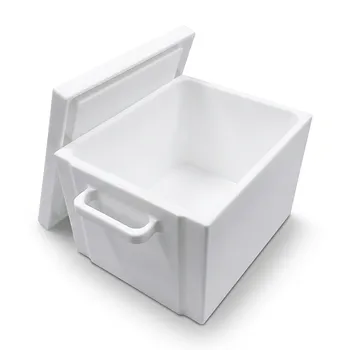
- High Purity Customizable PTFE Storage Tank Corrosion Resistant Chemical Reaction Vessel
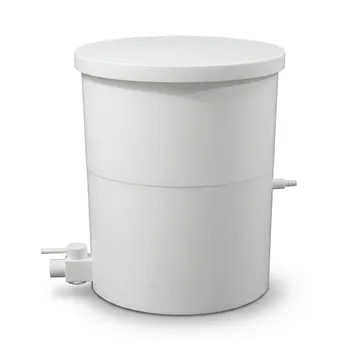
- Custom High Purity PTFE Storage Tank Corrosion Resistant Chemical Reaction Vessel Drum
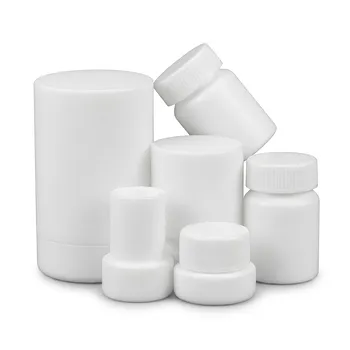
- High Purity Opaque White PTFE Chemical Storage Barrels and Customizable Fluoropolymer Reaction Sampling Vessels
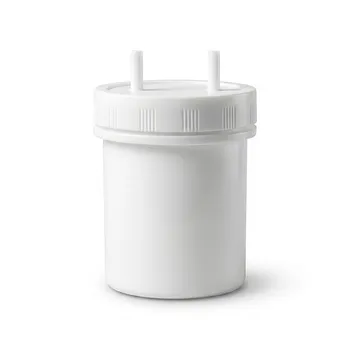
- High Purity Corrosion Resistant PTFE Raw Material Barrel 4L Screw Seal Low Background Feed Tank
- Corrosion Resistant High Purity Polytetrafluoroethylene Square Tank for Acid Bath and Industrial Chemical Soaking
People Also Ask
- How do Polytetrafluoroethylene (PTFE) containers perform regarding gas permeation? Expert Insights on Solvent Absorption
- Why is PTFE used in chemical transport and storage systems? Unmatched Chemical & Thermal Resistance
- What role do phosphorus-containing segments play in improving the flame retardancy and thermal safety of fluoropolymer fluid transfer components and storage tanks? Discover key benefits for enhanced fire safety.
- Why are PFA and PTFE fluoropolymers specifically chosen for chemical storage tanks, wafer carriers, and high-purity fluid transfer components? Discover their inertness and purity benefits.
- Why is surface treatment necessary for PTFE sheets used in tank linings? Ensuring a Secure and Reliable Bond