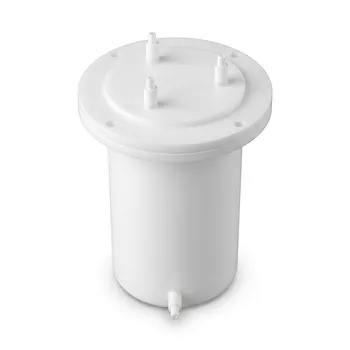
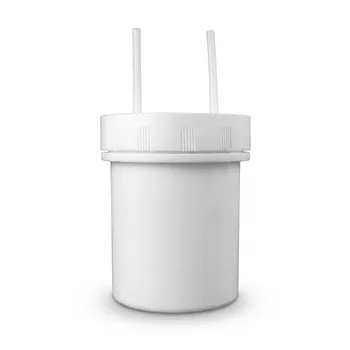
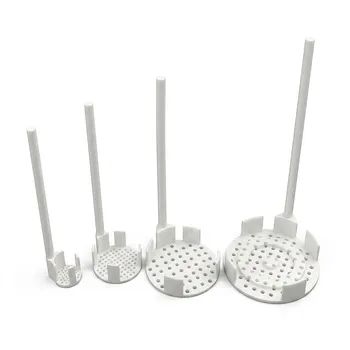
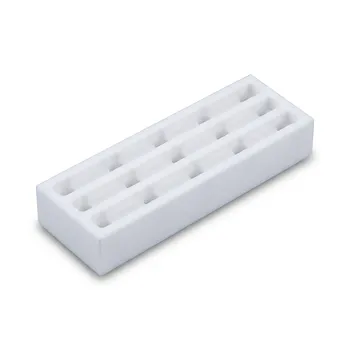
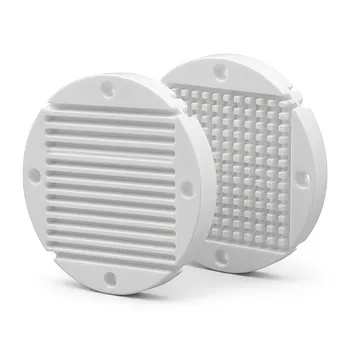
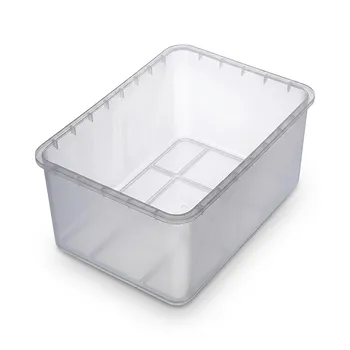
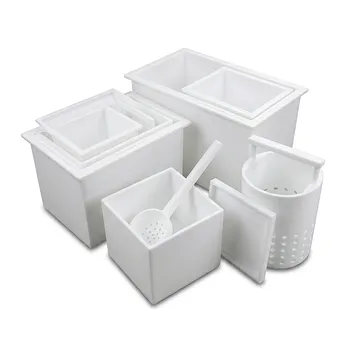
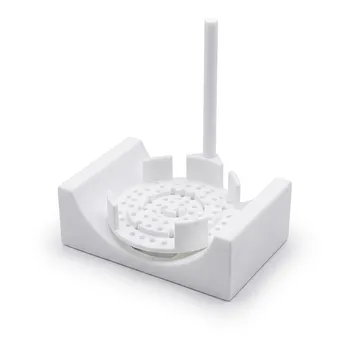
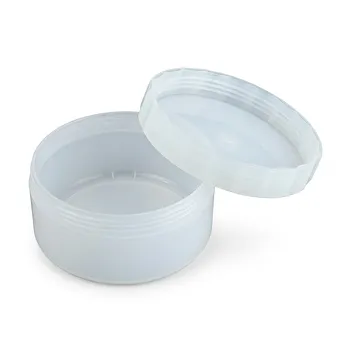
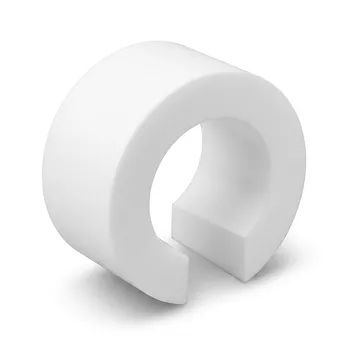
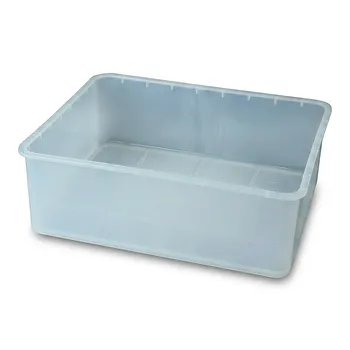
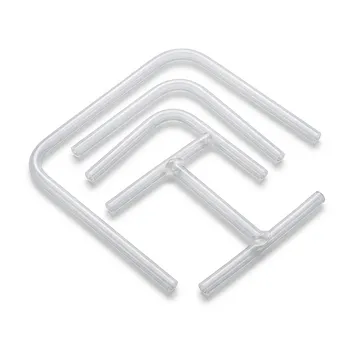
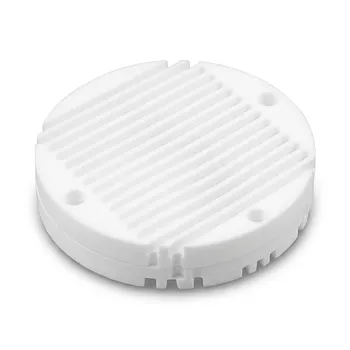
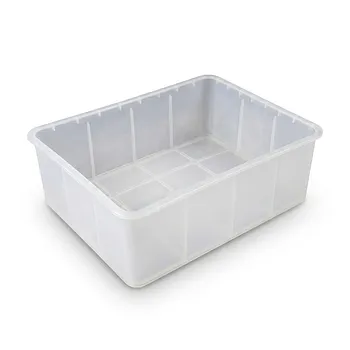
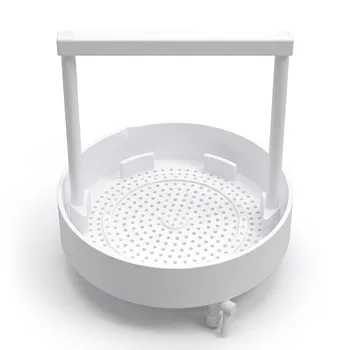
PFA and PTFE are chosen because they combine chemical inertness, purity, thermal stability, and non-stick behavior better than most practical engineering materials. They resist aggressive acids, bases, oxidizers, and organic solvents while contributing very low levels of extractables, ions, and particles to the fluid. Their low surface energy also reduces wetting, residue retention, and cross-contamination in tanks, wafer carriers, tubing, valves, and fittings.
Core takeaway: PFA and PTFE protect both the process fluid and the equipment. Their fluorinated molecular structure resists chemical attack and thermal degradation, while their low surface energy and low leachability support the cleanliness demanded by semiconductor and other high-purity applications.
Why Their Chemistry Provides Exceptional Protection
The carbon–fluorine structure resists chemical attack
PFA and PTFE have highly fluorinated polymer backbones. The strong carbon–fluorine bonds and protective fluorine atoms shield the carbon chain from many chemical reactions.
As a result, these materials withstand concentrated acids, strong bases, oxidizing agents, and many organic solvents that would rapidly attack metals, conventional plastics, or elastomeric materials.
They remain stable across demanding temperatures
PTFE and PFA retain useful performance across a broad temperature range, including many processes involving elevated temperatures, thermal cycling, or heated chemical solutions.
Typical continuous-use limits are around 260°C, depending on the grade, design, mechanical load, and operating environment. Exact temperature capability should always be confirmed against the manufacturer’s data rather than inferred from the polymer name alone.
Their resistance is not dependent on a coating
Unlike lined or coated components, solid PTFE and PFA do not depend on a thin surface layer to provide chemical protection. There is no coating to blister, delaminate, or expose a less-resistant substrate during normal service.
This is particularly important for tanks, fittings, and flow-path components that experience abrasion, pressure changes, thermal cycling, or repeated cleaning.
Why They Support High-Purity Fluid Handling
They minimize ionic and organic contamination
High-purity processes can be affected by extremely small amounts of contamination. PTFE and PFA generally have very low extractables and low ion-leaching behavior when properly manufactured, cleaned, and specified for the application.
This helps prevent the storage vessel or fluid path from becoming an unintended source of metallic ions, organic residues, particles, or other impurities.
They reduce sample and process interaction
Their chemical inertness means they are less likely to react with, absorb, or chemically alter the fluid being stored or transferred. That protects the composition of aggressive reagents, analytical samples, and semiconductor process chemicals.
The material does not eliminate contamination risk by itself. Manufacturing cleanliness, surface finish, assembly practices, seals, packaging, and cleaning validation remain equally important.
Their low surface energy improves release
PTFE and PFA have very low surface energy and strong non-stick behavior. Fluids are less likely to adhere strongly to their surfaces, and residues are generally easier to remove during rinsing or cleaning.
This is valuable in tubing, valves, and fittings, where retained droplets or films can cause carryover between process steps.
Why They Fit Specific Component Types
Chemical storage tanks
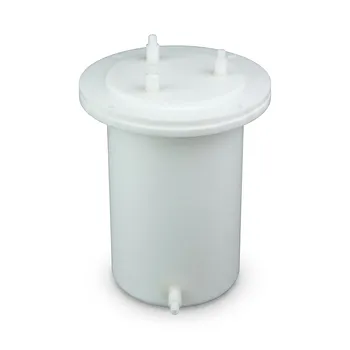
PFA and PTFE tanks can contain highly corrosive chemicals without the corrosion, ion release, or surface degradation associated with many metals and standard polymers.
They also help preserve fluid purity during storage because the wetted material is unlikely to react with the contents or introduce significant extractables. Tank design must still account for creep, wall thickness, support, permeability, and chemical-specific temperature limits.
Wafer carriers
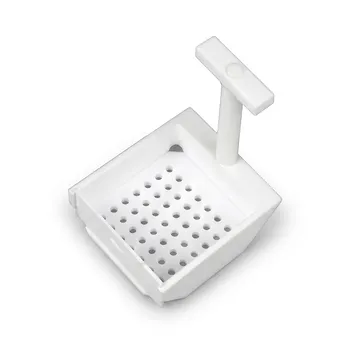
Wafer carriers require a combination of chemical resistance, low particle generation, cleanability, and dimensional stability. PFA and PTFE can withstand aggressive cleaning and processing chemicals while minimizing adhesion of residues to contact surfaces.
Their electrical insulating properties can also be useful where conductive materials could create contamination, electrostatic, or process-control concerns. Carrier geometry, surface finish, handling damage, and particle-control procedures remain decisive in actual performance.
Tubing
PFA is especially useful for high-purity tubing because it offers excellent chemical resistance and can be melt-processed into smooth, consistent tube structures. It is also available in transparent forms, which can help with visual inspection of the flow path.
PTFE tubing provides similarly strong chemical resistance and low-friction internal surfaces. However, its fabrication and connection methods differ because PTFE is not conventionally melt-processable.
Valves and fittings
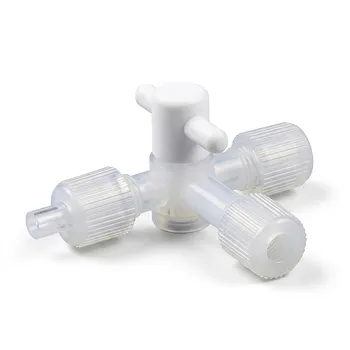
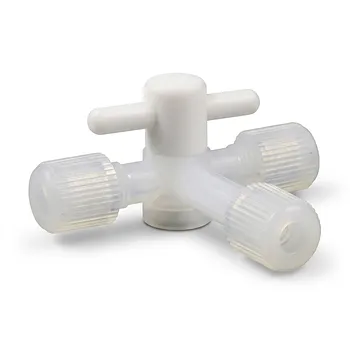
Valves and fittings made with PFA or PTFE protect the wetted path from aggressive chemicals and reduce the likelihood of corrosion products or metallic ions entering the stream.
Their non-stick surfaces also limit residue retention. In high-purity designs, the overall valve architecture matters: dead volume, crevices, seals, actuation materials, surface finish, and cleanability can be as important as the fluoropolymer itself.
PFA and PTFE: Similar Strengths, Different Practical Roles
PTFE is valued for broad chemical resistance and machinability
PTFE provides exceptional chemical resistance, low friction, electrical insulation, and high-temperature capability. It is commonly used for machined components, seals, liners, gaskets, laboratory vessels, and tubing.
Its principal processing limitation is that it does not flow like a conventional thermoplastic during molding. Components are commonly made through techniques such as compression molding, sintering, skiving, or machining.
PFA is valued for melt processing and high-purity fluid paths
PFA has chemical and thermal performance closely associated with PTFE while offering melt-processability. This makes it well suited to seamless tubing, molded components, tanks, and complex fluid-path geometries.
PFA is often selected when manufacturers need consistent molded parts, welded assemblies, visual inspection, or highly controlled high-purity flow paths.
Selection depends on the component and process
The choice is not simply “PFA is better than PTFE” or the reverse. PTFE may be preferred for a machined seal, bearing, liner, or laboratory vessel, while PFA may be preferred for a welded tank, molded valve body, or transparent tubing system.
The correct choice depends on chemical exposure, temperature, pressure, mechanical loading, permeability, fabrication method, purity requirements, and regulatory or qualification needs.
Understanding the Trade-offs
Chemical resistance is not unlimited
PTFE and PFA are highly resistant to most industrial and laboratory chemicals, but they are not universally inert under every condition. Important exceptions can include molten alkali metals, elemental fluorine under severe conditions, and certain highly reactive fluorinating compounds.
Chemical compatibility must be checked at the actual concentration, temperature, pressure, exposure time, and mechanical stress.
Creep and deformation can affect mechanical design
Both materials are relatively soft compared with metals and can deform under sustained load. This behavior, often described as creep or cold flow, can affect flanges, threaded fittings, seals, supports, and tank structures.
Designs may require appropriate reinforcement, load management, compression control, and periodic inspection.
Permeation can matter
Chemical resistance does not mean zero permeability. Some chemicals can slowly permeate fluoropolymer walls, particularly at elevated temperature or pressure.
For volatile, hazardous, or highly sensitive fluids, the design should evaluate permeation, ventilation, double containment, wall thickness, and exposure duration.
Purity depends on the complete system
A PFA or PTFE wetted surface cannot compensate for contaminated fabrication, poor cleaning, unsuitable elastomers, metal particles, or dead-leg geometry.
High-purity performance is a system property involving resin quality, processing controls, surface finish, assembly, packaging, and qualification testing.
Mechanical and thermal limits still apply
Fluoropolymers can soften at elevated temperatures and may have lower stiffness than metals or engineering plastics. Pressure ratings, vacuum capability, thermal expansion, and dimensional stability must therefore be evaluated for the finished component.
A material’s chemical compatibility rating alone is not a complete design approval.
Making the Right Choice for Your Goal
Use the material decision as a combination of chemical compatibility, purity control, mechanical design, and manufacturing requirements.
- If your primary focus is maximum chemical resistance: Specify PTFE or PFA after checking the exact chemical, concentration, temperature, and exposure conditions.
- If your primary focus is ultra-high-purity tubing or welded flow paths: Consider PFA for its melt-processability, smooth surfaces, and suitability for controlled molded or welded assemblies.
- If your primary focus is machined parts, seals, liners, or laboratory vessels: Consider PTFE where its chemical resistance, low friction, and established machining methods fit the design.
- If your primary focus is contamination control: Evaluate the entire fluid path, including resin grade, extractables, surface finish, seals, dead volume, cleaning, and assembly practices.
- If your primary focus is long service life: Check creep, pressure, thermal cycling, permeation, support, and chemical-specific limitations rather than relying only on nominal temperature ratings.
Choosing PFA or PTFE is most effective when the fluoropolymer’s chemical and purity advantages are matched to a mechanically sound, properly qualified system.
Summary Table:
| Property | PFA | PTFE |
|---|---|---|
| Chemical Resistance | Excellent | Excellent |
| Purity (Extractables) | Very Low | Very Low |
| Thermal Stability | Up to 260°C | Up to 260°C |
| Non-Stick | Excellent | Excellent |
| Processability | Melt-processable | Not melt-processable (machined/sintered) |
| Typical Applications | Tubing, molded parts, tanks | Seals, liners, machined components |
Ensure the highest purity and chemical resistance for your critical processes. Our PTFE and PFA components are engineered for semiconductor, pharmaceutical, and chemical applications. From custom-machined parts to complete fluid handling systems, we deliver precision and reliability. Contact us today to discuss your requirements and receive a tailored solution.
Related Products
- Corrosion Resistant High Purity PFA Valve and Weldable Transparent Tubing for Semiconductor Fluid Transfer
- High Purity PTFE Wafer Carrier Semiconductor Flower Basket for Corrosion Resistant Silicon Processing Custom Sized Labware
- High Purity PFA Valves and Weldable Corrosion Resistant Transparent Tubing for Semiconductor Sensor Manufacturing Fluid Transfer
- High Purity PTFE Wafer Cleaning Basket Acid Resistant Silicon Wafer Carrier Fluoropolymer Etching Rack
- Custom High Purity PTFE Storage Tank Corrosion Resistant Chemical Reaction Vessel Drum
People Also Ask
- Why are high-purity PFA fluid transfer components preferred for battery electrolytes? Ensure Purity & Data Accuracy
- How do high-precision PFA fluid transfer components, such as tubing and fittings, affect the results of continuous-flow synthesis?
- How do PFA fluid transfer components contribute to chemical research precision? Achieve high-purity results today.
- What role do PFA tubing and valves play in high-precision laboratory fluid transfer systems? Ensure Ultra-Pure Results
- Why is PFA widely used for high-purity fluid handling components, and why is end-group fluorination necessary?