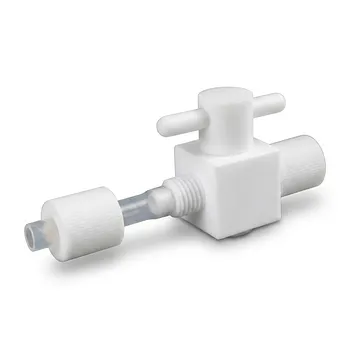
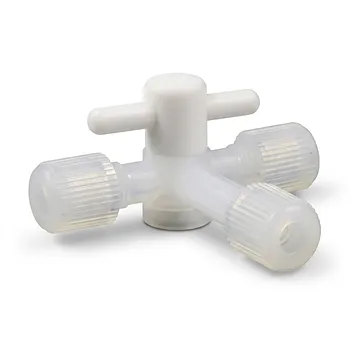
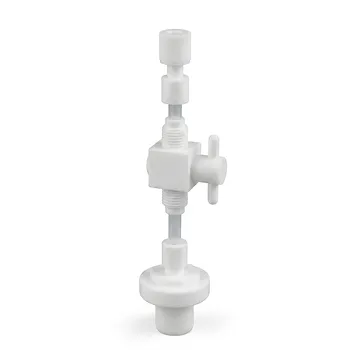
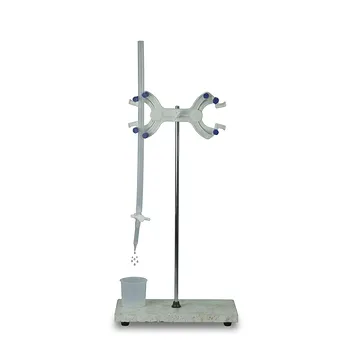
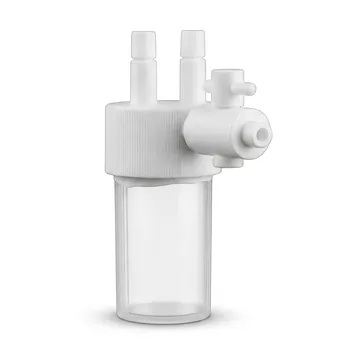
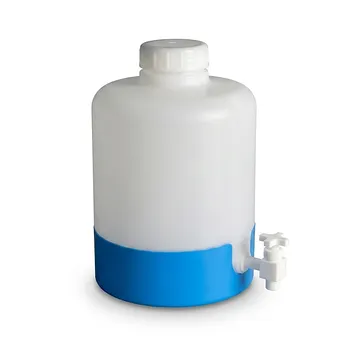
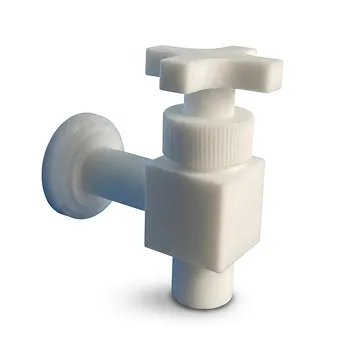
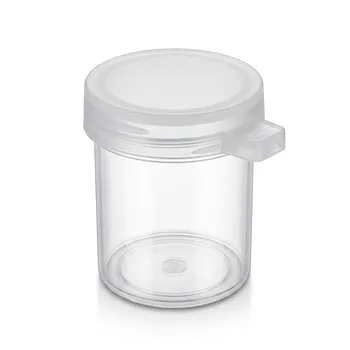
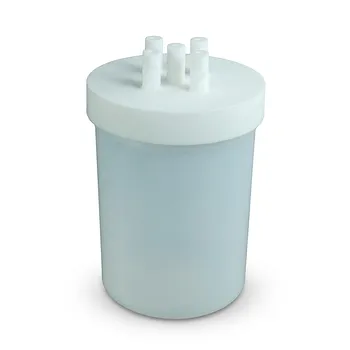
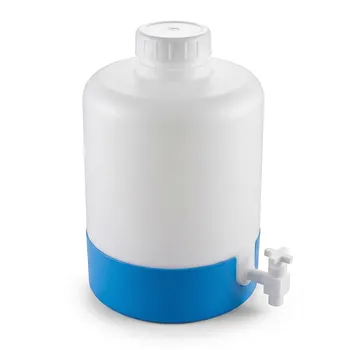
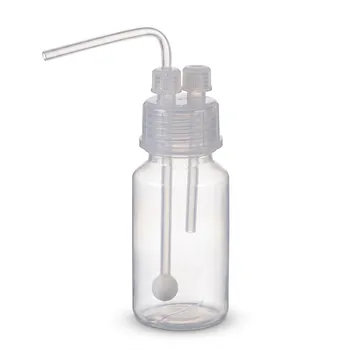
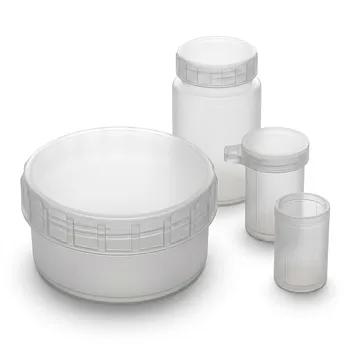
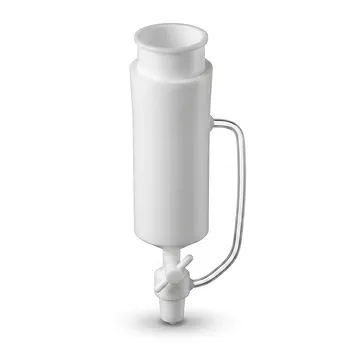
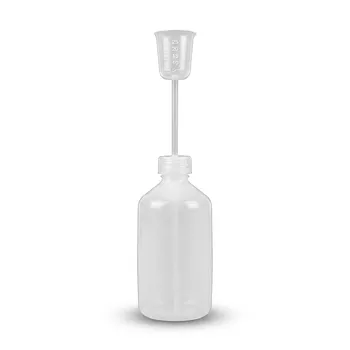
PFA is widely used because it combines PTFE-like chemical inertness with melt-processability and high purity. Its fully fluorinated structure resists strong acids, solvents, and corrosive process chemicals, while its melt-processability allows manufacturers to produce smooth, non-porous valves, fittings, tubing, liners, and vessels without plasticizers or stabilizers that could leach into the fluid. End-group fluorination is necessary because polymerization can leave unstable acid fluoride and carboxyl-containing chain ends that degrade at elevated temperatures and release corrosive or contaminating byproducts.
PFA protects fluid purity through both its fluorinated backbone and its controlled chain ends. The backbone resists chemical attack, while fluorinating unstable end groups converts them into inert perfluoroalkyl groups, reducing outgassing, HF generation, leaching, and contamination.
Why PFA Fits High-Purity Fluid Handling
Broad Chemical Resistance
PFA is a fully fluorinated copolymer made from tetrafluoroethylene and a perfluoroalkyl vinyl ether. Its carbon-fluorine-rich structure gives it resistance to a wide range of aggressive organic and inorganic chemicals.
This makes PFA suitable for contact with strong acids, corrosive reagents, and solvents that could degrade many conventional plastics. The material remains chemically stable during prolonged fluid transmission and storage.
Thermal Stability
The strong carbon-fluorine bonds in PFA provide high thermal stability. This allows components to operate and be processed at elevated temperatures with less risk of chemical breakdown than less-fluorinated polymers.
Thermal stability is especially important when systems handle heated chemicals, undergo thermal cycling, or require high-temperature cleaning and sterilization processes.
Melt-Processability Without Additives
Unlike PTFE, PFA can be melt-processed. Manufacturers can form it into complex valve bodies, fittings, tubing, vessel liners, and molded containers using conventional high-temperature processing methods.
This is important for purity because the material can be processed without relying on plasticizers or stabilizers that might later migrate into the fluid. Melt-processing also supports smooth, continuous, and non-porous surfaces that are easier to clean.
Low Contamination Potential
High-purity PFA grades minimize chemical leaching and trace-metal contamination. They are therefore used in semiconductor chemical delivery, trace-analysis laboratories, and demanding chemical process equipment.
Its low surface energy also reduces adhesion of chemicals and samples. That helps limit residue buildup, cross-contamination, and changes in fluid composition.
Reliable Mechanical Performance
PFA offers useful flexural fatigue resistance and strong resistance to environmental stress cracking. These properties matter in flexible tubing, bellows, pump fittings, and valve components exposed to repeated movement or mechanical stress.
Resistance to stress cracking reduces the risk of micro-fractures, leakage, and contamination during long-term chemical exposure.
Why the Polymer End Groups Matter
Polymerization Creates Reactive Chain Ends
During peroxide-initiated fluoropolymer polymerization, some PFA chains can terminate with unstable groups such as carboxylic acid or acid fluoride groups. These groups are chemically different from the highly inert fluorinated backbone.
The bulk polymer may be extremely resistant while these relatively small populations of reactive end groups remain potential sources of instability. High-purity applications are sensitive to those small sources because even trace byproducts can affect process fluids or analytical results.
Heat Can Release Contaminating Byproducts
At elevated processing or operating temperatures, unstable end groups can decompose. Depending on the end-group chemistry and conditions, degradation can produce carbon dioxide, carbonyl fluoride, and hydrofluoric acid.
These volatile products can cause outgassing, bubble formation, changes in melt viscosity, and micro-voids in molded or extruded parts. HF is also corrosive and can contribute to metal-ion contamination if it attacks nearby equipment.
End Groups Can Affect Finished-Part Quality
Gas generation during processing can create bubbles or internal voids. These defects can compromise dimensional stability, sealing performance, and long-term reliability in valves, fittings, tubing, and liners.
The problem is not limited to manufacturing. Continued degradation during service can release unwanted species into the fluid path or surrounding equipment.
How End-Group Fluorination Solves the Problem
Fluorine Replaces Unstable Chemistry
End-group fluorination treats the reactive chain ends with elemental fluorine. This converts unstable acid-derived end groups into more inert perfluorinated groups, commonly represented by terminal -CF3 groups.
The treatment makes the chain ends more chemically consistent with the inert fluorinated character of the main polymer chain.
It Reduces Outgassing and HF Formation
With fewer unstable end groups available to decompose, fluorinated PFA produces fewer volatile degradation products during heating. This reduces the risks of CO2, carbonyl fluoride, and HF release.
That improvement is valuable during molding, extrusion, thermal cycling, and high-temperature chemical service.
It Protects Fluid and Equipment Purity
Reducing HF generation lowers the risk of corrosion in associated metal components and helps prevent released metal ions from entering the process stream. The treatment also reduces the possibility of polymer-derived contamination entering sensitive fluids.
For semiconductor processing and trace analysis, this control over contamination can be as important as the polymer's broad chemical resistance.
It Improves Long-Term Reliability
A component with chemically stable end groups is less likely to develop gas-related defects or release degradation products over time. End-group fluorination therefore supports more predictable performance in high-purity fluid transfer systems.
It does not replace proper material selection, cleaning, fabrication, or system design, but it removes an important source of polymer-related instability.
Understanding the Trade-offs
PFA Is Not Automatically High Purity
The base resin alone does not guarantee a high-purity component. Contamination can also come from compounding, processing equipment, machining, cleaning, packaging, installation, or other materials in the fluid path.
High-purity service requires a qualified PFA grade and controlled manufacturing and handling practices.
Fluorination Does Not Eliminate Every Failure Mode
End-group fluorination reduces unstable-end-group degradation, but PFA can still be affected by extreme temperatures, mechanical damage, permeation, or chemicals that are incompatible under specific conditions.
Compatibility must be evaluated against the actual chemical concentration, temperature, pressure, exposure time, and mechanical loading.
Processing Requires High Temperature
PFA's melt-processability is a major advantage, but it requires specialized high-temperature equipment and controlled processing conditions. Poor processing can still produce voids, surface defects, or contamination.
Manufacturers must control thermal history and part design to preserve the material's purity and structural performance.
PFA Can Be More Expensive Than General Plastics
The resin and processing requirements generally make PFA more costly than conventional engineering polymers. That cost is justified when contamination, corrosion, leakage, or component failure would be more expensive than the material itself.
The economic case is strongest in systems where fluid purity and uptime are critical.
How to Apply This to Your Project
The correct PFA specification depends on both the fluid chemistry and the contamination limits of the application.
- If your primary focus is chemical compatibility: Select PFA based on the actual chemical, concentration, temperature, pressure, and exposure duration, rather than relying only on its general reputation for resistance.
- If your primary focus is ultra-high purity: Use high-purity PFA components with controlled manufacturing, cleaning, packaging, and handling, and verify that end-group fluorination is part of the material specification.
- If your primary focus is thermal processing or service: Evaluate fluorinated end groups and thermal stability to reduce outgassing, HF generation, bubbles, and degradation byproducts.
- If your primary focus is mechanical reliability: Consider PFA for applications involving flexing, repeated movement, or environmental stress, while checking pressure ratings, wall thickness, and fatigue requirements.
- If your primary focus is total system integrity: Assess PFA together with seals, metal interfaces, pumps, cleaning procedures, and installation practices because contamination and corrosion can originate outside the polymer component.
PFA is effective in high-purity fluid handling because its inert backbone, clean melt-processability, and stabilized fluorinated end groups address both chemical exposure and contamination risk.
Summary Table:
| Feature | Benefit for High-Purity Fluid Handling |
|---|---|
| Chemical Resistance | Resists acids, solvents, and corrosive chemicals, protecting fluid purity |
| Thermal Stability | Withstands high temperatures without degrading, reducing contamination risk |
| Melt-Processability Without Additives | Forms smooth, non-porous parts with no leachable additives |
| Low Contamination Potential | Minimizes leaching and trace-metal contamination, ideal for sensitive processes |
| Mechanical Reliability | Offers stress-crack resistance, reducing leaks and long-term failures |
| End-Group Fluorination | Converts unstable chain ends to inert groups, reducing outgassing, HF formation, and corrosion |
Ensure your high-purity fluid handling systems meet strict contamination controls with KINTEK's PFA and PTFE components. Our labware, tubing, fittings, valves, and custom parts are engineered for reliability and purity. Contact us today to optimize your process—get in touch now!
Related Products
- Corrosion Resistant High Purity PFA Valve and Weldable Transparent Tubing for Semiconductor Fluid Transfer
- High Purity PFA Flared Globe Valve Custom Two Way Three Way Reducing PTFE Valve Heavy Metal Free
- High Purity PFA Valves and Weldable Corrosion Resistant Transparent Tubing for Semiconductor Sensor Manufacturing Fluid Transfer
- High Purity PFA PTFE Flare Stop Valves Customizable 2-Way 3-Way Reducing Fluoropolymer Fluid Control Solutions
- High Purity PFA Translucent Volumetric Burette with PTFE Valve for Acid Base Titration and Corrosive Reagent Handling
People Also Ask
- Why are high-purity PFA fluid transfer components preferred for battery electrolytes? Ensure Purity & Data Accuracy
- How do high-precision PFA fluid transfer components, such as tubing and fittings, affect the results of continuous-flow synthesis?
- How do PFA fluid transfer components contribute to chemical research precision? Achieve high-purity results today.
- What role do PFA tubing and valves play in high-precision laboratory fluid transfer systems? Ensure Ultra-Pure Results
- What advantages do PTFE and PFA tubing offer for organic solvents? Superior chemical resistance, purity, and high-temperature stability.