All Questions
Why Are Fluoropolymers Like Ptfe And Pfa Preferred Over Other Plastics For Fluid Transfer? Discover Their Superior Chemical Resistance, Thermal Stability, And Purity.
Learn why PTFE and PFA outperform conventional plastics for valves, fittings, and tubing in demanding applications.
What Technical Challenges Exist In Laboratory-Scale Radical Polymerization Of Low-Boiling Fluorinated Monomers, And How Do Custom Ptfe And Pfa Seals And Fittings Solve Them? Expert Solutions For Volatile Monomer Handling
Learn how custom PTFE/PFA seals and fittings overcome volatility, contamination, and compatibility challenges in fluorinated monomer polymerization.
How Do Precision Cnc-Machined Reactor Fittings Ensure Safety In Co2 Methanation? Secure Your High-Pressure Lab Research
Learn how precision CNC-machined fittings prevent hydrogen leaks and ensure safety in CO2 methanation experiments under extreme heat and pressure.
What Is The Operating Principle Of Push-To-Connect Ptfe Fittings Compared To Compression Fittings? Choosing The Best Seal.
Compare push-to-connect vs. compression PTFE fittings. Learn about collet-grip vs. ferrule-deformation sealing for your lab's fluid transfer systems.
What Factors Influence The Pressure And Temperature Ratings Of Ptfe Connectors? Essential Guide To Material & Design
Learn how material grade, fillers, mechanical design, and thermal dynamics affect the pressure and temperature limits of PTFE connectors.
How Do Ptfe Connector Designs Address The Challenge Of Material Cold Flow Or Creep? Expert Engineering Solutions
Discover how mechanical containment, material reinforcement, and live-loading strategies mitigate PTFE cold flow to ensure durable, leaktight seals.
How Does The Sealing Mechanism Of A Ptfe Compression Connector Function During Installation? Master Leak-Tight Seals
Learn how PTFE compression connectors create leak-proof seals through mechanical deformation, plastic flow, and precise ferrule installation.
What Are The Primary Components Of A Standard Two-Ferrule Ptfe Compression Connector? Essential Guide To Leak-Free Seals
Learn about the 4 key components of two-ferrule PTFE compression connectors and how they ensure leak-proof, chemically inert seals for lab tubing.
What Are The Common Types Of Ptfe Connectors Used In Industrial And Research Settings? Expert Fluid Transfer Guide
Discover the main types of PTFE connectors for labs and industry. Learn how to maintain fluid purity with chemically inert fittings and seals.
Which Material Properties Of Polytetrafluoroethylene (Ptfe) Contribute To The Performance Of Laboratory Connectors? Guide
Explore how PTFE’s chemical inertness, thermal range, and low friction ensure sample purity and reliability in high-performance lab connectors.
What Are The Primary Functions And Applications Of Ptfe Connectors In Fluid-Handling Systems? Ensure Purity & Durability
Discover how PTFE connectors provide chemical inertness, low friction, and thermal stability in high-purity semiconductor and pharma fluid systems.
What Are The Engineering Limitations Of Polytetrafluoroethylene (Ptfe) Connectors? Mastering Cold Flow & Seal Integrity
Learn about PTFE connector limitations like cold flow and creep, plus engineering solutions like live-loading and fillers for stable, high-performance seals.
How Do Ptfe Connectors And Unions Improve The Accuracy Of Hplc And Gc? Achieve Zero Dead-Volume Precision.
Discover how PTFE connectors enhance HPLC & GC accuracy by eliminating contamination, ensuring zero dead-volume, and providing chemical inertness.
Why Are Ptfe Connectors Utilized In Pharmaceutical, Biotechnology, And Food Processing? Ensure Purity & Compliance
Learn how PTFE connectors ensure purity in pharmaceutical and food processing through FDA compliance, non-stick surfaces, and chemical resistance.
How Do Ptfe Connectors Enhance The Reliability Of Fluid-Handling Systems? Achieve Leak-Free Chemical Processing
Discover how PTFE connectors prevent corrosion, ensure fluid purity, and manage thermal stress in high-stakes chemical and petrochemical systems.
What Are The Primary Material Properties Of Ptfe For Laboratory Connectors? Unlock Extreme Purity And Thermal Range.
Explore why PTFE's chemical inertness, wide thermal range, and dielectric strength make it the ideal material for high-precision lab connectors.
What Makes Ptfe Reducing Flanges An Excellent Choice For Piping Systems? Achieve Superior Corrosion Resistance And Reliability
Discover why PTFE reducing flanges excel in harsh environments with unmatched chemical inertness, thermal stability, and non-stick properties for safer, more efficient systems.
How Do Ptfe Reducing Flanges Improve Efficiency? Boost Flow, Reduce Downtime, And Enhance Safety
Learn how PTFE reducing flanges increase efficiency with superior flow dynamics, chemical resistance, and non-stick surfaces for reliable system performance.
In What Applications Are Ptfe Reducing Flanges Versatile? Solve Critical Connections In Demanding Industries
Discover how PTFE reducing flanges provide chemical resistance and high purity for chemical, pharmaceutical, and food processing applications.
Why Are Ptfe Reducing Flanges Considered Cost-Effective? Maximize Uptime And Minimize Costs
Discover how PTFE reducing flanges offer superior long-term value through extreme durability, reduced maintenance, and maximized operational uptime.
How Do Ptfe Reducing Flanges Contribute To Enhanced Safety? Ensure Leak-Proof, Corrosion-Resistant Connections
Discover how PTFE reducing flanges prevent hazardous leaks, resist chemical corrosion, and ensure system integrity for safer industrial operations.
What Are The Benefits Of Using Ptfe Reducing Flanges? Achieve Superior Flow & Corrosion Resistance
Discover how PTFE reducing flanges provide unmatched chemical resistance, non-stick surfaces, and long-term cost savings for demanding industrial applications.
What Advantage Do The Non-Stick Properties Of Ptfe Reducing Flanges Provide? Boost Flow & Cut Costs
Discover how PTFE reducing flange non-stick properties prevent blockages, reduce maintenance, and ensure process purity for industrial systems.
How Does Temperature Tolerance Benefit Ptfe Reducing Flanges? Ensure Reliable Performance From Cryogenic To High Heat
Discover how PTFE reducing flanges maintain integrity and sealing from -200°C to +260°C, enhancing safety and reducing costs in harsh environments.
Why Is Chemical Resistance An Important Feature Of Ptfe Reducing Flanges? Ensure Safety And Purity
Discover why PTFE reducing flanges' chemical resistance is critical for preventing leaks, ensuring product purity, and reducing long-term costs in aggressive environments.
What Are The Key Features Of Ptfe Reducing Flanges? Superior Chemical Resistance And Leak-Proof Performance
Discover the key features of PTFE reducing flanges: unmatched chemical resistance, wide temperature tolerance, non-stick surface, and secure installation.
What Industries Commonly Use Ptfe Reducing Flanges? Essential For Chemical, Pharma & Food Processing
Discover why PTFE reducing flanges are critical for corrosion resistance and product purity in chemical, pharmaceutical, and food processing industries.
What Are Ptfe Reducing Flanges Used For? Connect Pipes Of Different Sizes With Superior Chemical Resistance
Learn how PTFE reducing flanges provide leak-proof connections between pipes of different diameters, ideal for corrosive, high-purity, and non-stick applications.
How Do Ptfe Expansion Bellows Contribute To Pollution Control Systems? Enhance System Integrity & Safety
Learn how PTFE expansion bellows prevent leaks, absorb vibration, and handle corrosive media in pollution control systems for reliable compliance.
What Makes Ptfe Expansion Bellows Ideal For Pharmaceutical Processing? Ensure Product Purity And Regulatory Compliance
Discover why PTFE expansion bellows are essential for pharmaceutical processing, offering unmatched chemical inertness, hygienic properties, and FDA compliance.
Why Are Ptfe Expansion Bellows Suitable For Hvac Systems? Ensure Long-Term Reliability And Performance
Discover how PTFE expansion bellows manage thermal movement, absorb vibration, and resist chemicals in HVAC systems for superior durability and lower lifetime costs.
How Do Ptfe Expansion Bellows Benefit Pulse Dampeners? Achieve Superior Flow Stability And Corrosion Resistance
Learn how PTFE bellows absorb pressure surges and resist chemicals to protect equipment and ensure reliability in demanding industrial fluid systems.
Which Industries Commonly Use Ptfe Expansion Bellows? Solve Your Critical Chemical And Purity Challenges
Learn why PTFE expansion bellows are vital for chemical resistance, purity, and flexibility in semiconductor, pharmaceutical, and industrial applications.
What Is The Primary Function Of Ptfe Expansion Bellows? Solve Movement And Corrosion Challenges
Learn how PTFE expansion bellows absorb movement, vibration, and stress in corrosive, high-purity, and extreme temperature piping systems.
Why Are Ptfe Expansion Joints Considered An Optimal Solution For Industrial Systems?
Discover why PTFE expansion joints are ideal for industrial systems, offering chemical inertness, thermal stability, and mechanical flexibility to prevent leaks and downtime.
What Recent Advancements Have Been Made In Ptfe Expansion Joint Technology? Enhance Durability & Precision
Discover the latest PTFE expansion joint innovations, including composite materials, ePTFE, and 3D printing for superior performance in demanding applications.
What Are The Best Practices For Installing And Maintaining Ptfe Expansion Joints? Ensure Maximum Safety And Reliability
Learn the critical installation and maintenance procedures for PTFE expansion joints to prevent leaks and failures in demanding industrial systems.
What Factors Should Be Considered When Choosing A Ptfe Expansion Joint? Ensure System Safety And Longevity
Learn the 4 key factors for selecting a PTFE expansion joint: pressure, temperature, chemical compatibility, and movement, to ensure optimal performance.
How Do Ptfe Expansion Joints Compare To Other Materials? Achieve Superior Performance In Harsh Environments
Compare PTFE, rubber, and stainless steel expansion joints. Learn which material offers the best chemical resistance, temperature range, and flexibility for your system.
What Industries Commonly Use Ptfe Expansion Joints And Why? Solve Critical Pipeline Challenges With Ptfe
Discover why chemical, pharmaceutical, food & beverage, and power generation industries rely on PTFE expansion joints for chemical resistance, purity, and high-temperature stability.
What Are The Key Advantages Of Ptfe Expansion Joints Compared To Traditional Rubber Joints? Superior Performance In Harsh Environments
Discover why PTFE expansion joints excel in chemical resistance, extreme temperatures, and durability, offering unmatched reliability over rubber in demanding applications.
What Role Do Ptfe Expansion Bellows Play In Vibration Isolation? Protect Piping Systems From Vibration Damage
Learn how PTFE expansion bellows act as shock absorbers to dampen vibration, reduce noise, and protect equipment in harsh chemical and thermal environments.
How Do Ptfe Expansion Bellows Manage Thermal Expansion? Absorb Movement & Prevent System Failure
Learn how PTFE bellows use flexibility and a corrugated design to safely absorb thermal stress in piping systems, preventing cracks and leaks.
What Are The Key Properties Of Ptfe Expansion Bellows? Achieve Unmatched System Protection
Discover the 4 key properties of PTFE bellows: chemical resistance, flexibility, thermal stability, and non-stick surface for reliable performance.
What Are The Primary Applications Of Ptfe Expansion Bellows? Protect Piping Systems From Stress & Corrosion
Learn how PTFE bellows absorb thermal expansion, vibration & handle aggressive chemicals in chemical, pharmaceutical, & food processing industries.
What Are The Key Advantages Of Using Ptfe Instrumentation Tube Fittings? Superior Performance In Extreme Conditions
Discover why PTFE tube fittings excel with unmatched chemical resistance, extreme temperature stability, and high-pressure integrity for demanding applications.
What Is The Temperature Range That Ptfe Instrumentation Tube Fittings Can Withstand? A Guide To Extreme Thermal Performance
PTFE tube fittings operate from -328°F to 500°F (-200°C to 260°C). Learn how temperature affects performance for reliable sealing.
What Makes Ptfe Instrumentation Tube Fittings Highly Reliable And Durable? Superior Chemical & Thermal Resistance
Discover why PTFE tube fittings offer unmatched reliability with superior chemical inertness, extreme temperature stability, and long-term durability.
In What Industries Are Ptfe Instrumentation Tube Fittings Commonly Used? Ensuring Purity And Chemical Resistance
Explore the key industries that rely on PTFE tube fittings for chemical inertness, high purity, and temperature stability in critical applications.
Related Products
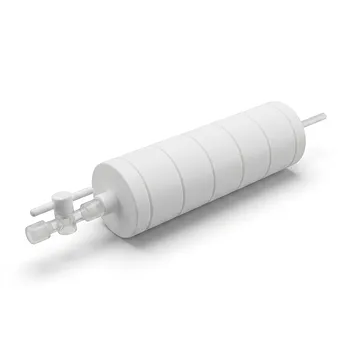
PTFE Corrosion Resistant Filter with PFA Valve Connections and Integrated Sieve Plate
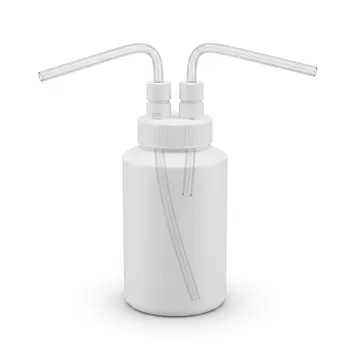
Custom PTFE Gas Washing Bottle Corrosion Resistant Chemical Absorption Vessel with Quarter Inch Tubing Connections

PTFE Deep Evaporating Dishes Customizable Laboratory and Industrial Solutions
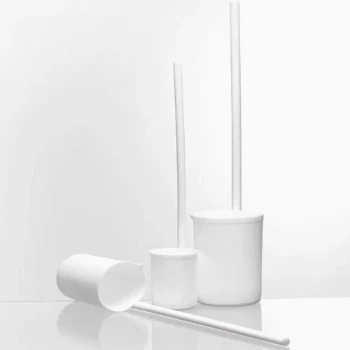
PTFE Chemical Solvent Sampling Spoon
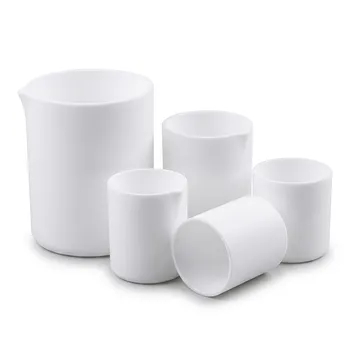
Large Scale PTFE Beakers and Flasks for High Temperature Corrosion Resistant Laboratory Applications with Custom CNC Fabrication