Fluoropolymers such as PTFE and PFA are preferred because they combine chemical inertness, thermal stability, low friction, and high purity in a way that conventional plastics generally cannot match. They resist aggressive acids, bases, oxidizers, solvents, and electrolytes while maintaining dimensional and sealing performance across demanding temperature ranges. Their low surface energy also discourages sticking, buildup, and contamination inside valves, fittings, liners, and tubing.
The central advantage of PTFE and PFA is not one isolated property but their combined performance: they protect the fluid from the component, and the component from the fluid, while supporting clean, reliable flow.
Why Conventional Plastics Often Fall Short
Chemical exposure causes degradation
Plastics such as PVC and other conventional polymers can soften, embrittle, swell, or degrade when exposed to strong chemicals, solvents, oxidizers, or prolonged heat.
PTFE and PFA are substantially more chemically inert. Their fluorinated molecular structure creates a highly resistant barrier against chemical attack, making them suitable for aggressive process fluids and long-duration testing.
Contamination can compromise the process
Fluid-transfer components may release additives, absorbed chemicals, corrosion products, or other impurities into the fluid stream.
PTFE and PFA have very low extractables and do not introduce metal ions, which is particularly important in semiconductor processing, fuel-cell research, electrochemistry, and high-purity laboratory systems.
Environmental exposure reduces service life
Some traditional polymers deteriorate under ultraviolet exposure, chemical stress, or repeated thermal cycling.
Fluoropolymers generally provide better long-term durability, fire resistance, and resistance to common organic solvents. This helps maintain leak tightness and material integrity over extended operating periods.
The Properties That Make PTFE and PFA Effective
Exceptional chemical resistance
PTFE and PFA rank among the most chemically resistant polymer materials available for fluid handling. They can tolerate many aggressive acids, alkaline electrolytes, oxidizing intermediates, and organic solvents that would attack less-resistant plastics.
This resistance is especially valuable where component failure could cause leakage, process interruption, or contamination.
The carbon–fluorine bond provides a protective structure
The performance of these materials is rooted in their fluorinated molecular structure. Strong carbon–fluorine bonds and the surrounding fluorine atoms shield the carbon backbone from many chemical reagents.
In practical terms, the fluid has difficulty penetrating or reacting with the polymer structure. That is why PTFE and PFA can remain stable in environments that rapidly damage conventional plastics.
High thermal stability
PTFE and PFA retain useful performance across a broad temperature range compared with many commodity plastics.
This makes them suitable for hot chemical transfer, thermal cycling, sterilization-related applications, and processes where temperature changes could otherwise accelerate aging or leakage.
Low friction and low surface energy
PTFE has an exceptionally low coefficient of friction, while PFA also provides very low-friction, non-stick behavior.
This reduces adhesion of particles, residues, gas bubbles, and reaction products to internal surfaces. It can also support smoother actuation in valve components and more reliable sealing in fittings, gaskets, and lined systems.
Low surface energy reduces buildup
Fluids and deposits are less likely to wet and adhere strongly to fluoropolymer surfaces.
That characteristic helps reduce material buildup, simplify cleaning, and preserve flow paths. In electrochemical systems, reduced bubble adhesion can also help maintain more stable fluid movement and minimize unwanted fluidic or electrical noise.
Why These Benefits Matter in Specific Components
Valves need reliable sealing and clean operation
Valve seats, diaphragms, seals, and internal flow paths may be exposed repeatedly to corrosive fluids and mechanical cycling.
PTFE and PFA resist chemical attack while providing low-friction contact surfaces. This supports reliable opening and closing, reduces sticking, and helps preserve sealing performance.
Fittings must prevent leaks and contamination
Fittings are often points of mechanical stress and potential leakage. They must remain dimensionally stable enough to maintain compression and sealing while resisting the transferred fluid.
Fluoropolymer fittings and liners are valuable when chemical compatibility and fluid purity are more important than using the lowest-cost material.
Tubing must protect both the fluid and the pressure boundary
Tubing carries the fluid continuously, so long-term permeation, swelling, embrittlement, and extractables are important considerations.
PTFE and PFA tubing provide highly inert internal surfaces and strong resistance to chemical degradation. For higher-pressure service, the fluoropolymer tube may be reinforced or supported by an appropriate external construction because polymer creep and pressure capability still need to be managed.
Liners and gaskets isolate aggressive fluids
Fluoropolymer liners and gaskets create a chemically resistant barrier between the process fluid and a structural component made from another material.
This approach can combine the mechanical strength of a supporting material with the chemical resistance and low contamination of PTFE or PFA.
PTFE and PFA Are Similar but Not Interchangeable
PTFE is the benchmark for low friction and chemical inertness
PTFE is widely selected when the primary requirements are maximum chemical resistance, very low friction, non-stick behavior, and broad service-temperature capability.
Its main manufacturing limitation is that standard PTFE is not readily melt-processable like ordinary thermoplastics. Components are commonly produced through specialized forming, sintering, machining, or other fluoropolymer-processing methods.
PFA offers similar resistance with easier processing
PFA provides chemical resistance and purity characteristics close to PTFE while being melt-processable.
That allows manufacturers to produce complex tubing, fittings, tanks, valve bodies, and other geometries with more conventional thermoplastic-processing techniques. PFA is therefore especially useful when both fluoropolymer performance and design flexibility are required.
Material selection depends on the full design
The choice between PTFE and PFA depends on temperature, pressure, geometry, flexibility, permeability, purity requirements, fabrication method, and mechanical loading.
Chemical resistance alone does not determine the correct material. The component must also be evaluated for creep, permeation, dimensional stability, and connection design.
Why Purity Is Critical in Specialized Systems
Semiconductor and ultrapure-fluid handling
In semiconductor processing, even trace contamination can affect yield or device performance.
PFA and PTFE components help maintain a clean fluid path because they resist chemical attack, have low extractables, and do not contribute metallic contaminants.
Fuel-cell research
Fuel-cell systems can combine acidic chemistry, elevated temperature, humidity, and sensitivity to ionic contamination.
Fluoropolymer tubing, valves, and fittings help prevent metal-ion release and chemical reactions that could poison catalysts or contaminate exchange membranes.
Electrochemical processes
Electrochemical systems may expose components to strong alkaline electrolytes, oxidizing intermediates, and reaction products for extended periods.
PTFE and PFA help prevent degradation and impurity release while their low-energy surfaces can reduce gas-bubble adhesion inside the fluid path.
Understanding the Trade-offs
Chemical resistance does not mean universal compatibility
PTFE and PFA are highly resistant, but no material is compatible with every chemical under every combination of temperature, pressure, concentration, and exposure time.
A compatibility review should consider the actual operating conditions rather than relying only on a general material-resistance chart.
Pressure capability can be limited by creep
PTFE and PFA are relatively soft compared with metals and some engineering plastics. Under sustained load, they can deform gradually through creep or cold flow.
High-pressure tubing and fittings may therefore require reinforcement, support, appropriate wall thickness, and carefully designed compression connections.
Permeation may still matter
A fluoropolymer can resist chemical reaction while still allowing some molecules to permeate through its wall.
This distinction is important for gases, volatile solvents, and applications where maintaining concentration or preventing external exposure is critical.
Cost and fabrication are higher
PTFE and PFA generally cost more than commodity plastics, and PTFE in particular requires specialized processing.
The additional cost is justified when failure, contamination, downtime, or replacement would be more expensive than the initial material premium.
Mechanical strength is not their primary advantage
Fluoropolymers excel in chemical and thermal performance, not necessarily in stiffness, wear resistance, or load-bearing strength.
Designers often use them as liners, seals, tubing materials, or chemically resistant internal components supported by stronger materials.
Making the Right Choice for Your Goal
Use the material’s full operating envelope—not chemical resistance alone—to select the component.
- If your primary focus is maximum chemical inertness and lowest friction: PTFE is often the strongest starting point for seals, liners, gaskets, and chemically aggressive fluid paths.
- If your primary focus is complex geometry and melt-processable fabrication: PFA provides fluoropolymer-level chemical resistance with greater manufacturing flexibility.
- If your primary focus is ultrapure fluid handling: Select high-purity PTFE or PFA components designed to minimize extractables, particles, and metallic contamination.
- If your primary focus is high-pressure transfer: Evaluate reinforcement, creep, permeation, connection design, and temperature together rather than selecting a fluoropolymer based on chemical resistance alone.
- If your primary focus is long service life in harsh environments: Compare the fluoropolymer’s total lifecycle value against the failure, contamination, and maintenance risks of conventional plastics.
PTFE and PFA are preferred when fluid purity, chemical resistance, temperature stability, and reliable long-term flow matter more than the lowest initial material cost.
Summary Table:
| Property | PTFE | PFA | Conventional Plastics |
|---|---|---|---|
| Chemical Resistance | Excellent | Excellent | Poor to Moderate |
| Thermal Stability | Excellent | Excellent | Limited |
| Purity (low extractables) | High | High | Variable |
| Friction Coefficient | Very Low | Low | Moderate to High |
| Surface Energy | Very Low | Low | Higher |
| Processing | Specialized (not melt-processable) | Melt-processable | Standard thermoplastic |
| Typical Applications | Seals, liners, gaskets | Complex tubing, fittings, valve bodies | General-purpose, low-stress uses |
Ensure the highest purity and reliability in your fluid handling systems with KINTEK's precision PTFE and PFA components. From custom CNC-machined parts to complete assemblies, our high-performance fluoropolymers are designed for the most demanding laboratory and industrial applications. Contact our experts today to discuss your specific requirements and experience the KINTEK advantage. Get in touch now.
Related Products
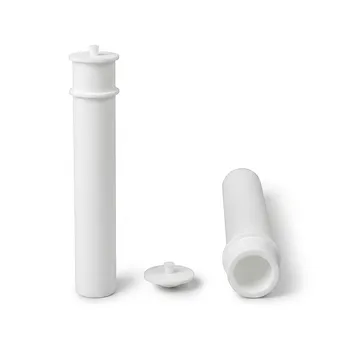
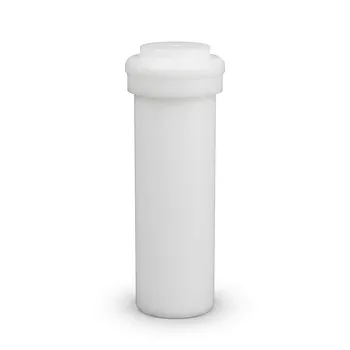
- PTFE Digestion Tubes Teflon Material Chemical Resistant Laboratory Vessels for Trace Metal Analysis
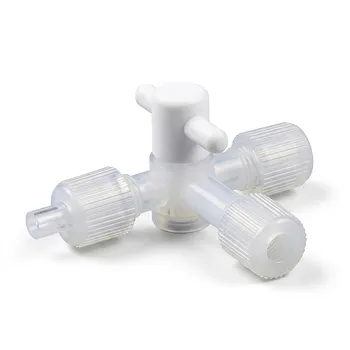
- High Purity PFA Valves and Weldable Corrosion Resistant Transparent Tubing for Semiconductor Sensor Manufacturing Fluid Transfer
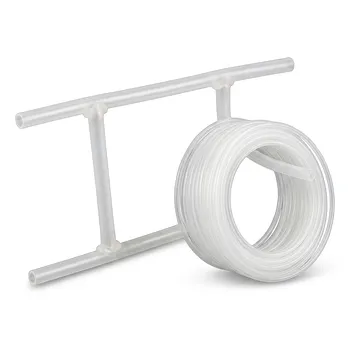
- High Purity PFA Coiled Tubing Custom PTFE Machining PFA Welding and Precision Bending Solutions
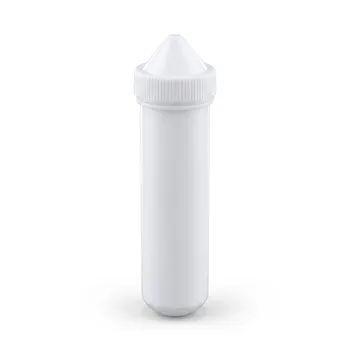
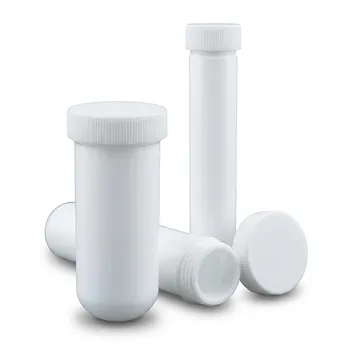
- High Purity PTFE Centrifuge Tubes for Trace Analysis Custom Laboratory Centrifugation Containers with Racks
- Custom PFA Tubing 1/4 Inch High Purity Corrosion Resistant Fluoropolymer Tube with Welding and Machining Services
People Also Ask
- How do PTFE digestion tubes facilitate the analysis of food and agricultural products? Ensure High-Purity Mineralization
- What is the primary role of a PTFE digestion tube in analytical chemistry? Ensure High Purity and Trace Accuracy
- How does a PTFE digestion tube facilitate sample decomposition in a conventional hot-block heating system? Boost Efficiency & Purity
- What are the common capacities and physical configurations available for PTFE digestion tubes? Expert Selection Guide
- How do PTFE digestion tubes assist in pharmaceutical and biological sample preparation? Ensure High Recovery & Purity