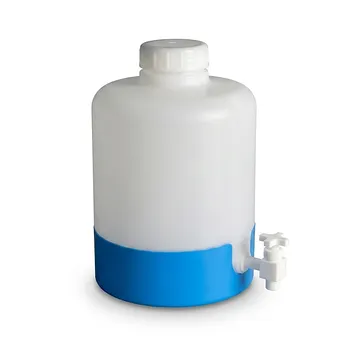
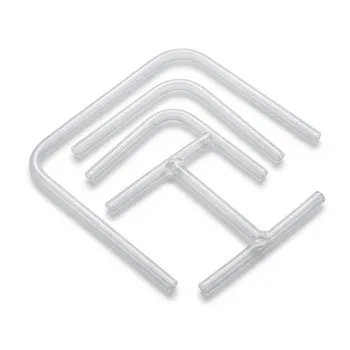
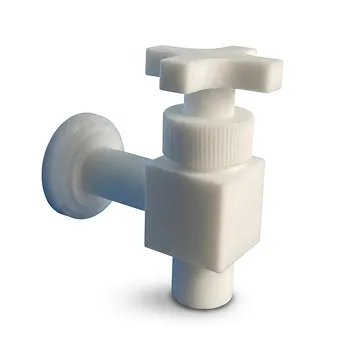
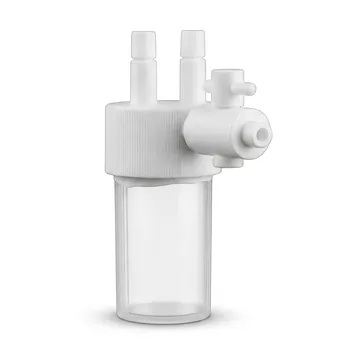
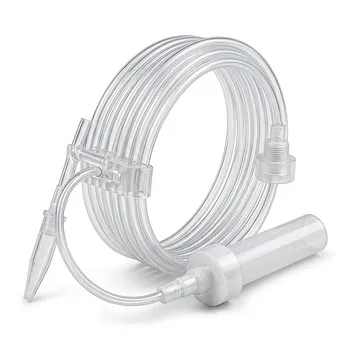
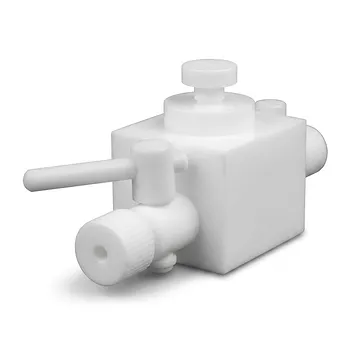
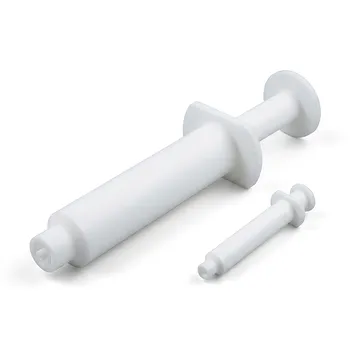
High-purity PFA and PTFE valves and lined fittings are preferred because they protect fluid purity while resisting chemicals that can attack metal. In semiconductor and chemical processing, stainless steel and even high-performance alloys may release trace metal ions, corrode, or generate particles when exposed to acids, bases, etchants, solvents, or ultrapure water. High-purity fluoropolymers provide broad chemical resistance, low extractables, smooth non-adhesive fluid paths, and lower lifecycle costs in applications where contamination and downtime directly affect yield.
The central advantage is not simply corrosion resistance. PFA and PTFE reduce the risk of ionic contamination, particle release, chemical adhesion, and premature component failure, making them well suited to aggressive, purity-critical fluid systems.
Why Metal Components Create Process Risk
Corrosion Can Contaminate the Fluid Path
Metallic components can corrode when exposed to aggressive process chemicals, including hydrofluoric, sulfuric, and nitric acids, alkaline chemistries, oxidizers, and organic solvents.
Even when corrosion is not visibly severe, the fluid path can receive trace metal ions. In semiconductor wet processing, those ions may interfere with wafer surfaces, reduce device performance, or lower manufacturing yield.
Exotic Alloys Do Not Eliminate Leaching
Upgrading from standard stainless steel to a more resistant alloy can improve durability, but it does not guarantee freedom from ionic extraction or particulate contamination.
Exotic alloys also bring substantially higher material, fabrication, qualification, and replacement costs. They may solve a mechanical or temperature problem while leaving the underlying purity risk unresolved.
Particles Accumulate on Rough or Damaged Surfaces
Surface defects, corrosion products, machining marks, and deposits can trap process chemicals and particles. Later flow changes, vibration, or valve operation can release that material into the process stream.
This is particularly damaging in wafer cleaning and etching, where microscopic contamination can affect a large number of products.
How PFA and PTFE Preserve Fluid Purity
Broad Chemical Inertness
PFA and PTFE resist attack from a wide range of aggressive acids, bases, solvents, oxidizers, and ultrapure process fluids.
This broad compatibility allows one fluoropolymer family to serve across multiple chemical delivery and fluid-control duties, including valves, tubing, tanks, fittings, and lined components.
Low Ionic and Organic Extractables
High-purity grades are selected to minimize metal-ion extraction and organic contamination. This is critical for UPW, acids, etchants, and cleaning chemistries that must remain within tightly controlled purity specifications.
The result is a fluid path that introduces fewer contaminants than metallic construction in environments where trace impurities matter.
Low Surface Energy Reduces Adhesion
The low surface energy of PFA and PTFE makes it difficult for many chemicals, solvents, and residues to adhere to the interior wall.
That property reduces chemical hold-up and cross-contamination between process fluids. It also helps limit the accumulation of deposits that could later become particles.
Smooth, Cleanable Fluid Paths
High-purity fluoropolymer components can provide smooth internal surfaces with low potential for particle retention. Properly manufactured and handled components therefore support cleaner operation and more consistent process performance.
The material alone is not sufficient: molding quality, machining, cleaning, packaging, installation, and system design also determine the final contamination level.
Why PFA and PTFE Serve Different Component Needs
PFA Is Well Suited to Complex Molded Components
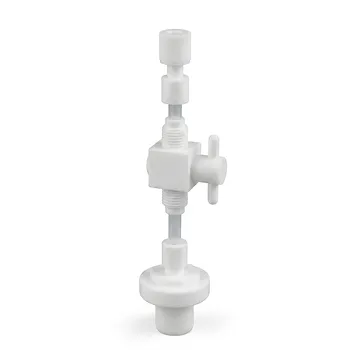
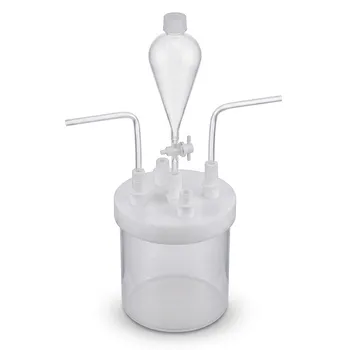
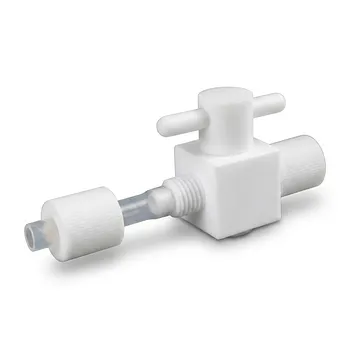
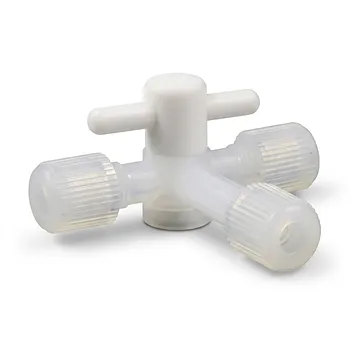
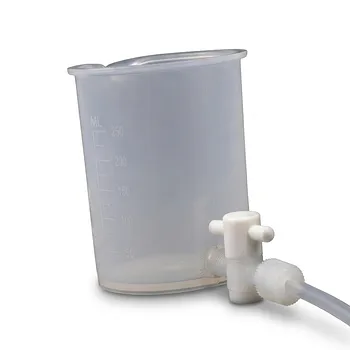
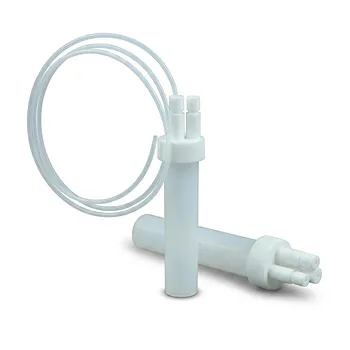
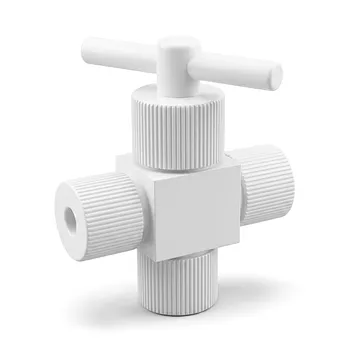
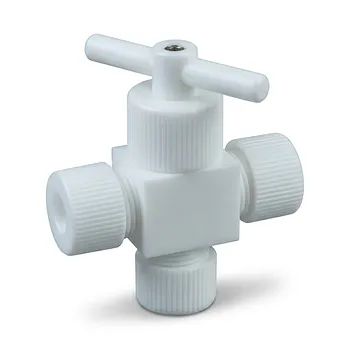
PFA is melt-processible, so it can be injection-molded into intricate geometries such as valve bodies, fittings, wafer carriers, and other fluid-transfer components.
This can reduce secondary machining, material waste, and the surface damage associated with extensive fabrication. A well-controlled molded PFA component can provide a consistent, void-free structure with low particulate shedding and strong resistance to chemical permeation.
PTFE Supports Machined and Dynamic Parts
PTFE is commonly used for custom-machined components, seals, seats, and flexible valve bellows. Its performance is particularly valuable where flex-fatigue resistance and broad chemical compatibility are required.
PTFE is not melt-processible in the same way as PFA, so complex PTFE parts may require machining or other specialized fabrication. That limitation is one reason PFA is often favored for complex molded high-purity geometries.
Lined Fittings Combine Structural Strength With Chemical Protection
A fluoropolymer-lined fitting can use a mechanically strong outer construction while placing PFA or PTFE at the wetted surface.
This approach is useful when the system requires structural support, pressure capability, or compatibility with existing piping standards, but the process fluid must remain isolated from the metal substrate.
Why the Advantage Is Strongest in Semiconductor Processing
Trace Contamination Has an outsized Cost
Semiconductor wet-etching and wafer-cleaning processes operate with extremely low tolerance for metallic and particulate contamination.
A small amount of contamination can affect wafer uniformity, device reliability, and overall yield. Therefore, the relevant comparison is not only the purchase price of a valve or fitting but also the value of the process material and product affected by a contamination event.
Consistent Purity Improves Process Stability
Fluoropolymer components help maintain stable chemical composition over prolonged exposure to aggressive reagents.
That stability supports repeatable etch rates, cleaning performance, and chemical delivery. It can also reduce the need for corrective maintenance and replacement caused by corrosion-related degradation.
Lower Downtime Improves Total Cost of Ownership
Metal corrosion, deposit formation, and contamination can lead to leaks, unplanned component changes, system flushing, and process interruptions.
High-purity PFA and PTFE components can reduce these risks in compatible operating conditions. Their higher suitability for the fluid path may therefore produce lower long-term cost even when the initial component price is not the lowest option.
Understanding the Trade-offs
Fluoropolymers Are Not Universal Replacements for Metal
PFA and PTFE generally have lower mechanical strength, stiffness, and dimensional stability than metals, particularly as temperature increases.
System designers must evaluate pressure, temperature, vacuum, cycling, mechanical loads, and support requirements. A lined or reinforced construction may be more appropriate than an entirely fluoropolymer component.
Permeation Must Be Evaluated for the Specific Chemistry
Fluoropolymers have strong resistance to many chemicals, but chemical resistance does not mean zero permeation.
Gases, solvents, and certain small molecules can permeate fluoropolymer walls under particular temperature and pressure conditions. The correct material grade, wall thickness, liner design, and operating envelope must be verified against the actual process chemistry.
Purity Depends on the Complete Supply Chain
High-purity resin does not automatically produce a high-purity system. Contamination can be introduced during molding, machining, cleaning, assembly, storage, packaging, or installation.
Qualification should therefore include component cleaning methods, extractables data, surface condition, particle testing, chemical compatibility, and traceability.
Sealing and Installation Still Matter
A chemically inert valve can still fail through poor seat design, incorrect torque, thermal cycling, mechanical stress, or unsuitable elastomeric seals.
The entire wetted assembly must be reviewed, including diaphragms, O-rings, gaskets, welds, liner interfaces, and dead-leg geometry.
Making the Right Choice for Your Goal
Choose the material and construction based on the process risk, not on corrosion resistance alone.
- If your primary focus is semiconductor purity: Use qualified high-purity PFA or PTFE for wetted components where minimizing metal ions, organics, particles, and cross-contamination is essential.
- If your primary focus is aggressive chemical compatibility: Select the fluoropolymer grade and component design against the exact acid, base, solvent, oxidizer, temperature, and concentration profile.
- If your primary focus is complex molded geometry: Favor high-purity PFA where injection molding can reduce machining, surface damage, and particulate risk.
- If your primary focus is dynamic valve performance: Consider PTFE for suitable bellows, seats, seals, or custom-machined parts requiring flex-fatigue resistance.
- If your primary focus is mechanical strength: Use a fluoropolymer-lined fitting or reinforced construction when the system requires metal-like structural support without exposing the process fluid to the metal.
- If your primary focus is lifecycle cost: Compare contamination events, yield loss, maintenance, downtime, and replacement frequency alongside the initial component price.
For purity-critical and corrosive fluid systems, the right fluoropolymer design can protect both the process and the economics of production.
Summary Table:
| Feature | High-Purity PFA/PTFE | Stainless Steel / Exotic Alloys |
|---|---|---|
| Chemical Resistance | Broad resistance to acids, bases, solvents, oxidizers | Limited; may corrode or leach ions |
| Ionic Contamination | Low extractables, minimal metal ions | Potential metal ion leaching |
| Surface Energy | Low, reduces adhesion and buildup | High, may retain chemicals and particles |
| Particle Generation | Smooth surfaces, low shedding | Particles from corrosion or wear |
| Lifecycle Cost | Lower due to reduced downtime and contamination | Higher due to corrosion, maintenance, and yield loss |
Discover how KINTEK's high-purity PFA/PTFE valves and lined fittings can enhance your semiconductor and chemical processes. Our expertise in fluoropolymer manufacturing ensures superior purity, corrosion resistance, and reliability. From custom machined PTFE components to complex PFA molded parts, we deliver solutions that protect your product yield and reduce total cost of ownership. Contact us today to discuss your specific application and see how we can support your success.
Related Products
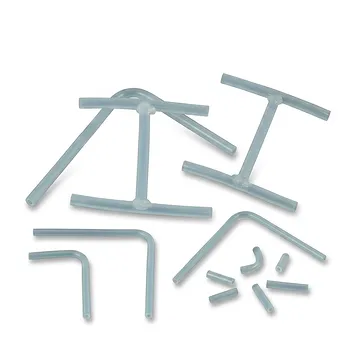
- High Performance PFA Coiled Spring Tubing and Custom PTFE Fabrication Services with Welded Fittings and Precision Bent Components
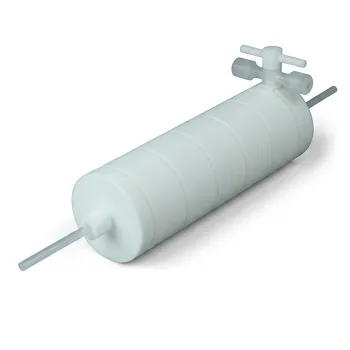
- High Purity PTFE Filter with PFA Valve Connections and Integrated Sieve Plate for Corrosive Fluid Processing
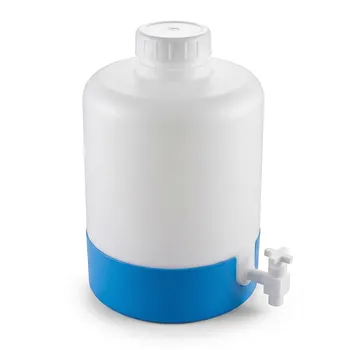
- High Purity PTFE Faucet Corrosion Resistant Polytetrafluoroethylene Drum Valve Customizable Lab Chemical Fluid Control
- Corrosion Resistant High Purity PFA Valve and Weldable Transparent Tubing for Semiconductor Fluid Transfer
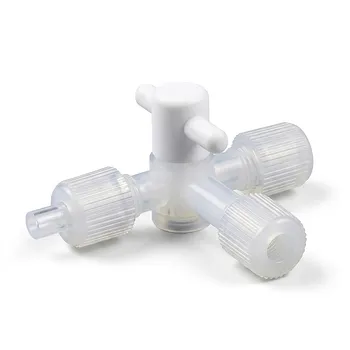
- High Purity PFA PTFE Flare Stop Valves Customizable 2-Way 3-Way Reducing Fluoropolymer Fluid Control Solutions
People Also Ask
- What are the technical advantages of high-precision PFA tubing in MXene production? Maximize Purity and Yield.
- What technical advantages do PFA tubing and fittings offer? Master Precision Fluid Transfer and Flow Chemistry
- What are the technical advantages of high-quality PFA tubing? Achieve Ultimate Purity and Precision in Fluid Handling
- How does high-purity PFA tubing maintain reagent purity? Achieve Ultra-Smooth, Zero-Contamination Fluid Transfer
- What are the key benefits of PTFE in custom fabrication? Unlock Performance in Extreme Conditions