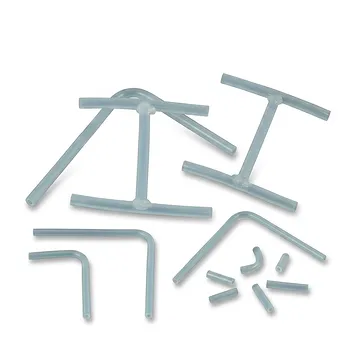
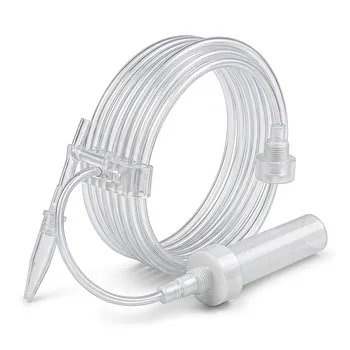
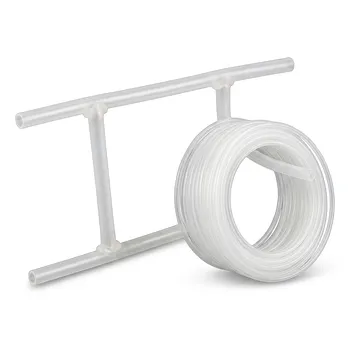
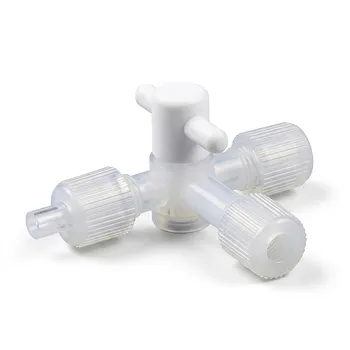
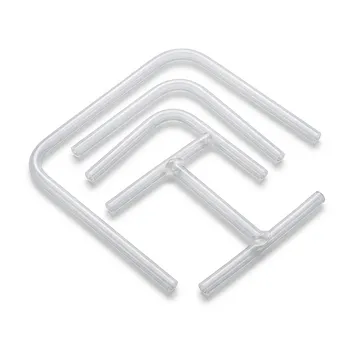
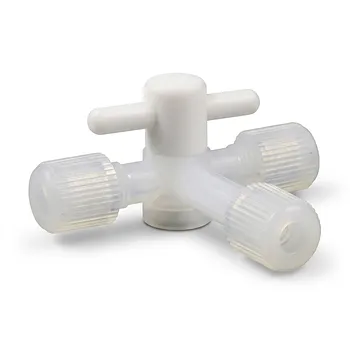
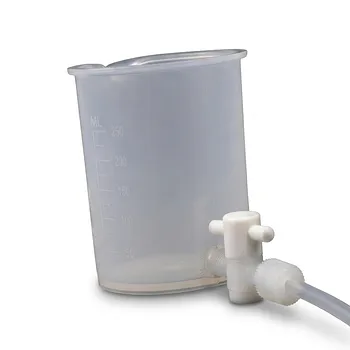
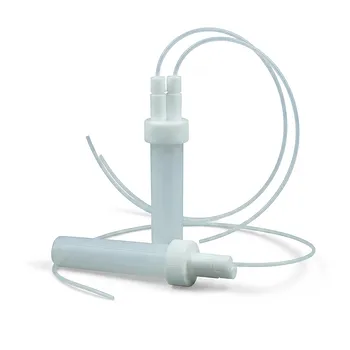
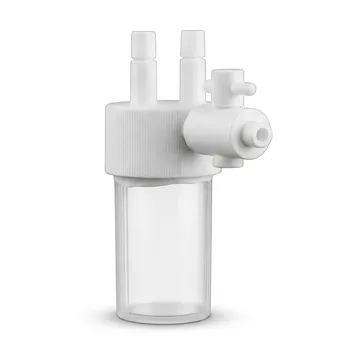
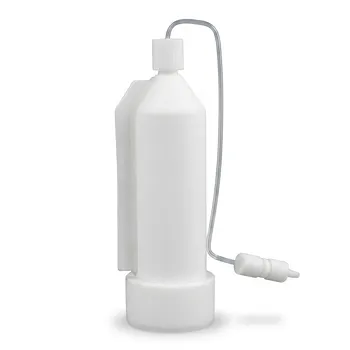
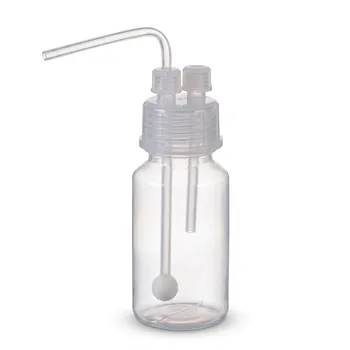
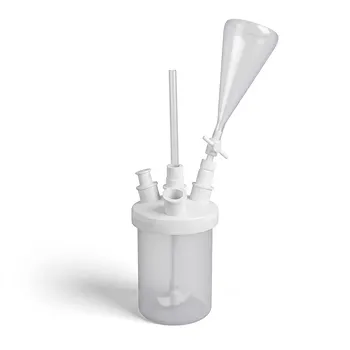
High-quality PFA tubing and fittings serve as the gold standard for high-purity fluid handling in critical laboratory environments. These components provide a unique combination of near-universal chemical inertness, extreme internal smoothness, and optical transparency. By eliminating material leaching and minimizing fluid retention, PFA ensures the integrity of sensitive analytical processes and complex chemical syntheses.
PFA (Perfluoroalkoxy) components provide an uncompromising barrier against contamination and chemical degradation. Their technical superiority lies in the synergy between mechanical flexibility, thermal stability, and a non-reactive surface that protects the most volatile or high-purity reagents.
Optimizing Fluid Dynamics and Cleanliness
Superior Internal Smoothness
High-quality PFA features an extremely smooth inner wall that significantly reduces fluid resistance and friction. This ultra-smooth surface prevents the attachment of microorganisms, biofilms, and crystalline deposits that often plague lesser materials. By minimizing residue, PFA ensures that every drop of reagent is accounted for and that the system remains easy to flush between runs.
Enhanced Visual Process Control
The translucent nature of PFA material allows for real-time observation of the fluid state throughout the transfer path. Technicians can immediately identify the presence of bubbles, color changes, or unexpected precipitates without disrupting the system. This transparency is a critical safety and quality control feature in automated sampling and continuous flow chemistry.
Advanced Hydrophobicity
The inherent hydrophobic properties of PFA further reduce the risk of aqueous solutions "wetting" the surface and leaving droplets behind. This characteristic is vital for maintaining the accuracy of volumetric transfers in precision laboratory workflows. It also ensures a faster and more complete drying process during system sterilization or cleaning.
Maintaining Absolute Fluid Purity
Universal Chemical and Permeation Resistance
PFA offers near-perfect resistance to a vast spectrum of organic solvents, strong acids, and concentrated bases. Its low permeability prevents corrosive fluids from "soaking" into the tube walls or leaching back into the stream. This makes PFA the ideal choice for trace analysis and semiconductor chemistry where even part-per-trillion (ppt) contamination is unacceptable.
Prevention of Particle Contamination
Unlike standard polymers that may degrade or shed particles over time due to chemical exposure or aging, high-purity PFA remains structurally stable. This stability prevents material breakdown from introducing micro-particles into the fluid circuit. This ensures that the purity of the entire path—from storage vessel to reaction chamber—is preserved.
Low Solute Adsorption
In analytical instrument systems, the adsorption of solutes onto tubing walls can lead to ghost peaks or inaccurate data. PFA’s non-reactive surface minimizes this adsorption, ensuring that the sample reaching the detector is an exact representation of the source. This is particularly critical in automated sampling workflows where data consistency is paramount.
Mechanical and Thermal Resilience
Structural Integrity Under Pressure
High-quality PFA fittings and tubing are engineered to maintain reliable, leak-free connections even in complex, multi-port routing. Their inherent flexibility allows for tight bends without kinking, while their pressure resistance ensures stability during high-flow applications. This mechanical strength is essential for maintaining system sealing integrity over long-term operations.
Broad Operating Temperature Range
PFA maintains its mechanical properties and chemical resistance across an exceptionally wide temperature spectrum. This allows it to handle cryogenic fluids as effectively as high-temperature chemical reactions. Such versatility makes it a "future-proof" investment for laboratories that handle diverse experimental protocols.
Understanding the Trade-offs
Cost vs. Performance
The primary drawback of PFA is its significantly higher cost compared to standard plastics like PTFE or Polyethylene. While the initial investment is higher, the longevity and contamination-prevention capabilities usually result in a lower total cost of ownership for high-precision labs.
Handling and Installation
While flexible, PFA has a specific bend radius that must be respected to avoid internal stress or flow restrictions. Furthermore, because the material is so smooth, it requires high-quality, precision-engineered fittings to ensure a secure grip and prevent blow-outs under pressure.
Selecting the Right Solution for Your Goal
How to Apply This to Your Project
- If your primary focus is Trace Analysis or Semiconductor Chemistry: Utilize high-purity PFA to eliminate metal ion leaching and ensure the lowest possible detection limits.
- If your primary focus is Complex Organic Synthesis: Leverage PFA’s universal chemical resistance to safely transport aggressive solvents and reagents without risking tubing degradation.
- If your primary focus is Automated Sampling and Monitoring: Choose PFA for its transparency and smooth inner walls to ensure visual clarity and minimize cross-contamination between samples.
By integrating high-quality PFA components, you transform your fluid transfer system into a high-purity circuit capable of supporting the most demanding scientific breakthroughs.
Summary Table:
| Feature | Key Advantage | Laboratory Benefit |
|---|---|---|
| Ultra-Smooth Surface | Reduces friction & buildup | Prevents biofilm and residue |
| Optical Transparency | Visual fluid monitoring | Real-time safety and quality control |
| Chemical Inertness | Universal resistance | Eliminates leaching in trace analysis |
| Thermal Stability | Wide temperature range | Supports cryogenic and high-heat apps |
| Hydrophobicity | Minimal fluid retention | Ensures accurate volumetric transfers |
Elevate Your Lab with KINTEK’s High-Performance Fluoropolymer Solutions
Precision matters in every drop. At KINTEK, we maintain an absolute focus on high-performance fluoropolymer materials, manufacturing virtually every PFA and PTFE laboratory supply imaginable.
Our extensive range spans from everyday basic labware (beakers, crucibles, reagent bottles, and digestion tubes) and fluid transfer components (high-purity tubing, fittings, and valves) to advanced reaction apparatus like electrochemical cells, hydrothermal synthesis liners, and microwave digestion vessels. Backed by end-to-end custom CNC fabrication, we deliver everything from high-volume orders to complex, bespoke laboratory setups tailored to your exact specifications.
Whether you are conducting trace analysis or complex chemical syntheses, ensure the integrity of your results with the gold standard of fluid handling. Contact KINTEK today to source the high-performance components your research deserves!
References
- Elhoucine Elmaataouy, Mouad Dahbi. Effect of Fluorine Doping on the Electrochemistry and Structural Stability of Single‐Particle LiNiO<sub>2</sub>. DOI: 10.1002/cssc.202500300
This article is also based on technical information from Kintek Knowledge Base .
Related Products
- High Performance PFA Coiled Spring Tubing and Custom PTFE Fabrication Services with Welded Fittings and Precision Bent Components
- Custom PFA Tubing 1/4 Inch High Purity Corrosion Resistant Fluoropolymer Tube with Welding and Machining Services
- Corrosion Resistant PFA Tubing 1/4 Inch Custom Molded Welded Fluid Transfer Components
- Corrosion Resistant High Purity PFA Valve and Weldable Transparent Tubing for Semiconductor Fluid Transfer
- High Purity PFA Coiled Tubing Custom PTFE Machining PFA Welding and Precision Bending Solutions
People Also Ask
- What are the technical advantages of high-precision PFA tubing in MXene production? Maximize Purity and Yield.
- What technical advantages do PFA tubing and fittings offer? Master Precision Fluid Transfer and Flow Chemistry
- What are the key benefits of PTFE in custom fabrication? Unlock Performance in Extreme Conditions
- What fabrication services are available for PTFE? Shearing, Stamping, Laser Cutting, Molding & Machining
- What technical challenges exist in laboratory-scale radical polymerization of low-boiling fluorinated monomers, and how do custom PTFE and PFA seals and fittings solve them? Expert Solutions for Volatile Monomer Handling