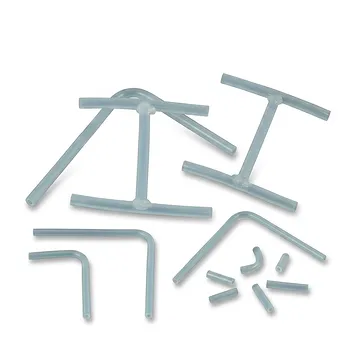
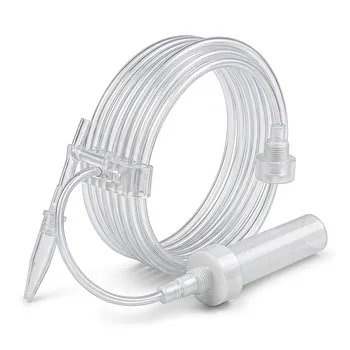
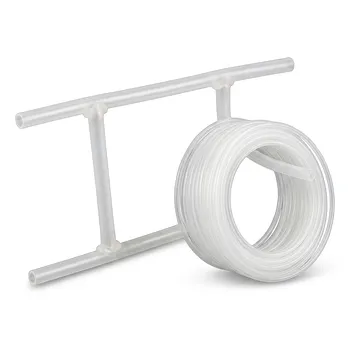
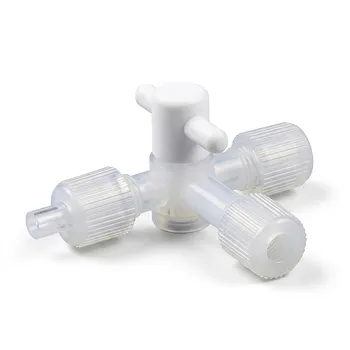
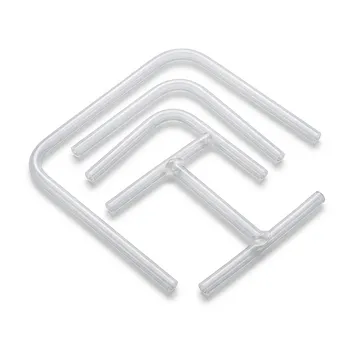
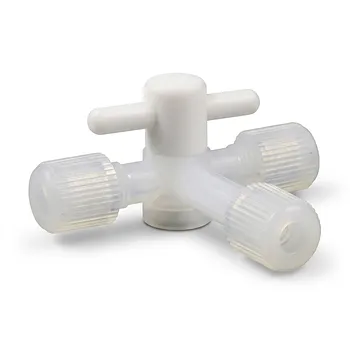
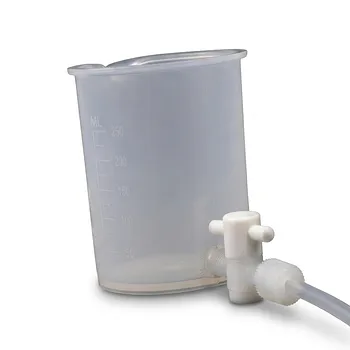
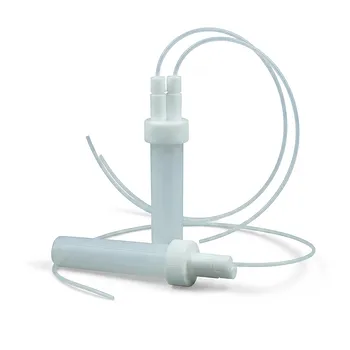
PFA (Perfluoroalkoxy) tubing and fittings provide unparalleled surface smoothness, chemical inertness, and translucency, making them the gold standard for high-purity fluidic systems. These components eliminate cross-contamination risks and ensure data consistency by preventing reagent adhesion and resisting chemical degradation across a wide range of temperatures and pressures.
PFA is the definitive choice for precision chemistry because it combines the near-universal chemical resistance of fluoropolymers with the mechanical integrity and transparency required for real-time monitoring and consistent flow dynamics. It transforms a simple conduit into a high-performance analytical tool.
Maximizing Fluid Purity and Flow Consistency
Exceptional Surface Smoothness and Anti-Adhesion
The internal walls of PFA components are engineered for extreme smoothness, which minimizes fluid resistance and prevents reagents from "hanging up" on the surface. This high degree of hydrophobicity ensures that even complex or viscous mixtures transition through the system without leaving behind residue that could compromise subsequent reactions.
Elimination of Cross-Contamination
By preventing chemicals from adhering to the internal walls, PFA significantly reduces the risk of carryover or cross-contamination between experimental runs. This is critical in continuous flow chemistry, where precise reagent proportions must be maintained to ensure the integrity and reproducibility of the data.
Prevention of Biofilms and Crystallization
The anti-adhesive nature of PFA also prevents the accumulation of biofilms or crystalline materials that often plague lesser materials. This ensures that the fluid path remains unobstructed, maintaining stable pressure and preventing the clogging that can lead to system failure in automated workflows.
Engineering Stability in Harsh Environments
Near-Universal Chemical Resistance
PFA offers robust resistance to almost all organic solvents, strong acids, and bases, preventing the material degradation that causes particle contamination. Unlike standard plastics that may leach or age over time, PFA maintains its structural integrity, ensuring that the fluid being transported remains as pure as it was at the source.
Superior Thermal and Pressure Performance
With a wide operating temperature range and high mechanical strength, PFA fittings ensure leak-free seals even under fluctuating conditions. This thermal stability is essential for continuous flow reactions that require high-temperature environments to drive chemical synthesis.
Low Permeability and Outgassing
High-quality PFA provides an excellent barrier against gas permeation, which is vital for maintaining the purity of sensitive reagents. By minimizing the exchange of gases through the tube wall, PFA protects oxygen-sensitive or moisture-sensitive reactions from environmental interference.
Enhancing System Monitoring and Integration
Real-Time Fluid Observation
The translucency of PFA allows researchers to monitor the fluid state and flow patterns in real-time. This visual feedback is indispensable for identifying bubbles, phase separations, or color changes during a reaction without interrupting the flow or compromising the system's seal.
Flexibility in Complex Routing
Despite its high strength, PFA tubing retains enough flexibility to be routed through complex laboratory setups or integrated into compact automated sampling instruments. This versatility allows for the creation of intricate fluid circuits without sacrificing the reliability of the connections.
Understanding the Trade-offs
Cost and Economic Considerations
PFA is significantly more expensive than standard plastics like polyethylene or polypropylene. However, its longevity and the reduction in experimental failures often justify the higher initial investment in high-stakes laboratory and industrial environments.
Mechanical Limitations and Kinking
While flexible, PFA tubing has a specific minimum bend radius that must be respected to avoid kinking. Over-bending can restrict flow or create stress points that may lead to premature failure under high-pressure conditions.
Precision Assembly Requirements
To achieve a "zero-leak" environment, PFA fittings must be installed with precision, often requiring specific tools or techniques. Improperly flared ends or over-tightened nuts can damage the material and compromise the high-purity seal the system is designed to provide.
How to Apply PFA to Your Project
Selecting the Right Components
- If your primary focus is Trace Analysis or Semiconductor Chemistry: Prioritize high-cleanliness, high-purity grade PFA to eliminate any risk of metallic or particle leaching.
- If your primary focus is Continuous Flow Synthesis: Focus on PFA’s wide temperature ratings and chemical compatibility to ensure the system survives aggressive reagents and high reaction heat.
- If your primary focus is Automated Sampling: Leverage the translucency and anti-adhesion properties of PFA to ensure visual verification and zero-residue transfer between different samples.
By integrating PFA tubing and fittings, you establish a reliable, high-purity fluid path that safeguards the accuracy of your chemical data and the longevity of your hardware.
Summary Table:
| Feature | Technical Advantage | Lab Application Benefit |
|---|---|---|
| Surface Smoothness | Extreme hydrophobicity | Prevents reagent residue & cross-contamination |
| Chemical Resistance | Near-universal compatibility | Resists aggressive organic solvents, acids, and bases |
| Translucency | Optical clarity | Allows real-time monitoring of flow and phase changes |
| Thermal Stability | Wide temperature range | Maintains leak-free seals during high-heat synthesis |
| Low Permeability | High gas barrier | Protects oxygen and moisture-sensitive reactions |
| Flexibility | High mechanical integrity | Enables complex routing in compact automated systems |
Elevate Your Lab Precision with KINTEK’s Fluoropolymer Expertise
Ensure the integrity of your most sensitive chemical processes with KINTEK’s high-performance PTFE and PFA solutions. From everyday basic labware—including beakers, measuring cylinders, crucibles, and reagent bottles—to specialized high-purity trace analysis instruments and cleaning tanks, we provide the foundational tools for excellence.
Our expertise extends to comprehensive fluid transfer components (tubing, fittings, valves), sample prep and filtration tools (separatory funnels, filters, pipettes), and essential consumables like stirring bars and O-rings. For researchers pushing the boundaries of science, we offer advanced reaction apparatus such as custom electrochemical cells, battery testing fixtures, microwave digestion vessels, and microchannel reactors.
Backed by end-to-end custom CNC fabrication, KINTEK is equipped to deliver everything from high-volume standard orders to complex, bespoke machined parts designed for your unique workflow.
Ready to optimize your fluidic systems? Contact KINTEK today to discuss your custom requirements!
References
- Jusheng Bao, You Liu. Hydrothermal Synthesis of Single‐Crystal Europium Tungstate Hydroxide Nanobelts for Enhanced Humidity Sensing. DOI: 10.1002/asia.202401933
This article is also based on technical information from Kintek Knowledge Base .
Related Products
- High Performance PFA Coiled Spring Tubing and Custom PTFE Fabrication Services with Welded Fittings and Precision Bent Components
- Custom PFA Tubing 1/4 Inch High Purity Corrosion Resistant Fluoropolymer Tube with Welding and Machining Services
- Corrosion Resistant PFA Tubing 1/4 Inch Custom Molded Welded Fluid Transfer Components
- Corrosion Resistant High Purity PFA Valve and Weldable Transparent Tubing for Semiconductor Fluid Transfer
- High Purity PFA Coiled Tubing Custom PTFE Machining PFA Welding and Precision Bending Solutions
People Also Ask
- What are the technical advantages of high-precision PFA tubing in MXene production? Maximize Purity and Yield.
- What are the technical advantages of high-quality PFA tubing? Achieve Ultimate Purity and Precision in Fluid Handling
- What are the key benefits of PTFE in custom fabrication? Unlock Performance in Extreme Conditions
- What fabrication services are available for PTFE? Shearing, Stamping, Laser Cutting, Molding & Machining
- How does die design and core pin arrangement impact PTFE tubing accuracy?