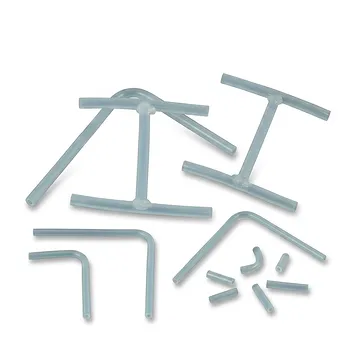
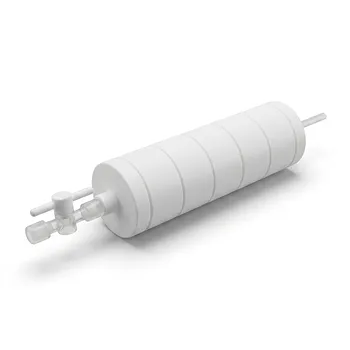
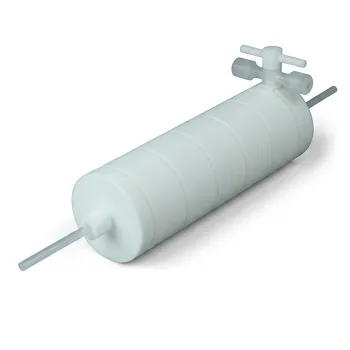
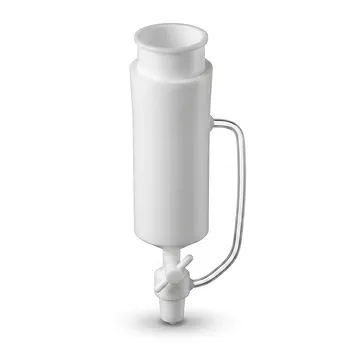
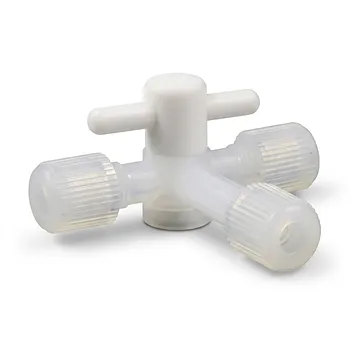
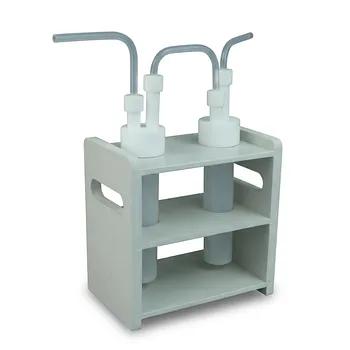
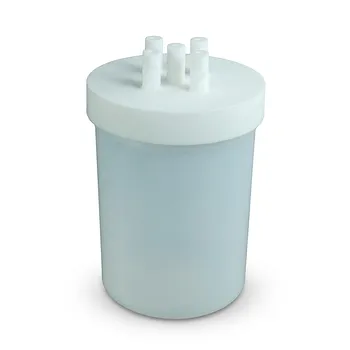
PTFE and PFA components can provide continuous service temperatures of up to 260°C, combined with exceptional resistance to nearly all inorganic and organic chemicals. Their fully fluorinated molecular structure protects the carbon backbone from aggressive acids, bases, oxidizers, and organic solvents, helping prevent swelling, dissolution, degradation, and chemical leaching. In high-temperature reaction apparatus, this makes them well suited to microwave digestion vessels, crucibles, tubing, valves, fittings, and other fluid-contact components, provided the specific component is rated for the intended temperature, pressure, and chemical exposure.
PTFE and PFA offer an unusually strong combination of heat resistance and chemical inertness, with continuous-use ratings reaching 260°C. Their chemical resistance is broad but not absolute, and operating conditions must remain within the manufacturer’s limits to preserve dimensional stability, seals, and pressure performance.
What Thermal Limits Do PTFE and PFA Provide?
Continuous Operating Temperature
Both materials are commonly specified for maximum continuous service temperatures of up to 260°C, or approximately 500°F. This is the practical operating boundary for long-duration use in reaction equipment.
The rating is different from the melting point. PTFE melts at approximately 327-342°C, while PFA melts at approximately 265-310°C, depending on grade and formulation. Melting-point data should not be used as an operating limit because components can lose dimensional accuracy, stiffness, or sealing performance well before they melt.
PTFE Thermal Performance
PTFE generally offers a melting range around 327-340°C and is highly stable at temperatures substantially above its normal continuous-use limit. However, prolonged exposure beyond the rated service temperature can still cause deformation, loss of mechanical performance, or eventual thermal degradation.
PTFE is non-melt-processable, so it is typically compression-molded and then machined. This supports precision components and vessels but can limit the geometry and fabrication methods available.
PFA Thermal Performance
PFA is melt-processable and generally melts at approximately 302-310°C, although some references report broader grade-dependent ranges. Its continuous service temperature may be specified anywhere from approximately 225°C to 260°C, so the exact PFA grade and component design must be checked.
Melt-processability allows PFA to be molded into smooth, complex laboratory components such as tubing, bottles, valves, and fittings. The material still provides the high-temperature chemical resistance expected from a perfluoropolymer.
Temperature and Reaction Apparatus Design
A reaction vessel rated for 260°C is not automatically suitable for every process at 260°C. Pressure, thermal cycling, wall thickness, mechanical loading, microwave energy absorption, seal design, and exposure time all affect the safe operating envelope.
For continuous operation, the process temperature should remain comfortably below the component’s rated maximum. This provides margin against local hot spots, temperature-control error, and reduced mechanical strength at elevated temperatures.
Why Are PTFE and PFA Chemically Resistant?
Fully Fluorinated Molecular Structure
PTFE and PFA contain carbon backbones shielded by fluorine atoms. The strong carbon-fluorine bonds form a protective structure that limits access to the carbon chain and makes the polymers extremely difficult for most reagents to attack.
This structure gives the materials their characteristic insolubility, low reactivity, and resistance to chemical permeation across a wide range of laboratory conditions.
Resistance to Acids, Bases, and Oxidizers
PTFE and PFA resist virtually all commonly encountered strong acids, bases, and oxidizing agents used in chemical analysis and digestion processes. This includes aggressive reagents that would rapidly damage many conventional laboratory plastics or metals.
The resistance helps prevent container attack and reduces the risk that the apparatus will introduce contaminants into high-purity samples.
Resistance to Organic Solvents
Both materials also provide broad resistance to many organic solvents. They generally do not dissolve, swell significantly, or chemically react under normal laboratory exposure conditions.
Compatibility remains dependent on temperature, concentration, pressure, exposure time, and the specific chemical mixture. A compatibility chart and the component manufacturer’s data should be consulted for unusual solvents or combined reagents.
Low Surface Energy and Low Contamination
The low surface energy of PTFE and PFA reduces sample adhesion and surface contamination. This is particularly valuable in trace analysis, microwave digestion, and high-purity sample preparation.
PFA’s smooth melt-processed surfaces can be advantageous where cleanability and low particle retention are important. PTFE also provides low adhesion, especially in machined or molded reaction components.
How Do These Properties Support High-Temperature Reaction Systems?
Microwave Digestion Vessels
Microwave digestion vessels must contain aggressive reagents while tolerating elevated temperatures and pressures. PTFE and PFA provide chemical compatibility with many digestion chemistries, while their thermal limits support demanding analytical preparation workflows.
The vessel assembly still requires a pressure rating appropriate to the digestion method. Polymer chemical resistance does not by itself establish pressure-vessel safety.
Crucibles and Laboratory Containers
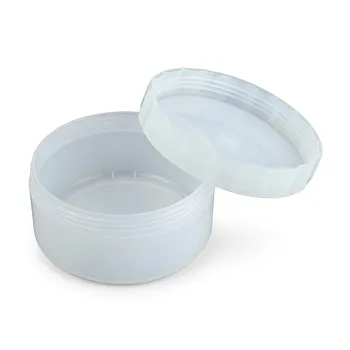
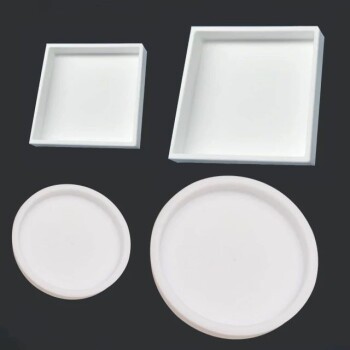
PTFE and PFA crucibles, cups, and containers can maintain chemical purity and structural function during high-temperature processing within their continuous-use ratings. Their resistance to adhesion can also simplify sample recovery and cleaning.
They should not be treated as general-purpose high-temperature ceramic replacements. Processes approaching the melting range or involving direct flame exposure require a different material selection.
Heated Fluid Transfer Tubing
PTFE and PFA tubing are useful for transferring heated corrosive fluids because they combine chemical resistance with low surface reactivity. PFA is often selected for smooth, molded tubing and fittings, while PTFE is widely used where its established high-temperature performance and machinability are beneficial.
Tubing pressure capacity can decline as temperature rises. The pressure-temperature curve, wall thickness, bend radius, and fitting system must be evaluated together.
Seals, Valves, and Fittings
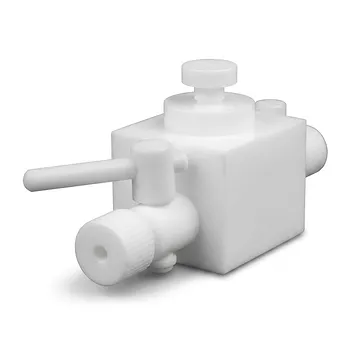
The polymers can maintain chemical compatibility in valve seats, seals, fittings, and liners exposed to aggressive process fluids. However, seal integrity is especially sensitive to compression, thermal cycling, creep, and dimensional changes.
A component can remain chemically intact while becoming mechanically unsuitable. Design validation must therefore include leakage, compression-set, and dimensional-stability requirements.
Understanding the Trade-offs
Continuous Use Is Not the Same as Short-Term Survival
PTFE and PFA may tolerate temperatures above their continuous-use ratings for limited periods, but that does not make those conditions suitable for continuous reaction operation. Long-term exposure can cause creep, deformation, embrittlement, or loss of sealing performance.
The 260°C value should be treated as an upper continuous-service rating, not as a target operating temperature or a guarantee for every component.
PFA Ratings Are More Grade-Dependent
PFA products can have different thermal limits, with some component specifications falling closer to 225°C than 260°C. Molded geometry, reinforcement, wall thickness, pressure, and fabrication method can also affect the usable limit.
Always use the rating for the actual PFA product rather than relying on a generic resin-level specification.
Chemical Inertness Has Narrow Exceptions
PTFE and PFA resist nearly all chemicals used in typical laboratory reaction processes, but they are not universally inert. Molten alkali metals and gaseous elemental fluorine under severe conditions are recognized exceptions.
Extreme temperatures and reactive combinations can also change compatibility behavior. Chemical resistance data must be interpreted for the complete process, not for an isolated reagent at room temperature.
Thermal Processing Requires Appropriate Equipment
Fabrication or thermal processing above normal service temperatures can produce decomposition products or off-gassing. Equipment used for such work should provide suitable ventilation and corrosion-resistant construction where exposure to reactive fumes is possible.
This consideration applies to manufacturing, repair, thermal forming, and high-temperature cleaning operations as well as to the reaction apparatus itself.
High Temperature Does Not Eliminate Mechanical Limits
Fluoropolymers retain strong chemical resistance at elevated temperatures, but their mechanical stiffness and load-bearing capability are more limited than those of many metals and ceramics. Pressure, clamping force, thermal expansion, and creep must be included in the design analysis.
The material may be chemically unaffected while the component still deforms or loses its seal.
Making the Right Choice for Your Goal
Select the material and component rating based on the complete operating envelope, not temperature or chemical exposure alone.
- If your primary focus is continuous high-temperature operation: Choose a component specifically rated for the intended temperature, using 260°C only where the manufacturer confirms that limit and the design provides adequate thermal and mechanical margin.
- If your primary focus is aggressive chemical compatibility: PTFE or PFA will generally provide broad resistance to acids, bases, oxidizers, and organic solvents, but verify unusual reagents and the effects of temperature and pressure.
- If your primary focus is complex molded laboratory hardware: Consider PFA because its melt-processability supports smooth tubing, vessels, valves, and fittings with intricate geometries.
- If your primary focus is precision-machined or highly heat-resistant components: Consider PTFE, while accounting for its non-melt-processable fabrication methods and elevated-temperature mechanical behavior.
- If your primary focus is pressurized reaction work: Confirm the complete pressure-temperature rating of the vessel, tubing, fittings, and seals rather than relying on the polymer’s chemical resistance alone.
PTFE and PFA are effective choices for high-temperature reaction apparatus when their continuous-use, chemical-compatibility, pressure, and mechanical limits are evaluated as one integrated system.
Summary Table:
| Material | Continuous Max Temp | Melting Point | Chemical Resistance | Key Attributes |
|---|---|---|---|---|
| PTFE | Up to 260°C | 327-342°C | Excellent vs. acids, bases, oxidizers, solvents | Non-melt-processable, machinable, low adhesion |
| PFA | 225-260°C (grade-dependent) | 302-310°C | Excellent vs. acids, bases, oxidizers, solvents | Melt-processable, smooth surfaces, complex shapes |
Ready to enhance your high-temperature reaction apparatus with reliable PTFE and PFA components? At KINTEK, we specialize in high-performance fluoropolymers, offering a comprehensive range from basic labware to advanced custom solutions. Our expertise in PTFE/PFA CNC machining ensures precise, durable parts tailored to your exact specifications. Whether you need microwave digestion vessels, tubing, valves, or custom components, we deliver unmatched quality and service. Contact us today to discuss your requirements and experience the KINTEK advantage – Get in touch now!
Related Products
- High Performance PFA Coiled Spring Tubing and Custom PTFE Fabrication Services with Welded Fittings and Precision Bent Components
- PTFE Corrosion Resistant Filter with PFA Valve Connections and Integrated Sieve Plate
- High Purity PTFE Filter with PFA Valve Connections and Integrated Sieve Plate for Corrosive Fluid Processing
- PTFE PFA Vacuum Filtration System Corrosion Resistant Customizable Shatterproof Laboratory Device
- Corrosion Resistant High Purity PFA Valve and Weldable Transparent Tubing for Semiconductor Fluid Transfer
People Also Ask
- What are the technical advantages of high-precision PFA tubing in MXene production? Maximize Purity and Yield.
- What technical advantages do PFA tubing and fittings offer? Master Precision Fluid Transfer and Flow Chemistry
- What are the technical advantages of high-quality PFA tubing? Achieve Ultimate Purity and Precision in Fluid Handling
- What are the key benefits of PTFE in custom fabrication? Unlock Performance in Extreme Conditions
- What fabrication services are available for PTFE? Shearing, Stamping, Laser Cutting, Molding & Machining