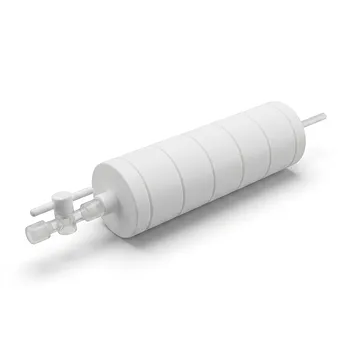
Laboratory-scale radical polymerization of low-boiling fluorinated monomers requires specialized containment and materials control. Monomers such as vinylidene fluoride (VDF), with a boiling point near -86 °C, readily exist as volatile gases under ordinary laboratory conditions. The reaction system must therefore contain the monomer reliably at low pressure while resisting aggressive monomers, initiators, and fluorinated solvents without introducing leaks, particles, or metallic contamination. Custom CNC-machined PTFE and PFA seals, bushings, valve components, and fittings address these requirements by combining chemical resistance with application-specific dimensional precision.
The central challenge is not simply making a vessel pressure-tight; it is maintaining a clean, chemically compatible, low-pressure reaction environment throughout charging, polymerization, sampling, and transfer. Properly designed PTFE and PFA components reduce leakage and contamination risks that conventional elastomeric or metal hardware can introduce.
Why Low-Boiling Fluorinated Monomers Are Difficult to Handle
Volatility complicates monomer containment
A monomer such as VDF is highly volatile at laboratory operating temperatures. Even small imperfections in seals, threaded connections, or valve interfaces can allow monomer loss, compromise reaction composition, or release hazardous material.
The containment problem also affects reproducibility. If the monomer inventory changes during charging or reaction, the intended monomer-to-initiator ratio and reaction conditions may no longer be maintained.
Low pressure increases the importance of sealing quality
Laboratory systems handling volatile gases may operate with relatively modest pressure differences compared with industrial reactors, but that does not make sealing less demanding. Small gaps, poorly matched surfaces, or damaged sealing elements can still permit gas diffusion or leakage.
Seals must remain dimensionally stable across assembly, thermal changes, solvent exposure, and repeated use. A fitting that seals adequately with a liquid may perform differently when exposed to a volatile gas.
Reaction chemistry can attack conventional materials
Radical polymerizations may involve reactive initiators, fluorinated monomers, fluorinated solvents, and other chemically demanding reagents. Conventional elastomers may swell, degrade, or lose mechanical properties when exposed to these materials.
Metallic components introduce a different set of concerns. They may corrode under aggressive chemical conditions or release trace metal ions and particles into a sensitive polymerization.
Why Material Selection Directly Affects Polymer Quality
Contamination can alter a sensitive polymerization
Trace metals can interfere with radical chemistry, interact with initiators, or become incorporated as unwanted impurities. Even when they do not stop the reaction, they can complicate characterization and reduce confidence in the resulting polymer.
This is especially important at laboratory scale, where a small amount of contamination can represent a significant fraction of the total reaction inventory.
Fluorinated solvents require compatible fluid paths
Fluorinated solvents such as benzotrifluoride and 2,2,2-trifluoroethanol can improve the solubility of fluorinated monomers, ionic species, or catalyst complexes. They can also support specialized controlled or surface-initiated polymerization approaches.
However, these solvents may swell or degrade standard laboratory plastics. Tubing, valves, reagent containers, and fittings must therefore be selected for compatibility with the complete chemical system rather than with the monomer alone.
Fluoropolymer compatibility has practical limits
PTFE and PFA offer broad chemical resistance and useful thermal stability, but no material should be treated as universally immune under every temperature, pressure, and reagent combination. Compatibility must still be confirmed for the specific initiator, solvent, exposure time, and operating conditions.
Their value is that they substantially reduce the common failure modes associated with elastomeric seals, ordinary plastics, and exposed metal surfaces.
How Custom PTFE and PFA Components Solve the Problem
CNC-machined PTFE creates application-specific sealing geometries
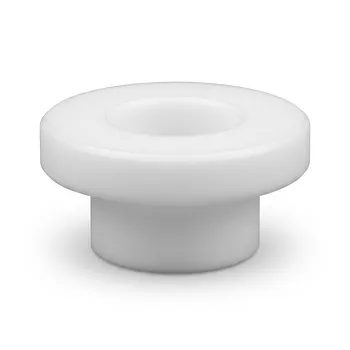
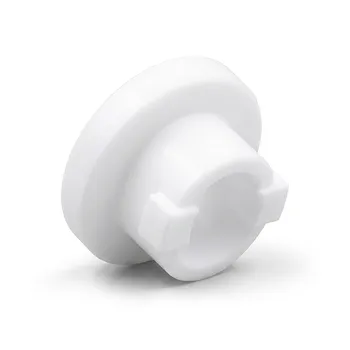
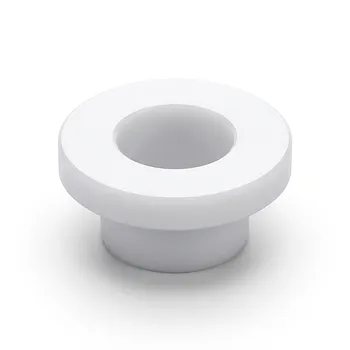
High-precision machining allows PTFE bushings, pressure-tube seals, valve seats, and related components to match the actual dimensions and interfaces of a laboratory reactor. This is important when standard commercial seals do not fit the required geometry or do not provide an adequate sealing surface.
Custom geometry can also reduce the number of interfaces and improve alignment between plungers, tubes, valves, and reaction vessels. Fewer poorly matched interfaces generally mean fewer opportunities for leakage or contamination.
PTFE provides a chemically resistant contact surface
PTFE is well suited to components that directly contact aggressive monomers, initiators, solvents, and polymerization mixtures. Its chemical resistance helps prevent degradation, swelling, and extractables from the sealing material.
PTFE is also commonly useful for machined components because it can be fabricated into precise, low-friction parts without exposing the reaction mixture to a metallic working surface.
PFA supports inert fittings and fluid transfer components
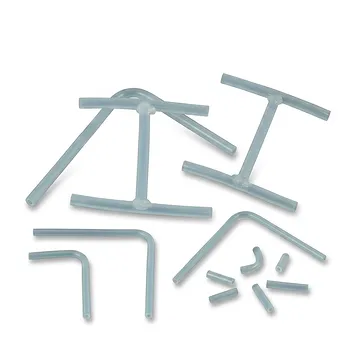
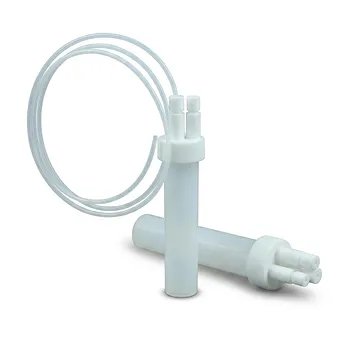
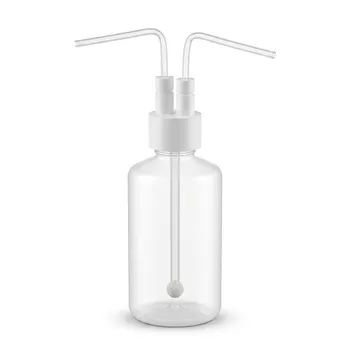
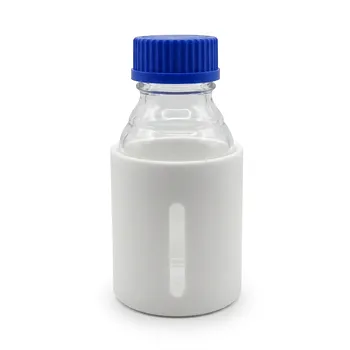
PFA is valuable for tubing, fittings, valves, bottles, and other fluid-handling elements that must remain chemically clean while transferring volatile or aggressive reagents. It provides fluoropolymer-level chemical resistance while supporting fabricated fluid-path components.
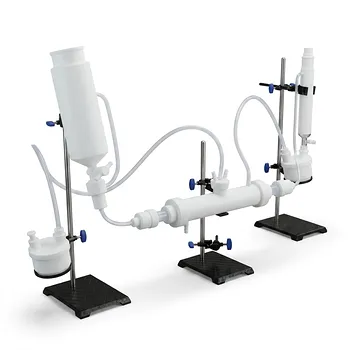
A PFA transfer path can limit contact between the reagent and materials that might corrode, absorb solvent, or release contaminants. This is particularly useful during monomer charging, solvent addition, sampling, and product transfer.
Plunger valve components improve controlled gas handling
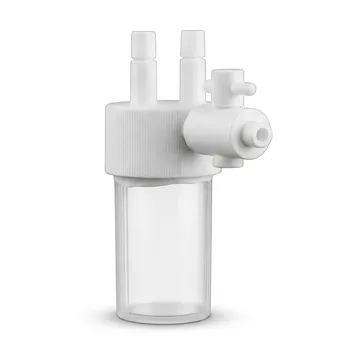
Custom PTFE plunger components can be designed around the required valve stroke, bore, and sealing surfaces. This supports controlled isolation and transfer of volatile monomers while reducing reliance on incompatible commercial valve internals.
The valve design still has to account for mechanical wear, compression, thermal expansion, and the pressure rating of the complete assembly. Material selection alone cannot compensate for an unsuitable valve geometry or operating procedure.
Pressure-tube seals support leak-tight reactor interfaces
A pressure-tube seal must maintain contact around the tube or vessel interface without distorting, extruding, or creating a leak path. Custom PTFE seals can be matched to the tube dimensions and the available compression space.
The result is a more reliable boundary between the reaction zone and the laboratory environment. It also helps preserve the intended monomer concentration during the reaction.
What “Metal-Free” Containment Achieves
It reduces corrosion and ion-release risks
Replacing exposed metallic wetted parts with PTFE or PFA limits the opportunity for corrosion and metal-ion release. This is valuable when the polymerization is sensitive to trace impurities or when aggressive fluorinated chemistry is involved.
The practical goal is not merely avoiding visible corrosion. It is controlling the chemical history of the reaction mixture so that analytical results and polymer properties are not confounded by hardware-derived impurities.
It simplifies chemical compatibility
A fluoropolymer fluid path can provide a consistent material environment across seals, fittings, valves, and transfer lines. This is easier to evaluate than a mixed system containing several elastomers, coated metals, ordinary plastics, and adhesives.
A consistent wetted-material strategy also makes troubleshooting more systematic when a reaction shows unexpected conversion, molecular-weight behavior, or contamination.
Understanding the Trade-offs
PTFE has mechanical design constraints
PTFE is chemically resistant but relatively soft compared with metals and can deform under sustained compression or load. Seals therefore require appropriate compression, support, tolerances, and surface finish.
A design that is chemically excellent can still fail if the seal creeps, extrudes, or is damaged during repeated assembly.
PFA and PTFE are not interchangeable in every component
The best choice depends on the function. PTFE is often advantageous for custom-machined bushings, plungers, and seals, while PFA is often useful for tubing and fabricated fluid-transfer components.
Selecting one material for every part can create avoidable mechanical or fabrication problems. The component’s geometry, flexibility, transparency needs, temperature exposure, and pressure duty should all be considered.
Fluoropolymer fabrication requires care
Fluoropolymers have low surface energy and can be difficult to bond or integrate with other materials. Their high melt viscosity and processing demands can make additive manufacturing or conventional thermal fabrication unsuitable for precision sealing components.
For this reason, precision CNC machining is often preferred for custom laboratory hardware. Machined parts still require inspection, cleaning, and validation before use.
Chemical resistance does not eliminate operational risk
A chemically compatible seal cannot correct overpressure, poor venting, incompatible initiator handling, or an inadequate reactor design. Low-boiling monomers require documented charging, isolation, pressure control, and leak-testing procedures.
The complete assembly must be assessed as a system, including tubes, threads, closures, valves, supports, and the vessel itself.
Making the Right Choice for Your Goal
The correct component strategy depends on which failure mode matters most in the experiment.
- If your primary focus is monomer retention: Use a purpose-designed pressure-tube seal and valve assembly with carefully controlled tolerances, verified compression, and leak testing before introducing the volatile monomer.
- If your primary focus is polymer purity: Minimize exposed metal and elastomeric wetted parts by using PTFE and PFA components throughout the reaction and transfer path, while validating cleaning and material compatibility.
- If your primary focus is solvent compatibility: Select PFA tubing and fittings or PTFE wetted components based on the full solvent and initiator system, not only the fluorinated monomer.
- If your primary focus is repeatable laboratory operation: Use custom-machined bushings, plungers, and seals that match the reactor geometry and reduce improvised adapters and inconsistent interfaces.
- If your primary focus is long-term reliability: Confirm pressure, temperature, compression, wear, and chemical-exposure limits for every component before placing the system into repeated service.
Reliable laboratory-scale fluoropolymer synthesis comes from treating containment, materials compatibility, precision fabrication, and contamination control as one integrated engineering problem.
Summary Table:
| Challenge | How Custom PTFE/PFA Solves |
|---|---|
| Volatility & leakage | Precision-machined PTFE seals and plunger valves provide leak-tight interfaces, retaining volatile monomers. |
| Contamination (metals, particles) | Metal-free PTFE/PFA wetted parts eliminate corrosion and ion release, ensuring purity. |
| Chemical attack on materials | PTFE/PFA resist aggressive monomers, initiators, and fluorinated solvents. |
| Incompatible standard fittings | CNC-machined custom geometries match reactor interfaces, reducing improvisation. |
| Solvent compatibility | PFA tubing and fittings withstand fluorinated solvents, preserving fluid-path integrity. |
| Seal reliability under pressure | PTFE seals are dimensionally stable, resistant to creep and extrusion, for dependable sealing. |
Ensure reliable, contamination-free fluoropolymer synthesis with KINTEK's custom PTFE and PFA components. Our end-to-end CNC machining expertise delivers precision seals, bushings, valve parts, and fittings tailored to your reactor. From lab-scale to high-volume, we support your polymerization with chemically compatible, metal-free solutions. Contact us today to optimize your system—contact us!
Related Products
- High Performance PFA Coiled Spring Tubing and Custom PTFE Fabrication Services with Welded Fittings and Precision Bent Components
- Custom PTFE Reaction Lid with Integrated Valve and Fitting Corrosion Resistant No Leaching PFA FEP Bottle Cap System
- Custom PTFE Insulating Gaskets and Corrosion Resistant Fluoropolymer Seals for Industrial Electrical Applications
- Custom PTFE Sealing Caps and Corrosion Resistant Low Background Teflon Adapters
- Custom PTFE Constant Pressure Separatory Funnel Corrosion Resistant Low Background Labware for PFA Flasks
People Also Ask
- What are the technical advantages of high-precision PFA tubing in MXene production? Maximize Purity and Yield.
- What technical advantages do PFA tubing and fittings offer? Master Precision Fluid Transfer and Flow Chemistry
- What are the technical advantages of high-quality PFA tubing? Achieve Ultimate Purity and Precision in Fluid Handling
- What are the key benefits of PTFE in custom fabrication? Unlock Performance in Extreme Conditions
- What fabrication services are available for PTFE? Shearing, Stamping, Laser Cutting, Molding & Machining