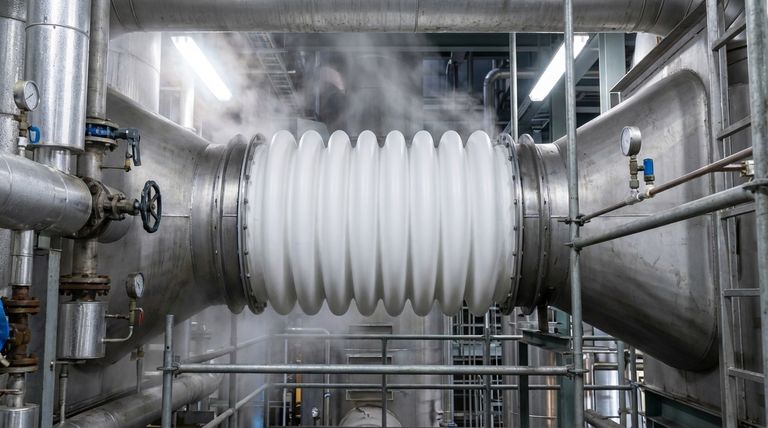
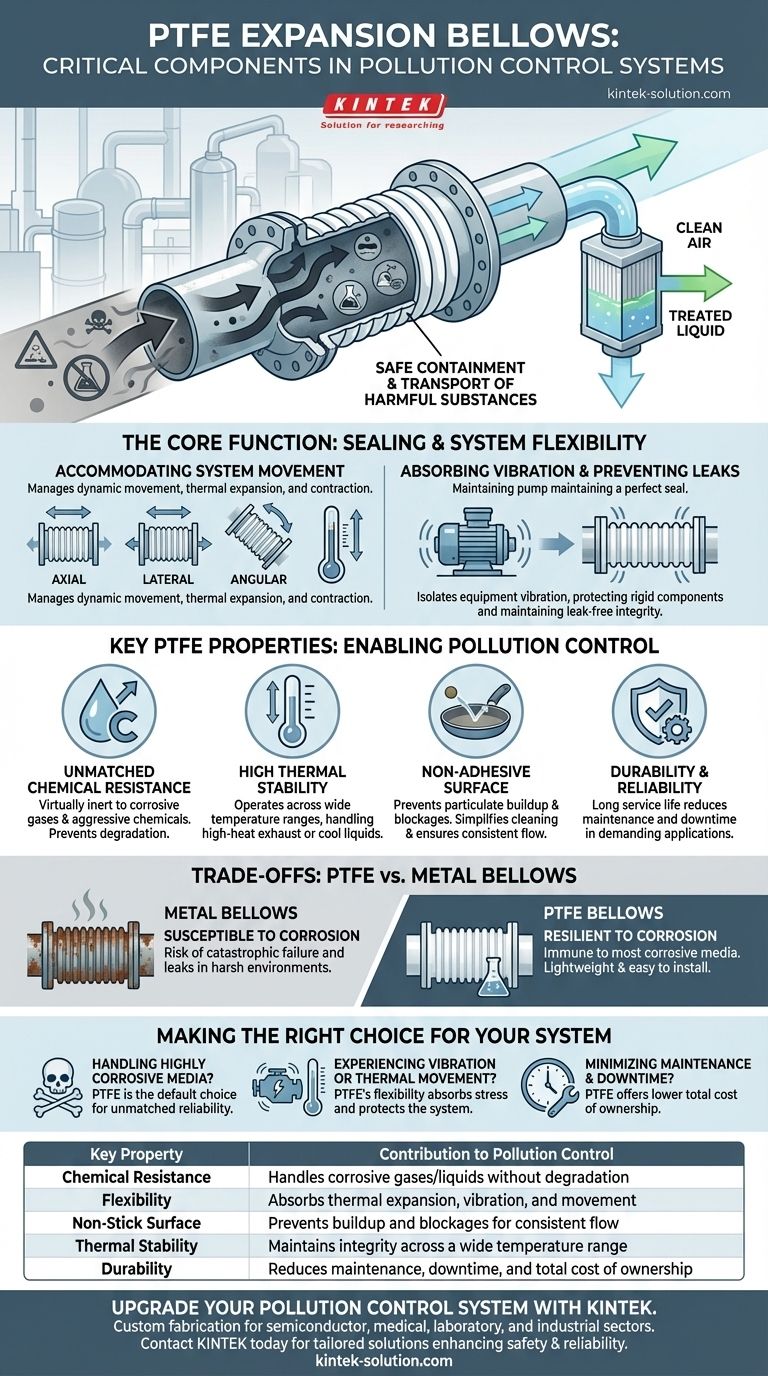
At its core, a PTFE expansion bellow is a specialized flexible connector used in pollution control systems to safely contain and transport harmful substances. It acts as a durable, chemically inert bridge in piping or ductwork, absorbing system movements like thermal expansion and vibration while preventing the escape of corrosive gases or liquids. This ensures the integrity and safety of the entire emission control process.
The essential contribution of PTFE expansion bellows is their unique ability to combine extreme chemical resistance with mechanical flexibility. This pairing allows them to solve critical sealing and movement challenges in harsh environments where rigid components or less durable materials would quickly fail.
The Core Function: Sealing and System Flexibility
In any industrial piping or ducting system, movement is inevitable. PTFE expansion bellows are engineered specifically to manage this dynamic reality, particularly in the demanding context of pollution control.
Accommodating System Movement
PTFE bellows are highly flexible, capable of compensating for axial (compression/extension), lateral (sideways), and angular movements. This is critical for accommodating the thermal expansion and contraction of pipework as process temperatures fluctuate.
Absorbing Vibration
Industrial equipment, such as pumps and scrubbers, generates significant vibration. A PTFE expansion bellow isolates this vibration, preventing it from transferring through the system, which could damage rigid components and compromise seals.
Preventing Leaks of Harmful Media
By seamlessly handling these movements, the bellow maintains a perfect seal. This containment is the primary goal of any pollution control system, ensuring that hazardous materials are safely transported for treatment or disposal.
Key Properties That Enable Pollution Control
The effectiveness of PTFE bellows stems directly from the inherent properties of the Polytetrafluoroethylene material itself.
Unmatched Chemical Resistance
PTFE is virtually inert to almost all industrial chemicals and corrosive gases. This makes it the ideal material for handling the aggressive substances often found in industrial exhaust streams, preventing degradation and system failure.
High Thermal Stability
These bellows can operate across a wide range of temperatures. This tolerance ensures they maintain their structural integrity and flexibility whether the system is handling high-temperature exhaust or cooled liquids.
Non-Adhesive Surface
PTFE has a non-stick surface, which prevents particulates or viscous substances from building up inside the bellow. This prevents blockages, simplifies cleaning, and ensures consistent flow through the system.
Durability and Reliability
Engineered for demanding applications, PTFE bellows enhance overall system reliability and safety. Their long service life reduces the need for frequent maintenance, minimizing downtime and associated costs.
Understanding the Trade-offs vs. Metal Bellows
While metal expansion joints exist, PTFE offers clear advantages in the specific context of pollution control.
The Corrosion Problem
The primary weakness of metal bellows is their susceptibility to corrosion. In environments with acidic gases, saline water, or other harsh chemicals, metal will rust and degrade, leading to catastrophic failure and leaks.
The Resilience of PTFE
PTFE, by contrast, is completely unaffected by the vast majority of corrosive media. This inherent immunity makes it a far more reliable and long-lasting choice for chemical processing and pollution management applications.
Lightweight and Simplified Installation
PTFE bellows are significantly lighter than their metal counterparts. This makes them easier and safer to handle and install, often requiring less labor and no specialized heavy equipment, which contributes to lower initial costs.
Making the Right Choice for Your System
Selecting the right component is critical for ensuring both regulatory compliance and operational safety.
- If your primary focus is handling highly corrosive media: PTFE is the default choice, as its chemical inertness provides unmatched reliability where metal would quickly fail.
- If your system experiences significant vibration or thermal movement: The superior flexibility of PTFE bellows is essential for absorbing these stresses and protecting the integrity of the entire system.
- If your goal is to minimize long-term maintenance and downtime: The durability and corrosion resistance of PTFE lead to a lower total cost of ownership compared to materials that require frequent inspection and replacement.
By leveraging the unique material science of PTFE, engineers can build more resilient, reliable, and compliant pollution control systems.
Summary Table:
| Key Property | Contribution to Pollution Control |
|---|---|
| Chemical Resistance | Handles corrosive gases/liquids without degradation |
| Flexibility | Absorbs thermal expansion, vibration, and movement |
| Non-Stick Surface | Prevents buildup and blockages for consistent flow |
| Thermal Stability | Maintains integrity across a wide temperature range |
| Durability | Reduces maintenance, downtime, and total cost of ownership |
Upgrade your pollution control system with precision-engineered PTFE components from KINTEK.
Our PTFE expansion bellows are specifically designed to solve critical sealing and movement challenges in the harshest environments, ensuring your system remains leak-free, compliant, and operational. We specialize in custom fabrication—from prototypes to high-volume orders—for the semiconductor, medical, laboratory, and industrial sectors.
Contact KINTEK today to discuss your specific requirements and receive a tailored solution that enhances safety and reliability.
Visual Guide
Related Products
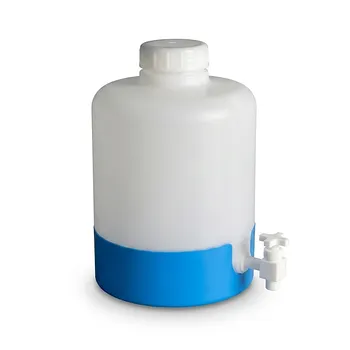
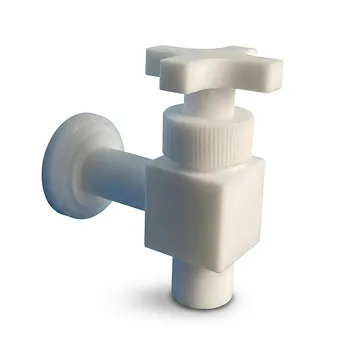
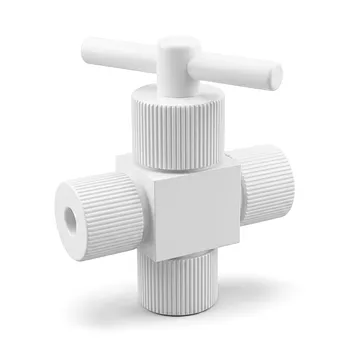
- High Corrosion Resistant PTFE Faucet Polytetrafluoroethylene Valve for Chemical Storage Drums and Fluid Transfer Systems Customizable Industrial Grade
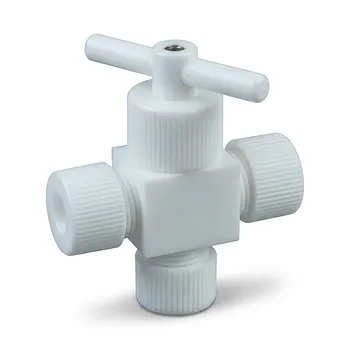
- Corrosion Resistant PTFE Polytetrafluoroethylene Valve and Customizable Laboratory Fluid Dispensing Faucet for Aggressive Chemical Handling in Industrial Storage Tanks and Plastic Drums
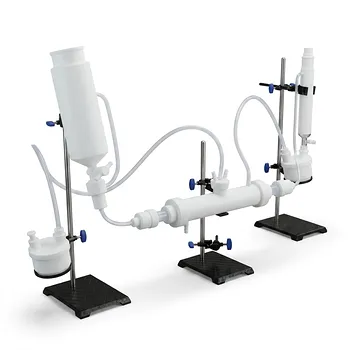
- Custom Polytetrafluoroethylene PTFE Constant Pressure Dropping Funnel Corrosion Resistant Fluid Control Assembly with Conversion Stopper Compatibility
- Custom PTFE Sleeves and Hollow Rods for Advanced Applications
- Custom PTFE Teflon Balls for Advanced Industrial Applications
People Also Ask
- What is the typical operating temperature and pressure range for PTFE valves? Key Specs for Optimal Performance
- What specific advantages do PTFE valves offer? Unmatched Corrosion Resistance for Industrial Chemical Handling
- What industries commonly use PTFE valves and components? Essential for Chemical & Purity Applications
- How do PTFE valves and components support high-purity liquid transfer? Ensure Product Integrity with Inert Materials
- What are the key properties of PTFE valves? Ensure Purity, Safety, and Reliability in Demanding Processes