PTFE connector designs mitigate cold flow by employing mechanical containment, material reinforcement, and active compensation systems. These strategies shift the functional burden from the soft PTFE material to more rigid mechanical components, ensuring that sealing pressure remains constant even as the polymer chains naturally shift under load. By isolating the sealing function from the gripping function and using "live-loading" hardware, engineers can prevent the leaks and bolt-load relaxation typically caused by PTFE's viscoelastic nature.
Core Takeaway: To solve the challenge of creep, advanced PTFE connectors utilize a "defense-in-depth" approach—combining reinforced material grades with mechanical supports like Belleville washers and two-ferrule systems to maintain a permanent, high-pressure seal.
Mechanical Support and Containment Strategies
The Use of Two-Ferrule Systems
One of the most effective methods for managing cold flow in tube connectors is the two-ferrule design. This configuration separates the gripping function (which holds the tube in place) from the sealing function (which prevents leaks). By distributing these stresses, the design prevents the PTFE from being over-compressed at a single point, which would otherwise accelerate material deformation.
Mechanical Locking and Dovetail Recesses
In lined connectors and valves, designers often use mechanical locking grooves or dovetail recesses. These physical features act as "traps" for the PTFE material, preventing it from migrating or extruding radially when subjected to high pressure. By physically anchoring the liner, the design ensures the material stays within its intended sealing zone.
Engineered Wall Thickness and Jacketing
In high-temperature or high-pressure environments, simply increasing the wall thickness of the PTFE component can provide greater structural integrity. For more demanding applications, external reinforcements like stainless steel braiding or jacketing are used to provide a rigid skeleton that limits the material's ability to expand or "flow" outward.
Material Modification and Reinforcement
Reinforced PTFE (RPTFE) Grades
Standard PTFE can be structurally improved by adding fillers such as glass fiber, carbon, or bronze. These Reinforced PTFE (RPTFE) grades significantly reduce the rate of creep by providing a rigid internal matrix that resists the sliding of polymer chains. This makes the material far more suitable for high-load applications where pure PTFE would quickly fail.
Expanded PTFE (ePTFE) Structures
Some designs utilize expanded PTFE (ePTFE), which features a unique fibrillar structure. Unlike standard PTFE, ePTFE is highly multidirectional and resists the "pancake effect" (radial extrusion) under load. This structural modification allows the gasket or seal to maintain its thickness and seal integrity more effectively than traditional molded PTFE.
Dynamic Load Compensation
Live-Loading with Belleville Washers
Because PTFE will inevitably "settle" or thin over time, "live-loading" is a critical design feature. By incorporating Belleville washers (spring washers), the connector can apply a constant compressive force. As the PTFE deforms or thins, the springs expand to take up the slack, maintaining a consistent sealing stress without requiring manual re-tightening.
Redundant Seals and Seat Energizers
Designers often include redundant seals, such as internal elastomeric O-rings, to act as a secondary barrier. Additionally, seat energizers—internal metal springs or elastomeric backups—provide an "active" push against the PTFE sealing face. This ensures that the interface remains under high contact pressure even if the primary PTFE body experiences minor cold flow.
Understanding the Trade-offs
While these design mitigations are effective, they introduce specific compromises. Fillers like glass or carbon can improve structural stability but may decrease the material's chemical universal resistance or introduce potential contaminants into high-purity fluid paths.
Furthermore, live-loading systems and redundant seals increase the mechanical complexity and cost of the connector. Over-reliance on high-torque installation to counteract cold flow can actually backfire, as excessive initial stress can accelerate the rate of extrusion, leading to premature joint failure rather than a longer-lasting seal.
Applying These Designs to Your Project
When selecting or designing a PTFE-based connection system, your choice should be dictated by the specific environmental stressors of your application.
- If your primary focus is high chemical purity: Use pure PTFE but prioritize mechanical containment (dovetail grooves) and live-loading rather than reinforced fillers to avoid contamination.
- If your primary focus is high-temperature cycling: Opt for Reinforced PTFE (RPTFE) filled with glass or carbon combined with Belleville washers to compensate for thermal expansion and creep.
- If your primary focus is high-pressure gas sealing: Utilize a two-ferrule system with precise machining tolerances to ensure a high-contact-pressure interface that resists radial leakage.
By matching the specific mitigation strategy to the operational load, you can harness the superior chemical resistance of PTFE while neutralizing its mechanical vulnerabilities.
Summary Table:
| Mitigation Strategy | Key Mechanism | Primary Benefit |
|---|---|---|
| Mechanical Containment | Two-ferrule systems & dovetail recesses | Isolates sealing stress and prevents radial material migration. |
| Material Reinforcement | Glass/carbon fillers or ePTFE structures | Increases structural rigidity and resists internal polymer chain sliding. |
| Dynamic Compensation | Live-loading with Belleville washers | Maintains constant compressive force even as the material settles. |
| Active Energizers | Internal springs or elastomeric backups | Ensures high contact pressure at the sealing interface at all times. |
Optimize Your Fluid Path with KINTEK’s Precision Engineering
Are you facing sealing failures due to PTFE cold flow or creep? KINTEK specializes in high-performance fluoropolymer solutions designed for the most demanding laboratory environments. Whether you need everyday basic labware (beakers, crucibles, reagent bottles) or specialized fluid transfer components like precision-machined tubing, fittings, and valves, we have the expertise to ensure long-term reliability.
From sample prep tools and filtration equipment to advanced reaction apparatus—including standard and custom electrochemical cells, battery testing fixtures, and microwave digestion vessels—KINTEK manufactures virtually every laboratory supply imaginable from high-purity PTFE and PFA. Our end-to-end custom CNC fabrication allows us to deliver everything from complex, non-standard machined parts to high-volume bespoke setups with an absolute focus on performance.
Eliminate leaks and maintain high-purity integrity in your lab. Contact KINTEK today to discuss your custom fluoropolymer requirements!
Related Products
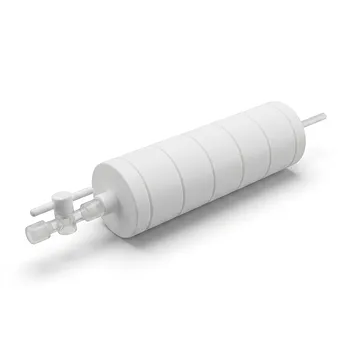
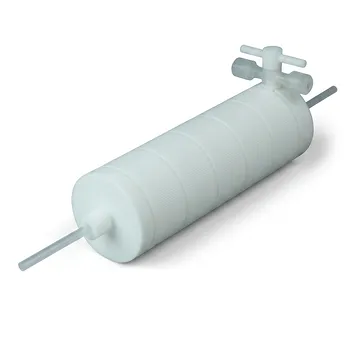
- PTFE Corrosion Resistant Filter with PFA Valve Connections and Integrated Sieve Plate
- Custom PTFE Corrosion Resistant White Syringe with Threaded Luer Connector Compatibility
- High Purity PTFE Filter with PFA Valve Connections and Integrated Sieve Plate for Corrosive Fluid Processing
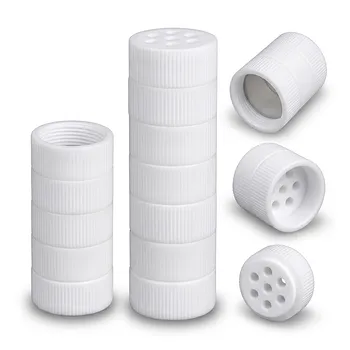
- Corrosion Resistant PTFE Multi Layer Sieve with Threaded Connections for Bio Chemical Laboratory Extraction and Customizable Mesh Size
- High Temperature Resistant PTFE White Screw Plugs Custom T Shaped Sealing Hole Stoppers Waterproof Dustproof Chemical Inert Laboratory Fasteners
People Also Ask
- What sizes and pore options are available for PTFE filters? Choose the Right Filter for Your Application
- What steps are involved in selecting the proper PTFE filter? A 4-Step Guide to Optimal Filtration
- Which chemicals are fully compatible with PTFE filters? Discover Unmatched Chemical Resistance
- How does the hydrophobicity of PTFE filters benefit their use? Ensure Uninterrupted Gas Flow and Solvent Filtration
- What temperature resistance do PTFE filters offer? Unmatched Thermal Stability from -200°C to +260°C