Fluoropolymers provide long-term corrosion resistance because their chemically inert, highly fluorinated molecular structure creates a stable, low-energy barrier that is difficult for corrosive chemicals, oxygen, and moisture to penetrate or react with. Strong carbon-fluorine bonds protect the polymer backbone from acids, bases, solvents, oxidants, and aggressive salt solutions, while the material’s hydrophobic, low-surface-energy surface limits water uptake, residue buildup, and chemical adhesion. Dense, well-formed fluoropolymer components or linings can therefore isolate metals, samples, and structural materials from harsh environments for extended service periods.
The protection comes from two complementary effects: fluoropolymers resist chemical reaction, and their continuous, hydrophobic surfaces slow the transport of gases, vapors, and dissolved species. This combination helps prevent corrosion, contamination, leaching, and loss of material performance.
Why Fluoropolymers Resist Chemical Attack
Strong Carbon-Fluorine Bonds
The carbon-fluorine bond is exceptionally strong, with a bond dissociation energy of approximately 485 kJ/mol. This gives fluoropolymer backbones high resistance to thermal degradation and attack by concentrated acids, bases, organic solvents, and corrosive aqueous mixtures.
Fluorine atoms also shield the underlying carbon backbone. Their size and positioning make it more difficult for reactive species to reach and break the polymer structure.
Low Chemical Reactivity
Extensive fluorination produces a chemically stable, non-polar surface. Unlike metals, which can rust or pit, and many conventional plastics, which may swell, dissolve, or degrade, materials such as PTFE and PFA remain largely unreactive across a broad range of aggressive chemicals.
This inertness is especially valuable in vessels, tubing, valves, bottles, and linings used for digestion, synthesis, storage, and trace analysis.
High Thermal and Oxidative Stability
Chemical environments often combine corrosive media with elevated temperatures or oxidizing conditions. Fluoropolymers retain their structural integrity under many of these conditions because their molecular backbone is resistant to both chemical attack and thermal breakdown.
The exact operating limit depends on the specific fluoropolymer, temperature, stress, and chemical exposure. Material selection must therefore be based on application-specific compatibility data rather than the general label “fluoropolymer.”
How the Barrier Limits Corrosion
Hydrophobic Surfaces Restrict Moisture Interaction
Fluoropolymer surfaces have low surface energy and strong hydrophobic character. Water and aqueous corrosive solutions are less likely to spread, adhere, or be absorbed at the surface.
This reduces the opportunity for moisture to reach an underlying metal or react with contaminants that could accelerate corrosion. The effect is particularly useful in protective linings, storage containers, and fluid-handling components.
Low Permeability Slows Chemical Migration
A continuous fluoropolymer layer can slow the movement of oxygen, water vapor, volatile chemicals, and dissolved contaminants through the material. Dense molecular packing and fluorine-rich shielding restrict transport pathways within the polymer.
This helps prevent chemical migration through container walls, concentration changes in stored reagents, and exposure of protected substrates to corrosive species. However, permeability is not zero and varies significantly with polymer grade, thickness, temperature, crystallinity, pressure, and the specific permeant.
Limited Ion Transport
Aggressive salts can contribute to corrosion when moisture allows ions to reach a metal surface. A properly formed fluoropolymer barrier separates the salt solution from the substrate and greatly limits transport through the barrier.
The most important protection is usually physical isolation, rather than an assumption that every fluoropolymer is completely impermeable to all ions. Defects, seams, pinholes, poor adhesion, and edge exposure can provide easier corrosion paths than transport through the bulk polymer.
Why Long-Term Performance Is Possible
Resistance to Swelling and Dissolution
Many ordinary polymers lose barrier performance when solvents penetrate them, causing swelling, softening, or extraction of additives. Fluoropolymers generally resist these processes across a wide range of chemical exposures.
Maintaining dimensional and chemical stability helps the barrier remain continuous instead of developing gaps or weakened regions that could expose the underlying surface.
Low Adhesion and Easier Cleaning
The low-energy surface reduces the adhesion of residues, salts, biological material, and reaction products. Contaminants are less likely to form persistent deposits that retain moisture or create localized chemical attack.
This also supports easier cleaning and reduces cross-contamination in laboratory and analytical applications.
Stable Protection in Fabricated Systems
Fluoropolymers can be used as solid components, coatings, fabricated linings, flexible bags, or loose-fit liners. Powder coatings can be fused onto internal metal surfaces, while fabricated or drop-in liners provide a separate chemical barrier inside a structural shell.
Long-term performance depends on producing a continuous barrier and controlling mechanical damage. A chemically inert resin cannot compensate for cracks, abrasion, poor installation, or an exposed joint.
Why This Matters in Chemical and Analytical Equipment
Protecting Samples and Reagents
PTFE and PFA vessels, bottles, digestion systems, tubing, and fittings reduce the risk of chemical leaching and sample contamination. Their inert surfaces help maintain reagent composition and analytical accuracy during storage and processing.
This is particularly important in trace analysis, where small amounts of extracted material or absorbed contaminants can affect results.
Protecting Structural Materials
Fluoropolymer linings isolate metal tanks, reaction vessels, and fluid-handling equipment from corrosive contents. The structural shell provides mechanical strength while the fluoropolymer supplies chemical resistance.
This arrangement can extend service life and reduce the need to manufacture the entire component from a more expensive corrosion-resistant material.
Handling Aggressive Salts and Corrosive Liquids
Salt solutions can promote localized metal corrosion, especially when oxygen and moisture are present. Fluoropolymer tubing, vessels, and liners reduce direct contact between these solutions and vulnerable structural materials.
The result is lower risk of rust, pitting, contamination, and premature equipment failure, provided the system is properly designed and maintained.
Understanding the Trade-offs
Low Permeability Is Not Absolute
Fluoropolymers are highly resistant barrier materials, but they are not universally impermeable. Small gases and vapors can permeate some fluoropolymer grades, particularly under elevated temperature, pressure, or long exposure times.
Barrier performance should therefore be confirmed using data for the actual material, thickness, temperature, chemical, and service duration.
Mechanical Damage Can Defeat Chemical Resistance
PTFE and related materials can be susceptible to creep, deformation, abrasion, or damage under mechanical load. A small defect in a lining may expose the substrate even though the bulk polymer remains chemically intact.
Designs should account for support, pressure, flexing, thermal expansion, installation damage, and inspection access.
Processing and Joints Matter
A sprayed or fused coating must be continuous and properly bonded. Fabricated liners and flexible bags require careful attention to seams, fittings, penetrations, and edges.
These locations can become the weakest points in the barrier system. Quality control and appropriate inspection are as important as resin selection.
Temperature and Chemical Compatibility Still Require Verification
“Fluoropolymer” describes a family of materials, not one uniform performance class. PTFE, PFA, ETFE, PVDF, and other fluorinated materials differ in permeability, mechanical strength, temperature capability, and compatibility with particular chemicals.
Manufacturers’ compatibility charts and application data should be used for final selection, especially for mixtures, high temperatures, pressure service, and prolonged exposure.
How to Apply This to Your Project
Fluoropolymer protection is most effective when molecular stability, barrier continuity, and mechanical design are considered together.
- If your primary focus is corrosion prevention: Use a chemically compatible, continuous fluoropolymer lining or component to isolate the substrate from moisture, oxygen, acids, bases, solvents, and salt solutions.
- If your primary focus is analytical purity: Select high-purity PTFE or PFA components to minimize leaching, adsorption, sample contamination, and reagent degradation.
- If your primary focus is long service life: Verify temperature, pressure, permeability, abrasion, creep, seams, fittings, and installation conditions rather than relying on chemical inertness alone.
- If your primary focus is barrier performance: Specify the required thickness, material grade, defect tolerance, and permeation limits for the actual gases, vapors, and liquids involved.
Fluoropolymers endure demanding chemical environments because they combine exceptional molecular stability with a hydrophobic, low-permeability barrier that keeps corrosive species away from the materials and samples that must remain protected.
Summary Table:
| Factor | Mechanism | Benefit |
|---|---|---|
| Strong C-F bonds | High bond energy (485 kJ/mol) shields backbone | Resists acids, bases, solvents, oxidants |
| Low surface energy | Hydrophobic, non-stick surface | Minimizes moisture and salt adhesion |
| Low permeability | Dense polymer structure restricts gas/vapor transport | Slows oxygen, water, and vapor migration |
| Chemical inertness | Non-reactive molecular structure | Prevents swelling, dissolution, and degradation |
| Thermal stability | Resists thermal and oxidative breakdown | Retains integrity in elevated temperatures |
Partner with KINTEK for high-performance PTFE and PFA products, from custom components to complete labware, ensuring reliable corrosion protection and purity. Our expert team is ready to help you select the right solution. Contact us today at #ContactForm to discuss your needs.
Related Products
- Custom PTFE Flask 250ml High Purity Fluoropolymer Laboratory Vessel for Chemical Research
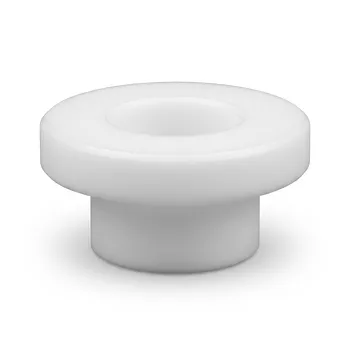
- Custom PTFE Insulating Gaskets and Corrosion Resistant Fluoropolymer Seals for Industrial Electrical Applications
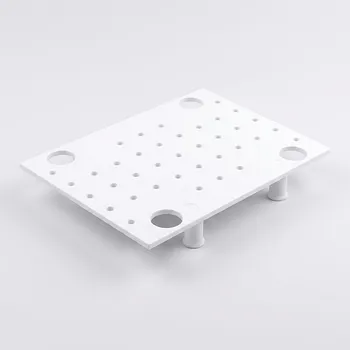
- High Temperature Resistant PTFE Thermal Insulation Board Corrosion Resistant Metal Free Fluoropolymer Stand for Ultra Clean Laboratories
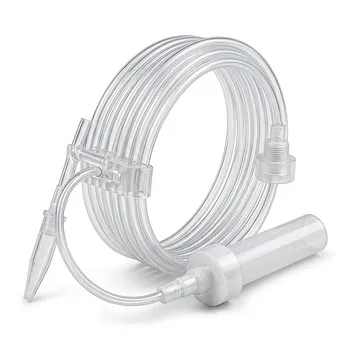
- Custom PFA Tubing 1/4 Inch High Purity Corrosion Resistant Fluoropolymer Tube with Welding and Machining Services
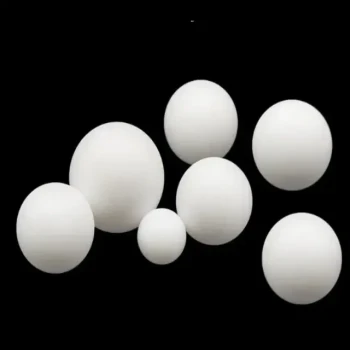
- Custom PTFE Teflon Balls for Advanced Industrial Applications
People Also Ask
- What are the key steps for structural integrity in molded PTFE lab reaction vessels? Master fine powder processing.
- What toxicological hazards and safe handling protocols must be established when PTFE fluoropolymer reaction vessels are subjected to pyrolysis temperatures? Learn essential safety measures now.
- When synthesizing TFVE monomers involving reactive organometallic reagents and aggressive polar solvents, what material performance characteristics are required? Ensure purity with PTFE/PFA.
- Why Are High-Purity Fluoropolymer Vessels and Tubing Critical for Trace Analysis? Prevent Contamination Reliably
- How does pressure management influence molar mass distribution and reaction rate in the iodine transfer emulsion polymerization of vinylidene fluoride, and how do custom fluoropolymer reaction vessels support this process?