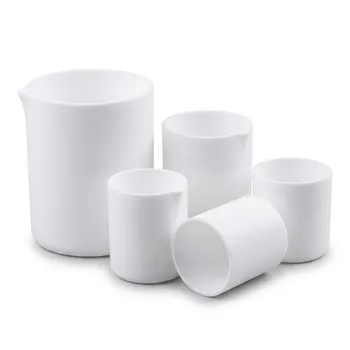
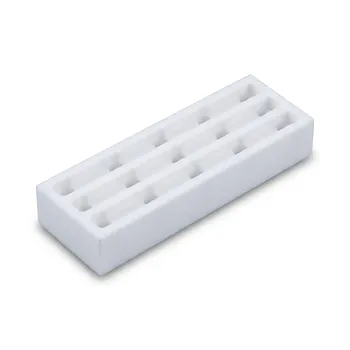
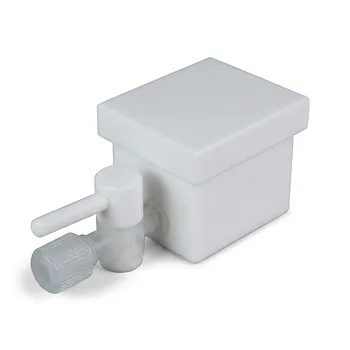
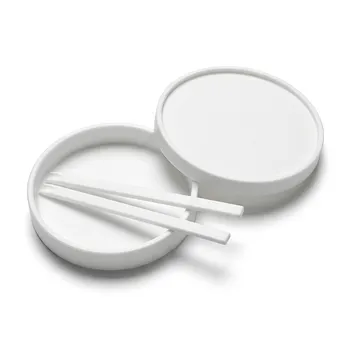
Extreme TFE purity directly determines whether PTFE can achieve the molecular weight and cleanliness expected of high-performance laboratory supplies. TFE purified to approximately 99.99995%, with trifluoroethylene limited to below 0.2–0.3 ppm, minimizes premature polymer-chain termination. The result is PTFE with stronger molecular structure, low extractables, high chemical resistance, and better reliability in trace-analysis vessels, digestion liners, beakers, and storage components.
The purity of the monomer sets the ceiling for the finished PTFE. Hydrogen- or chlorine-bearing impurities interrupt chain growth, lowering molecular weight and potentially increasing contaminants or weak points in the material. Ultra-pure TFE is therefore essential, but finished-product performance also depends on polymerization control, resin handling, fabrication, and contamination control.
Why TFE Purity Matters During Polymerization
Impurities interrupt molecular-chain growth
PTFE is formed by adding TFE molecules into long polymer chains. Some hydrogen- or chlorine-bearing impurities act as telogenic chain-transfer agents, terminating growing chains before they reach the required length.
Trifluoroethylene is especially important because even concentrations below one part per million can materially affect high-molecular-weight PTFE production. Keeping it below approximately 0.2–0.3 ppm helps preserve uninterrupted chain growth.
High molecular weight supports demanding labware
High-molecular-weight PTFE provides the entangled polymer structure needed for mechanical integrity and dimensional stability. This is important for vessels and liners that must withstand aggressive chemicals, thermal cycling, vacuum, or handling stresses.
If impurities reduce molecular weight, the material may not develop the same strength, toughness, or resistance to deformation. The effect is not necessarily visible immediately, but it can reduce the product’s performance margin during demanding use.
How Purity Appears in Finished PTFE Supplies
Greater chemical inertness
PTFE is valued because its fluorinated polymer structure is exceptionally resistant to many aggressive reagents. Maintaining high molecular weight helps preserve the continuous, chemically stable structure that users rely on.
This does not make PTFE universally inert under every condition. Temperature, reagent concentration, exposure time, pressure, and mechanical stress still determine compatibility.
Lower leachable and extractable backgrounds
Ultra-pure monomer helps produce PTFE with fewer chemically reactive or contaminating chain ends. When combined with clean polymerization and virgin-resin processing, this supports low leachable profiles.
That matters especially in trace analysis, digestion, and sample preparation. A vessel that contributes minimal background contamination helps analysts distinguish the sample signal from contamination introduced by the container.
Improved structural reliability
High molecular weight contributes to resistance against cracking, deformation, and damage during use. This is relevant to custom reaction vessels, microwave digestion liners, transfer components, and chemical storage tanks.
The benefit is best understood as increased reliability rather than immunity to failure. Poor machining, sharp stress concentrations, excessive temperature, or unsuitable loading can still damage PTFE.
More consistent performance between products
Strict control of TFE purity reduces variation in the resin’s molecular structure. More consistent resin makes it easier for manufacturers to produce laboratory supplies with predictable chemical, mechanical, and thermal behavior.
Consistency is particularly valuable when a laboratory uses multiple vessels or components in a validated analytical procedure. Variability in extractables, dimensions, or strength can complicate reproducibility.
Purity Is Only One Part of the Cleanliness Chain
Polymerization conditions must remain controlled
The monomer must be pure, but the reaction environment must also be clean and stable. High-purity water and properly passivated reactor surfaces help prevent inorganic or organic contaminants from entering the resin.
These controls reduce the risk that metal ions, reactive residues, or altered chain ends will compromise the final PTFE’s analytical cleanliness.
Oxygen and thermal management matter
TFE polymerization is highly exothermic and requires careful control of oxygen, temperature, and pressure. Uncontrolled conditions can cause unwanted reactions, localized heating, or decomposition.
Therefore, excellent TFE purity cannot compensate for poor process control. Safe and stable polymerization is necessary to translate monomer purity into a consistent resin.
Fabrication can reintroduce contamination
A high-purity resin can be compromised during molding, machining, cleaning, packaging, or storage. Tooling residues, metal particles, processing aids, or cross-contamination may affect the finished component even when the original TFE was exceptionally pure.
For critical applications, users should evaluate the complete supply chain—not just the stated polymer grade.
Understanding the Trade-offs
Ultra-pure TFE increases manufacturing complexity
Achieving approximately 99.99995% purity requires demanding purification, analytical verification, and process controls. These requirements increase manufacturing complexity and can raise the cost of the resulting PTFE products.
That cost is justified when contamination, failure, or sample loss would be more expensive than the material itself. It may be unnecessary for routine applications with less stringent chemical or analytical requirements.
High purity does not eliminate all extractables
Ultra-pure monomer reduces one major source of contamination, but it does not guarantee zero leachables. Residuals can originate from the reactor, additives, water, equipment, fabrication, cleaning, or packaging.
For trace work, ask for application-relevant extractables or leachables information rather than relying only on a general “high-purity PTFE” description.
PTFE still has use limitations
PTFE’s chemical resistance is substantial but not unlimited. Extreme temperatures, certain reactive fluorinating conditions, mechanical loads, and prolonged exposure can exceed its practical operating envelope.
Material selection should therefore consider the complete operating environment, not monomer purity alone.
“High purity” must be defined for the application
A product may be chemically pure yet unsuitable for a particular analytical method if it has unacceptable particle shedding, dimensional instability, surface condition, or background contamination.
The appropriate specification may include resin purity, extractables, trace metals, surface finish, cleaning procedure, and packaging controls.
Making the Right Choice for Your Goal
Select the material and supplier based on the consequence of contamination, mechanical failure, and chemical exposure in your specific process.
- If your primary focus is trace analysis: Prioritize virgin, high-purity PTFE with documented low extractables, controlled fabrication, and appropriate cleaning and packaging.
- If your primary focus is aggressive chemical handling: Prioritize high-molecular-weight PTFE and verify compatibility at the actual temperature, concentration, exposure time, and mechanical load.
- If your primary focus is mechanical durability: Confirm that the product is made from a suitable high-molecular-weight grade and review wall thickness, geometry, thermal cycling, and stress conditions.
- If your primary focus is routine laboratory use: Balance purity requirements against cost, selecting ultra-high-purity products where contamination risk or analytical sensitivity genuinely requires them.
Understanding the connection between TFE purity, polymer molecular weight, and finished-product controls enables you to specify PTFE supplies by verified performance rather than by material name alone.
Summary Table:
| Aspect | Impact of Ultra-Pure TFE |
|---|---|
| Molecular Weight | Minimizes chain termination, ensuring high molecular weight for strength and stability. |
| Chemical Inertness | Preserves continuous fluorinated structure for superior resistance to aggressive reagents. |
| Extractables | Reduces reactive chain ends, lowering leachable backgrounds for trace analysis. |
| Structural Reliability | Enhances resistance to cracking and deformation under demanding conditions. |
| Consistency | Reduces resin variability, providing predictable performance across products. |
| Manufacturing Complexity | Increases cost due to strict purification and process control. |
Elevate your laboratory's precision and reliability with KINTEK's high-purity PTFE and PFA supplies.
Our products are crafted from ultra-pure TFE (99.99995%) to ensure exceptional chemical resistance, low extractables, and superior durability—essential for trace analysis, digestion, and demanding chemical handling. From beakers and digestion vessels to custom CNC-machined components, we offer a complete range of PTFE/PFA labware backed by end-to-end manufacturing expertise.
Why choose KINTEK?
- Certified purity: Monomer purity exceeding 99.99995% with trifluoroethylene below 0.2–0.3 ppm.
- Comprehensive product line: Labware, fluid handling, sample prep, reaction vessels, and custom parts.
- Custom CNC machining: Non-standard parts and bespoke setups tailored to your specifications.
- Consistent quality: Rigorous process control ensures reliable performance batch after batch.
Ready to enhance your lab's accuracy? Contact us today to discuss your requirements and discover how KINTEK can support your critical applications. We are dedicated to delivering high-purity solutions that meet your most demanding standards.
Related Products
- Corrosion Resistant PTFE Laboratory Material Scoop for Biopharmaceutical Use Non Stick Easy Clean Fluoropolymer Shovel
- Large Scale PTFE Beakers and Flasks for High Temperature Corrosion Resistant Laboratory Applications with Custom CNC Fabrication
- Custom PTFE Laboratory Cleaning Basket Carrier High Purity Acid Base Resistant Wafer Holder Low Background Contamination Free Chemical Bath Rack
- Custom PTFE Laboratory Apparatus Corrosion Resistant Low Background Reaction Cells Precision CNC Fabrication
- Custom PTFE Petri Dish 30mm Corrosion Resistant Low Background Non Leaching Laboratory Ware
People Also Ask
- What advantages do PTFE's surface properties provide for lab tools? Optimize Sample Recovery and Tool Longevity
- What factors should be considered when selecting a PTFE shovel for laboratory use? Ensure Chemical Inertness & Sample Integrity
- What structural and chemical characteristics give PTFE laboratory products their exceptional thermal stability and flame resistance? Discover the science behind PTFE's outstanding heat resistance.
- What additional advantages does PTFE offer for laboratory use? Maximize Purity and Reliability
- What molecular characteristics provide PTFE laboratory tools with ultra-low surface energy and anti-stick properties for fluid transfer? Discover the science behind PTFE's non-stick performance.