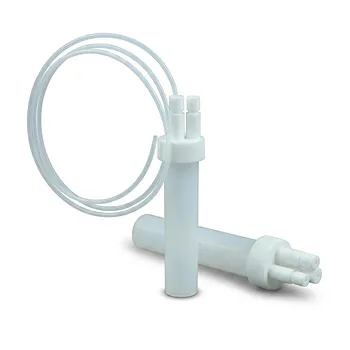
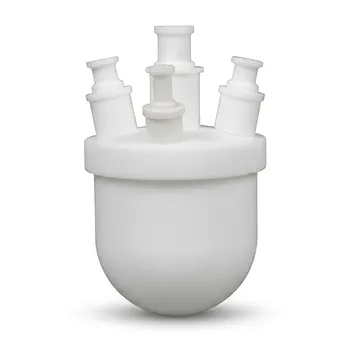
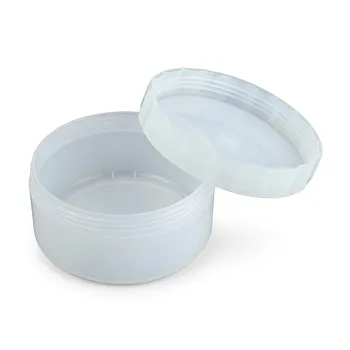
Amorphous perfluoropolymers benefit specialized laboratory labware and electrochemical reaction apparatus by combining chemical inertness, high-temperature stability, and exceptionally reliable electrical insulation. Their strong carbon-fluorine bonds resist aggressive acids, bases, solvents, and redox reagents, while decomposition temperatures above 300°C support demanding thermal conditions. Their low dielectric constants, typically 1.87–2.2, remain virtually unchanged by humidity, improving the accuracy and repeatability of electrochemical measurements.
The central advantage is experimental control: amorphous perfluoropolymers reduce contamination, material degradation, wall reactions, moisture-related electrical variation, and premature equipment failure in chemically and electrically demanding laboratory systems.
Why These Materials Suit High-Purity Labware
Resistance to Aggressive Chemistry
Amorphous perfluoropolymers remain highly inert when exposed to corrosive reagents, harsh solvents, acids, bases, and redox-active chemicals. This allows vessels, tubing, transfer components, and cell bodies to maintain their chemical integrity during demanding experiments.
The strong carbon-fluorine bonds and absence of hydrogen in the polymer structure contribute to this resistance. As a result, the material is less likely to react with samples or become degraded by the reagents it contains.
Reduced Contamination and Leaching
For trace analysis, even small amounts of leached material or surface contamination can distort results. Chemically stable perfluoropolymer labware minimizes these risks by resisting reagent attack and maintaining a low-contamination surface.
This is particularly valuable in digestion vessels, trace-analysis containers, fluid-transfer components, and custom reaction vessels where sample purity is more important than low initial material cost.
Protection Against Wall-Catalyzed Reactions
Container walls can sometimes participate in unintended reactions or promote thermolysis at elevated temperatures. Chemically inert fluoropolymer surfaces reduce the likelihood of wall-catalyzed interference compared with reactive or catalytically active surfaces.
That helps researchers distinguish the behavior of the sample from reactions caused by the apparatus itself.
How Thermal Stability Supports Reaction Apparatus
Operation at Elevated Temperatures
Amorphous perfluoropolymers exhibit decomposition temperatures above 300°C, with reported values extending into the range of approximately 300–370°C depending on the material and conditions. This provides a substantial thermal operating margin for heated reaction vessels, digestion systems, and chemical-processing components.
Thermal endurance also helps preserve dimensional and chemical stability during repeated heating cycles, provided the apparatus is operated within its actual material-specific limits.
Lower Risk of Thermal Degradation
A material that degrades under process conditions can release contaminants, lose mechanical integrity, or alter the chemistry of the experiment. The thermal stability of amorphous perfluoropolymers reduces these failure modes in high-temperature laboratory environments.
This is important for apparatus exposed simultaneously to heat and aggressive chemicals, where either factor can accelerate material failure.
Stable Performance in Gas and Fluid Systems
The same chemical and thermal resilience benefits gas-sampling manifolds, membrane systems, and fluidic assemblies. These components can remain operational under corrosive feeds or volatile organic exposure without the rapid degradation or plasticization that can compromise transport performance.
For gas-handling equipment, this supports longer service life and more consistent flow or separation behavior.
Why Dielectric Stability Matters in Electrochemical Systems
Reliable Electrical Isolation
Amorphous perfluoropolymers have exceptionally low dielectric constants, generally around 1.87–2.2. This makes them effective insulating materials for electrode holders, cell components, probe supports, and other parts that must electrically separate conductive elements.
Proper isolation reduces unintended current paths and helps preserve the intended electrochemical circuit.
Lower Stray-Current Effects
Stray current leakage can introduce measurement errors, distort electrode responses, and reduce confidence in low-level electrochemical data. Electrically insulating fluoropolymer components help limit these unwanted pathways around electrodes and sensors.
This is especially relevant in high-precision cells and custom apparatus where electrode geometry and electrical isolation directly affect the measurement.
Humidity-Independent Electrical Behavior
The dielectric constant of amorphous perfluoropolymers is reported to remain virtually unaffected by humidity. This is a significant advantage because moisture-sensitive insulating materials can change their electrical response as laboratory humidity varies.
A humidity-independent dielectric response improves measurement reproducibility and reduces the need to compensate for environmental changes during electrochemical experiments.
Support for High-Voltage and High-Frequency Work
Fluoropolymer materials can also provide high dielectric strength, particularly in thin-film forms. This helps reduce the risk of electrical breakdown in apparatus exposed to elevated voltage or high-frequency signals, although the applicable rating must be verified for the specific polymer, geometry, thickness, temperature, and environment.
The low dielectric constant and high dielectric strength address different design requirements: one limits capacitive and field-related effects, while the other helps prevent insulation failure.
Additional Benefits of the Amorphous Structure
Optical Transparency for In-Situ Observation
Many amorphous perfluoropolymers are transparent from the ultraviolet through the near-infrared range. Transparent reaction vessels and cell components can therefore support visual inspection, optical monitoring, and spectroscopy without replacing chemically resistant materials with less suitable alternatives.
This is useful when researchers need to observe color changes, precipitation, bubbles, interfaces, or reaction progress directly.
Low Moisture Absorption and Surface Energy
These materials have minimal moisture absorption and extremely low surface energy. Together with their chemical inertness, these properties reduce water-related contamination and unwanted interactions between the apparatus surface and the sample.
The result is a cleaner and more predictable interface for high-purity fluid handling and electrochemical measurements.
Solubility for Precision Fabrication
Unlike fully conventional PTFE, some amorphous perfluoropolymers dissolve in selected fluorinated solvents, including fluorinated alkanes and hexafluorobenzene. This enables precision-cast parts, thin protective coatings, and specialized membrane structures.
Solubility expands fabrication options for complex laboratory components while preserving the underlying fluorinated material's resistance to aggressive chemistry.
Understanding the Trade-offs
Chemical Inertness Is Not Universal Solvent Resistance
Amorphous perfluoropolymers are highly resistant to conventional chemical environments, but their amorphous structure gives them a unique vulnerability: they can dissolve or be processed in certain fluorinated solvents.
This is useful during fabrication but must be considered during operation. Compatibility should be checked against the exact solvent, temperature, exposure time, and polymer grade.
Thermal Ratings Require Application-Specific Verification
A decomposition temperature is not the same as a recommended continuous-use temperature. Mechanical strength, dimensional stability, pressure, thermal cycling, and the surrounding chemical environment may impose lower practical limits.
Designers should verify the material's data sheet and test the complete apparatus under representative conditions.
Electrical Properties Depend on Geometry and Frequency
The stated dielectric constant describes the material under defined measurement conditions; it does not alone determine the electrical behavior of a complete electrochemical cell. Electrode spacing, component thickness, frequency, temperature, surface contamination, and fluid conductivity also influence leakage and capacitance.
Broad fluoropolymer data should not be substituted for the specific dielectric data of the amorphous perfluoropolymer being selected.
Mechanical Design Still Matters
Chemical resistance does not eliminate issues such as creep, deformation, sealing compatibility, or pressure limitations. A chemically ideal polymer can still be unsuitable if the apparatus requires high stiffness, tight dimensional tolerances, or sustained mechanical loading at elevated temperature.
Material selection must therefore evaluate chemical, thermal, electrical, and mechanical requirements together.
How to Apply This to Your Project
The appropriate design emphasis depends on the experiment's dominant failure risk:
- If your primary focus is trace analysis and sample purity: Use amorphous perfluoropolymer vessels and fluid-transfer components to minimize chemical attack, leaching, wall reactions, and contamination.
- If your primary focus is high-temperature chemistry: Select a grade and apparatus design with verified thermal endurance for the actual temperature, exposure duration, pressure, and chemical environment.
- If your primary focus is electrochemical measurement accuracy: Use the material's low, humidity-stable dielectric constant to support electrical isolation and reduce stray-current and moisture-related variability.
- If your primary focus is in-situ optical monitoring: Consider transparent amorphous perfluoropolymer components for UV-to-NIR observation while retaining chemical resistance.
- If your primary focus is custom fabrication: Use the selective solubility of amorphous grades in compatible fluorinated solvents to produce coatings, membranes, and precision-cast laboratory surfaces.
Amorphous perfluoropolymers are most valuable when an apparatus must remain chemically clean, thermally stable, and electrically predictable under conditions that would compromise ordinary materials.
Summary Table:
| Property | Benefit | Application |
|---|---|---|
| Chemical inertness | Resist acids, bases, solvents; low contamination | Digestions vessels, trace analysis containers |
| Thermal stability | Operate above 300°C; resist degradation | Heated reactors, high-temperature synthesis |
| Low dielectric constant (1.87–2.2) | Effective electrical isolation, humidity-independent | Electrochemical cells, electrode holders |
| Optical transparency | UV-to-NIR observation | In-situ spectroscopy, visual monitoring |
| Low moisture absorption | Minimized contamination, predictable surface | Fluid handling, sensors |
| Solubility in selective solvents | Precision fabrication | Custom parts, coatings, membranes |
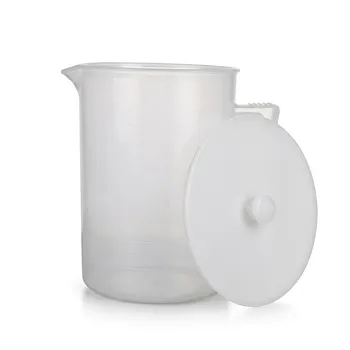
Upgrade your lab with high-performance PTFE/PFA components from KINTEK. Our amorphous perfluoropolymer labware and custom CNC-machined parts deliver superior chemical resistance, thermal stability, and electrical insulation for your most demanding applications. Whether you need standard beakers or bespoke electrochemical cells, we ensure precision and purity. Contact us today to discuss your custom requirements and experience the KINTEK difference. Get in touch.
Related Products
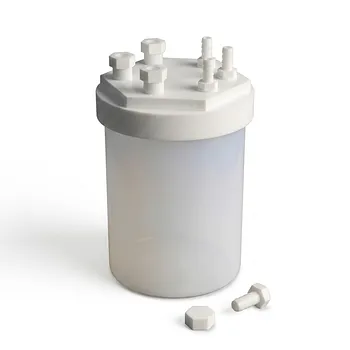
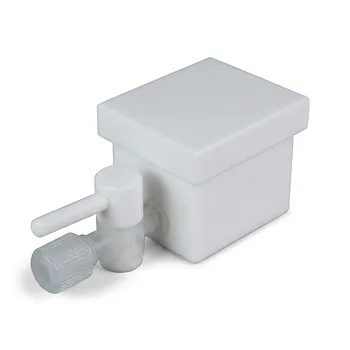
- Corrosion Resistant PTFE Electrochemical Cell for New Energy Research Inert Insulating Customizable Lab Reaction Vessel
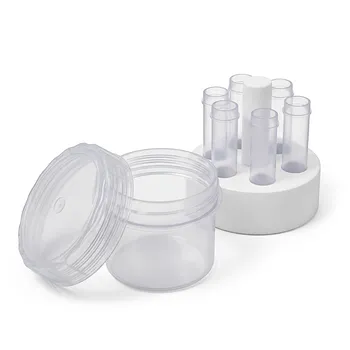
- Corrosion Resistant PTFE Support with PFA Transparent Reaction Tank and High Purity PFA Sampling Tube for Trace Analysis
- High Purity 4L PFA Reaction Tank for Proton Exchange Membrane Electrolysis Water Oxygen Separation Systems
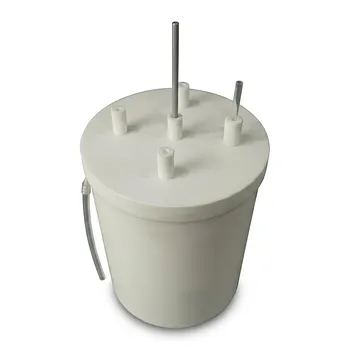
- Custom PTFE Reaction System with Hose Barb Fittings Corrosion Resistant High Sealing 2L 4L Lab Reactor with Separatory Funnel
- PFA Chemical Reaction Tank with Customizable Fittings for Corrosive Solvent Synthesis and High Purity Lab Applications
People Also Ask
- What parameters govern the electrochemical decomposition of perfluorooctanoic acid (PFOA) in aqueous solutions, and why are custom PTFE electrochemical cells preferred? Key factors include anode material, current density, electrolyte, and cell design.
- How do custom PTFE electrochemical cells improve the accuracy of stability testing for alkaline catalysts compared to glass cells?
- How does the hydrophobicity of PTFE benefit electrochemical measurements? Enhance Stability and Precision in Your Lab
- What makes PTFE an ideal construction material for custom electrochemical cells and electronic analytical instrumentation housings? Discover superior chemical resistance and electrical insulation
- Why must seawater electrolysis test cells have high corrosion resistance? Protect catalyst stability & data accuracy.