For HF by-products from VDF synthesis, use fluoropolymer-based fluid-transfer and containment equipment—primarily PFA and PTFE—rather than standard metal or glass components. The necessary system includes HF-compatible tubing, compression fittings, valves, reaction and collection vessels, low-temperature distillation components, and an inert wet-scrubbing train for HF and HCl gases. Equipment must also provide secondary containment and be rated for the process pressure, temperature, and chemical concentration.
The central requirement is chemical compatibility without compromising containment. PFA and PTFE resist concentrated HF and HCl far better than glass or conventional metals, while properly designed fittings, valves, vessels, and scrubbers prevent leaks, contamination, and uncontrolled acid release.
Why VDF Synthesis Requires Specialized Equipment
HF and HCl attack conventional materials
Dehydrohalogenation and related VDF routes can generate highly corrosive hydrogen fluoride and hydrochloric acid. Concentrated HF can severely damage glass, quartz, and many metallic components, potentially causing leaks, contamination, or equipment failure.
The risk applies throughout the process—not only inside the reaction vessel. Gas lines, condensers, sample ports, valve assemblies, and collection vessels can all contact the by-products.
Low-temperature operation adds another design constraint
VDF is a gaseous fluoromonomer with a boiling point of approximately −84 °C. Systems may therefore combine corrosive acid handling with gas transfer, condensation, and low-temperature distillation.
Materials must remain chemically resistant and mechanically reliable across the operating temperature range. Thermal contraction, brittle seals, pressure changes, and blocked lines must be addressed in the equipment design.
Essential Fluid-Transfer Equipment
PFA or PTFE tubing
Use high-purity PFA or PTFE tubing for acid-bearing gas, liquid, condensate, and sample-transfer paths. These fluoropolymers provide strong resistance to HF, HCl, aggressive solvents, initiators, and reactive fluorinated intermediates.
PFA is often advantageous where transparency, smooth internal surfaces, or more rigid tubing are useful. PTFE is widely used where maximum chemical resistance and low surface interaction are the primary requirements.
Fluoropolymer compression fittings
Tubing should connect through HF-compatible compression fittings, preferably fabricated from PFA, PTFE, or another demonstrably compatible material. Fittings must be selected for the actual pressure, temperature, tubing dimensions, and chemical duty.
Avoid assuming that a fluoropolymer tube makes a complete connection safe. Metallic inserts, ferrules, valve bodies, or seals can become the weakest components if they are exposed to the acid stream.
Valves and valve assemblies
Use chemically compatible fluoropolymer-lined or fluoropolymer-bodied valves for isolation, routing, sampling, and draining. Valve seats, stems, diaphragms, and seals must be evaluated individually because the wetted material—not just the external body—determines compatibility.
The design should minimize dead legs and trapped acid. This reduces residual contamination, sample carryover, and the risk of pressure buildup during isolation.
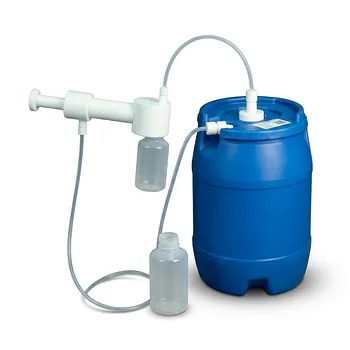
Sample lines and sampling assemblies
Sample tubing, ports, and transfer assemblies should use PFA or PTFE wetted surfaces. Their smooth, nonreactive surfaces help limit cross-contamination and memory effects between samples.
Sampling systems should be designed to prevent operator exposure and uncontrolled release of HF or VDF. Closed transfer is preferable to open handling.
Containment and Reaction Equipment
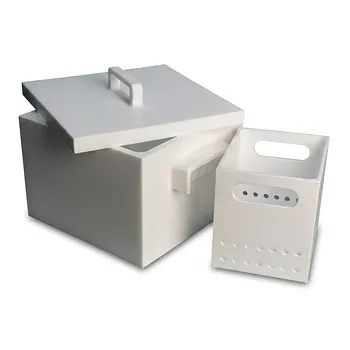
PFA and PTFE reaction vessels
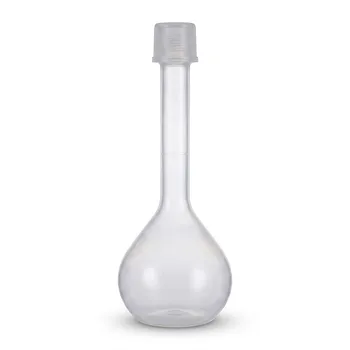
Use PFA or PTFE reaction and digestion vessels where HF-containing liquids or condensates contact the vessel walls. These materials resist corrosion and minimize leaching into the process stream.
The vessel must still be appropriately rated for pressure and temperature. Chemical resistance alone does not make a vessel suitable for pressurized VDF service.
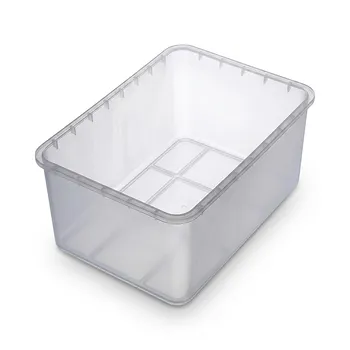
Collection and condensate vessels
HF and HCl condensates require compatible collection vessels, transfer lines, and drain connections. PFA or PTFE components should be used throughout the wetted path to prevent localized corrosion at interfaces.
Collection vessels should be placed within secondary containment capable of retaining the full credible release volume. Secondary containment materials must also be compatible with HF.
Low-temperature distillation hardware
Distillation pots, receivers, transfer lines, valves, and sample ports exposed to HF-containing streams should use PFA or PTFE wetted components wherever practical. Conventional glass or quartz distillation hardware is unsuitable for concentrated HF exposure.
The assembly must account for condensation, thermal cycling, pressure relief, and potential line blockage. Any non-fluoropolymer component should be specifically justified by compatibility and mechanical requirements.
Reactor interfaces and seals
Where a metal reactor is required for pressure control or mechanical strength, isolate the process fluid from the metal using compatible fluoropolymer liners, inserts, diaphragms, or wetted components where feasible.
Seals and gaskets require separate review. A chemically resistant vessel can still fail if an elastomer, adhesive, or gasket compound is incompatible with HF, HCl, solvent, or the temperature cycle.
Gas Absorption and Scrubbing
HF- and HCl-compatible scrubbers
Off-gas should pass through an engineered wet-scrubbing or absorption system designed for HF and HCl capture. The scrubber’s wetted vessel, packing, spray components, tubing, valves, and demister materials must be compatible with the acid gases and the resulting absorbate.
The system should be designed for the expected gas flow, acid loading, temperature, and pressure drop. A scrubber that is chemically resistant but undersized is not an adequate containment system.
Spray chambers and internal distribution components
Spray chambers, nozzles, and liquid-distribution assemblies should use compatible fluoropolymer materials where they contact the acid stream. PFA or PTFE surfaces help resist corrosion and reduce contamination.
Drainage must be reliable. Accumulated acidic liquid in low points can create a secondary release or obstruct gas flow.
Scrubber monitoring and isolation
Include appropriate provisions for monitoring scrubber condition, liquid level, pressure drop, and breakthrough according to the process design. Isolation valves and drains must remain accessible without requiring exposure to the acid stream.
The exhaust path should not rely on a single unverified barrier. Containment, absorption, ventilation, and emergency response must function as a coordinated system.
Material and Design Requirements
Prioritize wetted-material compatibility
The key question is not simply whether equipment is “plastic” or “metal.” Identify every wetted material, including tubing, fittings, valve seats, gaskets, O-rings, adhesives, coatings, and instrument diaphragms.
PFA and PTFE are strong baseline choices, but compatibility must be verified for the actual HF concentration, HCl presence, solvent system, temperature, pressure, and exposure duration.
Control contamination and memory effects
High-purity fluoropolymers provide smooth, low-interaction surfaces that help preserve sample purity. This is particularly important when measuring reaction intermediates, condensates, or residual acid.
Use dedicated lines or validated cleaning procedures where cross-contamination could affect process control or analytical results.
Design for inspection and replacement
Acid-handling systems should permit inspection of tubing, fittings, valve bodies, vessels, and secondary containment. Replace components that show deformation, embrittlement, discoloration, loss of flexibility, or damaged sealing surfaces.
Fluoropolymers resist HF, but no material should be treated as permanently maintenance-free.
Understanding the Trade-offs
Fluoropolymers are chemically resistant but not universally structural
PTFE and PFA are excellent wetted materials for HF service, but they may not provide the stiffness, pressure capability, or dimensional stability required for every reactor or high-pressure assembly.
A practical system may combine a mechanically strong outer structure with fluoropolymer-lined or fluoropolymer wetted components. The design must ensure that the structural material is not unintentionally exposed to HF.
Glass is useful in some processes but inappropriate for HF exposure
Glass can be valuable for visual observation and certain controlled photochemical or solvent-based setups. However, concentrated HF can severely corrode glass and quartz, so they should not be used in portions of the system exposed to HF unless a validated isolation strategy prevents contact.
Visibility should never take priority over chemical compatibility and containment.
PTFE and PFA do not eliminate pressure or toxicity hazards
Fluoropolymer equipment reduces corrosion risk, but HF remains highly toxic and penetrative, while VDF is a volatile, flammable process gas. Material selection must be integrated with pressure relief, ventilation, gas detection, closed handling, and site-specific emergency procedures.
Equipment selection should be reviewed by qualified process-safety and chemical-safety personnel before operation.
Unverified “compatible” components create hidden failure points
A system can fail at a small fitting, seal, valve trim, or instrument connection even when its main vessel is made from PFA or PTFE. Obtain material declarations and operating limits for complete assemblies rather than relying on a generic material label.
How to Apply This to Your Project
The exact configuration depends on whether HF is handled as a gas, condensate, aqueous acid, or mixed by-product stream, as well as on pressure and temperature.
- If your primary focus is corrosion resistance: Use PFA or PTFE for all wetted tubing, fittings, valves, reaction vessels, collection vessels, and distillation components, and verify every seal and auxiliary material.
- If your primary focus is gas containment: Use a closed fluoropolymer-compatible transfer path leading to an engineered HF/HCl scrubber with compatible spray, packing, drain, and isolation components.
- If your primary focus is sample purity: Use high-purity PFA or PTFE sample lines, spray chambers, and valve assemblies with smooth surfaces and dedicated or validated-clean transfer paths.
- If your primary focus is pressurized VDF processing: Combine fluoropolymer wetted components with mechanically rated reactor hardware, pressure relief, suitable seals, and a documented compatibility review.
- If your primary focus is operator protection: Provide secondary containment, closed transfer, controlled ventilation, accessible isolation, and site-approved HF emergency controls in addition to corrosion-resistant materials.
A properly engineered PFA/PTFE fluid path, supported by rated containment and effective HF/HCl scrubbing, is the foundation for safely managing VDF-synthesis by-products.
Summary Table:
| Component Category | Recommended Material | Key Considerations |
|---|---|---|
| Tubing | High-purity PFA or PTFE | HF/HCl resistance; smooth surfaces; low contamination |
| Fittings | PFA or PTFE compression fittings | Pressure/temperature rated; no metal exposure |
| Valves | Fluoropolymer-lined or bodied | Wetted parts compatibility; minimal dead legs |
| Reaction Vessels | PFA or PTFE | Corrosion resistance; pressure/temperature rating |
| Scrubbers | Fluoropolymer wetted components | HF/HCl capture; adequate sizing; monitoring |
| Secondary Containment | HF-compatible materials | Full credible release volume; material compatibility |
Ensure safe and efficient HF by-product handling in your VDF synthesis process with KINTEK's high-performance PFA/PTFE equipment. Our comprehensive range includes tubing, fittings, valves, vessels, and custom machined parts, all backed by end-to-end CNC capabilities. Contact us today to discuss your specific requirements and benefit from our expertise in fluoropolymer applications. Get in touch with our team to request a quote or consult on your system design.
Related Products
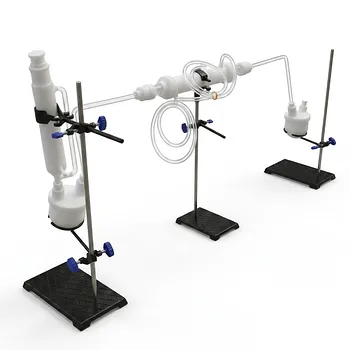
- Corrosion Resistant Hydrogen Fluoride Reflux Apparatus PTFE Flask Condenser Separatory Funnel Collection Bottle High Temperature Laboratory System
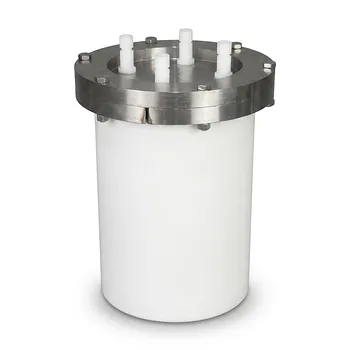
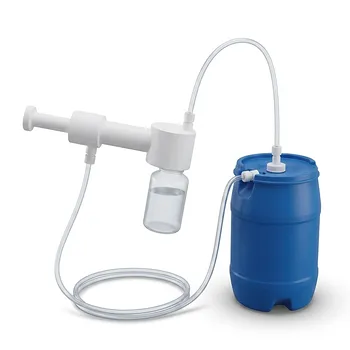
- PTFE Hydrofluoric Acid Dilutor and Corrosion Resistant Reaction Vessel with Flange Sealing White PTFE Raw Material Storage Barrel
- Custom PTFE Condenser Tube Hydrofluoric Acid Resistant Reflux Device Constant Pressure Separatory Funnel
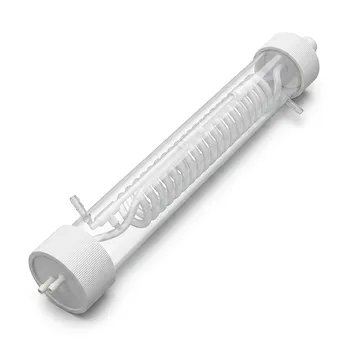
- High Purity PFA Condenser Serpentine Straight HF Resistant Reaction Apparatus Custom Circulation Column
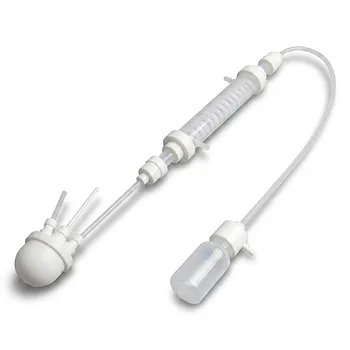
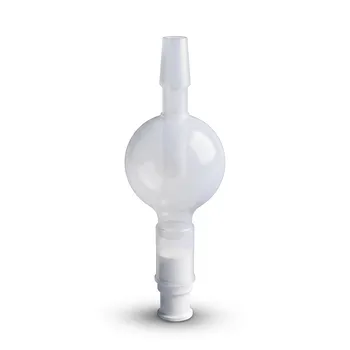
- PFA Anti Splash Ball High Temperature HF Resistant Laboratory Buffer Vessel for Distillation and Trace Analysis
People Also Ask
- What structural characteristics provide PTFE fluoropolymer laboratory apparatus with high thermal stability? Strong C-F bonds, dense fluorine shielding, and rigid helical conformation ensure stability during high-temperature analysis.
- How does resin stratification occur during the curing of fluoropolymer coatings, and why might solid fluoropolymer laboratory apparatus be preferred over surface coatings for aggressive chemical applications?
- What chemical resistance considerations are important when selecting fluoropolymer laboratory apparatus for post-modification reactions of FAVE polymers?
- How do operating temperatures and pressures influence the formation of thermal degradation products during the high-temperature processing of PTFE fluoropolymer laboratory equipment? Key factors and safety limits
- What impact does thermal annealing and crystallization temperature have on the material properties of custom-machined fluoropolymer apparatus? Optimize Performance with Controlled Thermal Processing