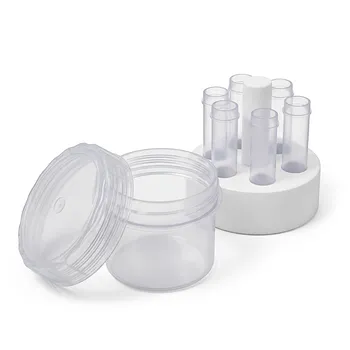
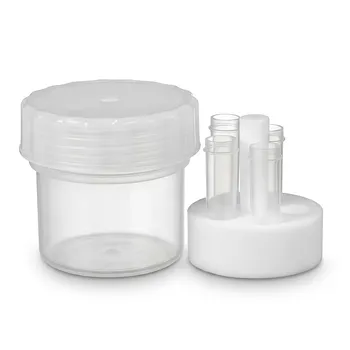
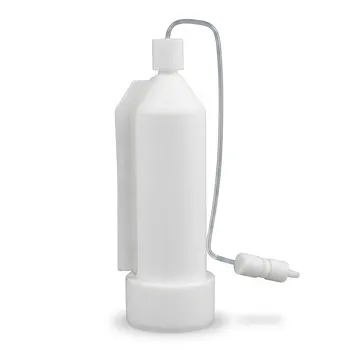
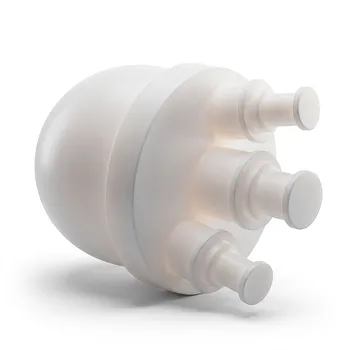
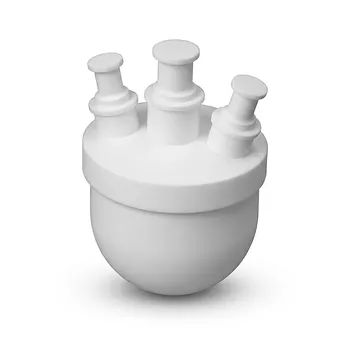
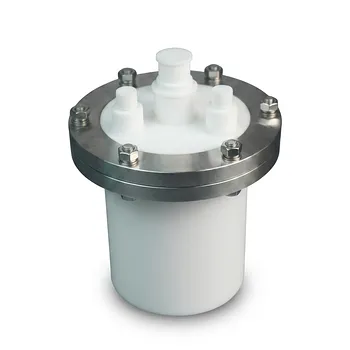
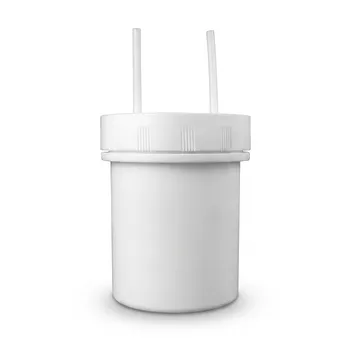
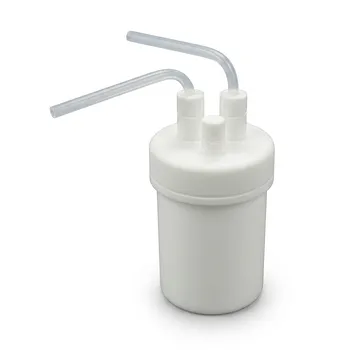
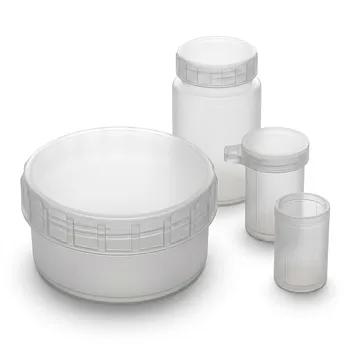
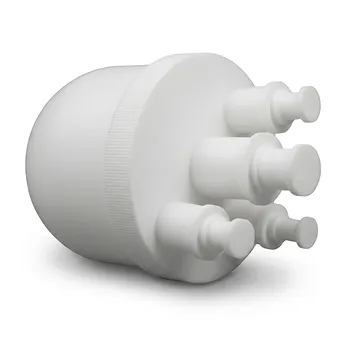
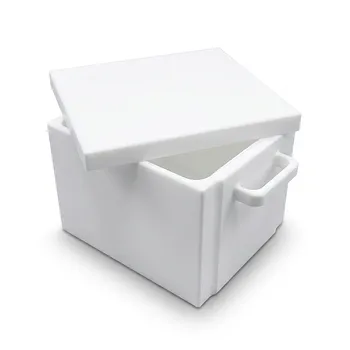
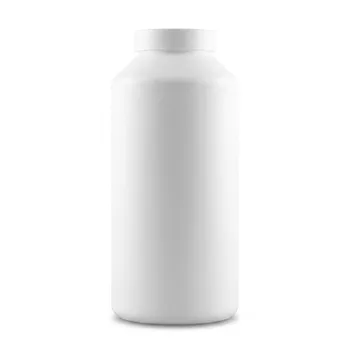
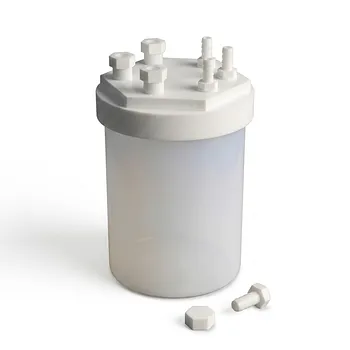
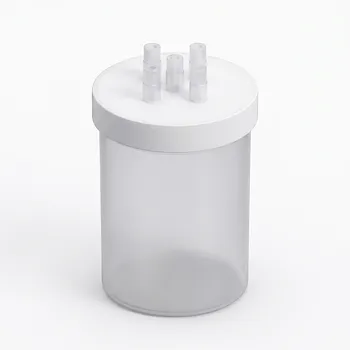
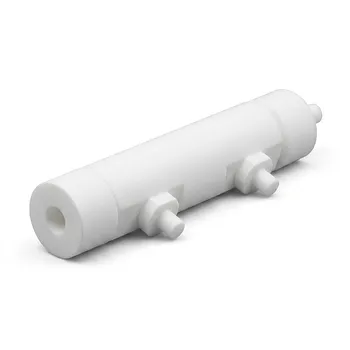
PTFE and PFA fluoropolymer vessels are essential for handling N-Methyl-2-Pyrrolidone (NMP) because they resist both chemical attack and solvent-induced contamination. NMP is a powerful organic solvent with a high boiling point of approximately 202°C, allowing it to remain aggressive during heated processing. Standard plastics may soften, swell, degrade, or leach impurities, while PTFE and PFA maintain chemical stability across the storage, transfer, mixing, and analysis of NMP-based formulations.
The central advantage of PTFE and PFA is containment without interference: they protect the vessel from NMP and protect the formulation from contamination, even when strong solvency and elevated temperatures are involved.
Why NMP Requires Specialized Vessels
NMP Has Strong Solvency
NMP is used to dissolve difficult binder resins such as polyamide/imide (PAI) and polyethersulfone (PES). The same solvency that makes NMP useful in coating formulations can also attack unsuitable container materials.
A vessel that absorbs or reacts with NMP can change the formulation, damage its own structure, or introduce extractable impurities into the coating.
Elevated Temperature Increases the Risk
NMP's boiling point of approximately 202°C supports high-temperature mixing and processing. Heat generally accelerates solvent penetration, swelling, softening, and chemical degradation in conventional plastics.
The vessel must therefore tolerate not only NMP's chemical strength but also the thermal conditions under which the solvent is handled.
Coating Formulations Are Sensitive to Contamination
Binder systems and complex solvent mixtures can be sensitive to trace contamination. Impurities from a container may affect coating consistency, analytical results, adhesion, or final film performance.
A chemically inert vessel acts as a passive boundary rather than an additional component in the formulation.
How PTFE and PFA Protect the Process
Fluorination Creates Exceptional Chemical Inertness
PTFE and PFA have highly fluorinated polymer backbones built around strong carbon-fluorine bonds. Their high bond strength and complete fluorination give them broad resistance to organic solvents, strong acids, strong bases, and oxidizing environments.
For NMP handling, this means the vessel is highly unlikely to undergo solvent-driven corrosion, degradation, or chemical reaction under normal operating conditions.
They Resist Swelling and Solvent Uptake
Conventional thermoplastics can absorb aggressive solvents, causing dimensional changes and loss of mechanical strength. PTFE and PFA show exceptionally low absorption and swelling with standard hydrogen-containing organic solvents, including many solvents used alongside NMP.
Low solvent uptake helps preserve vessel dimensions, sealing performance, and the intended concentration of the formulation.
They Minimize Leaching
PTFE and PFA contribute very low levels of extractable metal and other impurities. This is important when the coating formulation must remain chemically consistent or when samples are transferred to sensitive analytical procedures.
The material's low tendency to leach helps ensure that measured properties reflect the coating system rather than contamination from the container.
They Maintain Integrity During Repeated Handling
NMP-based work may involve storage, transfer, mixing, heating, and repeated sampling. A vessel that softens or becomes brittle over time creates both contamination and handling risks.
PTFE and PFA maintain structural integrity during prolonged contact with aggressive solvents and under demanding laboratory or process conditions.
PTFE and PFA in the Handling Workflow
Storage and Sample Containment
For storage, the vessel must prevent evaporation-related concentration changes while remaining unaffected by the solvent. PTFE and PFA provide a chemically stable contact surface for NMP-containing formulations.
This is particularly valuable when samples must be retained for later comparison or analysis.
Transfer Through Tubing and Fittings
Aggressive solvents can damage not only the main vessel but also tubing, valves, fittings, and seals. Fluoropolymer components help prevent swelling, extractables, and loss of dimensional stability throughout the transfer path.
The material choice should therefore cover the complete fluid-contact system, not just the container.
Mixing and Elevated-Temperature Processing
Mixing introduces continuous mechanical exposure, while heating increases solvent mobility and material stress. PTFE and PFA are suited to these conditions because they combine chemical resistance with high thermal stability.
This supports more reliable processing of NMP-based coating formulations containing tough binder resins and mixed solvents.
Analytical Preparation
Sample preparation can be compromised when the container contributes trace contaminants or absorbs part of the solvent system. Fluoropolymer vessels reduce these sources of variation and help preserve the original sample composition.
That makes them useful for reproducible testing and quality control.
Understanding the Trade-offs
“Chemically Inert” Does Not Mean Universally Indestructible
PTFE and PFA are highly resistant, but their limitations are not zero. Extreme environments involving molten alkali metals, elevated-temperature gaseous fluorine, or specialized fluorinating compounds can attack fluoropolymers.
These conditions are generally outside normal NMP-based coating operations, but compatibility should still be checked for the complete chemical mixture and process temperature.
Temperature Still Matters
Solvent uptake can increase as temperature rises because heat expands the polymer structure and increases molecular mobility. Even highly resistant materials should be selected and operated within their rated temperature limits.
Compatibility data at room temperature should not automatically be treated as proof of identical behavior at the process temperature.
Mechanical Requirements Differ by Application
PTFE and PFA may be chemically suitable while still requiring appropriate vessel design for pressure, stirring, sealing, or repeated handling. Chemical compatibility is only one part of a complete equipment assessment.
The vessel, closure, gasket, tubing, and fittings should all be evaluated as an integrated system.
Conventional Plastics Create Avoidable Risk
Materials such as PVC, polycarbonate, ABS, and polystyrene can experience swelling, softening, or severe degradation with aromatic, chlorinated, ester, and ketone solvents, especially at elevated temperatures.
Even when a conventional plastic appears acceptable during brief contact, long-term exposure or heating can reveal failures that compromise the formulation.
Making the Right Choice for Your Goal
Choose the vessel material according to the most demanding chemical, thermal, purity, and mechanical requirement in the workflow.
- If your primary focus is solvent compatibility: Use PTFE or PFA for NMP contact because their high chemical inertness minimizes degradation, swelling, and solvent-induced damage.
- If your primary focus is formulation purity: Use high-purity PTFE or PFA to reduce leaching and prevent container-derived impurities from entering the coating.
- If your primary focus is heated processing: Verify the complete fluoropolymer vessel and component assembly against the operating temperature, recognizing that solvent uptake can increase with heat.
- If your primary focus is reliable fluid transfer: Specify fluoropolymer tubing, fittings, valves, liners, and seals alongside the vessel so that weaker components do not become the failure point.
- If your primary focus is analytical consistency: Use fluoropolymer sample containers to reduce adsorption, extractables, and changes in sample composition during storage and preparation.
For aggressive NMP-based coating processes, PTFE and PFA provide the stable, low-contamination boundary required to protect both the equipment and the formulation.
Summary Table:
| Feature | PTFE/PFA Advantage |
|---|---|
| Chemical Resistance | High fluorination resists NMP attack and degradation. |
| Solvent Uptake | Minimal swelling and absorption, preserving dimensions. |
| Purity | Low extractables prevent contamination of coatings. |
| Thermal Stability | Maintains integrity at NMP's boiling point (202°C). |
| Mechanical Durability | Withstands repeated handling and process stress. |
Ensure your NMP-based processes stay pure and efficient with KINTEK's high-performance PTFE/PFA labware and custom components. From beakers and tubing to complete reaction vessels, our fluoropolymer solutions resist solvents, minimize contamination, and withstand high temperatures. Contact us today to discuss your requirements and receive a tailored quote!
Related Products
- High Purity Corrosion Resistant PFA Reaction Vessel with PTFE Holder and Integrated Sampling Tube for Trace Analysis
- Custom PFA Reaction Bottles High Purity PTFE Reaction Vessels Corrosion Resistant Petrochemical Containers
- Corrosion Resistant PTFE Support with PFA Transparent Reaction Tank and High Purity PFA Sampling Tube for Trace Analysis
- Custom PTFE Flask 250ml High Purity Fluoropolymer Laboratory Vessel for Chemical Research
- Custom PTFE Dissolution Bottle 50ml with PFA Ultra Fine Tubing Corrosion Resistant No Leaching
People Also Ask
- Why is the choice of reaction vessel material critical during B-NiBDC synthesis? Optimize MOF Purity & Performance
- What is the function of corrosion-resistant reaction vessels in the acid hydrolysis process of molasses for microalgae culture media?
- How do the material choice and sealing integrity of the reaction vessel affect the growth of NiFe-LDH? Optimize Synthesis
- Why are corrosion-resistant vessels needed for alkaline cellulose extraction? Ensure Purity and Process Safety
- Why are well-sealed reaction vessels necessary for superacid-promoted Friedel-Crafts polycondensation? Optimize Synthesis