The decisive factors are PFPE molecular structure and surface chemistry. A fully fluorinated PFPE with a perfluoroether backbone and non-reactive trifluoromethyl (-CF3) end-groups is chemically inert because fluorine shields the carbon framework and resists chemical attack. Its interaction with PTFE and PFA is therefore dominated by weak physical forces and the very low surface energy of the fluoropolymers, producing minimal wetting, adhesion, and adsorption. Functional end-groups such as hydroxyl, carboxyl, or alkoxysilane groups change that behavior by introducing stronger intermolecular interactions and specific chemical affinity for surfaces.
Backbone fluorination primarily determines chemical inertness, while terminal groups largely determine surface adsorption and reactivity. Fully fluorinated, non-functional PFPEs are preferred where purity and chemical neutrality matter; functionalized PFPEs are selected when controlled surface attachment or thin-film formation is required.
Why PFPEs Are Chemically Inert
The perfluorinated backbone provides the main protection
PFPEs contain a backbone rich in carbon-fluorine bonds. Fluorine forms a dense outer sheath around the carbon framework, making the molecule difficult for acids, bases, oxidants, and organic solvents to attack under ordinary laboratory conditions.
The same structural principle gives PTFE and PFA their exceptional resistance. Their fully fluorinated carbon backbones protect the polymer from degradation and help prevent contaminants from being extracted into laboratory samples.
Trifluoromethyl end-groups minimize reactivity
PFPEs terminated with -CF3 groups have chemically non-reactive molecular ends. These groups do not provide obvious sites for covalent bonding, hydrogen bonding, or strong acid-base interactions with PTFE, PFA, or most laboratory reagents.
As a result, these fluids are suitable as lubricants, hydraulic media, and process fluids where the fluid must remain chemically separate from the apparatus and sample.
Inertness is not the same as total non-interaction
A PFPE can remain chemically unchanged while still making weak physical contact with a surface. Van der Waals forces, surface roughness, confinement, temperature, and fluid viscosity can influence how much liquid remains on PTFE or PFA after draining or rinsing.
Therefore, “inert” means resistant to chemical transformation, not necessarily that every molecule will leave the apparatus without residue.
Why PTFE and PFA Usually Limit Adsorption
Their low surface energy reduces wetting
PTFE and PFA present fluorine-rich surfaces with very low critical surface energy, commonly associated with poor wetting by many liquids. A liquid that does not spread readily has fewer opportunities to form a persistent, high-contact-area film.
This non-stick behavior helps reduce sample adhesion and supports more complete liquid recovery in tubing, vessels, digestion equipment, and transfer components.
Weak surface interactions favor reversible retention
With non-functional PFPEs, interactions with PTFE and PFA are generally weak and physical rather than chemical. Any retained film is more likely to be displaced by compatible rinsing, draining, or mechanical flow than to become permanently bonded to the fluoropolymer.
The actual recovery depends on the apparatus geometry and operating conditions. Dead legs, narrow tubing, rough machined surfaces, seals, and stagnant regions can retain fluid even when the material pair is chemically compatible.
PFA can offer practical processing advantages
PTFE and PFA are both highly fluorinated and chemically resistant. PFA is melt-processable and is often used for smooth, transparent vessels and tubing, while PTFE is widely used for machined components, liners, seals, and low-friction parts.
Those manufacturing differences can affect residual-fluid behavior more than the nominal chemical identity of the polymer. Surface finish, cleanliness, and component design should therefore be evaluated alongside material compatibility.
How End-Groups Change Surface Adsorption
Non-functional PFPEs favor purity
A fully fluorinated PFPE with -CF3 termini has no intentional reactive anchor. It is the appropriate choice when the objective is to minimize chemical interaction, extraction, and contribution to a trace-analysis background.
These fluids are generally preferred for high-purity systems involving PTFE or PFA apparatus, provided the PFPE grade has also been controlled for low-molecular-weight fractions, additives, and manufacturing contaminants.
Hydroxyl and carboxyl groups add specific interactions
Hydroxyl (-OH) and carboxyl (-COOH) end-groups introduce polarity and hydrogen-bonding capability. They can interact more strongly with polar contaminants, oxide surfaces, deposited residues, or other functional materials than a -CF3-terminated PFPE can.
That increased affinity can improve coating persistence, but it also increases the possibility of adsorption, transfer, or analytical interference.
Alkoxysilane groups can promote surface attachment
Alkoxysilane-terminated PFPEs are designed to interact with suitable hydroxylated surfaces and can support more durable thin-film or surface-modification strategies. Their behavior is therefore intentionally different from that of an inert process fluid.
They should not be treated as interchangeable with non-functional PFPEs in trace-purity applications. A functionalized fluid may remain fluorinated and thermally stable while still reacting with, bonding to, or coating a surface.
What Controls the PFPE/PTFE/PFA Interface
Molecular architecture affects retention
The PFPE backbone structure, molecular weight distribution, chain length, viscosity, and end-group identity all influence spreading and residual-film formation. Higher-viscosity or higher-molecular-weight fractions may drain more slowly and remain in small features for longer periods.
Different PFPE families can therefore show different practical adsorption or recovery behavior even when all are described broadly as “chemically inert PFPE.”
Surface condition matters
Scratches, machining marks, contamination, deposited sample residues, and prior exposure to other chemicals can create retention sites that are absent on a clean, smooth fluoropolymer surface. Adsorption may occur primarily to the contaminant layer rather than directly to PTFE or PFA.
Cleaning validation should evaluate the actual apparatus, not only a flat coupon of virgin polymer.
Temperature and contact time influence outcomes
Elevated temperature can reduce viscosity and improve drainage, but it can also change spreading, evaporation of volatile fractions, and transport into small gaps. Longer contact times increase the opportunity for physical retention and for functional groups to interact with compatible surface sites.
The operating temperature must also remain within the limits of both the PFPE formulation and the PTFE/PFA component design.
Purity grade is part of compatibility
A chemically compatible PFPE can still be unsuitable for trace work if it contains extractable impurities, manufacturing residues, or components that appear in the analytical method. Compatibility testing should include blanks, rinsate analysis, and exposure under the intended temperature and contact-time conditions.
This distinction is important: material compatibility addresses degradation, while cleanliness and extractables testing address contamination.
Understanding the Trade-offs
Maximum inertness reduces surface attachment
Non-functional, fully fluorinated PFPEs provide the lowest expected chemical reactivity, but they are not designed to form strongly attached coatings. Their films may be removed by rinsing or displaced during repeated fluid handling.
That is beneficial for cleanability and sample purity, but insufficient when a persistent surface treatment is the objective.
Functionalization improves coating performance but adds risk
Reactive end-groups can increase film retention and enable targeted surface modification. The trade-off is greater adsorption, possible reaction with the apparatus or sample matrix, and a higher risk that the treatment itself contributes to background or changes surface wetting.
Functionalized PFPEs should be used only when their added surface chemistry serves a defined purpose.
“Compatible with fluoropolymers” does not mean universally safe
PTFE and PFA resist nearly all common laboratory acids, bases, and organic solvents, but exceptional conditions can attack perfluoropolymers. Examples include molten alkali metals, highly reactive fluorinating agents such as chlorine trifluoride or oxygen difluoride, and certain concentrated strong bases or Lewis bases at elevated temperatures.
These conditions are outside ordinary PFPE handling assumptions and require specific compatibility review.
Low friction does not eliminate residue
PFPEs and fluoropolymers can exhibit very low friction and poor wetting, which reduces adhesion. However, fluid can still remain because of capillary retention, trapped geometry, surface defects, or insufficient flushing.
A low-friction surface should not be used as evidence that a system is automatically free of residual PFPE.
Making the Right Choice for Your Goal
The correct selection depends on whether the priority is chemical neutrality, controlled adsorption, or durable surface modification.
- If your primary focus is maximum chemical purity: Use a high-purity, fully fluorinated PFPE with non-reactive
-CF3end-groups and validate extractables and rinsing performance in the complete PTFE/PFA assembly. - If your primary focus is minimal surface retention: Favor non-functional PFPEs, smooth and clean fluoropolymer surfaces, low-dead-volume designs, and a validated flushing procedure.
- If your primary focus is a persistent thin-film coating: Consider a functionalized PFPE, but verify its reaction pathway, coating stability, sample compatibility, and analytical background.
- If your primary focus is operation under extreme conditions: Evaluate the specific PFPE formulation and PTFE/PFA component against the reagent, temperature, pressure, and exposure time rather than relying on general fluoropolymer compatibility tables.
The backbone determines how inert the PFPE is, while its end-groups and the condition of the PTFE or PFA surface determine how strongly it stays.
Summary Table:
| Factor | Impact on Inertness & Adsorption |
|---|---|
| Backbone fluorination | High fluorination provides chemical inertness by shielding carbon framework. |
| End-groups | Non-functional (-CF3) minimize reactivity; functional (e.g., -OH, -COOH) increase surface adsorption. |
| Surface energy of PTFE/PFA | Low surface energy reduces wetting and adsorption. |
| Molecular weight & viscosity | Higher MW/viscosity may increase retention. |
| Surface condition | Scratches, contaminants can trap fluid, increasing adsorption. |
| Temperature & contact time | Higher temp reduces viscosity, but prolonged contact can increase retention. |
| Purity grade | Extractables impact cleanliness, not chemical compatibility. |
Maximize the performance of your PTFE and PFA labware with the right PFPE fluid.
At KINTEK, we specialize in high-performance fluoropolymer products, including PTFE and PFA labware, tubing, and custom components. Our team can help you select the optimal PFPE for your application, ensuring chemical inertness, minimal adsorption, and high purity. Whether you need standard beakers, custom machined parts, or high-volume orders, we are your dedicated partner. Contact us today to discuss your requirements and discover how our expertise can enhance your laboratory's efficiency and reliability.
Related Products
- Corrosion Resistant High Purity PFA Valve and Weldable Transparent Tubing for Semiconductor Fluid Transfer
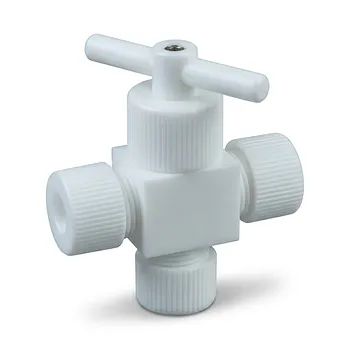
- Custom PTFE Valve 2-Way 3-Way Corrosion Resistant Low Background Virgin Fluoropolymer Industrial Fluid Control
- Custom PFA Pear Shaped Flask High Purity Corrosion Resistant Labware Custom Molded Fluoropolymer Flask Glass Replacement Solution
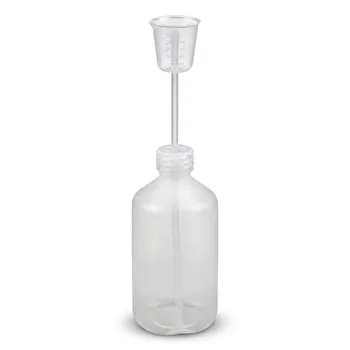
- Translucent PFA Bottle Top Dispenser for Corrosion Resistant Chemical Squeeze Extraction
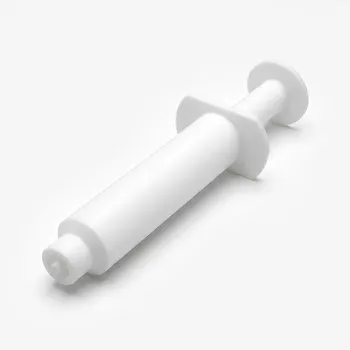
- High Purity Virgin PTFE Syringe 20ml Chemical Resistant Liquid Handling for Syringe Pumps and PFA Tubing Integration
People Also Ask
- Why are high-purity PFA fluid transfer components required for OSDAs and silica? Ensure Precision in Zeolite Synthesis
- Why are high-purity PFA fluid transfer components preferred for battery electrolytes? Ensure Purity & Data Accuracy
- How does high-purity PFA tubing maintain reagent purity? Achieve Ultra-Smooth, Zero-Contamination Fluid Transfer
- How do high-precision PFA fluid transfer components, such as tubing and fittings, affect the results of continuous-flow synthesis?
- How do PFA fluid transfer components contribute to chemical research precision? Achieve high-purity results today.